
The Yazidi Genocide and the Doctor Who Gave Life Back to Survivors
The Yazidi Genocide and IS Campaign Against the Community In August 2014, Islamic State militants launched a systematic assault on Yazidi communities in northern Iraq, seizing control of Sinjar and surrounding areas. The United Nations has described these attacks as an ongoing genocide targeting the religious minority. At least 12,000 Yazidis were killed or kidnapped during thi
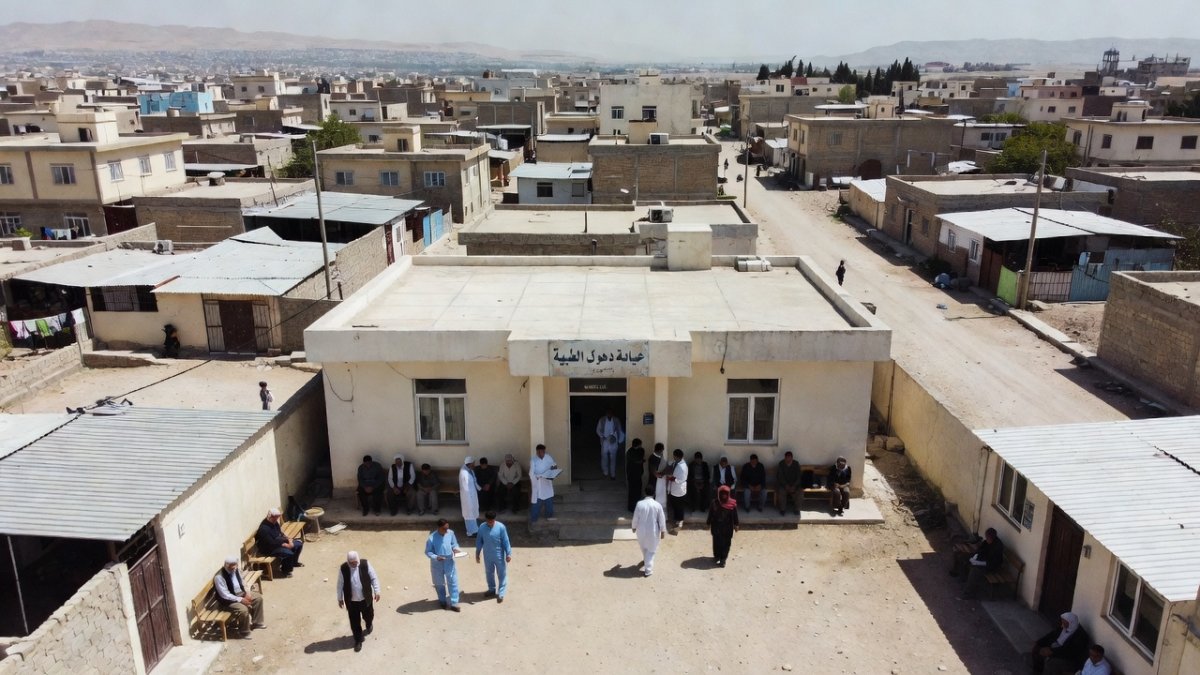
The Yazidi Genocide and IS Campaign Against the Community
In August 2014, Islamic State militants launched a systematic assault on Yazidi communities in northern Iraq, seizing control of Sinjar and surrounding areas. The United Nations has described these attacks as an ongoing genocide targeting the religious minority. At least 12,000 Yazidis were killed or kidnapped during this period, as IS forces sought to eradicate the community through mass killings, forced conversions, and the enslavement of women and girls.
The campaign disrupted daily life across the region, displacing families from their ancestral lands and fracturing social structures that had sustained Yazidi culture for generations. Local economies in towns like Sinjar collapsed under the weight of occupation, leaving survivors to navigate loss amid ongoing conflict. This violence echoed patterns of targeted persecution seen in other parts of the Middle East, where minority communities face erasure under extremist control.
Shireen's Story as a Representative Survivor Account
Shireen was 19 years old and preparing for a high school examination at her home in Sinjar on 3 August 2014 when IS militants entered and abducted her. She was sold as a sex slave in Tal Afar and later transferred to Mosul, where she became the third wife of an IS fighter named Abu Omar. For more than two years, she endured forced labor, repeated rape, and physical abuse from the other wives in the household. Two younger Yazidi girls, aged six and ten, were also brought to the home and subjected to similar exploitation.
Shireen was freed in 2016 during Iraqi forces' operations to retake Mosul. Upon release, she faced depression, nightmares, and the absence of her father and one sister, who remain missing since 2014. Her uncle and several friends were killed during the IS occupation. Her account reflects the experiences of thousands of Yazidi women who survived captivity, highlighting the long-term effects on mental health and family bonds in communities still recovering from displacement.
Dr Nagham Nawzat's Background and Commitment to Women's Health
Dr Nagham Nawzat, born in 1976 to a Yazidi family in Mosul, pursued medicine with a focus on women's issues from an early age. She graduated from Mosul's Medical College with a degree in gynaecology in 2002. Her work centres on providing care to survivors in the Kurdish region of Iraq, particularly in Duhok, where many displaced Yazidis have sought refuge.
At age 42, Dr Nawzat has earned respect within the Yazidi community for combining medical treatment with attentive listening. She addresses both physical injuries and emotional trauma, offering support that survivors describe as essential to their recovery. This approach connects directly to the daily realities of women rebuilding lives after years of captivity, where access to trusted healthcare providers remains limited in post-conflict settings.
Dr Nawzat's Work at the Duhok Survivors Centre
Dr Nawzat volunteers at the Duhok Survivors' Centre, the only facility in Iraq specialising in gender-based violence, funded by the United Nations Population Fund. She applies a post-traumatic medical approach that begins with a thorough physical examination followed by extended conversations where survivors share their experiences. She provides positive reinforcement, positioning herself as a supportive figure akin to a family member.
According to Hussein al-Qaidi, director of the Kidnapped Affairs department at the Kurdistan Regional Government in Duhok, 2,023 Yazidi women had been liberated from IS territories as of July 2018. Dr Nawzat has assisted an estimated 1,200 of them. Her presence at the centre addresses immediate health needs while supporting longer-term stability for women returning to communities in the Kurdish region.
The Broader Context of the UN-Recognised Genocide
The United Nations characterisation of the IS campaign as genocide underscores the scale of targeted violence against Yazidis, including the destruction of religious sites and the systematic separation of families. By 2014, IS controlled nearly a third of Iraq, creating conditions where minority groups faced coordinated efforts at elimination. This context shapes the ongoing challenges in Duhok and other areas hosting displaced populations.
Recovery efforts involve coordination between local authorities like the KRG and international organisations, yet the human cost remains evident in missing persons cases and persistent mental health needs. The genocide's legacy affects economic opportunities and social cohesion, as survivors navigate reintegration in a region marked by repeated cycles of conflict and displacement.
The Importance of Survivor-Centred Care and International Recognition
Dr Nawzat received the International Women of Courage Award in March 2016 from then-US Secretary of State John Kerry for her psychological support to Yazidi survivors and efforts against gender-based violence. Survivors such as Shireen credit her with providing both medical attention and emotional validation that aided their ability to continue forward.
Shireen, now 23, has stated that without this support she would not be here today, noting how Dr Nawzat affirmed her bravery after captivity. Such care models emphasise listening and reinforcement, which prove vital in settings where trauma intersects with cultural expectations around family and resilience. International acknowledgment highlights the role of dedicated local practitioners in addressing the aftermath of systematic violence.
By Fatima Al-Rashid, Staff Writer
This article was produced with AI-assisted research and editorial support. Reporting is based on sources cited in the article.
What's Your Reaction?
 Like
0
Like
0
 Dislike
0
Dislike
0
 Love
0
Love
0
 Funny
0
Funny
0
 Wow
0
Wow
0
 Sad
0
Sad
0
 Angry
0
Angry
0

Gulf/MENA Correspondent at Global1.News. Based in Doha, covering Gulf politics, energy markets, diplomacy, and development across the Middle East and North Africa. Tracks the economic transformation of the Gulf states.










Comments (0)