
South Korea Retirement Age: Nearly 9 in 10 Support Raising to 65 as Demographic Crisis Intensifies
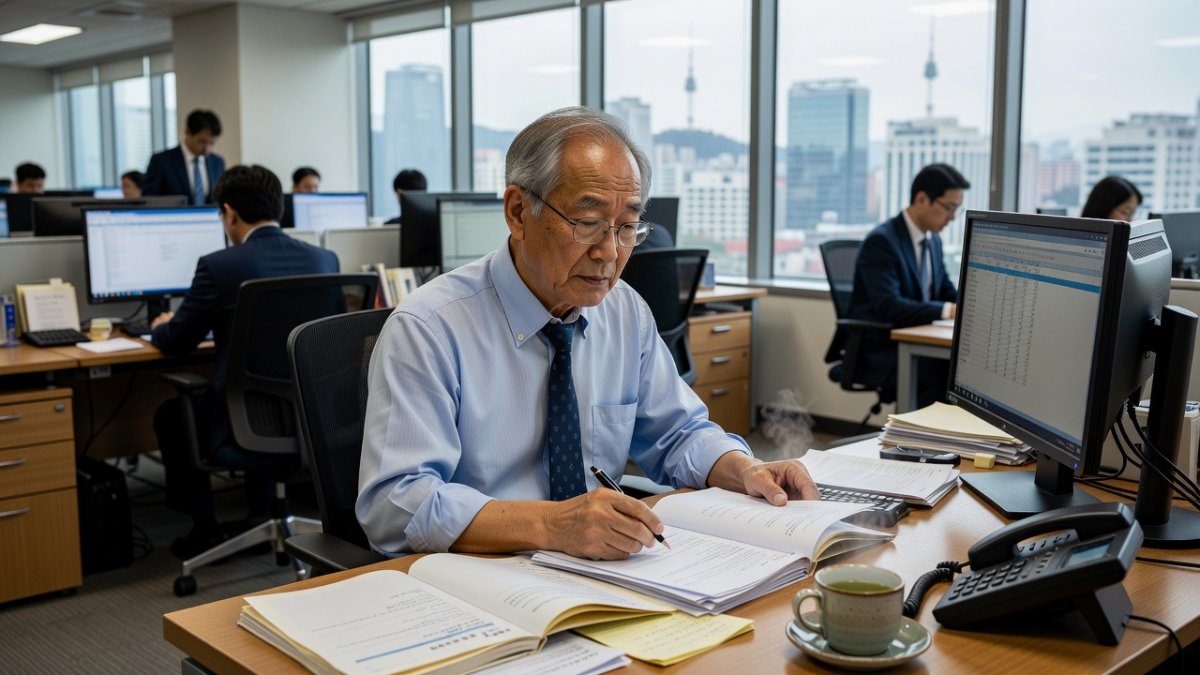
Retirement age reform has emerged as one of the most pressing policy questions in South Korea, with a new survey covered by KOREA NOW on June 9, 2026, revealing that nearly nine in ten South Koreans support raising the statutory retirement age. The finding reflects deepening public awareness of the structural demographic crisis facing the Republic of Korea — the world's fastest
Retirement age reform has emerged as one of the most pressing policy questions in South Korea, with a new survey covered by KOREA NOW on June 9, 2026, revealing that nearly nine in ten South Koreans support raising the statutory retirement age. The finding reflects deepening public awareness of the structural demographic crisis facing the Republic of Korea — the world's fastest-aging society and the nation with the lowest total fertility rate among advanced economies.
South Korea Retirement Age: Nearly 9 in 10 Support Raising to 65 as Demographic Crisis Intensifies
Seoul, South Korea — June 9, 2026 — A new public opinion survey highlighted by KOREA NOW indicates that approximately 87 to 89 percent of South Korean adults favor increasing the nation's statutory retirement age from sixty to sixty-five or higher. The findings come as the National Assembly reviews legislative proposals from the ruling People Power Party that would phase in a gradual increase to age sixty-five by 2033, with implementation potentially beginning as early as 2027.
The survey's results mark a significant shift in public attitudes. Earlier polling by the Korea Times in February 2026 found that two-thirds of Koreans aged fifty and older supported raising the retirement age. The more recent survey, encompassing a broader demographic cross-section, suggests that intergenerational consensus on the issue is building across age cohorts — including younger workers who might otherwise be concerned about reduced job openings.

Statutory Framework and Institutional Recommendations
South Korea's current legal retirement age of sixty was established by the 2013 Act on Prohibition of Age Discrimination in Employment, which came into full force in 2016. Before this legislation, the sixty-year standard was merely a recommendation, and most private-sector employers — particularly in manufacturing and construction — retired workers between the ages of fifty-six and fifty-eight. Government offices and public institutions were early adopters of the sixty-year standard.
The National Human Rights Commission of Korea (NHRCK) issued a formal recommendation in March 2025 calling for the statutory retirement age to be raised to sixty-five. While the NHRCK's recommendations carry moral and institutional weight, they are not binding on the National Assembly or the executive branch. The Ministry of Employment and Labor and the Ministry of Health and Welfare are currently examining the recommendation alongside parallel proposals from the legislative branch.
Demographic Pressures Driving Reform
South Korea's demographic trajectory provides the most compelling rationale for retirement age reform. The nation's total fertility rate fell to 0.72 in 2023 and remained at 0.75 in 2024 — the lowest in the world by a significant margin. The working-age population, defined as those aged fifteen to sixty-four, is declining by approximately 330,000 persons annually as the baby boomer generation born between 1955 and 1963 reaches retirement age.
The economic dependency ratio — the number of working-age individuals supporting each elderly person — is deteriorating rapidly. Projections from Statistics Korea indicate that by 2040, there will be fewer than two working-age adults for every person aged sixty-five and older, compared with approximately five in 2020. This structural shift places immense pressure on the National Pension Service, whose fund is projected to be exhausted by approximately 2055 under current contribution and benefit parameters.
Political Landscape and Legislative Prospects
The People Power Party, which holds a majority in the National Assembly following the June 3 local elections, has made retirement age reform a legislative priority. The party's proposed bill envisions a phased increase beginning in 2027, with the statutory retirement age rising incrementally to sixty-five by 2033. The legislation would apply to both public-sector and private-sector employers, with provisions for small and medium-sized enterprises to receive transitional support.
The main opposition Democratic Party of Korea has not taken a formal position on the specific legislative text but has signaled openness to reform conditional on accompanying measures to protect youth employment and strengthen the social safety net. Cross-party negotiations are expected to intensify during the current legislative session, with some lawmakers advocating for a faster timeline given the urgency of the pension funding crisis.
Labor Market Implications and Intergenerational Equity
The retirement age debate in South Korea carries complex implications for intergenerational equity. Youth unemployment among those aged fifteen to twenty-nine has hovered between five and six percent in recent months — elevated by OECD standards and a persistent source of political concern. Critics of raising the retirement age argue that keeping older workers in the labor force longer will reduce entry-level opportunities for younger job seekers, particularly in the highly competitive Korean domestic labor market.
However, empirical evidence from Japan — which raised its retirement age to sixty-five in 2013 and is now studying a further increase to seventy — suggests that the employment effects are more nuanced. Japan's experience indicates that extended workforce participation by older workers tends to concentrate in part-time and contract roles rather than competing directly with entry-level positions. The Japanese case also demonstrates that active labor market policies, retraining programs, and wage flexibility are essential complements to retirement age reform.
Major Korean conglomerates, including Samsung, Hyundai Motor Group, and SK Group, have maintained internal retirement and re-hiring systems that already extend employment beyond the statutory age under different contractual conditions. These chaebol-level practices, however, are not accessible to workers in small and medium-sized enterprises, where employment protections are weaker and wage structures are less flexible.
Union Positions and Social Dialogue
Organized labor in South Korea has adopted a cautiously constructive stance toward retirement age reform. The Korean Confederation of Trade Unions (KCTU) and the Federation of Korean Trade Unions (FKTU) have both expressed support for the principle of raising the retirement age but have conditioned their endorsement on several protections: safeguards against wage reductions for older workers, prohibitions on forced early retirement, and government-subsidized retraining programs for workers in physically demanding industries.
The seniority-based wage system prevalent in Korean workplaces introduces a particular complication. Under current arrangements, workers at the top of the pay scale — typically those in their late fifties — earn substantially more than their younger counterparts. Extending employment without adjusting the wage curve could impose significant cost burdens on employers. Some policy proposals have therefore linked retirement age reform to the introduction of more flexible wage systems, including the "peak wage" model already adopted by some public-sector institutions, under which wages are gradually reduced in the years preceding retirement.
Regional Comparisons and International Context
South Korea's retirement age debate must be understood within the broader Northeast Asian context. Japan's gradual increase to sixty-five, completed in 2013, provides the most directly relevant comparative case. The Japanese government is now considering further increases to age seventy, reflecting the same demographic pressures — though Japan's fertility rate of approximately 1.2 is substantially higher than Korea's sub-1.0 level.
China, by contrast, maintains one of the lowest statutory retirement ages among major economies — sixty for men and fifty-five for female white-collar workers — though discussions of reform have gained urgency as China's own demographic outlook deteriorates. Taiwan has moved its retirement age to sixty-five. The regional trend is unmistakable: aging societies across Northeast Asia are converging toward later retirement ages as demographic headwinds intensify.
Looking Ahead
The timeline for legislative action remains uncertain, though the People Power Party has indicated its intention to pass a retirement age bill by the end of 2026. Even if enacted this year, the phased implementation structure proposed by the legislation would mean that the first adjustments to the statutory age would not take effect until 2027, with full implementation of the sixty-five-year standard arriving no earlier than 2033.
South Korea's retirement age debate is ultimately a conversation about the social contract between generations in a rapidly aging society. The near-universal public support identified by the KOREA NOW survey suggests that South Koreans recognize the demographic arithmetic — but translating that recognition into sustainable policy will require careful attention to wage structures, pension reform, youth employment, and the distinctive features of the Korean labor market. As Japan's experience demonstrates, raising the retirement age is not a standalone solution but one component of a broader recalibration of labor market, pension, and social welfare systems that aging societies across Northeast Asia must undertake.
By Prof. David Park, Staff Writer
This article was produced with AI-assisted research and editorial support. Reporting is based on sources cited in the article.
What's Your Reaction?
 Like
0
Like
0
 Dislike
0
Dislike
0
 Love
0
Love
0
 Funny
0
Funny
0
 Wow
0
Wow
0
 Sad
0
Sad
0
 Angry
0
Angry
0

East Asia/Technology Correspondent at Global1.News. Seoul-based voice covering Korean politics, technology, business, and culture. Analyzes how technology and geopolitics intersect across East Asia.















Comments (0)