
Sexual Harassment: Displaced Yemeni Women Accuse Villagers of Abuse
The Plight of Displaced Women in Yemen's Conflict In Taiz, Yemen, families like that of Afnan al-Soroori once maintained middle-class routines centered on university studies and household support aided by modern appliances. When Houthi forces advanced toward the city approximately one year before the reporting, Soroori and her relatives abandoned their home for a makeshift camp
The Plight of Displaced Women in Yemen's Conflict
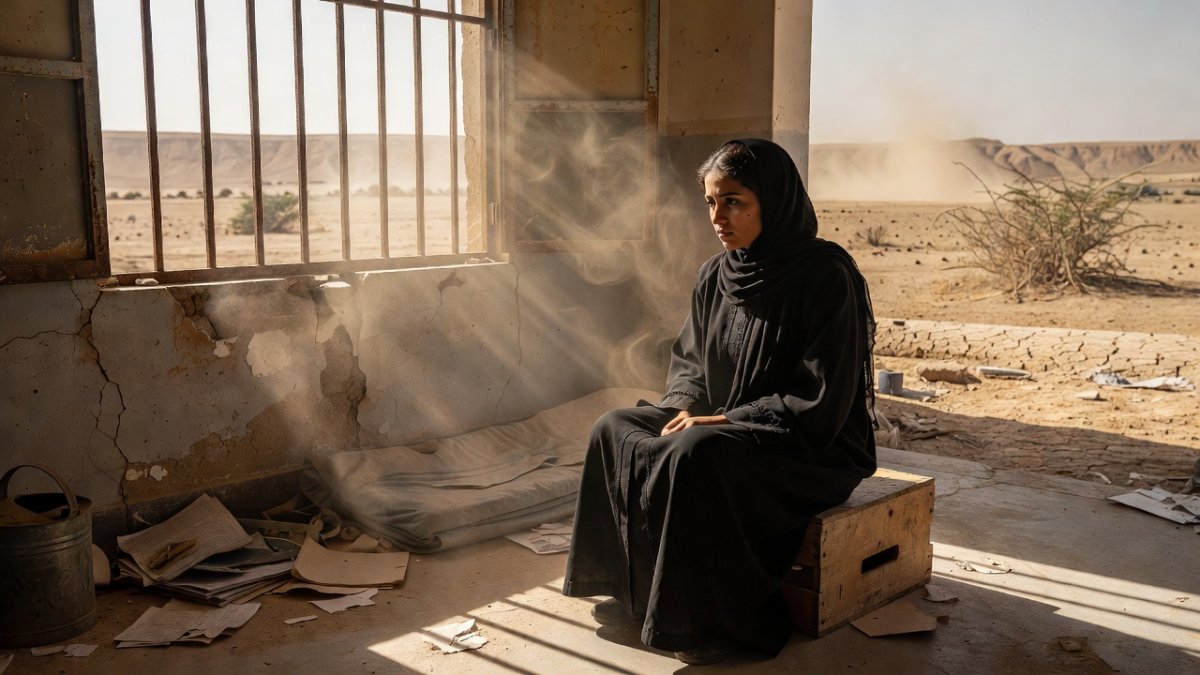
In Taiz, Yemen, families like that of Afnan al-Soroori once maintained middle-class routines centered on university studies and household support aided by modern appliances. When Houthi forces advanced toward the city approximately one year before the reporting, Soroori and her relatives abandoned their home for a makeshift camp inside a school in the al-Safia area, 65 kilometres distant. The transition eliminated access to electric ovens and washing machines, replacing them with firewood and hand basins that extend chores from dawn past dusk.
Similar patterns of sudden displacement recur across conflict zones in the Middle East, where urban populations lose both material security and personal mobility. Soroori's account highlights how the absence of basic infrastructure compounds the psychological strain of confinement, particularly for women who previously moved freely between classes and social circles.
Voices from the Camp: Daily Realities of Confinement
Afnan al-Soroori, 22, described the harassment that begins the moment she approaches the camp gates. Youths gather to shout abuse or make sexual advances, forcing her to remain inside at all times. She noted that her accustomed city attire, including fitted abayas that leave the face visible, draws immediate attention in an area where women cover entirely. Appeals by her father and other camp men to local tribal elders and mosque leaders produced no protection; instead, religious figures criticised the women's clothing and voices.
Mariam Abdul-Qader, 23, who shares the same camp, attempted to adopt the plastic shoes and full coverings worn by local women. Even then, youths identified her by her walk and sandals, continuing the verbal harassment. Groups of women now leave together for safety, yet the name-calling persists. Abdul-Qader expressed frustration at a war that compels acceptance of such conditions among people she described as indifferent to the suffering of newcomers.
Cultural Clashes and the Shadow of Harassment
Local sheikh Mohammed Gobah acknowledged that sexual harassment has become a notable problem in al-Safia since the arrival of city families. He attributed the incidents to the immodesty of the displaced women rather than to actions by village youths. This framing has left camp residents without recourse, as community leaders side against the newcomers and reinforce longstanding rural dress codes.
The resulting isolation severs women from green spaces and simple errands that once formed part of daily life. Soroori stated that the camp functions as a prison defined by external cultural norms she and her family cannot challenge. Such restrictions illustrate how displacement strips away not only physical possessions but also the limited autonomy women exercised in urban settings.
Human Rights Violations Amid Displacement
The accounts from al-Safia document restrictions on movement and exposure to sexual harassment that violate basic protections for displaced persons. Women who previously contributed to household economies through education now perform labour-intensive tasks without respite, their hands hardened by repeated washing. Fathers' unsuccessful interventions with elders underscore the absence of institutional mechanisms to safeguard female safety in temporary settlements.
These conditions reflect wider patterns in which conflict-driven movement places women at heightened risk of gender-based violence. The source material records no immediate figures on the scale of such incidents, yet the consistent testimonies indicate systemic exposure rather than isolated events. Without external mediation, the women remain confined, their complaints dismissed as cultural incompatibility.
Regional Echoes: Parallels with Palestinian Experiences
Displacement and subsequent restrictions on women's mobility appear across multiple Middle Eastern conflicts. In Palestinian communities under occupation or repeated military operations, women similarly navigate checkpoints, curfews, and social pressures that limit independent movement. The loss of urban routines and the imposition of more conservative expectations in new settings echo the cultural friction described in al-Safia.
Both contexts reveal how armed conflict amplifies existing gender inequalities. Palestinian women displaced from cities to rural or camp environments have reported comparable challenges in maintaining prior levels of education and social participation. The Yemeni testimonies therefore contribute to a documented regional record of how war erodes the limited freedoms women secure in more cosmopolitan areas.
The Broader Impact of War on Vulnerable Populations
Extended stays in camps such as the one in al-Safia transform temporary shelter into long-term confinement. Families that fled with minimal belongings now depend on manual labour while male relatives remain unemployed. The resulting economic strain intersects with social controls that prevent women from seeking external work or education, deepening household vulnerability.
Sheikh Gobah's comments and the elders' responses demonstrate how local power structures can interpret incoming populations as threats to established customs. This dynamic leaves displaced women without allies inside the host community, a pattern observed when rapid population movements occur amid active fighting. The absence of effective mediation perpetuates the cycle of harassment and isolation.
Seeking Dignity in Times of Crisis
Soroori and Abdul-Qader both expressed a desire to return to Taiz once security permits. Until then, their decision to remain inside the camp represents a calculated adaptation to an environment that offers no external protection. Their accounts underscore the human cost of conflict beyond battlefield casualties, focusing on the daily erosion of personal agency for young women.
Regional displacement crises continue to generate similar stories in which women bear disproportionate burdens. Documentation of these experiences remains essential for understanding the full scope of rights violations that accompany armed conflict and forced movement.
By Fatima Al-Rashid, Staff WriterThis article was produced with AI-assisted research and editorial support. Reporting is based on sources cited in the article.
What's Your Reaction?
 Like
0
Like
0
 Dislike
0
Dislike
0
 Love
0
Love
0
 Funny
0
Funny
0
 Wow
0
Wow
0
 Sad
0
Sad
0
 Angry
0
Angry
0
Gulf/MENA Correspondent at Global1.News. Based in Doha, covering Gulf politics, energy markets, diplomacy, and development across the Middle East and North Africa. Tracks the economic transformation of the Gulf states.












Comments (0)