
Iran Strikes Israel — Did Tehran Walk Into Netanyahu's Trap?
In a recent Middle East Eye report titled "Iran strikes Israel — have they walked into Netanyahu's trap?", the analysis examines whether Iran's direct missile response to Israeli operations in Lebanon has handed Prime Minister Benjamin Netanyahu the strategic opening he has sought for a broader military campaign. The exchange of ballistic missiles between Iran and Israel on Jun
In a recent Middle East Eye report titled "Iran strikes Israel — have they walked into Netanyahu's trap?", the analysis examines whether Iran's direct missile response to Israeli operations in Lebanon has handed Prime Minister Benjamin Netanyahu the strategic opening he has sought for a broader military campaign. The exchange of ballistic missiles between Iran and Israel on June 7-9, 2026, marked the most direct confrontation between the two states since the fragile April ceasefire, raising urgent questions about regional stability and the fate of diplomatic efforts still underway.
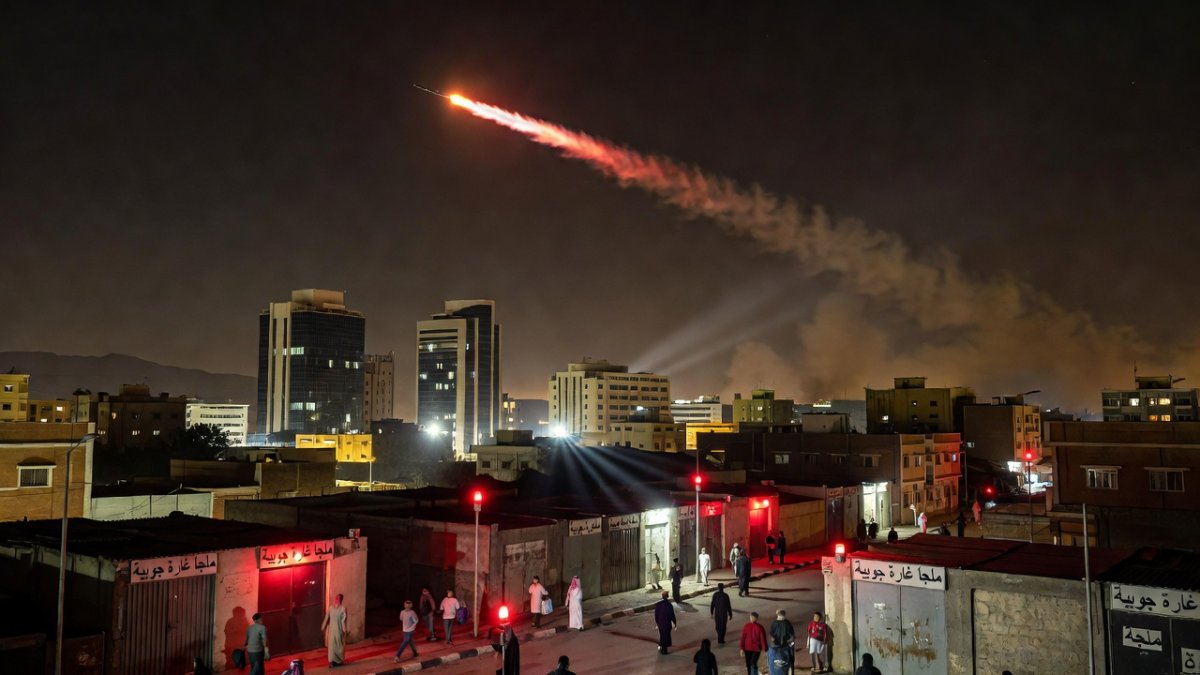
Timeline of the Escalation
On Sunday, June 7, 2026, Israeli forces struck southern Beirut, Lebanon, targeting sites linked to Hezbollah infrastructure in the Dahiyeh district and near the southern suburbs. Iran responded later that day by launching 18 ballistic missiles toward Israel, the first such direct exchange since the April 2026 ceasefire took hold. The following day, June 8, Israel carried out air strikes in Tehran and areas of central and western Iran, including facilities near Isfahan and military sites outside Qom. Iran then fired a second wave of 24 missiles at Israel. By June 9, both sides had signaled pauses while issuing warnings of possible further retaliation, leaving the April 2026 ceasefire under renewed strain.
These events compressed into roughly 48 hours, yet they revived patterns of direct confrontation that had appeared contained after April. Residents in affected Lebanese and Iranian communities described sudden disruptions to daily routines, with families seeking shelter and medical services stretched in the immediate aftermath. Palestinian observers noted how such rapid cycles of escalation often ripple outward, tightening movement restrictions and heightening security measures in the occupied territories even when strikes occur elsewhere. The sequence began with operations in southern Beirut before extending across borders into Iranian territory, illustrating how localized actions can quickly draw in multiple states.
Further examination of the timeline reveals that the initial Israeli operation in Lebanon targeted specific sites associated with Hezbollah infrastructure. This prompted Iran's ballistic response as a direct measure rather than through intermediaries. The subsequent Israeli actions in Tehran and surrounding regions marked a notable shift in reach, followed by Iran's additional missile launches. By the close of June 9, announcements from involved parties indicated temporary halts, though each retained language reserving options for future responses. Such compressed timing underscores the volatility that persists despite earlier agreements aimed at de-escalation.
Historical Context and the February 28 Campaign
The April 2026 ceasefire emerged after months of indirect negotiations mediated by regional actors, halting a broader US-Israeli campaign that began on February 28, 2026. That earlier operation involved coordinated strikes across multiple fronts, including intensified operations in Gaza and southern Lebanon. The June exchanges tested the fragile terms of the April agreement, which had aimed to prevent direct state-to-state ballistic exchanges. Officials in Ramallah observed that the February 28 actions had already set a precedent for rapid escalation, with Palestinian communities experiencing immediate increases in checkpoint density and permit denials.

Trump-Netanyahu Dynamics and the US Role
President Trump spoke directly with Netanyahu after the initial Iranian missile launch and urged him not to retaliate, stating that each side had already had its moment with the quote "Each of them had their fun." Netanyahu appeared to agree to stand down, yet Israeli strikes on Iran proceeded on June 8. Trump subsequently pressed both parties to halt further exchanges. After an additional conversation, Netanyahu canceled a larger planned operation against Iran. Iran then announced it would end its attacks. On June 9, Trump warned Netanyahu that continued strikes would leave Israel acting alone with the statement "You'll be on your own."
These exchanges illustrate the limits of external restraint when domestic political calculations in Israel favor sustained pressure on multiple fronts. Palestinian analysts have long tracked how U.S. statements of caution frequently coincide with Israeli actions that test those boundaries, producing outcomes that extend hardship for civilians already living under occupation or blockade. The reported telephone interactions highlight how personal diplomacy between leaders can influence immediate decisions while revealing underlying tensions in alliance management.
Additional context from the period shows that the U.S. position emphasized containment following the first Iranian launches. Despite initial indications of restraint, operations continued in a manner that extended beyond the agreed pause. Subsequent communications led to adjustments in planned activities, resulting in announcements of cessation from Iranian authorities. This back-and-forth demonstrates the challenges in aligning multiple actors during periods of heightened alert, where internal priorities often override external advisories.
Palestinian and Regional Perspectives — How This Affects People on the Ground
Communities across the West Bank and Gaza Strip have grown accustomed to the secondary effects of regional flare-ups. Heightened alert status at checkpoints, delays in permit approvals, and increased surveillance translate into lost wages, interrupted schooling, and restricted access to medical care. In Gaza, where reconstruction remains stalled years after earlier rounds of destruction, any fresh uncertainty over supply routes compounds existing shortages of building materials and fuel.
Regional actors, including governments and civil society groups in Jordan, Egypt, and Lebanon, have voiced concern that renewed Iran-Israel exchanges could destabilize already fragile borders. Lebanese families near the southern border described renewed displacement fears, while Iranian civilians in strike zones reported damage to residential areas and public infrastructure. Palestinian voices emphasize that such developments rarely remain isolated; they reinforce a broader architecture of control that limits movement, economic opportunity, and political expression for millions living under occupation.
Accounts from individuals in the West Bank detail how checkpoint expansions during these days led to extended waits that prevented workers from reaching employment sites. In Gaza, families noted interruptions in the delivery of essential goods, exacerbating conditions in areas where infrastructure recovery has been slow. Similar patterns emerged in Lebanese border communities, where residents prepared emergency supplies amid uncertainty over potential further incidents. Iranian accounts from affected zones mentioned temporary closures of local facilities and efforts to restore basic services amid the disruptions.
Regional Reactions from Arab Capitals and the International Community
Reactions in Arab capitals reflected a mix of caution and alarm. In Cairo, Egyptian officials called for immediate de-escalation to protect the April 2026 ceasefire framework. Amman expressed similar concerns, with Jordanian representatives noting risks to border stability. In Beirut, civil society organizations documented civilian displacement in southern areas. The international community, including statements from European Union representatives and United Nations envoys, urged restraint while monitoring the situation for violations of prior agreements. Palestinian officials in Ramallah highlighted how these responses often overlook the cumulative impact on occupied populations.
Analysis: Did Iran Fall into Netanyahu's Trap?
The Middle East Eye report frames Iran's direct missile response as potentially providing Netanyahu with the justification he needed to pursue a broader campaign. By striking Israel after the Beirut operation, Iran shifted the confrontation from proxy exchanges to state-to-state ballistic exchanges, allowing Israeli officials to portray their subsequent actions as defensive necessity rather than unprovoked escalation. Netanyahu's decision to proceed with strikes despite the reported understanding with Trump suggests calculations that extended beyond immediate deterrence.
From a Palestinian vantage point, the pattern fits a longer history in which Israeli leaders leverage external threats to consolidate domestic support and justify operations that also affect Palestinian populations. The April 2026 ceasefire had offered a narrow window for de-escalation; its erosion through these June exchanges risks returning the region to open-ended cycles of retaliation that leave civilian populations bearing the heaviest costs. This dynamic raises questions about whether direct involvement by Iran altered the strategic landscape in ways that favored expanded Israeli responses across multiple fronts.
Deeper consideration of the events points to how the transition to overt state-level actions created openings for portraying responses as necessary protections. The involvement of ballistic systems introduced new elements into the exchanges, moving beyond previous indirect engagements. Observers note that such shifts can serve to justify sustained operations while drawing attention away from other ongoing issues in the region, including those related to occupied territories. Iran's direct strike may have inadvertently supplied Netanyahu with a narrative of existential threat, enabling him to frame wider actions as essential while testing the boundaries of U.S. restraint established during the February 28 campaign.
What Comes Next — Implications for the Ceasefire
Both sides have indicated they are pausing operations while reserving the right to respond to future attacks. The April 2026 ceasefire therefore faces its most direct test since it was reached. Sustained quiet will require consistent external pressure and internal restraint that has proven difficult to maintain in previous periods of tension.
For Palestinians, the stakes extend beyond the immediate geography of the strikes. Renewed regional confrontation tends to narrow the space for diplomatic initiatives focused on occupation, settlements, and humanitarian access. Observers in Ramallah and Gaza City stress that durable stability cannot be achieved while the underlying conditions of displacement and restricted sovereignty remain unaddressed. The coming weeks will reveal whether the pauses announced on June 9 hold or whether further exchanges again place civilian lives across multiple countries at renewed risk.
Broader implications include the potential for similar cycles to recur if underlying grievances across the region stay unresolved. The involvement of additional states in monitoring and mediation efforts may prove essential to preventing renewed flare-ups. Palestinian communities continue to monitor these developments closely, recognizing that regional stability directly influences daily conditions under existing restrictions and controls.
By Fatima Al-Rashid, Staff WriterThis article was produced with AI-assisted research and editorial support. Reporting is based on sources cited in the article.
What's Your Reaction?
 Like
0
Like
0
 Dislike
0
Dislike
0
 Love
0
Love
0
 Funny
0
Funny
0
 Wow
0
Wow
0
 Sad
0
Sad
0
 Angry
0
Angry
0

Gulf/MENA Correspondent at Global1.News. Based in Doha, covering Gulf politics, energy markets, diplomacy, and development across the Middle East and North Africa. Tracks the economic transformation of the Gulf states.












Comments (0)