
South Korea Moves to Lower Age of Criminal Responsibility for Serious Juvenile Offenses
The South Korean government is advancing a targeted reform to the Juvenile Act that would lower the age of criminal responsibility for serious and violent offenses. This initiative, led by the Ministry of Justice, reflects mounting public anxiety over juvenile violence while preserving a conditional framework that distinguishes between categories of crime. The Policy Proposal T
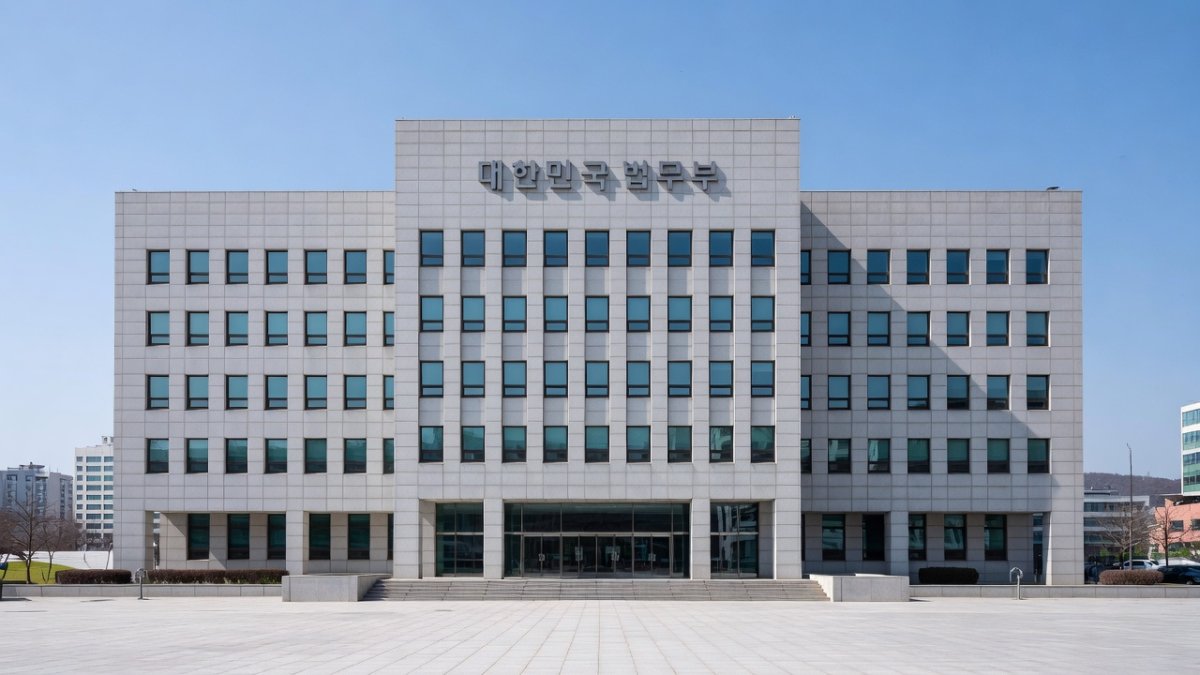 The South Korean government is advancing a targeted reform to the Juvenile Act that would lower the age of criminal responsibility for serious and violent offenses. This initiative, led by the Ministry of Justice, reflects mounting public anxiety over juvenile violence while preserving a conditional framework that distinguishes between categories of crime.
The Policy Proposal
The Ministry of Justice has indicated a preference for a conditional reduction of the age threshold from 14 to 13 years. Under this approach, only juveniles who commit serious or violent crimes would become subject to criminal prosecution, while less severe offenses would continue to fall under protective or welfare-oriented measures. The proposal does not envision a blanket change applicable to all offenses.
Officials have emphasized that the reform would require amendments to the Juvenile Act and subsequent approval by the National Assembly. No fixed implementation date has been announced, and the measure remains in the legislative preparation stage.
Current Legal Framework Under the Juvenile Act
The Juvenile Act (소년법 / 少年法) currently establishes that children under the age of 14 cannot face criminal charges. This provision has long served as a bright-line rule separating the criminal justice system from the juvenile welfare system. The statute’s protective orientation reflects Korea’s post-war emphasis on rehabilitation over punishment for young offenders.
Historical records show that the age of 14 was adopted in the mid-twentieth century and has remained stable despite periodic debates. The Ministry of Justice’s current initiative therefore represents the first formal attempt in decades to adjust this threshold, albeit on a limited, offense-specific basis.
Public and Political Debate
Rising public concern about violent incidents involving juveniles has generated political momentum for stricter accountability. Supporters argue that the existing framework insufficiently deters serious misconduct and fails to reflect contemporary patterns of youth offending.
Critics, including scholars affiliated with the Asan Institute for Policy Studies, contend that punitive adjustments alone will not address underlying drivers such as family instability, economic disadvantage, and gaps in social services. Research published by the Asan Institute has documented correlations between youth crime and socioeconomic stressors, suggesting that expanded rehabilitation and educational interventions may yield more durable reductions in offending rates.
The debate has unfolded alongside broader criminal justice reforms under consideration in the National Assembly, complicating the legislative calendar and requiring careful sequencing of related bills.
Comparative International Perspectives
Many jurisdictions maintain differentiated age thresholds that vary according to offense severity. Several European countries apply reduced ages of criminal responsibility exclusively for grave crimes while retaining higher thresholds for minor offenses. East Asian neighbors have likewise experimented with conditional frameworks that balance deterrence with developmental considerations.
Korean policymakers have examined these models, yet the Ministry of Justice has stressed that any adopted reform must align with domestic constitutional protections and Korea’s particular welfare infrastructure. Direct transplantation of foreign rules has been deemed inappropriate given differences in legal culture and social service capacity.
Looking Ahead: Implications for Korean Society
If enacted, the conditional lowering of the age threshold would mark a modest but symbolically significant shift in Korea’s approach to juvenile justice. The reform would likely intensify scrutiny of prosecutorial discretion and sentencing practices for 13-year-olds charged with serious offenses.
Longer-term consequences may include adjustments in school-based prevention programs, increased coordination between the Ministry of Justice and local welfare agencies, and renewed attention to inter-Korean border regions where family dislocation can exacerbate youth vulnerability. Observers note that successful implementation will depend on complementary investments in rehabilitation rather than punishment alone.
The National Assembly’s deliberations will determine whether the proposal advances and, if so, in what precise form. Until final legislation is passed, the age of criminal responsibility remains 14 for all offenses under the Juvenile Act.
By Prof. David Park, Staff Writer
This article was produced with AI-assisted research and editorial support. Reporting is based on sources cited in the article.
What's Your Reaction?
 Like
0
Like
0
 Dislike
0
Dislike
0
 Love
0
Love
0
 Funny
0
Funny
0
 Wow
0
Wow
0
 Sad
0
Sad
0
 Angry
0
Angry
0

East Asia/Technology Correspondent at Global1.News. Seoul-based voice covering Korean politics, technology, business, and culture. Analyzes how technology and geopolitics intersect across East Asia.















Comments (0)