
Supreme Court Blocks Trump from Firing Fed's Lisa Cook in Landmark Split Decision
Listen up, because the Supreme Court just dropped a bombshell split decision that shields the Federal Reserve from President Trump's reach while blowing the doors open for him to clean house at agencies like the FTC. This isn't some abstract legal squabble—it's a direct hit on how independent our economic guardrails really are. The Split Ruling That Changes Everything In a 5-4
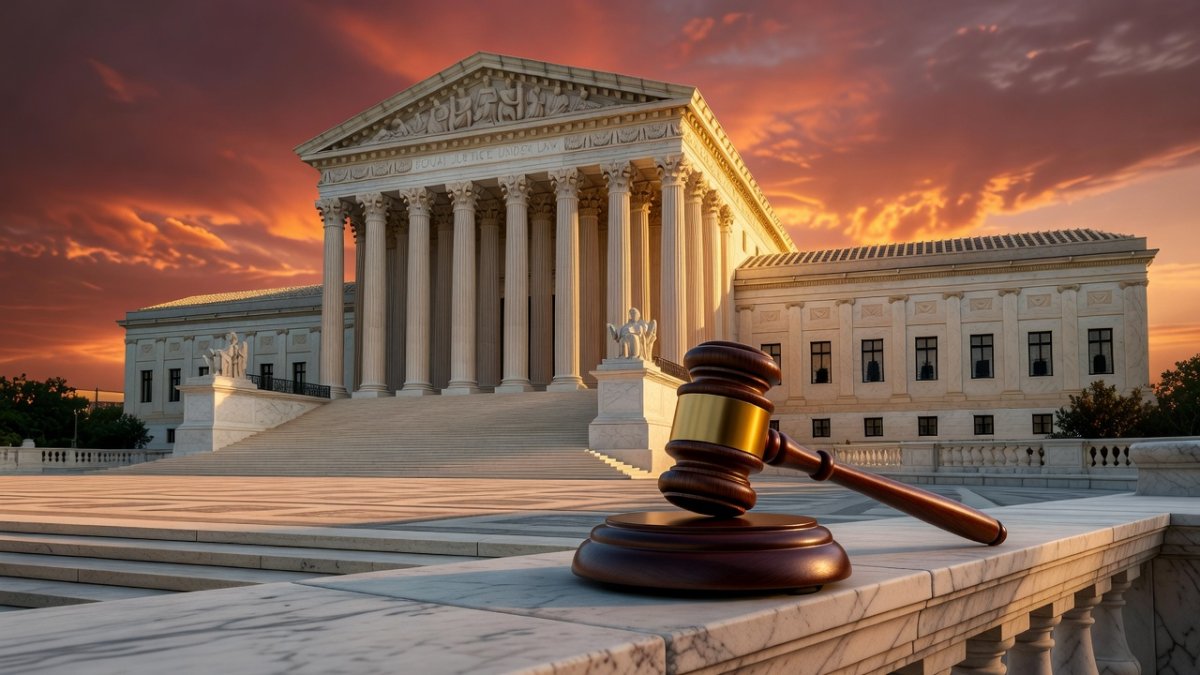
Listen up, because the Supreme Court just dropped a bombshell split decision that shields the Federal Reserve from President Trump's reach while blowing the doors open for him to clean house at agencies like the FTC. This isn't some abstract legal squabble—it's a direct hit on how independent our economic guardrails really are.
The Split Ruling That Changes Everything
In a 5-4 decision handed down today, June 29, 2026, the justices ruled that President Trump cannot fire Federal Reserve Governor Lisa Cook, calling the attempt unconstitutional under the Fed's specific statutory protections. SCOTUSblog reported the majority leaned hard on the "for cause" removal clause that Congress built into the Federal Reserve Act, preserving the central bank's ability to set monetary policy without political interference. At the same time, the Court went 6-3 in a related case to let Trump fire FTC commissioners, effectively gutting what's left of the Humphrey's Executor precedent that once shielded independent agencies. Reuters noted the opinions came down together at the end of one of the most consequential terms on executive power in decades, leaving a messy patchwork where the Fed stands alone.
Lisa Cook Stands Her Ground at the Fed
Cook, the economist and former Michigan State professor appointed by President Biden, challenged her January 2026 firing head-on, and the Court backed her all the way. The majority opinion stressed the Fed's unique statutory language that limits removals to cases of inefficiency, neglect, or malfeasance—language that simply doesn't exist at the FTC or similar bodies. NPR quoted Justice Elena Kagan's concurrence highlighting how the Fed's structure prevents presidents from pressuring interest rates for short-term political gain. Cook racked up $1.3 million in legal and security fees fighting the removal, a detail The Washington Post flagged as underscoring the personal stakes when power grabs hit independent officials. This win keeps her seat secure through the rest of her term.
FTC Commissioners Lose Their Shield
While Cook walked away protected, the ruling opens the floodgates elsewhere. The 6-3 decision on FTC commissioners overturns remaining protections from Humphrey's Executor, giving presidents broad removal power over most independent agencies. BBC coverage pointed to the majority's Article II argument that the Constitution vests executive authority in the president alone, making multi-member commissions with for-cause protections constitutionally suspect outside narrow exceptions. CNBC analysts noted this could ripple to the FCC, SEC, and NLRB, where Trump or future presidents might now install loyalists without Senate pushback on removals. The dissent, led by the liberal wing, warned this hands presidents a "blank check" over regulatory enforcement.
What This Means for the Federal Reserve's Independence
The split leaves the Fed's independence intact in a way no other agency enjoys, and that matters for every American watching their mortgage rates or 401(k). The Court explicitly called out the Fed's role in monetary policy as requiring insulation from daily political pressure, per quotes in The Guardian. Without that firewall, a president could demand rate cuts ahead of elections or punish governors who resist. For you as a reader, this means steadier inflation targeting and less risk of markets swinging on tweets, but it also highlights how fragile that independence remains if Congress ever tweaks the statute. The ruling reinforces that the Fed isn't just another agency—it's the economic stabilizer the Constitution's framers never imagined needing this kind of armor for.
Expert Analysis on Monetary Policy Fallout
Monetary policy experts are already parsing the long-term effects. SCOTUSblog's analysis flagged that the Fed's unique protection could encourage other agencies to lobby Congress for similar "for cause" language, though the Court signaled such carve-outs will face strict scrutiny. ABC News spoke with former Fed officials who said the decision reduces the chance of politicized rate decisions, which historically spiked volatility in bond markets. Yet Reuters warned that if future presidents test the edges by stacking the Board with allies through vacancies rather than firings, the independence win could prove narrower than it looks. Bottom line for everyday folks: your borrowing costs stay more predictable, but watch for Congress to get dragged into future fights over the Fed's charter.
Political Reactions Pour In From All Sides
Reactions split along predictable lines, with Trump allies calling the Fed ruling a "temporary setback" while Democrats hailed it as a bulwark against authoritarian overreach. The Guardian captured Senate Democrats vowing to codify stronger protections for other agencies, while Republican leaders celebrated the FTC expansion as restoring presidential accountability. NPR aired clips from Cook herself thanking the Court for recognizing the Fed's nonpartisan mission. CNBC tracked immediate market reactions, with bank stocks ticking up on the stability signal. The Guardian also noted international observers, including the Bank of England, breathing easier that U.S. monetary policy won't become a partisan football overnight.
This Term's Executive Power Battles in Context
Today's ruling caps a term packed with clashes over presidential authority, from immigration enforcement to regulatory rollbacks. The Guardian's term recap showed the Court consistently expanding Article II powers while carving out narrow exceptions like the Fed. NPR's legal correspondents tied this to earlier decisions limiting agency independence, arguing the justices are methodically reshaping the administrative state. For readers, these cases aren't academic—they determine whether agencies can check corporate power or if one person in the Oval Office calls every shot. The mixed outcome here shows the Court isn't handing presidents total victory, but it's shifting the balance dramatically toward greater executive control outside the Fed's walls.
By Jessica Ali, Global1 News Lead AnchorThis article was produced with AI-assisted research and editorial support. Reporting is based on sources cited in the article.
What's Your Reaction?
 Like
0
Like
0
 Dislike
0
Dislike
0
 Love
0
Love
0
 Funny
0
Funny
0
 Wow
0
Wow
0
 Sad
0
Sad
0
 Angry
0
Angry
0

Editor-in-Chief at Global1.News. Atlanta-based journalist who cuts through the BS and tells it like it is. Lead anchor, host, and the voice you hear when the spin stops and the truth starts.














Comments (0)