
West Bank Child Deaths Reflect 'Broader Israeli Policy' of Killings 'With Virtually No Accountability': B'Tselem
Release of the B'Tselem Report The B'Tselem report released on June 29, 2026, documents a devastating pattern of violence against Palestinian children in the West Bank. Children account for nearly a quarter of Palestinians killed by Israeli forces in the West Bank since October 2023. This marks the highest death rate of minors since the occupation began in 1967. The report deta
Release of the B'Tselem Report
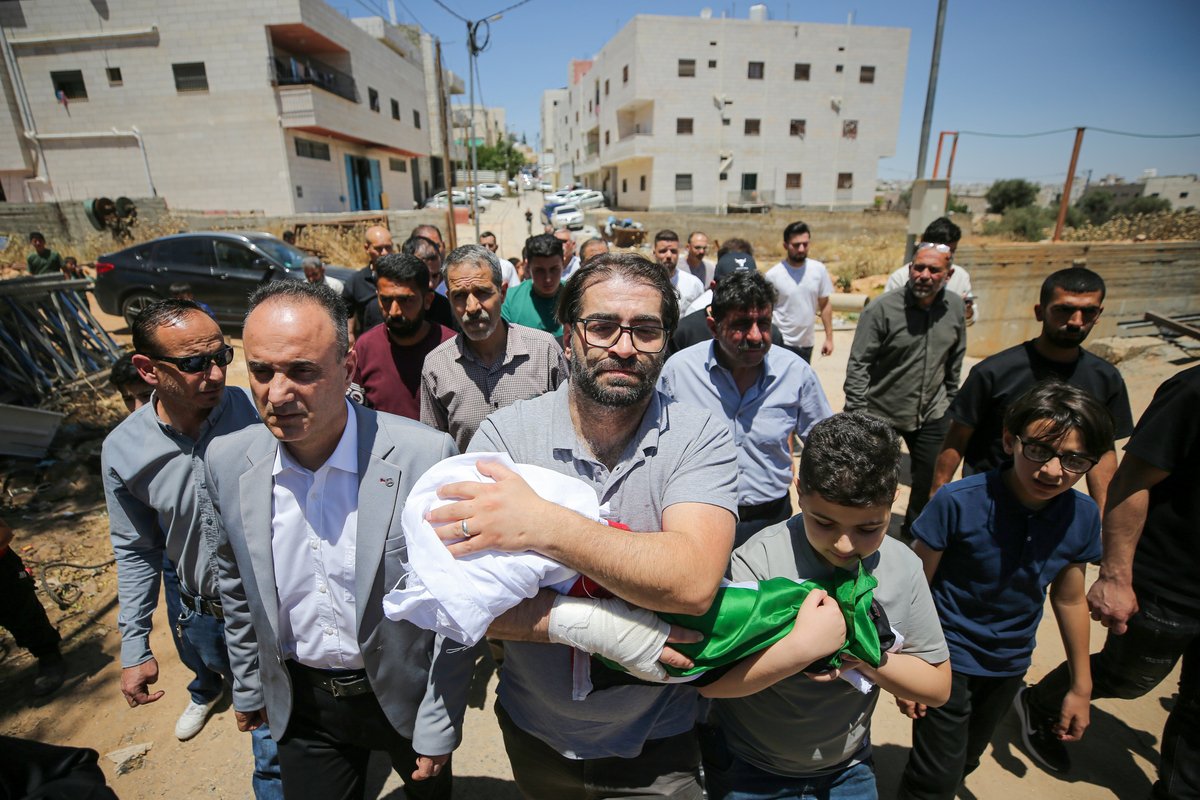
The B'Tselem report released on June 29, 2026, documents a devastating pattern of violence against Palestinian children in the West Bank. Children account for nearly a quarter of Palestinians killed by Israeli forces in the West Bank since October 2023. This marks the highest death rate of minors since the occupation began in 1967. The report details how 241 children and teenagers were among the 1,086 Palestinians killed during this period, underscoring the scale of loss in communities across the region.
These figures emerge from systematic documentation by B'Tselem, an organization focused on human rights in the occupied territories. The deaths reflect conditions where military operations have intensified, placing young lives at constant risk. Families in affected areas face ongoing trauma as the report highlights the unprecedented nature of these casualties compared to previous decades of the occupation.
Journalists and human rights monitors have noted that the report arrives at a critical moment when international attention often shifts elsewhere. Yet the data from B'Tselem provides a clear record of how children have become frequent victims. The organization emphasizes that such killings cannot be dismissed as random events but form part of a larger pattern requiring urgent examination.
Compassion for the affected families drives the need to understand these statistics fully. Each number represents a life cut short, leaving communities in mourning. The report calls for recognition of this human cost while presenting evidence gathered meticulously over months of investigation.
Human Toll in Numbers
Within the broader statistics, 54 children were killed in 2025 alone according to the B'Tselem findings. Israeli forces delayed or prevented medical teams from reaching the injured in nearly one-quarter of these cases. This obstruction compounded the tragedy, as timely intervention might have saved lives in several instances. The report further reveals that Israel continues to withhold the bodies of 18 of the 54 children, denying families the chance for proper burial and closure.
The impact extends deeply into specific locations such as Hebron, Nablus, Jenin, and Bethlehem. In these cities and surrounding villages, parents and siblings grapple with sudden loss amid restricted movement and heightened security measures. Communities in Hebron have seen multiple incidents where children were caught in operations, while Nablus families report similar patterns of grief and disruption to daily routines.
Jenin and Bethlehem have also borne significant shares of this toll, with local support networks strained by the frequency of such events. The withholding of bodies adds another layer of suffering, as relatives wait indefinitely for remains that could allow mourning rituals to proceed. B'Tselem documents these cases with attention to the emotional and practical hardships imposed on surviving family members.
These numbers illustrate not isolated tragedies but a sustained human cost across the West Bank. Medical access barriers highlight how even basic humanitarian responses face interference. The report urges attention to these details to grasp the full extent of harm inflicted on Palestinian children and their loved ones in these named areas.
The Policy Question
Yuli Novak, B'Tselem Executive Director, stated that the widespread, unprecedented killing of Palestinian children and teenagers in the West Bank is the result of a broader Israeli policy that enables the killing of Palestinians with virtually no accountability. This assessment frames the deaths not as accidents but as outcomes of deliberate systemic choices. The report connects individual incidents to overarching directives that shape military conduct on the ground.
Novak further noted that when the military commander boasts that Israel is killing Palestinians like we haven't killed since 1967, he confirms that the system effectively grants them a license to kill. Such statements from officials reveal an acceptance of elevated lethality as a norm rather than an exception. The policy in question expands the range of situations where lethal force is authorized, affecting how operations unfold in residential zones.
Analysis in the report shows how this approach permeates decision-making at multiple levels. Command structures appear to prioritize aggressive tactics over restraint, leading to higher child casualties. Communities experience this as a consistent threat where everyday activities carry elevated dangers for the young.
The executive director's words underscore the need to examine policy roots rather than focusing solely on individual actions. By linking the killings to institutional frameworks, B'Tselem calls for accountability at the level where decisions originate. This perspective highlights the responsibility of those who shape and implement the rules governing force in the West Bank.
Lack of Accountability
B'Tselem concludes that the killings are not isolated mistakes but the outcome of a policy that expands circumstances for soldiers to shoot, backs those who use lethal force, labels victims as terrorists, and almost never holds perpetrators to account. This systemic design ensures that investigations rarely lead to consequences. The report details how such mechanisms protect the status quo while Palestinian families seek justice.
No single indictment has been filed for killings of Palestinians in the West Bank since October 2023. This complete absence of legal proceedings stands as stark evidence of the accountability gap. More than 9,600 Palestinian detainees are held during the same period, many without charges tied to the violence in question.
The pattern of non-prosecution affects all cases involving children as well as adults. Families in the West Bank receive no official acknowledgment of wrongdoing, leaving wounds unaddressed. The report argues that this lack of recourse perpetuates the conditions allowing further deaths to occur without fear of repercussions.
Through its documentation, B'Tselem demonstrates how labeling and procedural barriers shield the military from scrutiny. The result is an environment where lethal actions face minimal internal review. This reality demands attention from those concerned with human rights standards in occupied territories.
Connection to Gaza
B'Tselem emphasizes that killings in the West Bank cannot be separated from Israel's killing of more than 21,000 Palestinian children in Gaza. The report presents these as interconnected elements of a single overarching approach to Palestinian populations. Since October 2023, more than 73,000 have been killed and 173,000 injured in Gaza, with 90 percent of civilian infrastructure destroyed.
This destruction in Gaza creates ripple effects that influence conditions in the West Bank. Families there watch events unfold across the barrier, aware that similar dynamics could intensify locally. The scale of child deaths in Gaza sets a context in which West Bank casualties appear as part of a continuum rather than separate phenomena.
The report urges readers to consider the unified policy framework spanning both territories. Numbers from Gaza illustrate the extreme end of the spectrum, while West Bank figures show parallel trends at a different intensity. Such connections reveal how military strategies adapt across regions yet share core characteristics.
Understanding this linkage helps explain the persistence of high child casualty rates in the West Bank. B'Tselem's analysis avoids compartmentalization, instead presenting evidence of coordinated outcomes. The shared experience of loss across these areas strengthens calls for comprehensive examination of the policies involved.
Broader Context in the West Bank
Since October 8, 2023, 1,173 Palestinians have been killed in the West Bank, with 12,666 injured and about 23,000 arrested. These totals encompass the child deaths highlighted in the report while also reflecting wider violence. Ongoing settlement expansion and land confiscation accompany military raids that disrupt communities on a daily basis.
Daily life under occupation involves checkpoints, movement restrictions, and frequent incursions that heighten tensions. Children navigate these realities while attending school or playing near their homes. The report notes how such conditions create environments where lethal encounters become more likely during routine operations.
Settlement activities in areas near Hebron, Nablus, Jenin, and Bethlehem add pressure on land resources and local populations. Confiscations reduce available space for families and contribute to friction that can escalate during raids. B'Tselem documents these structural factors as contributors to the overall climate of insecurity.
The combination of arrests, injuries, and fatalities paints a picture of sustained pressure on West Bank society. Communities adapt as best they can, yet the human cost accumulates steadily. The report positions these elements as essential background for interpreting the specific toll on children.
Conclusion and International Responsibility
B'Tselem states that as long as Israel continues to enjoy near-total impunity, the lives of Palestinians including children will remain unprotected and exposed. This assessment places responsibility on the international community to address the documented patterns. Without external pressure, the cycle of killings and lack of accountability shows no sign of ending.
The report's findings call for renewed focus on protecting civilian populations, particularly minors, in conflict zones. Specific data on child deaths, medical obstructions, and withheld bodies provide concrete points for advocacy. Organizations and governments are urged to consider these facts when formulating responses to the situation in the West Bank.
Compassionate engagement with the evidence requires acknowledging the full scope of suffering described. Families across Hebron, Nablus, Jenin, and Bethlehem continue to endure consequences that extend beyond immediate losses. The broader connections to Gaza further illustrate the regional dimensions of the crisis.
Ultimately, the B'Tselem report serves as a record demanding action to restore accountability and safeguard young lives. Its release on June 29, 2026, marks an opportunity for reflection on policies that have produced such outcomes. Continued documentation and attention remain essential to prevent further tragedies.
By Fatima Al-Rashid, Staff WriterThis article was produced with AI-assisted research and editorial support. Reporting is based on sources cited in the article.
What's Your Reaction?
 Like
0
Like
0
 Dislike
0
Dislike
0
 Love
0
Love
0
 Funny
0
Funny
0
 Wow
0
Wow
0
 Sad
0
Sad
0
 Angry
0
Angry
0
Gulf/MENA Correspondent at Global1.News. Based in Doha, covering Gulf politics, energy markets, diplomacy, and development across the Middle East and North Africa. Tracks the economic transformation of the Gulf states.









Comments (0)