
South Korea Democratic Party Chair Race: 4-Way Contest
The Democratic Party Leadership Race and Its Implications for South Korean Legislative Governance The Contours of the Four-Way Contest The upcoming election for the chairmanship of South Korea's ruling Democratic Party has crystallized into a four-candidate field that directly tests the extent of President Lee Jae-myung's influence over his own party. On July 7, former Prime Mi
The Contours of the Four-Way Contest
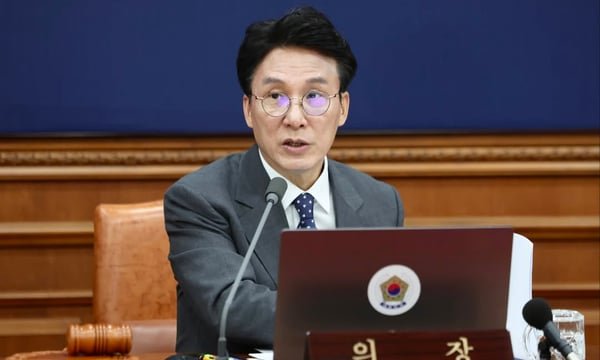
The upcoming election for the chairmanship of South Korea's ruling Democratic Party has crystallized into a four-candidate field that directly tests the extent of President Lee Jae-myung's influence over his own party. On July 7, former Prime Minister Kim Min-seok entered the race, leveling pointed criticism at former party leader Jung Chung-rae for pursuing self-serving strategies that prevented the conversion of Lee's approval ratings into concrete legislative achievements. Jung is expected to declare his candidacy shortly after resigning his post last month, while six-term lawmaker Son Yong-gil, who reentered the National Assembly following the June 3 by-election, and National Assembly member Ko Min-jung, a former broadcaster, both announced their candidacies on July 8.
This configuration reflects deeper tensions within the Democratic Party between those aligned with the presidential agenda and those seeking to preserve independent power bases. The contest occurs at a moment when the party holds 161 seats in the 300-member National Assembly, controls the speakership, and chairs the Legislation and Judiciary Committee responsible for vetting all bills. Such institutional advantages should, in principle, eliminate excuses for legislative inaction, yet persistent complaints from within the Blue House indicate otherwise.
Reform of the Party's Internal Voting System
A central feature of the current race is the Democratic Party's newly adopted voting formula, under which ordinary dues-paying members' ballots carry equal weight to those of convention delegates. This marks a departure from the previous system, in which a delegate's vote was weighted approximately seventeen times more heavily than a rank-and-file member's. Jung himself advanced this reform earlier in the year as a means of enhancing party sovereignty and broadening participation.
The change introduces considerable uncertainty into the outcome. A local pollster's survey shows Kim leading Jung by twenty-one percentage points among Democratic Party supporters, with 45 percent support against Jung's 24 percent. Nevertheless, the equal weighting of member and delegate votes means that established factional networks may no longer determine the result as decisively as in past contests. This structural shift carries implications for how future party leaders will be held accountable to the broader membership rather than to convention insiders.
President Lee's Legislative Frustrations and Party Dynamics
President Lee has publicly expressed dissatisfaction at Cabinet meetings regarding the pace at which legislation advances and the party's inability to translate its majority into enacted statutes. These remarks underscore a gap between the institutional resources available to the Democratic Party and the actual delivery of policy outcomes. Jung's tenure as party leader coincided precisely with these criticisms, leading many pro-Lee members to attribute the sluggish legislative record to his strategic choices.
Kim and Son have positioned themselves, in effect, as a coordinated challenge to Jung's continued influence. Son has indicated willingness to withdraw should his candidacy risk fragmenting the anti-Jung vote. Ko's entry adds a further dimension by emphasizing generational turnover and the retirement of senior party figures, drawing on her experience as a former spokesperson for President Moon Jae-in. The resulting competition therefore encompasses not only personal rivalries but also competing visions of how the party should organize itself to support or constrain the presidential agenda.
Contrast with Opposition Party Leadership Practices
The internal contest within the Democratic Party stands in sharp relief against the approach taken by the opposition People Power Party following its defeat in the June 3 local elections. PPP leader Jang Dong-hyuk has declined to resign and has instead signaled potential disciplinary measures against members who have questioned his leadership. This contrast highlights differing institutional cultures regarding accountability after electoral setbacks.
While the Democratic Party's open competition may expose divisions, it also provides a mechanism for renewing leadership legitimacy through member participation. The PPP's more centralized response risks entrenching existing leadership even when electoral results suggest the need for adjustment. Such differences in handling leadership transitions carry consequences for how each party engages with the National Assembly's legislative calendar and with the executive branch.
Strategic Significance for Inter-Korean Policy and Domestic Governance
The outcome of the Democratic Party chairmanship election will shape the legislative environment in which President Lee pursues his domestic and foreign policy priorities. Control of the Legislation and Judiciary Committee remains a critical choke point for all bills, and a chair more closely aligned with the Blue House could accelerate the processing of legislation related to economic regulation, social welfare, and inter-Korean engagement. Conversely, a leadership less responsive to presidential direction might prolong the very gridlock that has already drawn internal criticism.
Historical precedent within Korean politics shows that party leadership contests often serve as proxies for larger debates over executive-legislative relations. The current race occurs against the backdrop of a divided National Assembly in which the Democratic Party's numerical advantage has not yet produced proportional policy throughput. The result will therefore influence not only internal party balances but also the pace at which Korean institutions address pressing issues such as chaebol governance reforms and regional security coordination.
Outlook for Party Sovereignty and Presidential Authority
Whether the new voting system ultimately strengthens or fragments the Democratic Party will depend on how the candidates mobilize both dues-paying members and convention delegates. Jung's reform was intended to democratize internal decision-making, yet its first application coincides with a leadership challenge that places his own record under scrutiny. The interplay between these elements will test whether expanded member participation produces greater cohesion around the presidential program or instead amplifies factional competition.
In the broader Korean political context, the resolution of this contest will offer insight into the evolving relationship between the executive and the ruling party. President Lee's expressed frustrations indicate that institutional majorities alone do not guarantee legislative success; alignment between party leadership and the Blue House remains essential. The coming weeks will therefore determine whether the Democratic Party can convert its structural advantages into tangible governance outcomes or whether internal divisions will continue to constrain the legislative agenda.
By Prof. David Park, Staff WriterThis article was produced with AI-assisted research and editorial support. Reporting is based on sources cited in the article.
What's Your Reaction?
 Like
0
Like
0
 Dislike
0
Dislike
0
 Love
0
Love
0
 Funny
0
Funny
0
 Wow
0
Wow
0
 Sad
0
Sad
0
 Angry
0
Angry
0
East Asia/Technology Correspondent at Global1.News. Seoul-based voice covering Korean politics, technology, business, and culture. Analyzes how technology and geopolitics intersect across East Asia.















Comments (0)