
WestJet Flight Attendants Strike Threat Looms Over August Long Weekend Travel
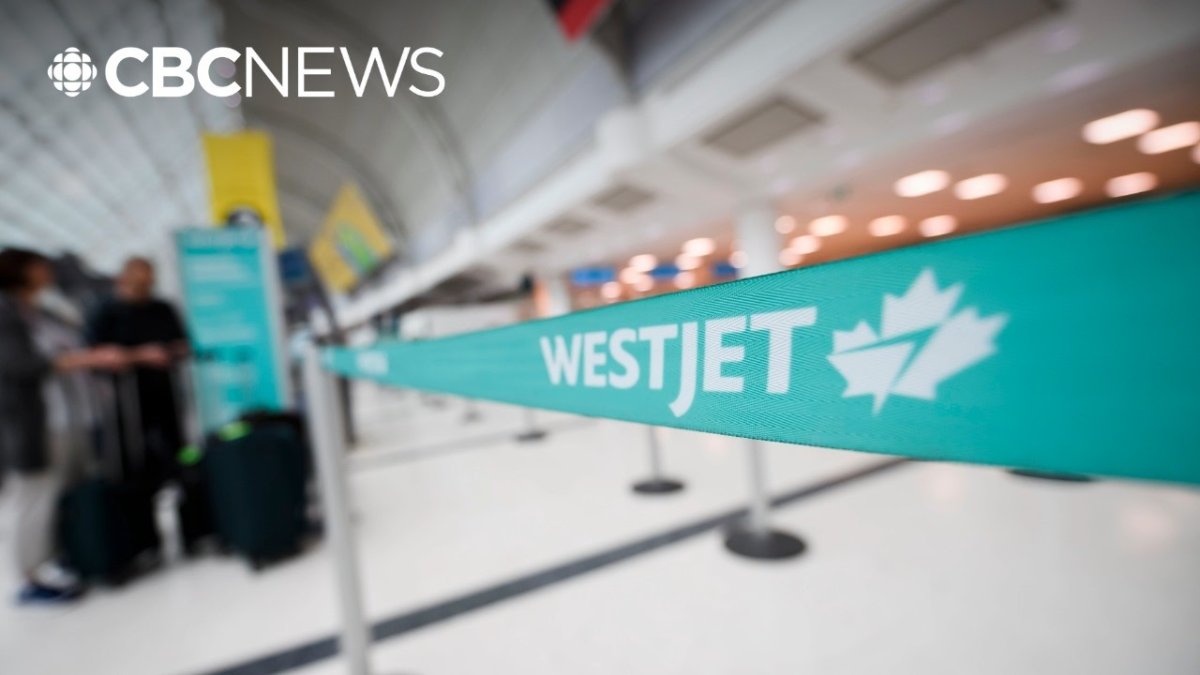
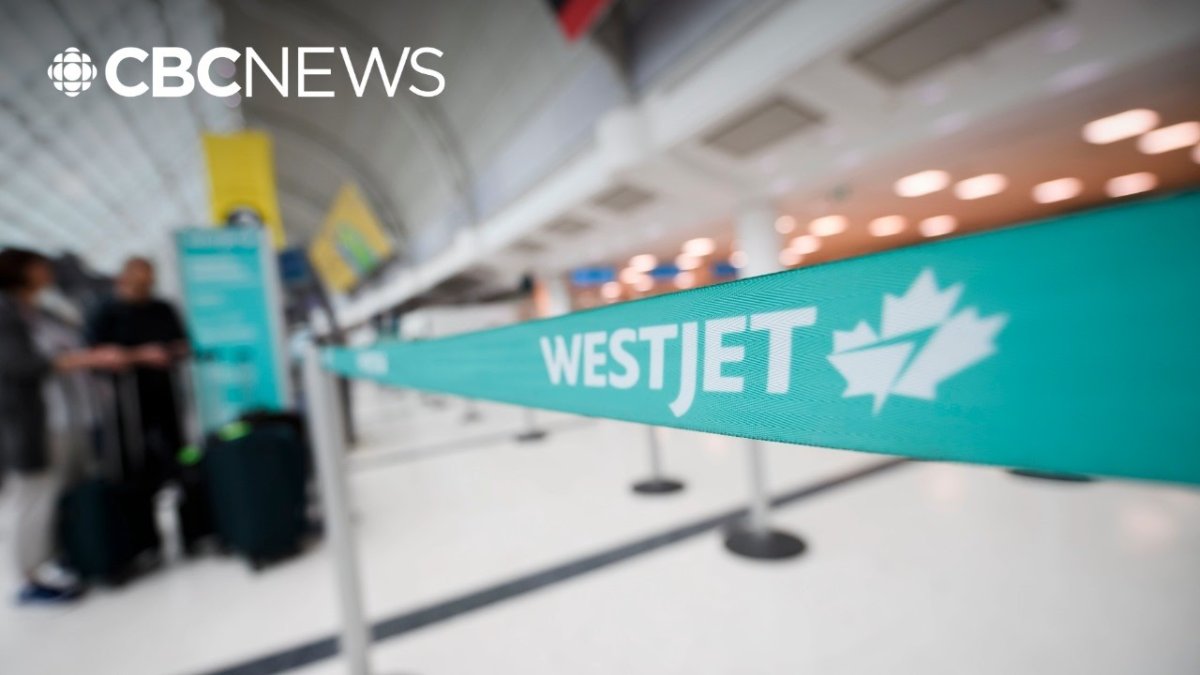
With the August long weekend fast approaching, the prospect of a strike by WestJet flight attendants threatens to disrupt travel for more than a million Canadians and cast a shadow over communities from coast to coast. As detailed in a recent CBC News report, CUPE Local 8125 has secured a near-unanimous strike mandate from its 4,400 members, setting the stage for the most significant labour disruption in Canadian aviation since the Air Canada walkout last summer.
With the August long weekend fast approaching, the prospect of a strike by WestJet flight attendants threatens to disrupt travel for more than a million Canadians and cast a shadow over communities from coast to coast. As detailed in a recent CBC News report, CUPE Local 8125 has secured a near-unanimous strike mandate from its 4,400 members, setting the stage for the most significant labour disruption in Canadian aviation since the Air Canada walkout last summer.
WestJet Strike Threat Looms Over August Long Weekend Travel
Calgary, Alberta — CUPE Local 8125 announced on July 15 that 99.4 per cent of voting members had authorized strike action, with 97.3 per cent participation in the ballot. The union can legally commence job action on August 2 after providing 72 hours notice under the Canada Labour Code, following the conclusion of the federal cooling-off period. WestJet mainline operations would face effective grounding, though WestJet Encore Q400 turboprop flights and code-share partner services remain unaffected.
The Credit Hour Dispute at the Heart of Negotiations
The core issue dividing the parties is WestJet's credit hour system, which compensates flight attendants solely for block hours defined as the time an aircraft is airborne between departure and arrival. Duties such as pre-flight boarding, passenger assistance during delays, emergency evacuations, and post-arrival aircraft checks receive no direct pay under this formula. Union representatives report that a typical duty day spanning ten to twelve hours yields credit for only four to six block hours, and that flight attendants therefore perform approximately 35 hours of unpaid work each month.
When these unpaid periods are factored into effective hourly rates, some junior attendants fall below the federal minimum wage of $17.30 in certain provinces during low-block months. CUPE Local 8125 president Alia Hussain has stated that many members effectively earn less than $20 per hour once all duty time is counted, making WestJet among the lowest-paying carriers in Canada for comparable roles. "We are the second-largest carrier in Canada, and we are among some of the lowest paid, and that has to change," Hussain said following the strike vote.
WestJet chief executive Alexis von Hoensbroech has acknowledged that the existing contract, negotiated during the depths of the pandemic in March 2021 and covering the period through the end of 2025, requires updating. "It was done in the middle of the pandemic, so there is a lot of catch-up to be done because they fell behind inflation," von Hoensbroech told reporters. However, the airline maintains that the credit hour system remains standard practice across North American carriers, citing similar models at Delta Air Lines and United Airlines. In contrast, Air Canada's flight attendant agreement incorporates a duty-day guarantee that credits a minimum number of hours for each scheduled shift regardless of actual airborne time.
Aviation management lecturer John Gradek of McGill University notes that the dispute mirrors a broader tension in Canadian aviation, where pandemic-era contracts locked in modest wage increases while subsequent inflation peaked above 8 per cent in 2022 and travel demand rebounded sharply. "It is not as if WestJet did not know this was coming," Gradek said, drawing parallels to the Air Canada strike last summer.
What a Strike Would Mean for Canadian Travellers
WestJet operates to 46 Canadian airports including major hubs in Toronto, Calgary, Vancouver, and Montreal, as well as smaller centres such as Kelowna, Saskatoon, and St. John's. The airline accounts for roughly 28 per cent of domestic air traffic, meaning any prolonged stoppage would ripple through regional economies reliant on reliable air links. Statistics Canada data indicate that more than 1.2 million Canadians typically fly domestically during the first weekend of August, with the Civic Holiday falling on August 3 in most provinces.
Families heading to cottage country, British Columbia's interior, or Atlantic Canada beaches face the greatest disruption. Unlike the 2025 Air Canada strike, which primarily affected transatlantic and international long-haul routes, a WestJet stoppage would immediately curtail connectivity to dozens of regional communities that depend on the carrier's hub-and-spoke operations. Business travellers connecting through Calgary and Toronto Pearson would encounter cascading delays, and tourism operators in Banff, Whistler, and the Maritimes have already reported concerns about last-minute cancellations affecting hotel occupancy and guided-tour revenues.
WestJet has introduced a one-time free change or cancellation policy for bookings between July 30 and August 4, applicable to mainline flights only. Passengers holding tickets during that window have been offered flexibility, yet many report difficulty securing alternative seats on competing airlines already operating near capacity. Contingency options remain limited: VIA Rail can absorb only a fraction of the displaced volume on its Toronto-Montreal and Toronto-Vancouver corridors, while rental car fleets in major cities are heavily booked. Porter Airlines and Flair have added limited extra sections, but neither possesses the fleet scale to replace WestJet's narrow-body capacity on high-frequency routes such as Calgary-Vancouver or Toronto-Edmonton.
Labour Relations and Federal Policy Context
Under the Canada Labour Code, airline disputes fall under federal jurisdiction, requiring the Minister of Labour to oversee cooling-off periods and the possible appointment of a conciliation board. The recent conclusion of the statutory cooling-off interval now shifts the onus to the parties to either reach a settlement or serve 72-hour strike or lockout notices. The federal labour minister has signalled reluctance to intervene early, preferring mediated outcomes over legislative action. Successive federal governments have invoked back-to-work legislation sparingly in aviation, most notably during the 2012 Air Canada pilots' dispute.
Pandemic-era contracts ratified in 2021 locked in modest wage increases when travel demand had collapsed. The subsequent recovery, fuelled by federal COVID-19 benefit programs and pent-up consumer demand, caught many airlines off guard. Inflation rising above 8 per cent in 2022 compounded the problem, creating structural gaps between compensation and the rising cost of living. Similar patterns have fuelled labour actions across the sector in 2025 and 2026, including the three-day Air Canada flight attendant strike and ongoing negotiations at several regional carriers. The WestJet dispute therefore reflects broader tensions in Canadian industrial relations, where workers in federally regulated industries are seeking to restore real wages eroded by the post-pandemic inflation surge.
What Happens Next and the Likelihood of a Deal
Once CUPE serves formal 72-hour notice, WestJet would begin an orderly wind-down of mainline operations, typically grounding aircraft at their overnight stations to minimise stranded passengers. Historical patterns in Canadian aviation offer some cause for cautious optimism: roughly 70 per cent of threatened strikes since 2010 have been averted by last-minute agreements reached within the final 48 hours. Mediation sessions facilitated by the Federal Mediation and Conciliation Service continue, though both sides describe the remaining gaps on credit-hour reform as substantial.
If a strike does commence, WestJet would suspend all mainline flights while Encore Q400 operations continue. Rebooking stranded passengers would rely on interline agreements with other carriers, likely resulting in multi-day backlogs across the system. McGill analyst John Gradek assesses the probability of a prolonged stoppage at approximately 25 per cent, citing the airline's desire to protect its lucrative summer schedule and the union's awareness of potential public backlash during peak holiday travel.
Both CUPE Local 8125 and WestJet management have indicated willingness to continue bargaining before the August 2 deadline, though no new negotiating sessions have been publicly confirmed. Resolution before the Civic Holiday weekend would prevent the operational shutdown that would otherwise halt WestJet mainline service across the country and disrupt the travel plans of hundreds of thousands of Canadians.
By Alex Thompson, Staff Writer
---WORD COUNT--- 1260This article was produced with AI-assisted research and editorial support. Reporting is based on sources cited in the article.
What's Your Reaction?
 Like
0
Like
0
 Dislike
0
Dislike
0
 Love
0
Love
0
 Funny
0
Funny
0
 Wow
0
Wow
0
 Sad
0
Sad
0
 Angry
0
Angry
0

Canada Correspondent at Global1.News. Based in Toronto, covering Canadian politics, energy, trade, and US-Canada relations. Provides the Canadian perspective on North American and global affairs.














Comments (0)