
France Wildfire Stabilises After 220,000 Evacuated in Gironde
The fire, which began on July 22, 2026, has already scorched roughly 42,000 hectares and prompted the evacuation of 220,000 residents, marking one of the largest such operations in modern French history. With the front now less than 15 kilometres from Bordeaux, authorities are maintaining a cautious stance even as containment lines hold. Scale of the Evacuation and Immediate Response More than 800 firefighters supported by 150 vehicles and aerial resources have been deploy...
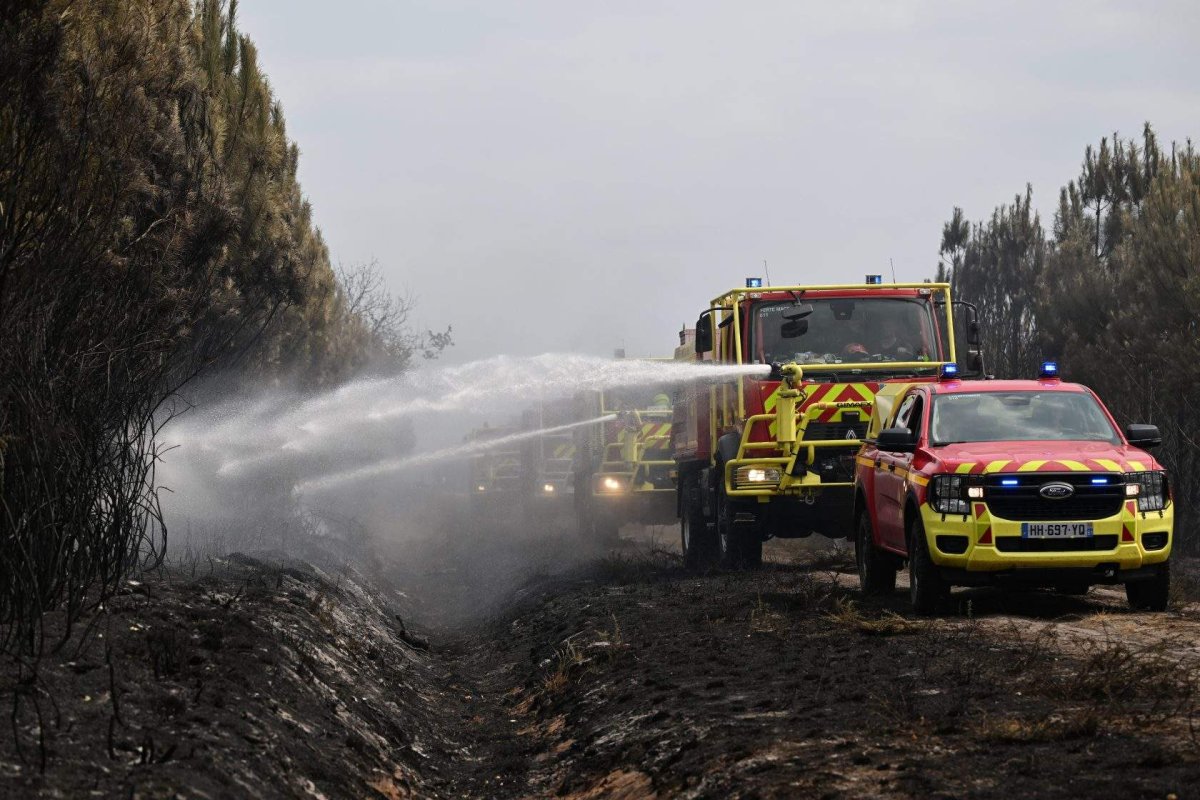
France Wildfire Stabilises After 220,000 Evacuated, Officials Warn Battle Not Over
Bordeaux, France – July 27, 2026 — The wildfire raging through the Gironde department of southwestern France has stopped expanding, according to the interior minister, though officials continue to stress that the blaze remains far from extinguished. The fire, which began on July 22, 2026, has already scorched roughly 42,000 hectares and prompted the evacuation of 220,000 residents, marking one of the largest such operations in modern French history. With the front now less than 15 kilometres from Bordeaux, authorities are maintaining a cautious stance even as containment lines hold.
Scale of the Evacuation and Immediate Response
More than 800 firefighters supported by 150 vehicles and aerial resources have been deployed across the affected zone. Shelters have been established in public facilities, including an exhibition centre in Bordeaux itself, where displaced families are receiving temporary housing and basic services. The interior minister noted on Monday that while the fire perimeter is no longer advancing, hot spots persist and wind shifts could reignite spread at any moment.
Parallel fires in Spain have also forced thousands from their homes, underscoring the regional nature of the crisis. Temperatures exceeding 40 degrees Celsius across southern Europe have dried vegetation to critical levels, creating conditions where even small ignitions can escalate rapidly.
The evacuation unfolded in stages, beginning with precautionary measures in outlying villages before escalating to a full-scale operation affecting suburbs such as Pessac, Gradignan, Mérignac, and Talence. French civil security forces coordinated the movement of residents through designated routes, directing many toward temporary shelters established at the Bordeaux exhibition centre. The logistics involved rapid deployment of buses and traffic management to handle the volume, with Sécurité Civile overseeing the process amid ongoing fire activity.
Mutual aid arrived swiftly through the EU Civil Protection Mechanism, with crews and equipment from neighbouring countries supplementing the 800 firefighters and 150 vehicles already on the ground. Interior Minister warnings highlighted persistent hot spots, while parallel fires in Spain compounded regional strain under 40C temperatures. This response demonstrated the challenges of mobilising resources across multiple jurisdictions during peak summer conditions.
Comparisons to Canadian events underscore the scale, as the 220,000 evacuees exceed the 88,000 displaced during the 2016 Fort McMurray wildfire and the 20,000 from Yellowknife in 2024. Even the 2025 Thompson evacuation involved far fewer residents. The French operation stands as one of the largest climate-related displacements in a developed Western nation outside hurricane zones, illustrating vulnerabilities in densely populated Mediterranean interfaces.
Threat to the Bordeaux Wine Region
The Gironde department encompasses the world-renowned Bordeaux wine appellation, where vineyards represent both cultural heritage and significant economic output. Although direct flame damage to vines has so far been limited, smoke exposure and disrupted harvest logistics threaten this year's vintage. Local producers are monitoring air quality closely, as taint from wildfire particulates can render grapes unsuitable for premium bottling.
Regional authorities in the Gironde have begun assessing potential compensation mechanisms, drawing on precedents from earlier agricultural losses tied to extreme weather. The economic ripple effects extend beyond immediate growers to tourism operators and seasonal workers who rely on the summer harvest period.
Bordeaux wine exports generate approximately €4-5 billion annually as of 2025-26, making smoke exposure a direct threat to both immediate harvest logistics and long-term market reputation. Appellations including Pessac-Léognan, Graves, Sauternes, and Entre-Deux-Mers lie closest to the fire front, where ash and volatile compounds could taint grapes during critical ripening periods. Tourism operators in these zones also face cancellations as visitors avoid areas under evacuation orders.
Cumulative stresses from prior events have heightened regional vulnerability. The 2022 frost damage, followed by 2023 hailstorms and the 2025 heatwaves, left vines with reduced resilience, complicating recovery from additional smoke incursions. Compensation mechanisms through agricultural programs aim to offset losses, yet repeated disruptions strain producer finances and insurance frameworks.
European Heatwave and Climate Connections
European climate scientists have linked the intensifying frequency and severity of such fires to broader patterns of warming and drying. Prolonged heatwaves reduce soil moisture and extend the fire season, leaving landscapes more combustible for longer periods. While individual events cannot be attributed solely to climate change, the statistical trend shows increased burned area across the Mediterranean basin over recent decades.
France is not alone in confronting these conditions. Neighbouring countries have activated mutual assistance protocols, sharing aerial resources and personnel. The current episode follows several summers of elevated fire activity that have prompted revisions to national emergency planning frameworks.
July 2026 temperatures reached 44-45C in Andalusia and 40-42C across southern France, shattering local records and intensifying fire behaviour. The European Forest Fire Information System (EFFIS) issued elevated danger ratings that guided resource allocation, while Copernicus climate monitoring data indicated 2026 was tracking among the hottest years globally. Reduced soil moisture from prolonged heatwaves amplified ignition risks across Mediterranean landscapes.
Canada's Concurrent Wildfire Season
Canadian observers are watching developments in Europe with particular interest, given the country's own active fire season. By mid-July 2026, nearly 850 fires were burning across Canadian jurisdictions, according to tracking by CBC News. British Columbia has faced multiple lightning-triggered ignitions, while smoke from Ontario blazes has drifted eastward, affecting air quality in Quebec and the Maritime provinces.
The Canadian Interagency Forest Fire Centre reports that overall activity has returned closer to the 25-year average after an unusually slow spring start. Provincial agencies in Alberta and Saskatchewan have also mobilised crews, reflecting the decentralised nature of Canadian wildfire management under federal-provincial arrangements.
Canada's experience with large-scale evacuations, particularly in British Columbia and the Northwest Territories, offers relevant context. Organised inter-agency coordination and community alert systems have evolved considerably since major events earlier in the decade. Indigenous communities have contributed traditional knowledge on landscape management, including controlled burns that reduce fuel loads in forested areas.
The Canadian Wildland Fire Information System integrates satellite detection from RADARSAT and NASA MODIS instruments, supplemented by AI-based smoke detection pilots in Alberta. The Canadian Interagency Forest Fire Centre coordinates resource sharing among provinces, pooling crews and equipment during peak demand periods. Prescribed burning programs in British Columbia and Alberta have expanded to incorporate Indigenous knowledge alongside cultural practices.
Governance differences remain notable: France's centralised Sécurité Civile under the Interior Ministry contrasts with Canada's decentralised provincial and territorial model coordinated through CIFFC. This structure allows flexible local responses but requires robust inter-agency protocols to match the speed of centralised European operations during large-scale events.
Outlook and Long-Term Preparedness
While the Gironde fire is no longer growing, officials caution that full containment may require weeks of sustained effort. Demobilisation will proceed gradually to guard against flare-ups. Longer-term discussions are already underway regarding land-use planning, vegetation management, and infrastructure resilience in fire-prone zones.
For Canadians, the European situation serves as a reminder that wildfire risk is no longer confined to traditional high-hazard regions. Cross-border learning and continued investment in both suppression capacity and climate adaptation measures remain priorities for federal and provincial governments alike.
Tags: France wildfire, Gironde fire, Bordeaux evacuation, European heatwave, Canadian wildfires, climate change, fire management
By Alex Thompson, Staff Writer
This article was produced with AI-assisted research and editorial support. Reporting is based on sources cited in the article.
What's Your Reaction?
 Like
0
Like
0
 Dislike
0
Dislike
0
 Love
0
Love
0
 Funny
0
Funny
0
 Wow
0
Wow
0
 Sad
0
Sad
0
 Angry
0
Angry
0

Canada Correspondent at Global1.News. Based in Toronto, covering Canadian politics, energy, trade, and US-Canada relations. Provides the Canadian perspective on North American and global affairs.











Comments (0)