
Burnham Hosts Zelensky, Shares Stone Cloak EW With Ukraine
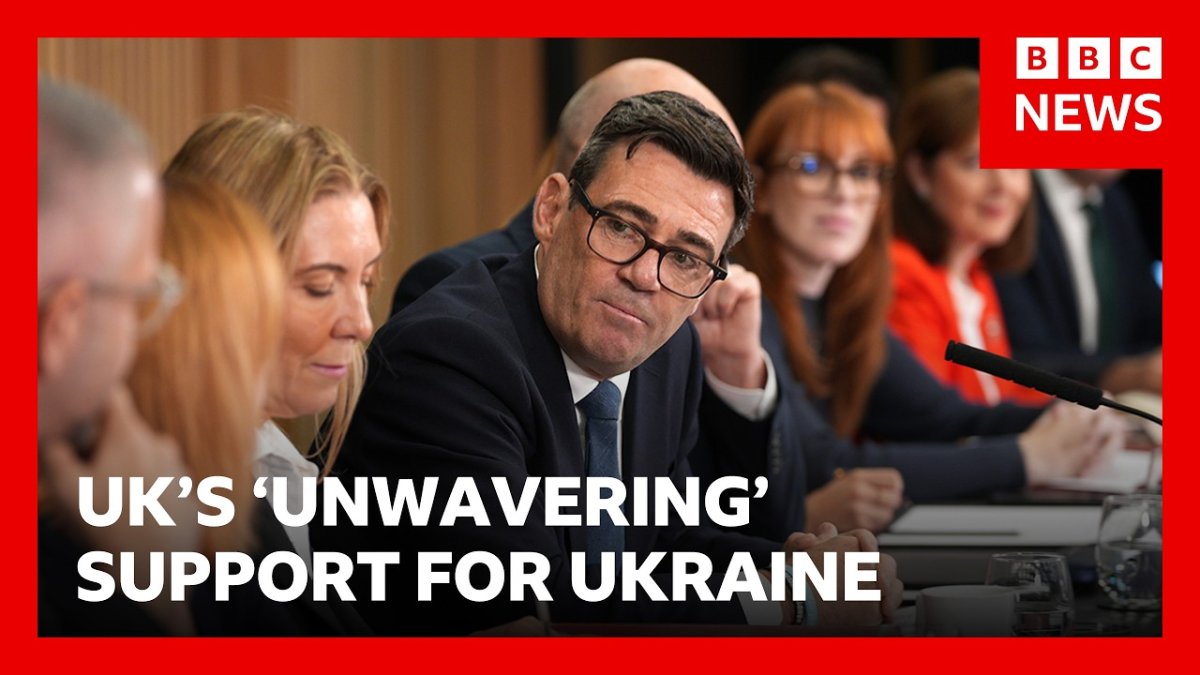
In a recent BBC News report, new UK Prime Minister Andy Burnham pledged continued "unwavering" support for Ukraine ahead of hosting President Volodymyr Zelensky in London. The visit — Burnham's first with a foreign leader since taking office a week ago — signals a deliberate strategic signal to both Moscow and Kyiv that Britain's commitment to Ukraine's defence will not waver under new leadership. Burnham Hosts Zelensky in First Foreign Leader Visit, Shares Stone Cloak Electr
In a recent BBC News report, new UK Prime Minister Andy Burnham pledged continued "unwavering" support for Ukraine ahead of hosting President Volodymyr Zelensky in London. The visit — Burnham's first with a foreign leader since taking office a week ago — signals a deliberate strategic signal to both Moscow and Kyiv that Britain's commitment to Ukraine's defence will not waver under new leadership.
Burnham Hosts Zelensky in First Foreign Leader Visit, Shares Stone Cloak Electronic Warfare IP With Ukraine
London — 27 July 2026 — UK Prime Minister Andy Burnham has pledged to continue Britain's "unwavering" support for Ukraine as he prepares to host President Volodymyr Zelensky for talks in London on Monday. The visit — the Prime Minister's first with a foreign leader since taking office — will feature the announcement that Britain is transferring the intellectual property behind its new "Stone Cloak" electronic warfare system to Ukraine, enabling Kyiv to manufacture the technology at scale on home soil.
Stone Cloak: A Battlefield-Proven Technology Goes to Ukraine
At the heart of Monday's announcement is Stone Cloak, a tablet-sized electronic jammer designed to be fitted to long-range surveillance and strike drones. According to Downing Street, the system interferes with Russian air defence radars, making drones significantly harder to detect and intercept during operations over contested territory. Thousands of Stone Cloak devices have already been supplied to Ukrainian forces under previous British military aid packages and, according to British defence officials, have been tested extensively in combat conditions.Monday's announcement marks a significant escalation in the UK's approach. Instead of simply shipping finished units, Britain will transfer the full intellectual property rights, allowing Ukrainian defence manufacturers to produce Stone Cloak domestically. Downing Street said this shift would allow Ukraine to produce the systems at a faster rate to meet operational demand while reducing dependence on overseas deliveries. The technology was developed under the UK-Ukraine 100-year partnership signed in January 2025, a framework that has governed defence cooperation between the two nations.
Zelensky's First Foreign Host: A Message to Moscow
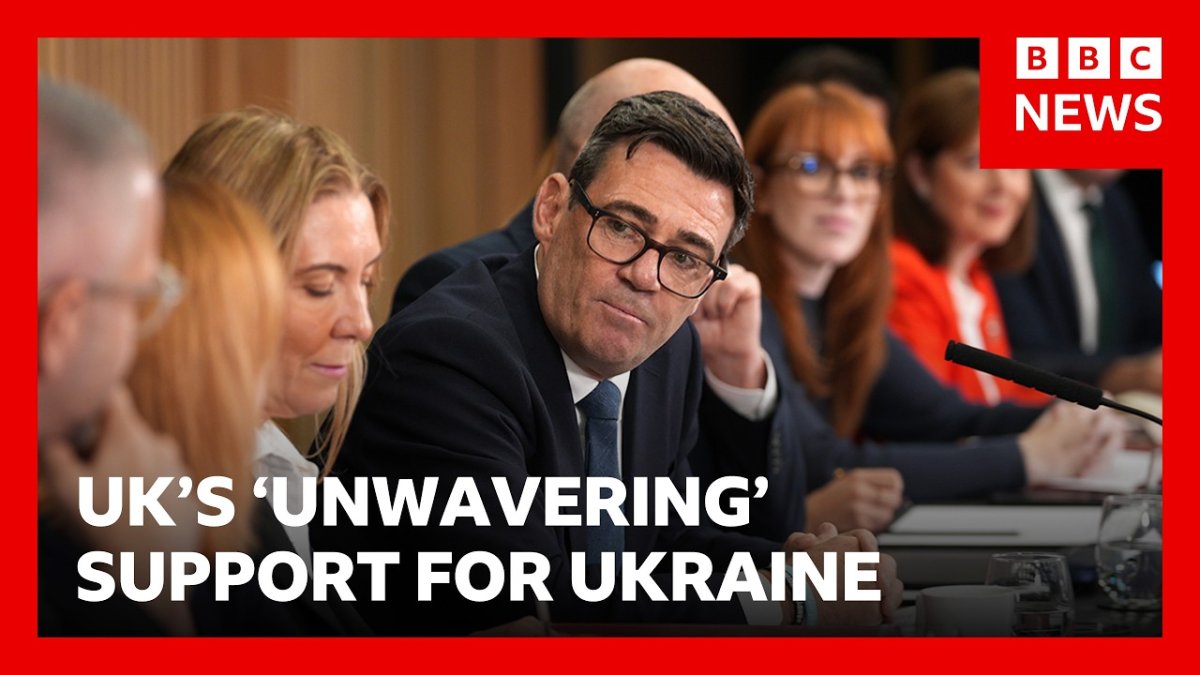
Burnham took office on July 20, 2026, succeeding Sir Keir Starmer as Labour leader and Prime Minister. In one of his first calls after entering Downing Street, Burnham spoke to Zelensky and invited him to visit the UK "at the earliest opportunity." Zelensky accepted, writing on X that he "truly appreciates that the support for Ukraine and our people will remain steadfast."
The choice of Zelensky as Burnham's first international visitor carries diplomatic weight. It signals to the Kremlin that Britain's policy toward Ukraine — which has included £25 billion in total support since Russia's full-scale invasion in February 2022 — remains unchanged despite the change in leadership at Number 10. It also reassures Kyiv that the UK-Ukraine relationship is institutional, not dependent on any single prime minister.
Project Brakestop and the Future of UK-Ukraine Defence Cooperation
British officials said that continued operational use of Stone Cloak inside Ukraine would provide valuable battlefield data to support the development of Britain's future long-range strike capabilities. Downing Street confirmed that lessons from the system's frontline deployment would help inform Project Brakestop, the Government's programme to develop low-cost cruise missiles capable of striking targets more than 500 kilometres away.
The operational data flowing back from Ukraine represents a unique advantage for British defence planners. No laboratory simulation or training exercise can replicate the conditions of live combat against Russian electronic warfare systems. The arrangement effectively turns Ukraine's frontline into a real-world testing ground for British defence technology, benefiting both nations simultaneously.
Exercise Sea Breeze and Ukrainian Naval Training
During Monday's visit, Burnham and Zelensky will visit a Royal Navy base and meet more than 200 Ukrainian military personnel who have spent the past three weeks training in Britain. The Ukrainian sailors and marines have been participating in Exercise Sea Breeze, a multinational maritime security and mine-countermeasure exercise involving 15 allied nations. The training programme is designed to strengthen Ukraine's warfighting capabilities in the Black Sea, improve interoperability with NATO navies, and prepare Ukrainian forces for future counter-mine operations along its coastline.
The training underscores a broader shift in Ukraine's defence posture. While much of the international focus has been on ground combat and drone warfare, Kyiv has steadily been rebuilding its naval capabilities with allied assistance. British-led training programmes have been particularly significant, with the UK committing to help Ukraine develop a modern navy capable of challenging Russia's Black Sea Fleet.
The £25 Billion Backing: Britain's Unwavering Commitment
Since Russia's full-scale invasion began in February 2022, the UK has committed approximately £25 billion in support for Ukraine, including £16 billion in direct military assistance and £5.6 billion in humanitarian and economic aid. The funding has covered everything from long-range missile systems and armoured vehicles to drone technology and specialised training programmes for Ukrainian personnel. Burnham's predecessor, Sir Keir Starmer, visited Kyiv on his final full day as Labour leader, announcing an additional £255 million in funding and receiving Ukraine's Order of Freedom — a sign of the close personal relationship that had developed between the two leaders.
Burnham has pledged to maintain that momentum. In his first major interview since becoming Prime Minister, he told the BBC's Laura Kuenssberg: "My support for Ukraine is unwavering — it is 100%. And I will do what, in Ukraine, people think is the right thing that they need." He also paid tribute to Starmer's "huge personal support" for Zelensky, adding: "He will get exactly the same from me."
Analysis — Continuity and Change in UK Foreign Policy
Burnham's rapid invitation to Zelensky — within hours of taking office — sends a clear signal that UK foreign policy toward the Russia-Ukraine war will follow the trajectory set by his predecessor. Unlike the political uncertainty that sometimes accompanies leadership transitions in other Western capitals, the UK's approach to Ukraine has remained remarkably consistent across two prime ministers and counting. This institutional continuity is a strategic asset for Kyiv, which has watched nervously as political dynamics shift in Washington and other allied capitals.
The Stone Cloak technology transfer represents a pragmatic evolution of that policy. By enabling domestic Ukrainian production, Britain reduces its own logistical burden, accelerates the fielding of the system, and strengthens Ukraine's long-term defence industrial base — all while gathering invaluable operational data for its own future weapons programmes. It is a model of defence cooperation that other allies may study closely.
For Moscow, the message is unmistakable: the change of leadership at Number 10 has not — and will not — change the fundamental reality that Britain remains one of Ukraine's most committed military backers. With Zelensky next expected to travel to Washington for talks with US President Donald Trump, and with European allies grappling with their own domestic challenges, the Burnham-Zelensky meeting may prove to be one of the more consequential diplomatic encounters of the year.
Russian Official Reactions and Strategic Concerns
Russian officials have consistently criticised Western transfers of advanced military technology to Ukraine, viewing them as direct escalations that prolong the conflict. Kremlin spokespeople have previously described similar British initiatives as attempts to turn Ukraine into a forward base for NATO-standard equipment. In this instance, the transfer of Stone Cloak intellectual property is likely to be framed in Moscow as further evidence that London seeks to embed Ukrainian forces with capabilities that directly counter Russian air-defence networks. Analysts in Russian state media have argued that such moves increase the risk of broader technological proliferation beyond the current theatre.
Perspectives from EU Allies on Technology Sharing
European partners have offered measured support for the UK-Ukraine arrangement while emphasising the need for coordinated industrial policy across the continent. Officials in Berlin and Paris have noted that domestic production in Ukraine could ease pressure on strained European supply chains, yet they have also called for safeguards to prevent unauthorised re-export of sensitive components. The European Union’s defence commissioner has highlighted ongoing work to align member-state contributions with Ukrainian requirements, suggesting that Britain’s bilateral approach could serve as a template provided it remains compatible with broader NATO standards.
Implications for Ukraine’s Domestic Defence Industry
Enabling Ukrainian factories to build Stone Cloak systems locally is expected to create skilled jobs and foster a more resilient supply chain inside the country. Ukrainian defence enterprises have already begun adapting Western designs for mass production, and the new agreement accelerates that process. Government sources in Kyiv have indicated that the technology transfer will be accompanied by training programmes for local engineers, ensuring that maintenance and incremental upgrades can be performed without reliance on overseas specialists. This development aligns with Ukraine’s stated goal of achieving greater strategic autonomy in critical defence sectors over the coming decade.
Broader NATO Interoperability and Future Exercises
The integration of Stone Cloak into Ukrainian drone fleets is anticipated to improve real-time data sharing with NATO partners during joint operations. Exercise Sea Breeze participants from Poland, Romania and Turkey have already expressed interest in observing how the system performs in Black Sea conditions. British defence planners view the arrangement as a practical demonstration of how allied technology can be adapted at the tactical level while feeding lessons back into collective defence planning. Future iterations of multinational drills are expected to incorporate Stone Cloak-equipped platforms to test interoperability under contested electromagnetic conditions.
By Irina Volkov, Staff Writer
This article was produced with AI-assisted research and editorial support. Reporting is based on sources cited in the article.
What's Your Reaction?
 Like
0
Like
0
 Dislike
0
Dislike
0
 Love
0
Love
0
 Funny
0
Funny
0
 Wow
0
Wow
0
 Sad
0
Sad
0
 Angry
0
Angry
0

Russia/Eastern Europe Correspondent at Global1.News. Covering Russian politics, energy, security, and the shifting dynamics of the post-Soviet space. Provides clear-eyed analysis on one of the world's most opaque regions.













Comments (0)