
Cottage cheese crisis expands to white cheese: Tnuva's supply chain crunch deepens
In a nation where cottage cheese once sparked a consumer revolt, the quiet failure of German automation software at Tnuva’s Alon Tavor warehouse has turned white cheese into the latest casualty of Israel’s supply-chain fragility.
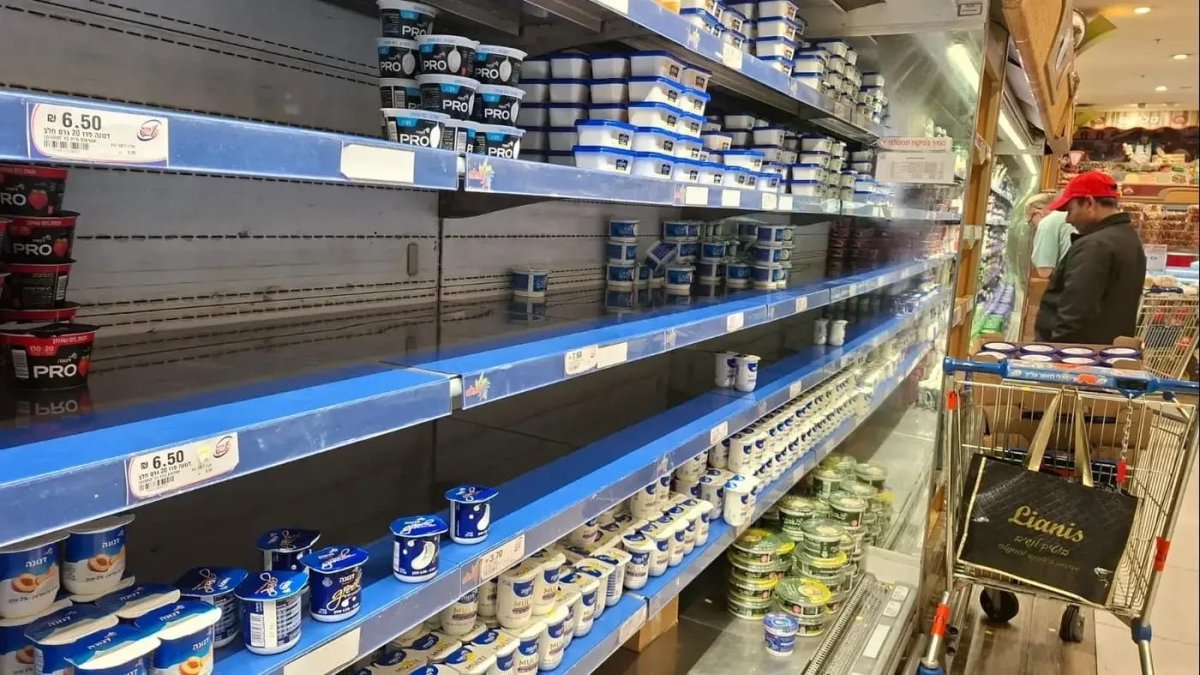
In a nation where cottage cheese once sparked a consumer revolt, the quiet failure of German automation software at Tnuva’s Alon Tavor warehouse has turned white cheese into the latest casualty of Israel’s supply-chain fragility. A computer glitch that no local engineer can fully override has exposed the irony of a high-tech economy unable to guarantee the most basic dairy staples, raising urgent questions about food security at a time when regional tensions already complicate every link in the logistics chain.
The disruption underscores how quickly technological dependence can translate into everyday hardship for Israeli households, particularly as hoarding and price spikes ripple outward from the northern production hub.
The Expanding Dairy Shortage Across Israeli Supermarkets
In recent months, shelves in supermarkets from Tel Aviv to the Jezreel Valley have grown increasingly bare of staple dairy products. What began as a localized issue with cottage cheese at Tnuva has now spread to white cheese, leaving consumers facing empty displays and higher prices. Reports from chains including Shufersal indicate that shoppers are finding it difficult to locate even basic quantities of these everyday items.
The shortage has prompted widespread hoarding, with families stocking up on whatever dairy remains available. This pattern has intensified pressure on supply lines already strained by the ongoing security situation.
Root Cause: Malfunction at the Alon Tavor Automated Warehouse
The Alon Tavor automated warehouse forms the central distribution hub for Tnuva's finished dairy products in northern Israel. The KION/Dematic system manages high-speed conveyor routing, pallet identification through barcode and RFID scanning, and automated storage-retrieval cranes that move goods between production lines and outbound loading bays. When the central control software failed, the entire sequence of product movement halted because the warehouse operates with minimal human intervention by design, leaving crates of cottage cheese stranded on racks that manual forklifts cannot efficiently access at scale.
Tnuva engineers have worked continuously since the malfunction began affecting shipments, attempting restarts of the supervisory control software and checks on the programmable logic controllers that coordinate the cranes and conveyors. These efforts have been limited by the proprietary nature of the German-supplied code and the integrated safety interlocks that prevent partial manual overrides. The Alon Tavor industrial zone, chosen for its proximity to raw milk sources in the Jezreel Valley, now concentrates the bottleneck because alternative manual packing lines lack the throughput capacity to compensate for the automated system's daily volume.
The failure illustrates how tightly coupled production and logistics have become at the facility. Without the precise tracking data the system provides, even available staff cannot reliably locate specific batches or verify cold-chain compliance before dispatch, extending the disruption beyond a simple mechanical issue into a full supply-chain stoppage.
Foreign Technician Access Blocked by Security Concerns
Efforts to resolve the warehouse issue have been hampered by the refusal of German technicians from KION/Dematic to travel to Israel. Remote assistance via Zoom has been attempted, but it has proven insufficient for addressing the complex hardware and software integration problems on site. This situation highlights the challenges Israeli manufacturers face when relying on overseas specialists during periods of heightened regional tension.
Without physical access, troubleshooting has stalled, prolonging the disruption at the Alon Tavor facility and affecting downstream supply to markets nationwide.
Consumer Impact: Price Spikes and Empty Shelves
Supermarket operators including Shufersal, Rami Levy, and Yochananof have reported sustained stockouts of cottage cheese and accelerating depletion of white cheese inventories, particularly in central and northern branches. The pattern began with cottage cheese displays emptying first, prompting shoppers to shift purchases to white cheese and thereby accelerating shortages in that category as well. In peripheral areas near Afula and the Jezreel Valley, restocking intervals have lengthened because the Alon Tavor facility cannot release finished goods at normal rates.
Price data tracked by the chains shows cottage cheese retail prices rising sharply from pre-disruption levels, with the reported 60 percent increase reflecting both reduced supply and the added costs of sourcing limited alternative stock. Consumers in Tel Aviv and Haifa describe visiting multiple stores in a single trip, while social media posts from Jerusalem residents highlight similar frustration over repeated empty shelves. This behavior aligns with documented patterns during periods of regional uncertainty, where households increase purchases to buffer against perceived future scarcity.
The geographic concentration of shortages near the production site compounds the effect, as transport from more distant facilities cannot fully offset the volume loss. Hoarding creates a self-reinforcing cycle: visible gaps on shelves prompt larger purchases by those who reach the stores first, leaving later shoppers with nothing and increasing pressure on whatever limited deliveries arrive.
Tnuva's Response Through Production Adjustments
In an attempt to ease the pressure, Tnuva has ramped up output of larger 500-gram and 750-gram white cheese containers. Company teams continue to coordinate with German counterparts remotely while local engineers focus on the warehouse systems. These steps aim to redirect available capacity toward products that can still reach stores despite the automation failure.
Despite these measures, the scale of the disruption at Alon Tavor has limited the effectiveness of increased production alone.
Historical Context of the 2011 Cottage Cheese Boycott
Cottage cheese holds a unique place in Israeli households as an affordable staple, a fact underscored by the 2011 nationwide boycott that forced price adjustments across the dairy sector. That earlier episode demonstrated how quickly public sentiment can mobilize around dairy pricing and availability, setting a precedent for the current sensitivities.
Today's shortages echo those concerns, though the trigger this time stems from technical and logistical barriers rather than pricing disputes.
Israeli Manufacturing's Reliance on Foreign Machinery
Many Israeli food processors and high-tech manufacturers operate automated lines supplied by a small number of European and Asian vendors, creating concentrated points of vulnerability when on-site service is unavailable. Beyond Tnuva, similar dependencies appear in dairy competitors and in semiconductor and medical-device plants that rely on specialized European robotics for clean-room material handling. Local alternatives remain limited because the capital investment and software development required to replicate KION/Dematic-class systems exceed the scale of most domestic suppliers.
Building independent maintenance capacity would require sustained government and industry programs to train engineers on proprietary platforms, establish certified spare-parts inventories inside Israel, and negotiate broader remote-access protocols with foreign vendors. Such steps would reduce single-point failures but demand years of coordinated effort across multiple sectors. The current episode at Alon Tavor demonstrates how quickly an overseas support gap can halt domestic output even when local technical talent is available.
In the context of ongoing regional tensions, these dependencies intersect with supply-chain security concerns. Manufacturers must weigh the efficiency gains of advanced imported automation against the risk that travel restrictions or security classifications will delay repairs, a calculation that now extends to food production as well as defense-related industries.
Supply Chain Resilience Under Regional Strain
Previous conflicts, including the 2006 Lebanon War and the 2014 Gaza operations, produced temporary logistics slowdowns when northern roads and border crossings faced restrictions, yet those episodes primarily affected transport rather than internal automated systems. The present malfunction at Alon Tavor adds a new layer: an internal production choke point that cannot be bypassed by rerouting trucks. Government bodies such as the Ministry of Economy and the Israel Innovation Authority have historically supported emergency import permits and domestic R&D grants during crises, though their direct role in resolving proprietary foreign software issues remains constrained.
Countries facing comparable dependencies, such as South Korea and Singapore, have developed national programs that combine mandatory local training modules with vendor partnerships to maintain critical automation. Israel’s food sector could draw on similar models by expanding existing high-tech workforce initiatives to include warehouse and logistics systems, thereby shortening response times when foreign personnel cannot travel.
For an Israeli food manufacturer in the current environment, resilience means maintaining redundant manual fallback processes, diversifying equipment suppliers where feasible, and securing contractual guarantees for remote diagnostics with escalation paths that do not rely solely on physical visits. Industry discussions now focus on whether targeted public-private investment in local certification programs can prevent future single-facility disruptions from affecting nationwide dairy availability.
Looking Ahead for Israel's Tech-Enabled Food Sector
Industry observers note that greater investment in local training for advanced warehouse systems could reduce future exposure to such disruptions. Tnuva's current efforts to stabilize output while pursuing fixes offer one model, yet the episode prompts wider discussion about diversifying maintenance capabilities within the Israeli tech and manufacturing ecosystem.
As the shortage persists, attention remains on how quickly the Alon Tavor systems can be restored and what lessons will shape resilience strategies moving forward.
For Israeli consumers already navigating the uncertainties of the ongoing regional conflict, the white-cheese shortage adds a tangible layer of strain, forcing families to alter diets or pay premiums while supply lines remain vulnerable to both physical and digital choke points. The episode is prompting calls for the government to move beyond ad-hoc emergency measures and develop a comprehensive national strategy for food-supply resilience, including incentives for domestic automation alternatives and mandatory redundancy protocols in critical processing facilities.
The refusal of German technicians to enter the country also highlights Israel’s growing diplomatic and operational isolation, where even routine industrial support becomes entangled with security classifications and travel restrictions. This reality may accelerate efforts to build sovereign capabilities in industrial software and robotics, reducing reliance on foreign vendors whose personnel cannot reach Israeli sites during periods of heightened tension.
By Hannah Berg, Staff WriterThis article was produced with AI-assisted research and editorial support. Reporting is based on sources cited in the article.
What's Your Reaction?
 Like
0
Like
0
 Dislike
0
Dislike
0
 Love
0
Love
0
 Funny
0
Funny
0
 Wow
0
Wow
0
 Sad
0
Sad
0
 Angry
0
Angry
0

Israel Correspondent at Global1.News. Based in Tel Aviv, covering Israeli politics, security, technology, and society. Provides balanced, deeply-sourced reporting on one of the most closely-watched regions in the world.















Comments (0)