
Your Web Host Is Probably Owned by a Private Equity Firm — and That's Becoming Your Problem
Seven million websites run on Newfold Digital hosting brands like Bluehost and HostGator, owned by private equity. With debt pressure rising and cPanel prices up 55%, independent hosting providers have a clear window to capture customers leaving the big brands.
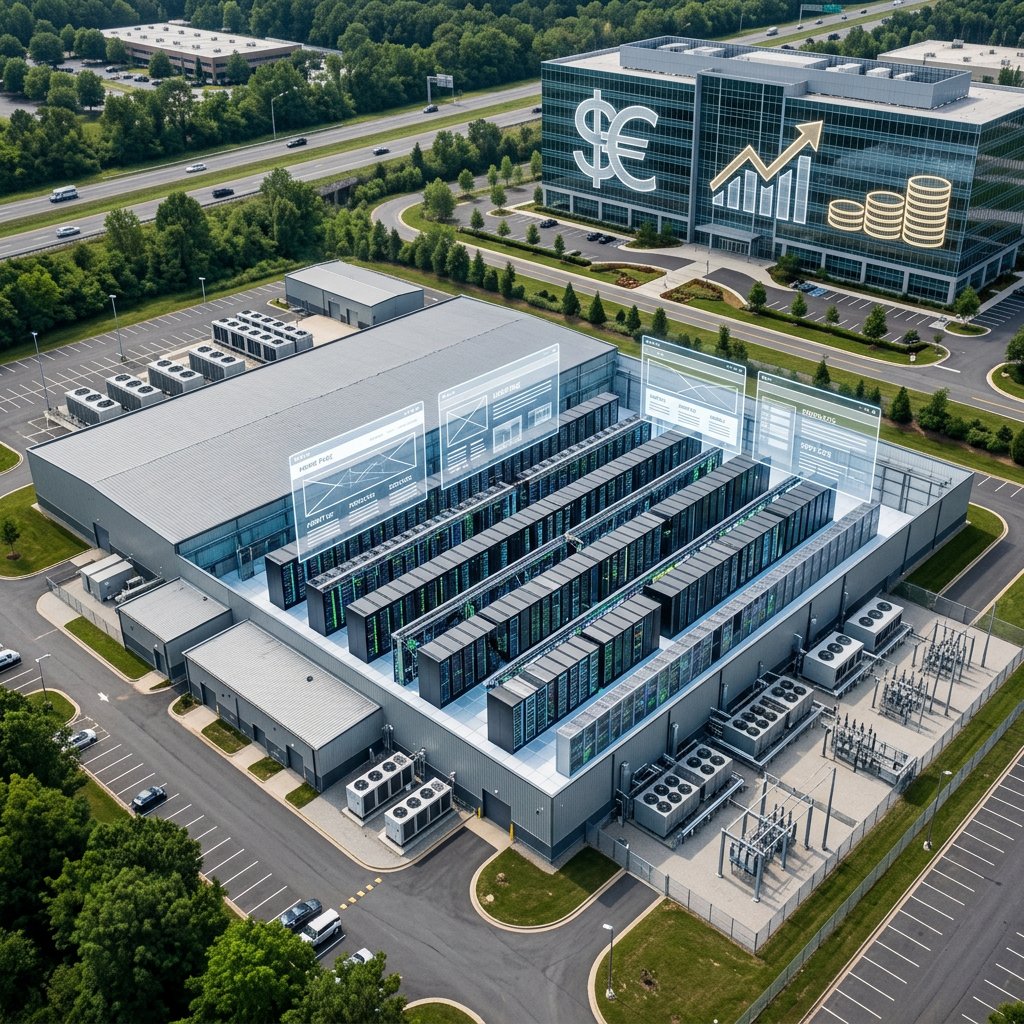
Your Web Host Is Probably Owned by a Private Equity Firm — and That's Becoming Your Problem
Let me tell you something I've been watching for the better part of a decade.
Every year, another hosting brand gets bought. Every year, the list of independent providers shrinks. And every year, a few million small business owners wake up to slower sites, worse support, and higher prices — without ever knowing that the company they trusted was sold to a private equity rollup years ago.
I'm not talking about a niche problem. We're talking about nearly seven million customers — actual businesses with actual websites — who are hosted under the umbrella of Newfold Digital, the private equity-backed conglomerate that owns Bluehost, HostGator, Network Solutions, iPage, FatCow, JustHost, HostMonster, and over a dozen other brands you've definitely heard of. And the story of how they got there, what's happening now, and what it means for every independent hosting provider who competes against them, is worth understanding.
The Newfold Story — How Private Equity Ate the Hosting Industry
Newfold Digital didn't grow by building better hosting. It grew by buying brands. The company traces its roots to 1997, but the real consolidation machine kicked into gear when Endurance International Group (EIG) started acquiring hosting companies faster than anyone could track. Bluehost. HostGator. iPage. FatCow. A Small Orange. JustHost. HostMonster. Each one was an independent company at some point, each one got bought, and each one eventually migrated onto shared infrastructure designed for cost efficiency — not performance.
In 2021, EIG merged with Web.com in a deal backed by private equity firms Clearlake Capital Group and Siris Capital Group, creating Newfold Digital. The combined entity today serves nearly 7 million customers globally and owns a brand portfolio that includes Bluehost, Crazy Domains, HostGator, Network Solutions, Yoast, YITH, and many others.
Seven million customers. That's roughly the population of Switzerland — all hosted by one company whose primary investor incentive is generating returns for its PE backers, not delivering the best possible hosting experience.
The Debt Problem Nobody's Talking About
Here's where it gets interesting. In 2025 and early 2026, Newfold Digital moved from being an infrastructure giant to a headline name in the corporate debt markets. What started as routine refinancing pressure evolved into something more worrying — a conversation about the durability of legacy shared hosting economics when the company carrying the debt is structured to maximize PE returns, not operational longevity.
The company sold off Markmonitor to Com Laude for $450 million in early 2026 to pay down debt and refocus on its core hosting brands. That's the kind of move a company makes when the balance sheet needs shoring up, not when it's investing for growth. It tells me the private equity math on the original rollup is getting tighter, and the path to a profitable exit is narrowing.
And here's the thing that keeps me up at night if I'm one of those seven million customers: when a PE-backed hosting company needs to improve margins, it doesn't cut executive compensation. It cuts support staff, reduces infrastructure spending, and raises prices. The customer pays for the refinancing — always.
Automattic Quietly Bought WebHosting.com — And That's a Bigger Signal Than You Think
While Newfold was selling off assets to manage its debt, another player entered the consolidation game. In early July 2026, the domain WebHosting.com quietly transferred from AT&T to Automattic — the company behind WordPress.com, WooCommerce, Jetpack, Tumblr, and Pressable. There was no press release. No disclosed price. Just a "coming soon" page with the familiar WordPress logo.
Automattic already owns Pressable, its managed WordPress hosting arm. What it hasn't had is a straightforward consumer-facing hosting brand with a domain that explains itself immediately. WebHosting.com does that. The natural assumption is that Automattic will turn it into a WordPress hosting play — and if they do, it puts them in direct competition with Newfold's Bluehost, which has been the "WordPress recommended" host for years.
This matters because Automattic isn't a hosting company trying to build a CMS. It's a CMS company that already owns the platform and is now building the hosting layer to control the full stack. That's a fundamentally different competitive position from Newfold, which has to license cPanel, pay for WordPress compatibility, and maintain margins while doing it.
The cPanel Squeeze — 55% Price Increases Since 2019
Speaking of licensing costs, let's talk about the elephant in every hosting provider's server room. cPanel, the dominant hosting control panel, has raised prices every year without fail. Since 2019, cumulative increases have pushed costs up more than 55%. In January 2026, cPanel raised per-tier license fees again — the Solo tier hit roughly $18/month, Admin at $21/month for up to five accounts, and per-account overage fees climbed to $0.35 per additional account.
For a small independent hosting provider with 500 accounts, that's $175/month just in cPanel overage fees. For Newfold with millions of accounts, it's a line item that runs into the millions annually. And every time cPanel raises prices, the hosting provider has a choice: absorb the cost (and compress margins), pass it to customers (and risk churn), or migrate to an alternative like DirectAdmin, CyberPanel, or HestiaCP.
The independent providers I know are migrating. The big PE-owned brands are raising prices and hoping nobody notices. Which approach do you think serves customers better in the long run?
What This Actually Means — The Independent Hosting Opportunity
I've been running hosting infrastructure for over a decade. I've watched EIG buy company after company. I've watched Newfold struggle with debt. I've watched cPanel raise prices every single year. And through all of it, independent hosting providers keep growing — not despite the consolidation, but because of it.
Here's what I see happening:
First — customer churn from the big brands is accelerating. Every time Bluehost or HostGator raises prices without improving service, a percentage of their customers starts shopping. Every time a small business owner finds out their "reliable host" is owned by a PE firm with debt problems, trust erodes a little more. The independent provider who answers the phone, knows the customer's name, and actually fixes problems has a massive advantage right now.
Second — the Automattic play changes the WordPress hosting game. If WebHosting.com becomes a consumer-facing hosting brand under Automattic, the "WordPress Recommended" badge that Bluehost has held for years is suddenly up for grabs. Automattic can offer deeper WooCommerce integration, native Jetpack features, and a level of platform control that no third-party host can match. Independent hosts need to differentiate on service, not on platform compatibility.
Third — cPanel alternatives are ready for prime time. DirectAdmin, CyberPanel, and HestiaCP have all matured significantly. Migration tools from cPanel to these alternatives are available and tested. The switching cost is real — retraining support staff, migrating customer accounts, updating documentation — but the ROI window is closing as cPanel raises prices again. Every year you wait is another year of paying the tax.
Fourth — the independent hosting brand is becoming a premium position. Customers are increasingly aware of the consolidation problem. When you can say "we built our own infrastructure, we're not a brand owned by a private equity rollup, and we answer our own phones," that's not a technical differentiator — it's a trust differentiator. And in a market where seven million customers are hosted by one company, being not-that-company is a real advantage.
The Structural Reality — Consolidation Isn't Reversing
Let me be clear about something. I'm not predicting Newfold is going to collapse. PE-backed companies don't go quietly — they get sold, restructured, or taken private again before they fail. The Markmonitor sale bought them time, and if the hosting market grows at 17% CAGR as projected, there's enough revenue growth to service the debt for years.
But the structural dynamic is what matters. When a hosting company's primary incentive is generating returns for its private equity backers, the customer experience will never be the top priority. It can't be — the math doesn't work. And when Automattic enters the consumer hosting market with full platform control, the competitive pressure on legacy shared hosting brands will only increase.
This creates a window — probably 18 to 24 months — where independent hosting providers have a clear runway to capture customers who are ready to leave the big brands. The cPanel migration window, the debt pressure on competitors, the Automattic disruption, the customer trust gap — all of these forces are converging on the same moment.
The Bottom Line
I've been saying this for years: the hosting industry's consolidation story is a slow-motion train wreck for customers who aren't paying attention. Seven million people are hosted by a company whose primary obligation is to its PE investors, not to them. That doesn't make Newfold evil — it makes it a normal private equity play. But normal doesn't mean good for customers.
If you're running an independent hosting business, this is your moment. The big brands are distracted by debt, raising prices, and losing the trust advantage. Automattic is entering the market from the platform side. cPanel is squeezing margins from the software side. The customers who are ready to leave — and there are more of them every quarter — need somewhere to go.
Make sure they know where to find you.
— Allan Ali, Founder
This article was produced with AI-assisted research and editorial support. Reporting is based on sources cited in the article.
What's Your Reaction?
 Like
0
Like
0
 Dislike
0
Dislike
0
 Love
0
Love
0
 Funny
0
Funny
0
 Wow
0
Wow
0
 Sad
0
Sad
0
 Angry
0
Angry
0

Publisher of Global1.News. Automation architect, systems builder, and the guy making sure the truth gets published.















Comments (0)