
15 Filipino Seafarers Home After Black Sea Attacks
Fifteen Filipino seafarers returned home July 26, 2026 after Black Sea drone attacks that killed two and injured 12. DMW Secretary Hans Leo Cacdac and OWWA led repatriation amid a deployment ban. The story highlights remittances worth $6.94 billion yearly and the human cost to OFW families, with calls for stronger safeguards.
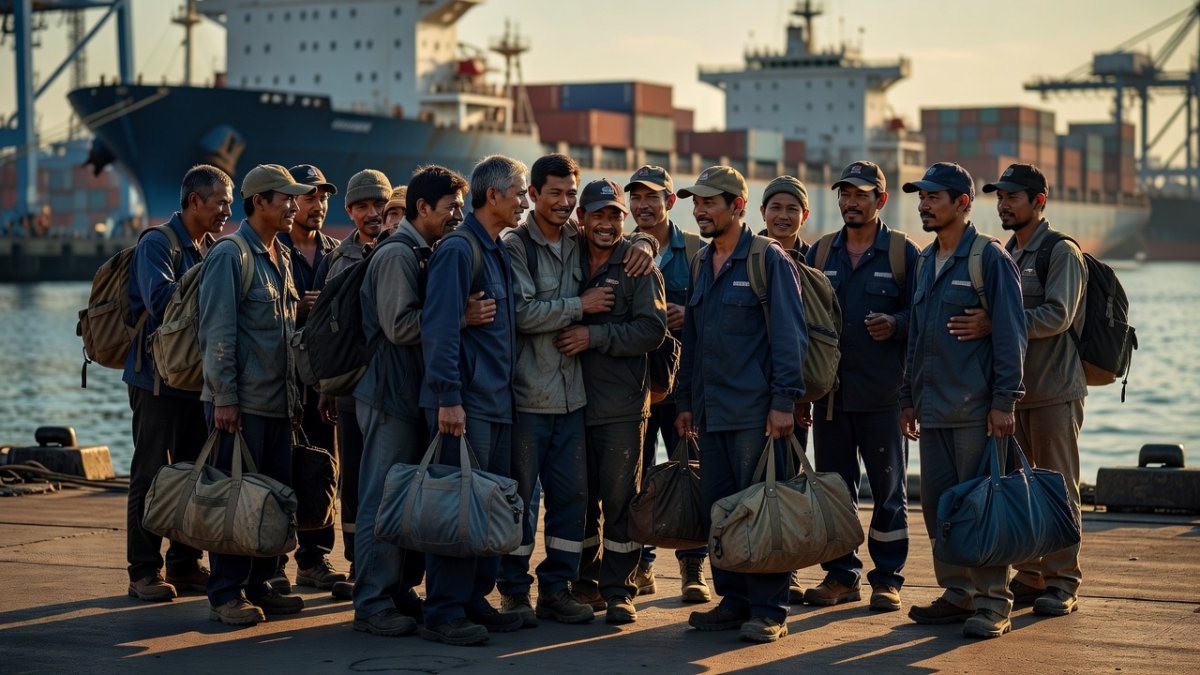
MANILA, Philippines — A group of 15 Filipino seafarers affected by the escalating conflict in the Black Sea region returned home this weekend, marking the first major repatriation since drone attacks on commercial vessels killed two Filipino crew members and injured 12 others earlier this month.
Repatriation Brings Relief to OFW Families in the Philippines
The Overseas Workers Welfare Administration confirmed on Sunday, July 26, 2026, that 15 Filipino seafarers have safely arrived home following drone attacks in the Black Sea. These men, part of crews on vessels struck near Ukrainian and Russian ports, reunited with loved ones in Manila and provincial barangays after weeks of uncertainty. OWWA officers met them at the airport, providing immediate medical checks and counseling, a gesture rooted in bayanihan spirit that echoes how communities rally during crises.
DMW and Secretary Cacdac Coordinate Rescue Amid Rising Tensions
Department of Migrant Workers Secretary Hans Leo Cacdac has led daily briefings since the first strikes, working with shipping firms and foreign embassies to track all 139 affected seafarers across nine vessels. As of July 20, 2026, DMW records showed two fatalities, 12 injuries, and one seafarer still missing. The agency issued DMW Advisory No. 41, Series of 2026, reinforcing the northern Black Sea as a warlike zone and ordering a deployment ban. Local government units in hometowns like Cebu and Davao have set up hotlines for families seeking updates.
Secretary Cacdac has maintained round-the-clock oversight since the initial drone strikes, convening daily briefings that bring together shipping company representatives, flag-state officials from Panama and Cameroon, and port authorities in Ukraine and Russia. These sessions allow real-time tracking of the 139 seafarers spread across nine vessels, using satellite communications and crew manifests to confirm locations and medical needs. DMW Advisory No. 41, Series of 2026, formally designates the northern Black Sea as a warlike zone, triggering an immediate deployment ban and requiring all manning agencies to halt new contracts until safety assurances are verified through international partners.
The agency's operations center in Manila coordinates with foreign embassies to secure safe passage for affected crews, arranging helicopter evacuations and overland transfers when ports remain under threat. Local government units in Cebu, Davao, and other provinces have activated family hotlines that feed directly into DMW databases, ensuring relatives receive verified updates rather than rumors. This layered approach, combining legal authority with diplomatic outreach, reflects the government's commitment to protecting every Filipino mariner caught in distant conflicts.
Human Stories Behind the July 8 Attack on M/V Blue
On July 8, 2026, the Cameroon-flagged tanker M/V Blue suffered a drone strike that damaged its stern, propeller, and engine room, sparking a fire. Its all-Filipino crew of 18 endured hours fighting the blaze before rescue. Twelve more seafarers from the Panama-flagged MV Gas Aura, hit while anchored near Kavkaz, Russia, returned alongside the others. These workers, many supporting children's education and parents' medical needs back home, now receive full contractual pay plus hazard allowances under Philippine law for refusing war-zone voyages.
When the drone struck M/V Blue on July 8, the impact tore through the stern and propeller, igniting a fierce blaze in the engine room that threatened to engulf the Cameroon-flagged tanker. The all-Filipino crew of 18 worked through the night, passing hoses and battling smoke while awaiting rescue vessels dispatched from nearby Ukrainian ports. Their endurance paid off when coast-guard teams finally reached them, but the hours of uncertainty left lasting memories for families back home who monitored news feeds and prayed for any sign of survival.
The twelve seafarers from MV Gas Aura faced a different ordeal after their Panama-flagged vessel was hit near Kavkaz, Russia. Anchored and vulnerable, they endured repeated alerts before being evacuated by Russian port services. During the waiting period, wives and children in provincial barangays organized prayer vigils and pooled resources for daily needs, embodying the quiet strength that sustains OFW households. Upon return, these workers receive full contractual pay plus hazard allowances, a legal safeguard that honors their refusal to sail into active war zones.
Filipino Seafarers' Vital Role in Global Trade and Local Economy
Filipino mariners form the backbone of international shipping, crewing roughly one in four vessels worldwide. Their annual remittances reached US$6.94 billion last year, representing 18 percent of all personal transfers from overseas Filipinos. This income sustains entire barangays, funds sari-sari stores, and pays tuition in provinces far from Manila. The Black Sea incidents highlight how distant conflicts ripple through Philippine households, yet the community's resilience shines as families organize prayer vigils and mutual aid drives.
Filipino mariners crew roughly one in four commercial vessels worldwide, making them indispensable to global supply chains that deliver grain, fuel, and consumer goods across oceans. Their remittances, totaling US$6.94 billion last year, account for 18 percent of all personal transfers from overseas Filipinos and directly support sari-sari stores, school tuition, and medical bills in far-flung provinces. When distant conflicts disrupt this flow, entire communities feel the strain, yet the same families respond with mutual aid drives and collective resilience that keeps local economies afloat.
Beyond direct earnings, the broader OFW ecosystem benefits from the skills and networks seafarers bring home, from advanced maritime training to small-business investments funded by hazard pay. The Black Sea incidents underscore how geopolitical tensions thousands of miles away can ripple through Philippine households, yet they also highlight the nation's deep reliance on these workers who quietly sustain both international trade and domestic stability.
Historical Context of the Black Sea Conflict and Philippine Response
Since Russia's 2022 full-scale invasion of Ukraine, the International Bargaining Forum has labeled the Black Sea a high-risk area. The Philippines responded with repeated advisories, drawing on lessons from earlier OFW evacuations in the Middle East. Congress has called for stronger manning-agency accountability, while OWWA expands trauma support programs. These measures protect the estimated 500,000 Filipino seafarers who keep global supply chains moving.
Since Russia's 2022 full-scale invasion of Ukraine, merchant vessels in the Black Sea have faced repeated drone and missile threats, prompting the International Bargaining Forum to classify the region as a high-risk warlike area after documented attacks on grain carriers and tankers. The Philippines has drawn on lessons from earlier OFW evacuations in the Middle East, issuing successive advisories that prioritize crew safety over commercial interests. Congress continues to push for stricter accountability from manning agencies, while OWWA expands trauma-support programs tailored to seafarers returning from conflict zones.
These measures protect an estimated 500,000 Filipino seafarers who keep global supply chains moving. By learning from past crises and strengthening legal frameworks like DMW Advisory No. 41, the country reinforces its long-standing policy of shielding its maritime workforce from the dangers of war, ensuring that those who venture abroad for their families' future can return with dignity and support.
Looking Ahead: Support Systems and Policy Reforms
The remains of the two fallen seafarers are scheduled for repatriation next week, with full honors planned at their home parishes. DMW continues monitoring the missing crew member. Community leaders urge expanded insurance coverage and mental-health services, ensuring that those who return can rebuild without added burden. Through coordinated action by Secretary Cacdac's team and local governments, the nation reaffirms its commitment to every OFW who ventures abroad for their families' future.
By Bella Reyes, Staff Writer ===SUMMARY=== Fifteen Filipino seafarers returned home July 26, 2026 after Black Sea drone attacks that killed two and injured 12. DMW Secretary Hans Leo Cacdac and OWWA led repatriation amid a deployment ban. The story highlights remittances worth $6.94 billion yearly and the human cost to OFW families, with calls for stronger safeguards.This article was produced with AI-assisted research and editorial support. Reporting is based on sources cited in the article.
What's Your Reaction?
 Like
0
Like
0
 Dislike
0
Dislike
0
 Love
0
Love
0
 Funny
0
Funny
0
 Wow
0
Wow
0
 Sad
0
Sad
0
 Angry
0
Angry
0

Philippines/Southeast Asia Correspondent at Global1.News. Manila-based journalist covering Philippine politics, environment, maritime security, and social issues. Passionate about marine conservation and the communities protecting the Philippines' natural heritage.













Comments (0)