
Berlin Pride Attack Declared Islamist Terror Attack
In a recent BBC News report, details emerged of a devastating attack on Berlin's annual Christopher Street Day Pride celebration that German authorities have officially declared an Islamist terrorist attack. The assault, which claimed one life and left at least 29 injured, has triggered a massive police operation and reignited debates about European security, Islamist extremism, and the safety of
In a recent BBC News report, details emerged of a devastating attack on Berlin's annual Christopher Street Day Pride celebration that German authorities have officially declared an Islamist terrorist attack. The assault, which claimed one life and left at least 29 injured, has triggered a massive police operation and reignited debates about European security, Islamist extremism, and the safety of LGBTQ+ public events across the continent.
Berlin Pride Attack Declared Islamist Terror Attack — Manhunt Ends with Suspect Killed
Berlin, Germany — A white van ploughed into crowds at Berlin's Christopher Street Day Pride event in Tiergarten park on Saturday night in what German Interior Minister Alexander Dobrindt has confirmed was an Islamist terrorist attack. The suspect, 21-year-old Abdul Ballout, a German citizen of Lebanese background with known links to the Islamic State group, was shot and killed by police on Sunday after rushing at officers with a knife at an allotment complex in the Spandau district of western Berlin. One woman was killed and at least 29 others were injured, some by stabbing with what officials believe was a machete, in a rampage that Chancellor Friedrich Merz called a "heinous" attack on German society.
The Attack: A Night of Terror at Christopher Street Day
The attack unfolded shortly after 22:00 local time (20:00 GMT) on Saturday, as hundreds of thousands of people gathered in Berlin's iconic Tiergarten park, near the Brandenburg Gate, for the annual Christopher Street Day Pride celebration. According to Berlin police, a white rented van was driven at high speed into crowds along Ahornsteig, a long path stretching through a forested area of the park. Eyewitnesses described a scene of chaos as the vehicle struck multiple people before the suspect emerged and began attacking others with a blade that officials said might have been a machete.
Event organisers immediately halted the performance and projected the word "evacuation" onto large screens, advising the crowd to move calmly toward exits. Unverified video posted to social media showed thousands of people streaming away from the area as emergency vehicles raced to the scene. Police confirmed at approximately 01:00 local time on Sunday that one woman had been killed and many more were injured. A short time later, officers located the rented vehicle, which had crashed into a tree in the park, abandoned by the suspect.
Berlin police immediately sealed off large sections of Tiergarten and launched a city-wide manhunt. Federal police and officers from Brandenburg and other surrounding states joined the operation, with thousands deployed across Berlin's transport hubs, motorways, and residential districts. Interior Minister Alexander Dobrindt stated that the manhunt involved coordinated roadblocks and surveillance of known addresses linked to the suspect. Authorities focused on an apartment block in the Tiergarten district where Ballout was believed to have been living prior to the attack. Police sources confirmed that forensic teams searched the building for evidence of planning or additional weapons while the manhunt continued through the night and into Sunday morning.
The scale of the response reflected the seriousness with which German authorities treated the incident from the outset. Berlin's police chief coordinated with federal agencies to monitor potential escape routes toward Brandenburg and beyond. Hospitals in central Berlin received the injured, while counter-terrorism units examined the abandoned van for explosives or further clues. The rapid widening of the search underscored the fear that the suspect might attempt additional attacks or flee the capital entirely.
The Suspect: Abdul Ballout and the Path to Radicalisation
Police swiftly identified the suspect as 21-year-old Abdul Ballout, a German citizen of Lebanese background who was already known to authorities. Interior Minister Alexander Dobrindt confirmed that Ballout had been radicalised, and German media reported that he was a supporter of the Islamic State group who had made multiple attempts to join the terrorist organisation. According to the public prosecutor's office, Ballout attempted to travel to Mauritania via Turkey in May 2025 but failed. He later travelled to Lebanon via Turkey with the stated intention of heading to Syria to join IS.
While in Lebanon, Ballout is alleged to have made contact with individuals he believed were members of the Islamic State. Lebanese authorities arrested him in July 2025, and he spent three months in a Lebanese prison. Following his release, he returned to Berlin in November 2025, where he was immediately arrested at the airport by German authorities and held in pre-trial detention until May 2026. A court subsequently ordered him to participate in a de-radicalisation programme, though the effectiveness of this intervention has now come under intense scrutiny.
Ballout had previously been sentenced to one year and 10 months in prison for prior crimes — a sentence that was commuted to parole. According to police, he had committed "a number of crimes" before the attack and was known to counter-terrorism authorities, raising serious questions about why he remained at large despite the clear warning signs of his radicalisation trajectory and repeated attempts to join a foreign terrorist organisation.
Police shot and killed Ballout on Sunday at an allotment complex in Spandau after he rushed at officers with a knife. Federal police sources described the confrontation as brief, with officers firing when the suspect ignored commands to drop the weapon. The operation concluded the manhunt, but investigators continue to examine Ballout's communications and movements in the days before the attack. German officials have stated that the killing prevents a full trial, shifting focus to whether earlier interventions by authorities could have prevented the violence. The case now prompts a formal review of monitoring protocols for individuals previously detained on terrorism-related suspicions.
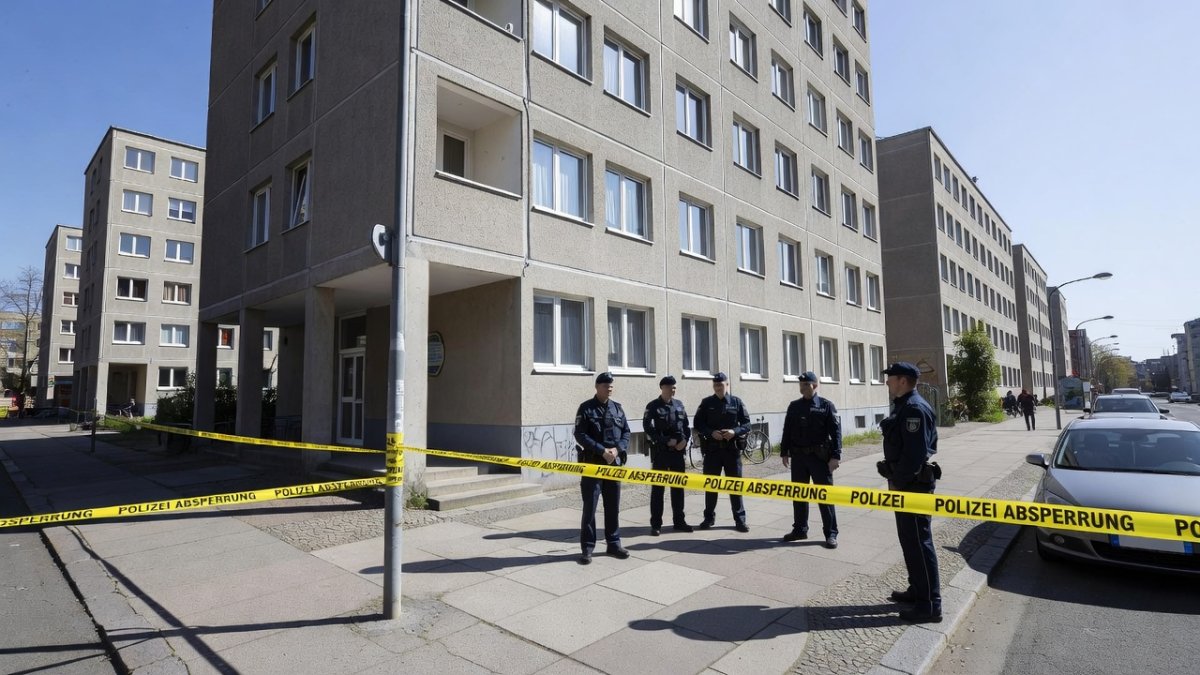
Official Response: Germany's Leadership Condemns the Attack
Chancellor Friedrich Merz condemned the attack in forceful terms, calling it a "heinous" act and vowing that extremists "have no place in our society." In a statement, Merz said the government would do everything in its power to see justice served, while Interior Minister Dobrindt told reporters at the scene that all available evidence pointed to an Islamist terrorist attack. The number of injured was revised upward to 29 as more victims came forward, and hospitals across Berlin mobilised to treat the wounded, several of whom remain in critical condition.
European leaders were swift to express solidarity. European Commission President Ursula von der Leyen said the Pride event stands for "freedom, dignity, and equality — the fundamental values of the EU," adding that "every person should be able to live, love, and stand up for their rights without fear." Dutch Prime Minister Rob Jetten stated that the Netherlands stands "shoulder to shoulder with our German neighbours," while Italian Prime Minister Giorgia Meloni expressed "solidarity and sincere sympathy." UK Defence Secretary Wes Streeting called the incident "an absolutely horrific disaster."
Further European reactions highlighted shared security concerns. French President Emmanuel Macron conveyed condolences and offered intelligence cooperation, while Polish Prime Minister Donald Tusk emphasised the need for stronger EU border controls. These statements reflect a consensus that the Berlin attack demands renewed focus on preventing radicalised individuals from exploiting gaps in monitoring systems. German counter-terrorism policy now faces pressure to tighten coordination with EU partners on tracking foreign travel by known extremists. For Pride events across Europe, organisers in cities including Paris, Amsterdam, and Madrid have already announced enhanced security measures for upcoming gatherings, citing the Berlin precedent as a direct threat to public celebrations of LGBTQ+ rights.
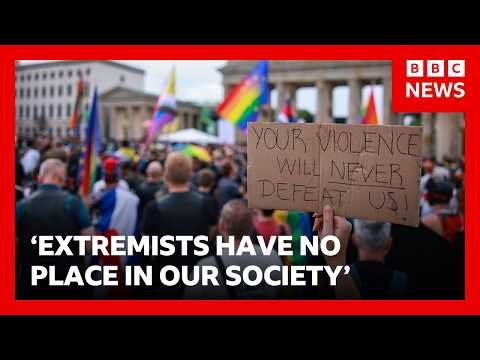
Security Implications: A Warning for Europe
The Berlin attack represents the most serious Islamist terrorist incident on German soil since the 2016 Berlin Christmas market attack, when a truck was driven into a crowd at Breitscheidplatz, killing 12 people. The targeting of an LGBTQ+ event is particularly significant, reflecting a pattern observed across Europe in recent years, where Islamist extremists have specifically targeted Pride celebrations and LGBTQ+ gatherings as symbols of Western liberal values they seek to destroy.
German security services have been on heightened alert since the Hamas-led attack on Israel in October 2023, which triggered a surge in antisemitic and Islamist-motivated incidents across Europe. The fact that Ballout was known to authorities, had been arrested in both Lebanon and Germany, had been ordered into a de-radicalisation programme, and was still able to rent a vehicle and carry out a mass-casualty attack will force German intelligence and counter-terrorism agencies to confront uncomfortable questions about the effectiveness of their monitoring and intervention systems.
Analysts suggest the failure of the de-radicalisation programme in Ballout's case will accelerate reviews across Germany and the EU. This incident exposes limitations in current approaches to managing returnees from conflict zones or individuals with repeated travel attempts to join groups such as Islamic State. European counter-terrorism cooperation may intensify, with calls for shared databases on radicalised citizens and faster information exchange between member states. The targeting of Pride events signals a persistent ideological threat that security services must address without restricting public assembly rights. For Chancellor Friedrich Merz's government, the attack carries political consequences, including potential demands for increased funding of federal police and stricter parole conditions for terrorism-related offenders. German domestic security policy is likely to shift toward longer pre-trial detentions and expanded surveillance powers, while EU-wide cooperation could see new joint task forces focused on lone-actor threats. The LGBTQ+ community in Berlin and beyond now confronts heightened vulnerability at public events, prompting discussions on balancing visibility with necessary protective measures.
Analysis — A Test for Germany's Security Architecture
The Berlin Pride attack has exposed critical vulnerabilities in Germany's approach to managing known Islamist extremists. The case of Abdul Ballout — a radicalised individual who attempted to join IS, was arrested in two countries, spent time in prison, and was placed in a de-radicalisation programme — nonetheless managed to carry out a sophisticated attack using a rented vehicle and a bladed weapon raises profound questions that German authorities will struggle to answer.
Analysts suggest that this attack will likely accelerate several parallel developments: a review of Germany's de-radicalisation programme effectiveness, increased funding for counter-terrorism surveillance, possible legislative changes to extend pre-trial detention periods for terror suspects, and intensified European intelligence-sharing mechanisms. For the LGBTQ+ community in Germany and across Europe, the attack represents a traumatic reminder that public celebrations of identity and diversity remain targets for those who reject the values they represent.
As Berlin recovers from this weekend's violence, the broader challenge for European societies remains unchanged: how to protect open, democratic spaces and the right to assemble peacefully while confronting the persistent threat of Islamist extremism that adapts and evolves even as security services improve their capabilities. The answer, as this weekend's events demonstrate, remains elusive.
By Irina Volkov, Staff Writer
This article was produced with AI-assisted research and editorial support. Reporting is based on sources cited in the article.
What's Your Reaction?
 Like
0
Like
0
 Dislike
0
Dislike
0
 Love
0
Love
0
 Funny
0
Funny
0
 Wow
0
Wow
0
 Sad
0
Sad
0
 Angry
0
Angry
0
Russia/Eastern Europe Correspondent at Global1.News. Covering Russian politics, energy, security, and the shifting dynamics of the post-Soviet space. Provides clear-eyed analysis on one of the world's most opaque regions.













Comments (0)