
Marcos Reaffirms Philippine Resolve in West Philippine Sea Dispute
President Marcos reaffirms the 2016 arbitral ruling in his SONA, backed by 13 nations, as China rejects it and DFA protests racist China Daily content. The dispute impacts fisherfolk livelihoods and national dignity, with legal dimensions strengthening international maritime law precedents. (248 chars)
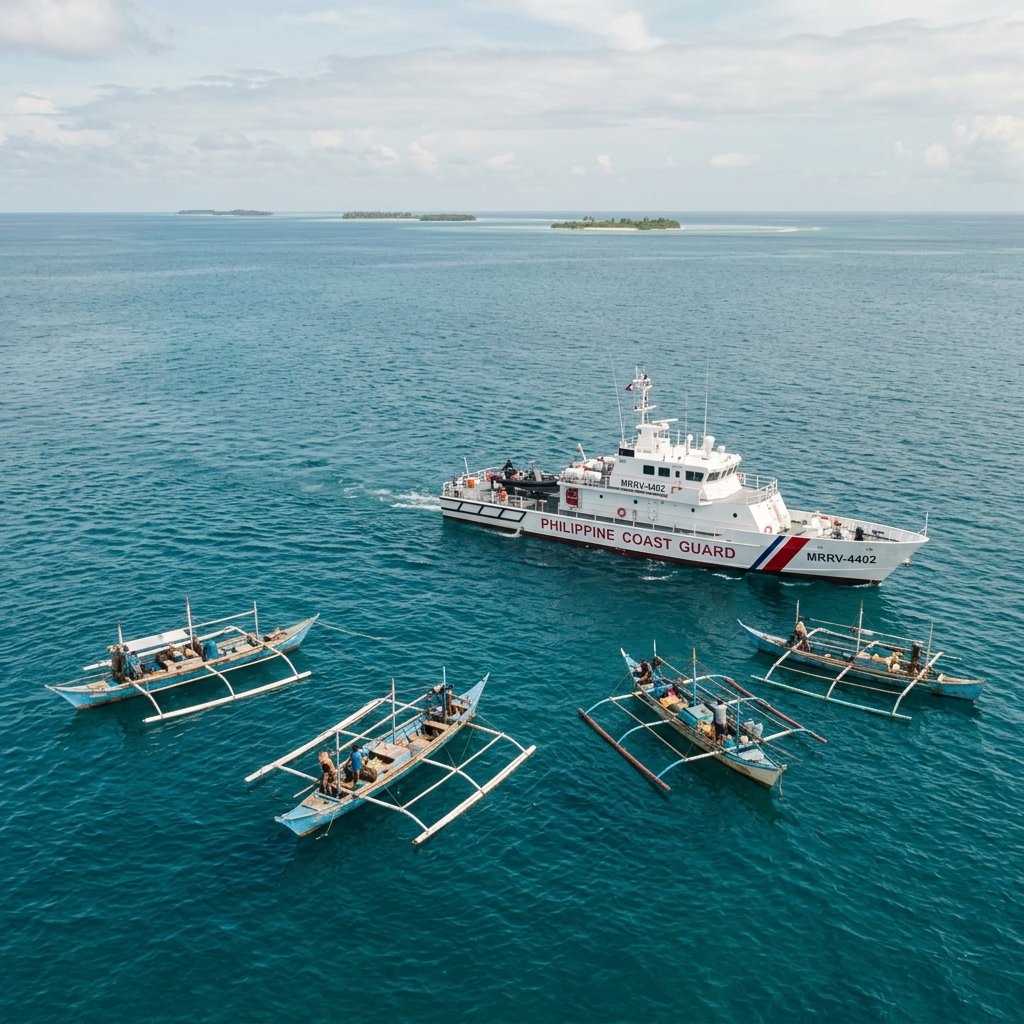
In the face of escalating tensions in the West Philippine Sea, President Ferdinand Marcos Jr. has delivered a resolute message to the nation and the world, reaffirming the Philippines' commitment to the landmark 2016 arbitral ruling. As foreign vessels continue to encroach on traditional fishing grounds and diplomatic frictions rise, the president's words underscore a steadfast defense of sovereignty through legal and peaceful means. This stance not only bolsters national dignity but also resonates deeply with coastal communities whose livelihoods hang in the balance.
West Philippine Sea: Marcos Reaffirms 2016 Arbitral Ruling in Fifth SONA
MANILA, Philippines — Article continues...
Marcos Delivers Clear Message on 2016 Arbitral Award During SONA
President Ferdinand Marcos Jr. stood before Congress on July 27 and made his position unmistakable. The 2016 arbitral ruling remains final and binding, and the Philippines will defend it through every peaceful and legal avenue. In his fifth State of the Nation Address, Marcos told lawmakers that the government would not abandon or retreat from the landmark decision that protects the country's exclusive economic zone in the West Philippine Sea. He stressed that any attempt to undermine the award, whether from abroad or within, would meet firm resistance grounded in law and diplomacy.
The president's words carried extra weight for coastal communities who have watched foreign vessels encroach on traditional fishing grounds for years. Marcos honored the Armed Forces of the Philippines, the Philippine Coast Guard, and the fisherfolk who continue their daily work despite the dangers. Their presence on the water, he said, gives life to the letter and spirit of the arbitral award. For many families in barangays along the western seaboard, these statements translate into continued government attention to their safety and livelihood.
The 2016 arbitral ruling carries binding force under the United Nations Convention on the Law of the Sea, specifically through the Annex VII tribunal process that the Philippines initiated in 2013. The decision invalidated China’s nine-dash line claims across vast portions of the South China Sea and affirmed the Philippines’ exclusive economic zone rights extending 200 nautical miles from its baselines. This legal victory established clear maritime entitlements for resource exploration, fishing, and navigation, providing a permanent reference point that subsequent Philippine administrations have invoked to counter encroachments without resorting to force.
Securing the ruling required years of meticulous legal preparation under the previous Aquino administration, including extensive archival research on historic maps and oceanographic data presented before the Permanent Court of Arbitration in The Hague. The tribunal’s unanimous findings on July 12, 2016, rejected Beijing’s historical arguments and clarified that low-tide elevations and rocks cannot generate extended maritime zones. Marcos’s reaffirmation during the SONA therefore builds directly on this foundation, signaling continuity in Manila’s strategy of anchoring its position in international jurisprudence rather than bilateral negotiations that might dilute the award.
Philippine naval and coast guard patrols now operate under heightened operational constraints, with vessels frequently shadowed by larger Chinese maritime militia boats equipped with water cannons and lasers. AFP and PCG personnel conduct resupply missions to outposts like Second Thomas Shoal while documenting violations through real-time video feeds shared with international partners. These missions expose crews to physical risks including ramming incidents and electronic interference, yet they sustain the physical presence that translates the legal award into daily enforcement on the water.
Thirteen Nations Join Philippines in Reaffirming the Ruling
Earlier this month, the Philippines marked the tenth anniversary of the 2016 Hague decision with a joint statement signed by thirteen countries, including the United States and Japan. The statement reaffirmed that the arbitral award is legally binding under international law. This show of solidarity arrived at a moment when tensions with Beijing remain high, offering Manila diplomatic support as it navigates the dispute through established channels.
Department of Foreign Affairs officials have long emphasized that such multilateral backing strengthens the Philippine position without escalating conflict. For ordinary citizens, the involvement of longtime partners signals that the country's claims are not isolated but part of a broader international consensus on maritime rules. Coastal LGUs have noted that this kind of support can eventually translate into more stable conditions for local fishing fleets operating near the contested areas.
The joint statement marking the tenth anniversary drew signatures from the United States, Japan, Australia, the United Kingdom, Canada, France, Germany, the Netherlands, New Zealand, South Korea, the Philippines, and two additional European partners, creating a broad coalition that spans Indo-Pacific and Atlantic allies. This grouping underscores a shared commitment to UNCLOS principles and signals coordinated diplomatic messaging ahead of upcoming ASEAN and East Asia Summit meetings. The collective voice amplifies Manila’s position by linking the arbitral award to wider rules-based maritime governance rather than framing it as a bilateral Philippine-Chinese matter.
Within ASEAN, the statement highlights growing divergence among member states, with several nations privately welcoming the external backing while avoiding direct confrontation that could fracture bloc unity. Vietnam and Malaysia have issued parallel but softer endorsements, reflecting their own overlapping claims, yet the explicit support from dialogue partners outside Southeast Asia reduces pressure on ASEAN to issue a diluted consensus statement. This dynamic allows the Philippines to pursue stronger bilateral security arrangements without appearing to undermine regional solidarity.
Beijing responded with sharp diplomatic notes and state-media editorials accusing the signatories of interference in internal affairs and attempting to “internationalize” the dispute. Chinese officials also accelerated economic outreach to ASEAN capitals, offering infrastructure financing packages timed to coincide with the statement’s release. These counter-measures aim to peel away potential supporters by emphasizing economic interdependence over legal interpretations of maritime entitlements.
Beijing Maintains Its Rejection of the Decision
China has consistently refused to recognize the 2016 ruling, which invalidated its expansive claims over much of the South China Sea, including waters within the Philippines' exclusive economic zone. In response to the recent joint statement, Beijing described the document as a distortion of the facts. This stance continues to create uncertainty for Filipino vessels that rely on those waters for daily catches.
Marcos addressed both friends and detractors directly, declaring that Filipinos are a noble, kind, gracious, and great race. He stated plainly, "We are not greedy. We are not racists. We are not liars. We are respectful, and we are dignified. We are Filipinos, and we do not yield." These lines drew sustained applause inside the session hall and resonated far beyond Manila, reaching fishing communities that have felt their dignity questioned in recent months.
China Daily Materials Spark Strong DFA Protest
The Department of Foreign Affairs lodged a formal protest after China's state-run China Daily published AI-generated videos and editorial cartoons depicting Filipinos as monkeys while criticizing the arbitral ruling. Officials called the materials deeply offensive, distressing, and unacceptable, and demanded their immediate removal. The incident added emotional weight to an already tense situation, touching on long-standing sensitivities about how Filipinos are portrayed abroad.
Community leaders in affected coastal areas described the depictions as an attack not just on policy but on the character of the Filipino people. In barangay halls from Palawan to Zambales, residents gathered to discuss how such portrayals affect the younger generation and the morale of those who patrol or fish the waters daily. The DFA's swift response reassured many that their government would not tolerate insults to national dignity.
The AI-generated videos depicted Filipino figures as monkeys piloting small boats toward Chinese vessels, accompanied by captions mocking the arbitral award as a “Western fabrication.” Editorial cartoons published alongside showed exaggerated facial features and portrayed Philippine officials as puppets of foreign powers, content that circulated widely on Chinese social platforms before being flagged by Philippine monitors. The materials combined algorithmic imagery with text that questioned Filipino sovereignty claims, prompting immediate condemnation from Manila as both racist and inflammatory.
DFA Secretary Enrique Manalo issued a formal diplomatic note demanding removal of the content within 24 hours and summoned the Chinese embassy chargé d’affaires for a démarche. In public remarks, Manalo described the publications as “a deliberate attempt to dehumanize Filipinos” and warned that such tactics would only harden Philippine resolve. The department also coordinated with the Philippine Embassy in Beijing to monitor further dissemination and prepared a dossier for possible referral to international press freedom bodies.
Filipino netizens quickly mobilized under hashtags such as #DignidadNgPilipino, sharing personal stories of fishing families alongside screenshots of the offensive images. Diaspora communities in the United States, Canada, and Australia organized virtual town halls and sent letters to their host governments urging public statements of support. The episode echoes earlier controversies involving Chinese state media caricatures during the 2012 Scarborough Shoal standoff, yet the use of AI tools this time drew sharper criticism for scaling the reach and speed of derogatory messaging.
The International Law Dimension
The 2016 arbitral award has been referenced in official statements by the International Court of Justice and in amicus briefs submitted to other maritime tribunals, establishing it as persuasive authority on the interpretation of historic rights versus UNCLOS entitlements. Legal scholars across Europe and North America cite the ruling when analyzing similar disputes in the Arctic and Eastern Mediterranean, demonstrating its broader doctrinal influence beyond Southeast Asia. This cross-regional citation pattern strengthens the award’s status as a precedent that reinforces the primacy of treaty-based maritime zones over unilateral historical assertions.
Vietnam has quietly aligned its own submissions to the UN Commission on the Limits of the Continental Shelf with key findings from the Philippine case, while Malaysia and Brunei have issued statements acknowledging the award’s relevance to their overlapping claims. Taiwan, despite its distinct political status, has also referenced portions of the ruling in its own maritime policy documents. These varied positions illustrate how the decision functions as a shared legal resource even among states that maintain differing strategic alignments with Beijing.
In the wider context of the rules-based international order, the award exemplifies how smaller states can leverage compulsory dispute settlement mechanisms to constrain the actions of larger powers. Its continued invocation at the UN General Assembly and in ASEAN forums underscores the linkage between maritime governance and global stability, reminding participants that erosion of one arbitral outcome could weaken the entire system of legal predictability that underpins trade routes and resource management worldwide.
Everyday Filipinos Bear the Weight of the Dispute
Behind the diplomatic exchanges and official statements lie the daily realities faced by Filipino fisherfolk and their families. These men and women leave port before dawn, often returning with smaller catches because certain traditional grounds now carry added risks. Their stories connect directly to the broader questions of sovereignty that Marcos highlighted in his address.
Local government units in coastal provinces have worked to provide support through livelihood programs and safety training, yet the uncertainty at sea continues to affect household incomes and food security in many communities. The president's pledge to uphold the arbitral award offers a measure of reassurance that their struggles are seen at the highest levels. For these families, the phrase "We do not yield" carries practical meaning: continued access to the waters that have sustained generations.
Marcos closed his remarks by noting that threats to the country's dignity would not go unanswered. His emphasis on peaceful and legal means aligns with the long-standing Philippine approach of combining diplomacy with presence on the water. As the tenth anniversary of the ruling passes, the focus remains on protecting both the legal victory and the people whose lives depend on it.
The Philippine fishing industry contributes approximately 1.8 percent to national GDP and employs over 1.6 million people directly, with western seaboard provinces accounting for a disproportionate share of municipal catch volumes. Recent data from the Bureau of Fisheries and Aquatic Resources indicate a 15 to 20 percent decline in average daily hauls for vessels operating near contested features, translating into lost income estimated at several billion pesos annually. These figures underscore how legal and diplomatic developments directly intersect with household economics in coastal municipalities.
In Palawan’s Coron and Culion islands, fishing cooperatives report that younger crew members increasingly seek work on commercial vessels or migrate to urban centers because traditional grounds near the Spratlys have become unpredictable. Families describe adjusting meal patterns and relying on government rice subsidies during lean months when Chinese maritime presence restricts access. Local leaders have documented cases of vessels returning with damaged nets after encounters with foreign trawlers operating inside the Philippine EEZ.
Overseas Filipino workers from these same coastal provinces have channeled remittances into community defense funds and legal aid initiatives supporting fisherfolk organizations. In cities such as Dubai, Rome, and Los Angeles, diaspora associations host awareness campaigns and lobby host-country legislators to back Philippine maritime claims. Their involvement extends the domestic narrative of resilience into transnational advocacy networks that reinforce the government’s diplomatic posture.
By Bella Reyes, Staff Writer
This article was produced with AI-assisted research and editorial support. Reporting is based on sources cited in the article.
What's Your Reaction?
 Like
0
Like
0
 Dislike
0
Dislike
0
 Love
0
Love
0
 Funny
0
Funny
0
 Wow
0
Wow
0
 Sad
0
Sad
0
 Angry
0
Angry
0

Philippines/Southeast Asia Correspondent at Global1.News. Manila-based journalist covering Philippine politics, environment, maritime security, and social issues. Passionate about marine conservation and the communities protecting the Philippines' natural heritage.














Comments (0)