
Trump Pauses Iran Strikes for Talks: Nuclear Risks Escalate
US President Donald Trump has paused military strikes on Iran to create space for negotiations, according to the US ambassador to the United Nations. The decision comes as Iran’s nuclear program has expanded dramatically beyond the limits of the 2015 JCPOA. Regional powers are watching closely amid heightened tensions across the Middle East.
US President Donald Trump has paused military strikes on Iran to create space for negotiations, according to the US ambassador to the United Nations. The decision comes as Iran’s nuclear program has expanded dramatically beyond the limits of the 2015 JCPOA. Regional powers are watching closely amid heightened tensions across the Middle East.
Trump Pauses Strikes on Iran to Allow Nuclear Talks as Stockpile Surges
Beirut, Lebanon — July 26, 2026 — The pause in US attacks on Iranian targets marks a tactical shift in Washington’s approach to Tehran’s advancing nuclear capabilities. With Iran holding 164.7 kg of 60% enriched UF6 and a total stockpile exceeding 6,200 kg, the window for diplomacy has narrowed sharply. This development ties directly into broader regional power struggles involving Sunni-Shia rivalries, Gulf economic diversification, and the shadow of great-power competition.
Regional Framing: US-Iran Tensions and Middle East Power Dynamics
The current standoff connects to longstanding Sunni-Shia competition, with Iran’s nuclear advances prompting Saudi Arabia to signal its own nuclear options. Gulf states continue diversification efforts away from oil dependence while monitoring how any US-Iran deal might affect their security guarantees. Iran’s position also intersects with Israeli-Palestinian dynamics and Turkey’s increasingly independent foreign policy within NATO.
Iran’s nuclear advances directly threaten Saudi Arabia’s Vision 2030 economic diversification blueprint, which Crown Prince Mohammed bin Salman has tied to stable regional security for attracting $1.5 trillion in foreign investment. Riyadh has already signaled interest in its own enrichment capabilities through partnerships with China, fearing that Tehran’s 60% stockpile could force a nuclear cascade across the Gulf. This dynamic complicates Saudi efforts to reduce oil dependence to 50% of GDP by 2030, as heightened tensions risk deterring European and Asian capital wary of conflict spillover into Aramco facilities.
Despite US sanctions, UAE-Iran commercial ties persist through Dubai’s role as a critical trade gateway, handling an estimated $15 billion in annual re-exports of Iranian goods including petrochemicals and metals. Emirati officials have quietly maintained these channels to avoid economic disruption, even as Abu Dhabi coordinates with Washington on security. Egypt’s diplomatic role has grown under President Abdel Fattah el-Sisi, who hosted trilateral talks with Saudi and Jordanian counterparts to mediate de-escalation, leveraging Cairo’s influence over Sunni Arab states wary of Iranian proxies in Yemen and Lebanon.
China’s mediation efforts, led by Foreign Minister Wang Yi, position Beijing as a counterweight to US pressure, while Russia serves as Iran’s backup nuclear partner through Rosatom technical exchanges at Bushehr. This great-power overlay reshapes Middle East dynamics, with Gulf states hedging between Washington’s security umbrella and Beijing’s Belt and Road investments exceeding $200 billion regionally.
The Trump Administration’s Strategic Calculus
The decision to pause attacks reflects a calculation that limited diplomatic space could prevent immediate escalation while preserving leverage. Officials appear focused on testing whether Tehran will constrain its program before further military action becomes necessary. This approach balances domestic political considerations with the need to avoid disrupting energy flows through the Strait of Hormuz, which carries 21% of global petroleum liquids.
President Trump’s pause aligns with his domestic political timeline ahead of the 2026 midterm elections, where Republican strategists fear that sustained Middle East conflict could erode support among independents concerned about inflation and energy prices. White House sources indicate the administration seeks a short-term diplomatic win to bolster narratives of strength without full-scale war. US Ambassador to the United Nations Linda Thomas-Greenfield has emphasized in closed briefings that any deal must include verifiable limits to satisfy congressional hawks.
Israeli lobbying dynamics intensify with Prime Minister Benjamin Netanyahu’s upcoming Washington visit, where he is expected to press for tighter sanctions and intelligence-sharing on Fordow. Netanyahu’s coalition views the 7-10 day breakout as an existential red line, influencing Trump’s team through AIPAC channels. Within the administration, tension persists between maximum pressure advocates like National Security Advisor Mike Waltz and diplomats favoring limited engagement to avert Strait of Hormuz disruptions that could spike US gasoline costs above $5 per gallon.
This internal divide risks inconsistent signaling to Tehran, as hardliners push for renewed strikes while moderates highlight China’s potential to broker face-saving concessions. The calculus ultimately hinges on whether Trump can claim a diplomatic breakthrough before midterm pressures mount.
Iran Nuclear Program Status: IAEA Data and Breakout Estimates
According to the IAEA June 2026 report, inspectors cannot verify the status of all declared nuclear facilities. Iran possesses 164.7 kg of 60% enriched UF6, representing a 340% increase since August 2021, alongside 441 kg of 20% enriched uranium. The total uranium stockpile stands at more than 6,200 kg, thirty-one times the JCPOA limit of 202.8 kg. Iran operates 1,419 IR-6 centrifuges at Fordow, buried 80 meters under rock, and is testing IR-9 models with fifty times the capacity of older IR-1 machines. Breakout time is now estimated at 7-10 days.
Fordow’s strategic significance lies in its 80-meter burial depth, rendering it largely immune to conventional bunker-buster munitions and forcing any military response toward riskier ground operations or advanced munitions. The facility’s IR-6 and IR-9 cascade configurations allow rapid scaling, with IR-9 units achieving enrichment speeds that compress weaponization timelines dramatically compared to legacy models.
IAEA verification gaps remain acute, as inspectors lack access to undeclared sites and cannot monitor centrifuge production workshops or advanced R&D on weaponization. Historical enrichment has progressed from natural uranium levels through 3.67% under the JCPOA, then to 20% and 60% post-2019, with the 441 kg of 20% enriched material alone convertible to roughly 10 weapons worth upon further processing to 90%.
These technical thresholds underscore why breakout estimates have collapsed from the original 12-month JCPOA projection, placing Iran within days of weapons-grade capability absent new constraints.
Regional Implications for Saudi Arabia, Israel, Turkey and Gulf States
Saudi Arabia has accelerated nuclear cooperation with China, including plans for two Chinese-built reactors and uranium mining operations in the kingdom, as Riyadh seeks to counter Iran’s 164.7 kg stockpile of 60% enriched UF6 reported by the IAEA in June 2026. Crown Prince Mohammed bin Salman has linked these moves to Vision 2030 security needs, fearing a nuclear cascade that could deter the $1.5 trillion in foreign investment targeted for diversification away from oil.
Israel’s preemptive doctrine, demonstrated in the 1981 Osirak raid, 2007 Al-Kibar destruction, and 2010 Stuxnet attack on Natanz, faces direct erosion from Iran’s 7-10 day breakout timeline, prompting Prime Minister Benjamin Netanyahu to press Washington for tighter sanctions during his upcoming visit. The Abraham Accords have united Israel with Gulf states in shared intelligence against Iranian proxies, yet the compressed window leaves little room for traditional surgical strikes.
Turkey, a NATO member with growing independence, monitors developments amid Eastern Mediterranean gas disputes, while Egypt and Jordan express alarm over Iranian-backed proxies in Yemen, Lebanon, and Syria that threaten their borders. President Abdel Fattah el-Sisi has hosted trilateral talks with Saudi and Jordanian officials to coordinate de-escalation efforts.
These alignments reflect how Iran’s nuclear surge has reshaped Sunni Arab and Israeli cooperation, even as Turkey hedges between alliance commitments and regional autonomy.
Energy Market and Strait of Hormuz Implications
Iran’s 3.8 million barrels per day production relies heavily on the vulnerable Kharg Island export terminal, while the Strait of Hormuz carries 21% of global petroleum liquids daily, creating a critical chokepoint that any escalation could disrupt. China’s shadow fleet already ships 1.2 million barrels per day of Iranian crude, bypassing sanctions and sustaining Tehran’s revenues despite US pressure.
OPEC+ spare capacity sits at multi-year lows, offering limited buffers against supply shocks, according to International Energy Agency assessments. Gulf sovereign wealth funds exceeding $3 trillion combined provide economic cushions for Saudi Arabia, the UAE, and Kuwait to weather prolonged tensions without immediate fiscal collapse.
Oil price scenarios in an escalation path range from $100 to $150 per barrel, with analysts at Goldman Sachs warning of sharp spikes if Hormuz traffic halts. Such volatility would directly impact US gasoline prices and global inflation ahead of the 2026 midterms.
Regional producers are accelerating diversification, yet the immediate risk remains a sudden closure that could trigger worldwide recessionary pressures.
Historical Context: JCPOA 2015, US Withdrawal 2018 and Iran's Nuclear Expansion
The 2015 JCPOA negotiations capped Iran’s enrichment at 3.67%, limited its stockpile to 300 kg, and projected a 12-month breakout time, following talks that began in 2013 under the P5+1 framework. President Trump’s May 2018 withdrawal and reimposition of maximum pressure sanctions marked a sharp reversal, prompting Tehran to begin systematic escalations.
From 2019 onward, Iran exceeded stockpile limits, raised enrichment to 20% by January 2021, and then to 60%, as documented in successive IAEA reports. Biden-era diplomacy collapsed between 2022 and 2024 amid disputes over sanctions relief and verification, leaving no viable path forward.
The 2024-2026 period saw intensified Israeli sabotage operations, US airstrikes, and Iranian retaliation through proxy attacks across the region. Current IAEA June 2026 data shows inspectors unable to verify all facilities, with breakout estimates collapsed to 7-10 days and total stockpiles exceeding 6,200 kg.
This trajectory traces directly from the original JCPOA framework’s unraveling to today’s acute crisis point.
What Comes Next: Scenarios for Talks and Escalation Risks
Scenario A envisions a limited deal capping enrichment at 20%, delivering partial sanctions relief, and restoring full IAEA access, potentially brokered with Chinese mediation. Scenario B involves failed talks triggering renewed US and Israeli strikes on Natanz, Isfahan, and Fordow, risking broader conflict.
Scenario C sees Iranian retaliation through closure of the Strait of Hormuz, pushing oil toward $150 per barrel and threatening global recession, as warned by energy analysts at the International Energy Agency. China and Russia would seek to leverage any outcome to expand their strategic footholds in the region.
While no major power desires full-scale war, miscalculation risks remain elevated given the compressed timelines and proxy dynamics. The next 30-60 days will prove decisive in determining whether diplomacy can avert further escalation.
By Malik Hassan, Staff Writer
This article was produced with AI-assisted research and editorial support. Reporting is based on sources cited in the article.
What's Your Reaction?
 Like
0
Like
0
 Dislike
0
Dislike
0
 Love
0
Love
0
 Funny
0
Funny
0
 Wow
0
Wow
0
 Sad
0
Sad
0
 Angry
0
Angry
0
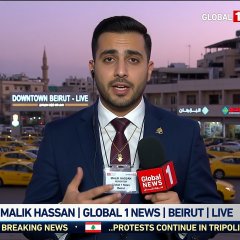
Middle East Correspondent at Global1.News. Based in Beirut, covering politics, conflict, energy, and society across the Middle East. Brings context and depth to a region often reduced to headlines.










Comments (0)