
Rhyu Si-min's Break with President Lee Jae-myung Exposes Factional Fault Lines in the Democratic Party
The public criticism leveled by Rhyu Si-min against President Lee Jae-myung has highlighted an emerging division within South Korea's ruling Democratic Party. Once a prominent supporter during the 2022 presidential campaign, Rhyu has now accused the president of sidestepping substantive prosecutorial reform and seeking to reshape the party around a narrow base rather than broadening its appeal. The Immediate Triggers of the Dispute Rhyu, former chairman of the Roh Moo-hyun...
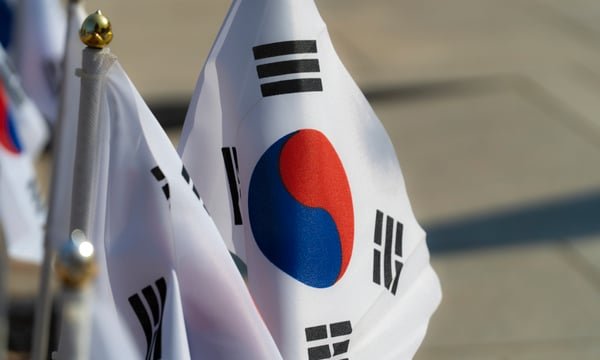
The public criticism leveled by Rhyu Si-min against President Lee Jae-myung has highlighted an emerging division within South Korea's ruling Democratic Party. Once a prominent supporter during the 2022 presidential campaign, Rhyu has now accused the president of sidestepping substantive prosecutorial reform and seeking to reshape the party around a narrow base rather than broadening its appeal.
The Immediate Triggers of the Dispute
Rhyu, former chairman of the Roh Moo-hyun Foundation, voiced his concerns in a series of statements culminating in an appearance on MBC Radio's "News Highkick" on July 23, 2026. He warned of a "catastrophic split" in the pro-government camp and criticized what he described as efforts to "demolish and redevelop" the Democratic Party. Rhyu specifically cautioned against the pro-Myung faction's apparent interest in canceling indictments against political opponents, framing such moves as inconsistent with earlier reform commitments.
These remarks drew swift rebuttals from within the party. Pro-Lee lawmaker Lee Geon-tae labeled them "shocking and irresponsible," predicting that Rhyu Si-min's political approach would ultimately fail. President Lee and former President Moon Jae-in held a lunch meeting amid these tensions, though no joint statement emerged from the encounter. As of July 20, 2026, Lee's approval rating stood at 48.4 percent according to UPI polling.
Rhyu Si-min’s reference to “demolish and redevelop” the Democratic Party drew on a long-standing critique of top-down organizational engineering within progressive circles. Observers have noted that this phrasing echoes earlier warnings from Roh-era figures who feared that electoral victories would be followed by efforts to marginalize independent voices in favor of a more centralized leadership structure. The Gongchumo group of lawmakers, widely understood to favor dismissal of pending charges against President Lee, became a focal point in these exchanges, illustrating how prosecutorial discretion and party discipline intersect in contemporary Korean politics. Such dynamics have repeatedly tested the boundary between legitimate political protection and the erosion of institutional norms.
Lee Geon-tae’s characterization of Rhyu’s intervention as “shocking and irresponsible” reflected the pro-Myung camp’s concern that external commentary could embolden opposition narratives about selective justice. The subsequent lunch between President Lee and former President Moon Jae-in occurred against this backdrop, with participants reportedly discussing ways to maintain continuity between successive progressive administrations without reopening factional wounds. Korean media accounts emphasized the absence of any public communiqué, underscoring the private nature of efforts to manage intra-party friction at a moment when legislative priorities remain pending.
Historical Patterns of Factionalism in the Democratic Party
South Korea's progressive camp has long been shaped by competing networks rooted in successive administrations. Rhyu Si-min's career illustrates these continuities. He served as Minister of Health and Welfare under President Roh Moo-hyun from 2003 to 2008 and later supported Moon Jae-in's 2017 presidential bid. In 2022, Rhyu positioned himself as a bridge between the pro-Roh and pro-Moon circles and the emerging pro-Lee Jae-myung group during the Democratic Party primary.
The current tension reflects a recurring dynamic in which reform-oriented intellectuals clash with party leaders who prioritize organizational control. The pro-Myung faction, centered on President Lee, now faces pushback from figures who view institutional renewal as secondary to consolidating power. This pattern echoes earlier episodes in which progressive governments struggled to maintain cohesion after electoral victories.
The three principal networks within the Democratic Party—pro-Roh, pro-Moon, and pro-Myung—emerged from successive electoral cycles and the institutional vehicles that preserved each leader’s legacy. The Roh Moo-hyun Foundation has functioned as an intellectual and organizational hub for those who entered politics during the 2003–2008 period, emphasizing participatory democracy and regional balance. Moon Jae-in’s circle, by contrast, consolidated around administrative experience gained in the Blue House and the need to defend the 2017–2022 record against conservative reversal. Lee Jae-myung’s network, centered on Gyeonggi Province governance and labor-linked constituencies, expanded rapidly after the 2022 primary contest with Lee Nak-yon, whose supporters drew more heavily from the party’s established legislative cohort.
The 586 generation—activists who reached political maturity during the 1980s democratization struggles—has supplied personnel and ideological framing across all three factions, yet generational turnover has introduced new tensions. Younger lawmakers increasingly question whether the Supreme Council’s decision-making procedures adequately accommodate post-2016 entrants whose careers began after the candlelight protests. Historical parallels with the 2004–2008 period, when pro-Roh reformers clashed with party elders over candidate nomination rules, suggest that factional accommodation has often required explicit bargaining mechanisms rather than informal mediation alone.
Consequences for Prosecutorial Reform Efforts
Rhyu's central charge concerns the pace and scope of prosecutorial reform. He argues that the administration has avoided structural changes that would limit the prosecutor's office's investigative reach over political cases. Such reforms were a recurring theme in both the Roh and Moon administrations, yet implementation has remained incremental.
Any perception that the current leadership is willing to adjust indictments for partisan advantage risks undermining the credibility of reform initiatives. Observers note that selective application of legal processes could reinforce public skepticism toward institutions already viewed as politicized. The Democratic Party's upcoming leadership election on August 17, 2026, with candidates Kim Min-seok, Song Young-gil, and Jung Cheong-rae, will likely test whether reform rhetoric translates into concrete legislative proposals.
Prosecutorial reform in the Korean context centers on disentangling investigative authority from prosecutorial discretion, a separation long advocated to curb the office’s expansive reach over political and corporate cases. The Corruption Investigation Office for High-ranking Officials was established precisely to create an independent investigative body insulated from the Prosecutor General’s oversight. Rhyu’s critique highlights the risk that incremental adjustments, rather than statutory limits on investigative jurisdiction, may leave intact the structural incentives that have historically allowed prosecutors to influence electoral outcomes.
The Choi Soon-sil scandal and the subsequent impeachment of Park Geun-hye demonstrated how prosecutorial decisions can both expose and exacerbate perceptions of politicized justice. Progressive administrations since 2017 have sought to institutionalize safeguards against such patterns, yet implementation has depended on legislative majorities that remain vulnerable to internal division. Any appearance that the current leadership is prepared to calibrate indictment policy for factional advantage could therefore undermine the credibility of reform legislation still awaiting final Assembly action.
Strategic Implications for Party Cohesion
The split carries immediate consequences for the Democratic Party's internal balance. Rhyu has stated he has no plans to meet with President Lee, signaling that mediation may prove difficult in the short term. The three contenders for party leadership must navigate these divisions while preparing for potential by-elections and the broader 2028 presidential contest.
Failure to reconcile the pro-Myung core with reform-minded progressives could fragment the party's legislative agenda. Historical precedents suggest that open factional warfare often reduces a ruling party's capacity to advance signature policies, particularly those requiring cross-factional support in the National Assembly.
Broader Effects on South Korean Democratic Institutions
At a systemic level, the episode underscores the challenges of maintaining programmatic consistency within Korea's major parties. When prominent intellectuals publicly question a president's commitment to institutional reform, it amplifies debates over executive accountability and the rule of law. These discussions extend beyond partisan lines and touch on public trust in the judiciary and prosecutorial apparatus.
The Democratic Party's handling of this rift will influence perceptions of how progressive governments manage internal dissent. If the leadership election produces a platform that reaffirms reform goals without alienating core supporters, the party may stabilize. Conversely, prolonged public discord could weaken its position relative to opposition forces and complicate inter-Korean policy coordination, an area where domestic political capital is often essential.
The public airing of differences over “prosecutorial dictatorship” (gumchal dokjae) versus structural reform revives a debate that has shaped Korean constitutional discourse since the 1990s. Progressive intellectuals, often described collectively as jinbo jisigin, have historically served as external monitors of executive power, drawing on academic and civic networks to articulate standards of institutional accountability. When such figures distance themselves from a sitting president, the episode signals deeper uncertainty about whether reform commitments will survive the pressures of governing.
Public opinion surveys conducted by non-partisan research institutes have consistently shown that ordinary citizens view prosecutorial independence as a core indicator of democratic consolidation, with trust levels fluctuating in response to high-profile political cases. The Democratic Party’s forthcoming leadership contest therefore carries implications beyond internal balance: the manner in which candidates address Rhyu’s concerns may either reinforce or erode the perception that progressive governance can reconcile factional legacies with consistent rule-of-law commitments. Reconciliation would likely require explicit platform language reaffirming statutory limits on prosecutorial power, while continued fracture could invite opposition parties to position themselves as defenders of institutional neutrality.
Outlook for the August Leadership Contest
The August 17 election offers the clearest near-term test of the party's direction. Each candidate will need to address Rhyu's critique while maintaining ties to the presidential office. The outcome will shape whether the Democratic Party prioritizes organizational consolidation or renewed emphasis on institutional reform. In either case, the episode serves as a reminder that factional legacies from the Roh and Moon eras continue to structure contemporary progressive politics in South Korea.
By Prof. David Park, Staff WriterThis article was produced with AI-assisted research and editorial support. Reporting is based on sources cited in the article.
What's Your Reaction?
 Like
0
Like
0
 Dislike
0
Dislike
0
 Love
0
Love
0
 Funny
0
Funny
0
 Wow
0
Wow
0
 Sad
0
Sad
0
 Angry
0
Angry
0
East Asia/Technology Correspondent at Global1.News. Seoul-based voice covering Korean politics, technology, business, and culture. Analyzes how technology and geopolitics intersect across East Asia.












Comments (0)