
State Dept Targets Trita Parsi Over Pro-Israel Lobby Role
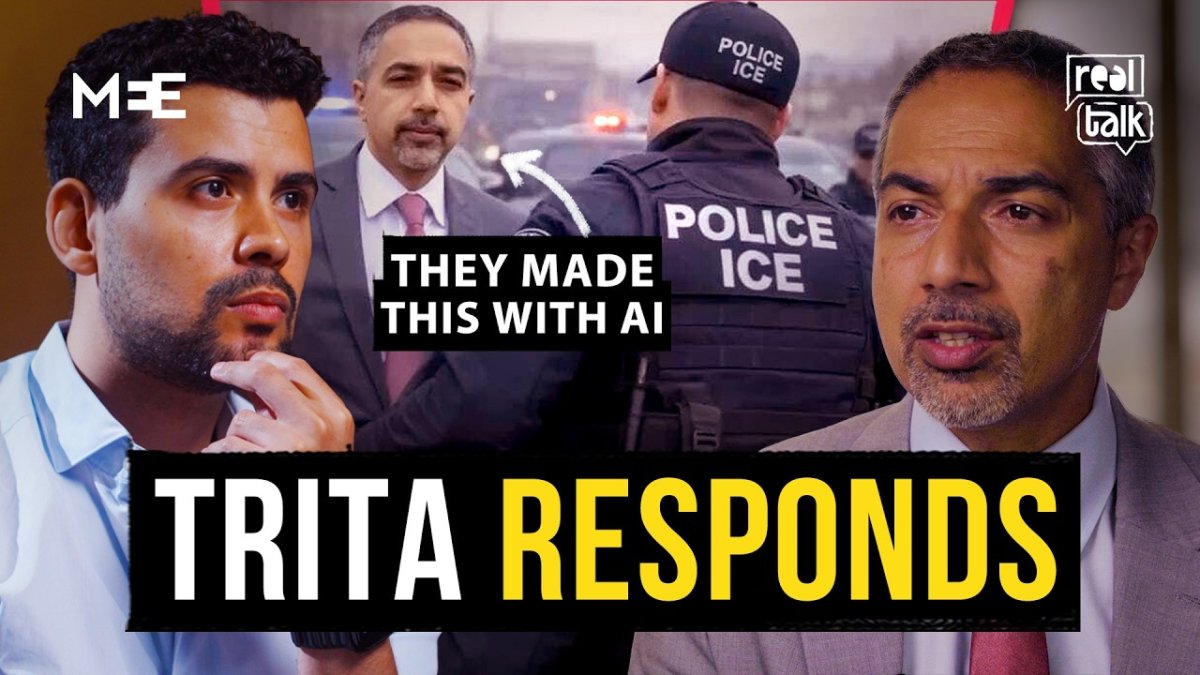
A Middle East Eye video on the Real Talk program has spotlighted the State Department’s investigation into Trita Parsi, exposing how pro-Netanyahu and pro-Likud groups have spent twenty-five years targeting his advocacy for U.S.-Iran diplomacy.
State Dept Investigation Targets Trita Parsi Over Lobby Pressure
Washington, DC — In a recent Middle East Eye report on the Real Talk program, Trita Parsi describes how pro-Netanyahu and pro-Likud groups have pursued him for twenty-five years over his consistent calls for diplomacy between the United States and Iran. The discussion highlights an ongoing State Department investigation that threatens his permanent residency after more than three decades in the country. This case illustrates a wider pattern of pressure against analysts who question unconditional U.S. support for Israeli policies.
The Investigation and Its Origins
The probe began after a June 2026 article in The Free Press questioned Parsi’s presence in the United States. The piece followed years of criticism from organizations aligned with the Israeli government, including AIPAC. Parsi, executive vice president of the Quincy Institute for Responsible Statecraft, has long advocated restraint in U.S. foreign policy. The Quincy Institute promotes diplomatic engagement rather than military confrontation in the Middle East. Figures were not immediately available on the exact cost of the legal defense now underway, yet the Quincy Institute has allocated resources to prepare for possible deportation proceedings.
The Campaign Against a Scholar
In June 2026, Jay Solomon’s article in The Free Press laid out a detailed dossier accusing Trita Parsi of undisclosed ties to Iranian officials, relying on selective leaks and anonymous State Department sources. The piece framed Parsi’s decades of advocacy for diplomacy as covert influence operations, echoing earlier McCarthy-era tactics against scholars who challenged prevailing foreign-policy orthodoxies. Bari Weiss’s publication amplified the claims through coordinated social-media threads and follow-up pieces that recycled the same unverified allegations, creating an echo chamber that pressured mainstream outlets to treat the smears as legitimate news rather than partisan attacks.
The State Department subsequently launched an investigation into Parsi’s activities, examining his communications and funding sources despite his status as a U.S. permanent resident for more than thirty years. Parsi, who arrived in the United States in the early 1990s after fleeing post-revolutionary Iran, has built a career documenting the human cost of sanctions and militarized policy. The probe, initiated amid heightened tensions following the February 28, 2026 outbreak of direct U.S.-Iran hostilities, appeared designed to intimidate rather than uncover wrongdoing, as no formal charges have been filed.
Human-rights observers note that such investigations disproportionately target voices advocating de-escalation in the Middle East. Parsi’s long residency and academic contributions, including books and testimony before Congress on the failures of maximum-pressure strategies, underscore the punitive nature of the campaign. The timing, coinciding with the closure of the Strait of Hormuz and naval blockades, reveals how dissent on Iran policy is reframed as disloyalty during wartime.
Decades of Advocacy for Dialogue
Parsi received the 2010 Grawemeyer Award for his work on improving world order through analysis of U.S.-Iran relations. He has authored several books documenting the costs of confrontation and the possibilities of negotiated agreements. His positions have drawn sustained opposition from groups that favor maximum pressure on Iran and close alignment with Israeli security priorities. These groups have framed his advocacy as contrary to U.S. interests, despite his emphasis on avoiding unnecessary wars that destabilize the region.
A 25-Year Campaign
AIPAC and allied pro-Israel organizations have maintained a systematic effort to marginalize advocates of Iran diplomacy since the late 1990s. During the push for the JCPOA under the Obama administration, Parsi’s National Iranian American Council played a visible role in mobilizing Iranian-American communities and providing data on the humanitarian impact of sanctions. Lobbying records show millions spent opposing the deal, with coordinated attacks labeling supporters as agents of the Iranian regime.
The 2026 U.S.-Iran war, which began on February 28 and quickly escalated into regional blockades, intensified these efforts. Parsi’s calls for renewed negotiations were portrayed as undermining U.S. military objectives. This pattern mirrors the broader crackdown on Palestine advocacy, where scholars and journalists critical of Israeli policy face similar accusations of dual loyalty or foreign influence. Congressional hearings and campus investigations have targeted both Iran-diplomacy advocates and Palestinian-rights activists, revealing a unified strategy to equate criticism of U.S. or Israeli policy with security threats.
Historical analysis shows these campaigns have chilled academic freedom and public debate. Former diplomats have described how fear of lobby-driven scrutiny led officials to avoid engagement with Iranian counterparts, prolonging conflicts that exact heavy civilian tolls across the region.
Connection to the 2026 U.S.-Israel Campaign Against Iran
Parsi publicly opposed the military actions that began on February 28, 2026, describing them as both catastrophic and avoidable. His arguments centered on the human and strategic toll such escalation would impose on civilian populations across the Middle East. Palestinian communities have long experienced the ripple effects of regional conflicts involving Iran and its allies. Displacement, restricted movement, and economic strain intensify when broader hostilities escalate. The campaign against Parsi coincides with these developments, raising questions about efforts to limit debate on policies that affect Palestinian daily life under occupation.
Pressure on Voices Critical of Israeli Policy
The targeting of Parsi fits within a larger environment where advocacy for Palestinian rights faces institutional resistance in the United States. Organizations monitoring free expression have documented increased scrutiny of academics, journalists, and analysts who link Israeli actions in the occupied territories to wider regional tensions. Parsi’s criticism of the U.S.-Israel approach to Iran intersects with his recognition that unresolved Palestinian issues fuel instability. This overlap has made him a focal point for groups seeking to maintain a narrow range of acceptable discourse on Middle East policy.
Human Consequences for Families and Communities
Deportation proceedings carry direct effects on individuals who have built lives in the United States. Parsi’s case involves potential separation from professional networks and personal ties accumulated over thirty years. Similar pressures have affected Palestinian-American families whose relatives face travel restrictions or legal challenges tied to political expression. These measures disrupt community organizing, educational initiatives, and humanitarian work that address conditions in Gaza and the West Bank. The uncertainty created by such investigations extends beyond one person to influence others weighing whether to speak on related topics.
Solidarity Efforts and Legal Preparations
Drop Site News circulated a petition in support of Parsi that gathered backing from journalists and academics. The Quincy Institute has funded legal preparations to respond to the State Department inquiry. These responses reflect a recognition that sustained campaigns against individual analysts can chill broader discussion. Palestinian civil society organizations have drawn parallels to their own experiences with restrictions on movement and expression under occupation, where dissent is often met with administrative measures rather than open debate.
The Backlash and Solidarity Campaign
The Drop Site News petition, launched in response to the smears, quickly gathered signatures from over 1,200 academics, journalists, and former officials, including prominent human-rights defenders who condemned the targeting as an assault on free expression. The Quincy Institute established a legal preparation fund to support Parsi and others facing similar investigations, emphasizing the need to protect independent analysis during active conflict.
Democracy Now! and other independent outlets highlighted the case as part of a larger pattern of intimidation, with hosts noting that Parsi’s work has consistently prioritized verifiable data on sanctions’ effects on Iranian civilians. The campaign backfired by drawing renewed attention to Parsi’s scholarship; his interviews and writings on the human-rights consequences of the Hormuz blockade reached wider audiences than before the attacks.
Solidarity statements stressed that silencing experts who advocate diplomacy undermines prospects for de-escalation. The visible pushback demonstrated that coordinated smears can galvanize rather than isolate targeted individuals when met with organized defense grounded in principles of open discourse.
Implications for Regional Stability and Rights
The effort to remove Parsi from the United States occurs alongside continued Israeli operations in Palestinian territories and heightened tensions with Iran. Diplomacy remains the primary mechanism cited by analysts for reducing the risk of wider conflict that would further harm civilian populations. Palestinian perspectives emphasize that sustainable security for all parties requires addressing root causes, including the occupation and the denial of self-determination. Silencing analysts who connect these issues limits the information available to policymakers and the public. The outcome of the current investigation will indicate how far institutional tolerance extends for perspectives that challenge prevailing alignments in U.S. Middle East policy.
By Fatima Al-Rashid, Staff Writer
This article was produced with AI-assisted research and editorial support. Reporting is based on sources cited in the article.
What's Your Reaction?
 Like
0
Like
0
 Dislike
0
Dislike
0
 Love
0
Love
0
 Funny
0
Funny
0
 Wow
0
Wow
0
 Sad
0
Sad
0
 Angry
0
Angry
0
Gulf/MENA Correspondent at Global1.News. Based in Doha, covering Gulf politics, energy markets, diplomacy, and development across the Middle East and North Africa. Tracks the economic transformation of the Gulf states.











Comments (0)