
Somaliland President on Historic First State Visit to Israel
As covered in the i24NEWS report on the arrival ceremony, Somaliland President Abdirahman Mohamed Abdullahi touched down in Israel on Sunday for the first state visit by any Somaliland head of state to any foreign country, marking a breakthrough in diplomatic ties that began with Israel's recognition of Somaliland last December. The Arrival Ceremony and Welcome President Abdira
As covered in the i24NEWS report on the arrival ceremony, Somaliland President Abdirahman Mohamed Abdullahi touched down in Israel on Sunday for the first state visit by any Somaliland head of state to any foreign country, marking a breakthrough in diplomatic ties that began with Israel's recognition of Somaliland last December.

The Arrival Ceremony and Welcome
President Abdirahman Mohamed Abdullahi arrived at the presidential residence in Jerusalem on Sunday where Israeli President Isaac Herzog personally greeted him with the Somali phrase "Ku soo dhawow Israel," underscoring the personal dimension of the engagement between the two leaders. The ceremony featured Somalilanders waving Israeli flags along the route, a visible display of public support that Herzog later highlighted during his remarks. This event followed months of behind-the-scenes coordination that included a secret November 2025 trip by Abdullahi to meet Prime Minister Benjamin Netanyahu, Mossad chief David Barnea and Foreign Minister Gideon Saar.
Israeli protocol officials arranged the welcome to emphasize mutual recognition of democratic values, with the residence setting chosen for its symbolic proximity to key government buildings in Jerusalem. Abdullahi's delegation included senior Somaliland ministers focused on foreign affairs and security, reflecting the practical agenda that would dominate closed-door sessions later that day. The presence of Israeli flags alongside Somaliland banners at the site illustrated the reciprocal nature of the diplomatic opening.
Security arrangements around the presidential residence incorporated joint Israeli-Somaliland threat assessments, drawing on intelligence shared during the November 2025 meetings. The ceremony concluded with a formal inspection of an honor guard, after which the two presidents moved inside for initial bilateral talks that set the tone for expanded cooperation.
Statements from Both Presidents
President Isaac Herzog opened his remarks by praising both nations for acting with courage and realism in forging ties, noting that Somaliland's 35-year record of democratic stability contrasted sharply with the fragmentation that has persisted in Somalia since 1991. Herzog emphasized that the visit represented a practical step toward cooperation on security, counter-extremism and maritime freedom in the Gulf of Aden. He specifically referenced the strategic importance of the Berbera port as a potential hub for regional trade routes.
President Abdirahman Mohamed Abdullahi responded by stating that Israel had answered first among all nations after Somaliland declared independence in 1991, calling the recognition and the current visit a historic milestone and the opening of a new chapter. He added that he represented six million people who thank the government of Israel for extending formal recognition on December 26, 2025, the first such acknowledgment by any country. Abdullahi framed the embassy discussions as the logical next step in institutionalizing the relationship.
Both leaders agreed during the public portion of the meeting to explore the opening of embassies, with Herzog underscoring that such moves would facilitate ongoing dialogue on shared challenges including piracy and extremist networks operating across the Horn of Africa. The statements were carried live by Israeli state media and Somaliland's national broadcaster, amplifying the message to domestic audiences in both countries.
Somaliland's 35-Year Struggle and Israel's Recognition
Somaliland has maintained multiparty elections and peaceful power transfers since declaring independence from Somalia in 1991, a period during which the rest of Somalia experienced repeated cycles of civil war and clan-based fragmentation. This stability enabled the territory to develop functioning institutions, including a coast guard and customs authority at the Berbera port on the Gulf of Aden. Israel's decision to extend recognition on December 26, 2025, positioned it as the first sovereign state to formalize ties with the self-declared republic.
The secret November 2025 visit by Abdullahi to Jerusalem laid the groundwork for the recognition, during which he conferred with Prime Minister Netanyahu, Mossad chief Barnea and Foreign Minister Saar on intelligence-sharing protocols and economic projects. Those talks addressed Somaliland's need for international legitimacy after 35 years of de facto autonomy without formal diplomatic relations. Israeli officials viewed the engagement as consistent with a broader policy of cultivating partnerships in the Horn of Africa.
Abdullahi's public comments on Sunday framed the recognition as validation of Somaliland's democratic experiment, contrasting it with the continued instability in Mogadishu. The milestone also reflected Israel's interest in securing reliable partners near critical shipping lanes that connect the Red Sea to the Indian Ocean.
Security and Strategic Cooperation
Discussions between the two presidents centered on joint efforts to counter extremist groups active in the Horn of Africa, with particular attention to threats that could affect maritime traffic through the Gulf of Aden. Herzog proposed expanded intelligence cooperation modeled on existing Israeli arrangements with other African partners, while Abdullahi highlighted Somaliland's existing efforts to secure the Berbera port against piracy and smuggling. Both sides agreed to establish working groups to operationalize these priorities in the coming months.
The strategic location of Berbera, roughly 250 kilometers east of the Bab el-Mandeb strait, offers potential for Israeli technical assistance in port security and logistics infrastructure. Israeli defense officials have long monitored developments in the area due to its proximity to shipping routes that carry a significant portion of global container traffic. Somaliland's coast guard, though limited in resources, has already conducted patrols that Israeli planners see as a foundation for deeper collaboration.
Maritime freedom emerged as a shared concern, with both leaders referencing past incidents of piracy that disrupted international commerce. The talks also touched on training programs for Somaliland security personnel, potentially involving Israeli specialists in counter-extremism tactics. These practical measures are expected to be formalized once embassy channels are established.
Regional Reactions
Egypt issued a formal condemnation of Somaliland's plans to open an embassy in Jerusalem, viewing the move as a challenge to its own diplomatic positions on the Israeli-Palestinian conflict. Cairo's statement emphasized continued support for Somali territorial integrity, aligning with long-standing Egyptian policy in the Horn of Africa. The reaction underscored the diplomatic friction that Israel's recognition of Somaliland has generated among certain Arab states.
The United States reaffirmed Somali sovereignty over the entire territory on June 2, 2026, just twelve days before the state visit, signaling Washington's reluctance to endorse Somaliland's independence at this stage. The Palestinian Authority similarly criticized the engagement, issuing statements that linked the visit to broader Israeli outreach efforts in Africa. The African Union has yet to issue an official position, though internal debates continue among member states regarding recognition of breakaway regions.
Somalia’s federal government in Mogadishu denounced the visit as an infringement on its sovereignty, prompting calls for regional mediation through the Intergovernmental Authority on Development. These varied responses illustrate the complex web of alliances and rivalries that Israel's new relationship with Somaliland must navigate in the coming period.
Implications for Israel's African Strategy
The recognition of Somaliland and the subsequent state visit fit into Israel's ongoing effort to expand the spirit of the Abraham Accords into sub-Saharan and Horn of Africa regions, where competition with Chinese and Turkish influence has intensified. Israeli officials see the Berbera port as a potential counterweight to Chinese-built infrastructure projects elsewhere on the continent, offering an alternative model of partnership focused on security and governance capacity. This approach aligns with Netanyahu's long-standing emphasis on pragmatic diplomacy over ideological constraints.
By establishing formal ties with a stable democratic entity on the Gulf of Aden, Israel gains a foothold that could facilitate intelligence collection and commercial access in a region where Turkish and Chinese actors have increased their presence through port investments and military training programs. The embassy discussions announced on Sunday are expected to accelerate these advantages by providing permanent diplomatic infrastructure. Israeli strategists also view the partnership as a means to diversify energy and trade routes away from chokepoints vulnerable to Iranian or Houthi disruption.
Over the longer term, the Somaliland relationship may serve as a template for additional African openings, particularly among states that have maintained democratic institutions despite regional instability. The visit's emphasis on counter-extremism cooperation resonates with Israeli security priorities that extend beyond the Middle East, while the public display of mutual respect during the Jerusalem ceremony reinforces Israel's narrative of seeking reliable partners based on shared interests rather than historical grievances.
By Hannah Berg, Staff WriterThis article was produced with AI-assisted research and editorial support. Reporting is based on sources cited in the article.
What's Your Reaction?
 Like
0
Like
0
 Dislike
0
Dislike
0
 Love
0
Love
0
 Funny
0
Funny
0
 Wow
0
Wow
0
 Sad
0
Sad
0
 Angry
0
Angry
0
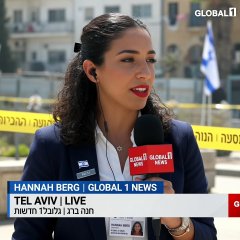
Israel Correspondent at Global1.News. Based in Tel Aviv, covering Israeli politics, security, technology, and society. Provides balanced, deeply-sourced reporting on one of the most closely-watched regions in the world.















Comments (0)