
Paraná River Drought: 72-Year Low Threatens Latin America
The Paraná River, Latin America's second-longest waterway, has plunged to its lowest level in 72 years, exposing cracked riverbeds and choking communities that depend on its flow. This is not an isolated dry spell but a stark signal of the accelerating climate crisis reshaping South America. Latin America's Second-Longest River at Lowest Level in 72 Years: Climate Crisis Deepen
The Paraná River, Latin America's second-longest waterway, has plunged to its lowest level in 72 years, exposing cracked riverbeds and choking communities that depend on its flow. This is not an isolated dry spell but a stark signal of the accelerating climate crisis reshaping South America.
Latin America's Second-Longest River at Lowest Level in 72 Years: Climate Crisis Deepens Across the Paraná Basin
Ayolas, Paraguay — June 14, 2026 — The Paraná River now stands at its lowest recorded level since 1954, according to measurements from the Comisión Mixta Paraguayo-Argentina del Río Paraná. The crisis has already triggered massive algal blooms, indefinite fishing protests, and sharp cuts in barge capacity along the Paraguay-Paraná Hidrovía. These impacts reach deep into the economies of Paraguay, Argentina, and Brazil.
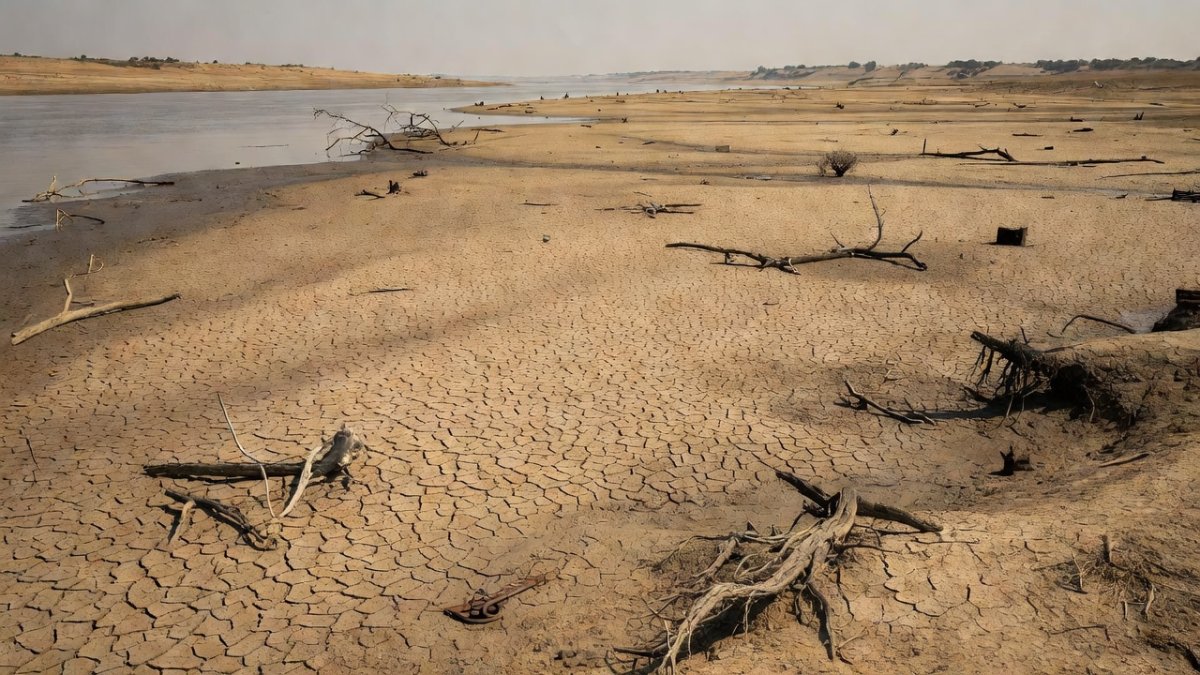
A River Under Siege: The Paraná's 72-Year Low
The Paraná River stretches 4,880 kilometers through Brazil, Paraguay, and Argentina. It forms the backbone of the Paraná-Paraguay river system that drains the La Plata Basin, the fifth-largest river basin on Earth. On June 14, 2026, COMIP recorded the Paraguay River at Asunción at approximately 2.73 meters and still descending. This marks the lowest level in 72 years and continues a pattern of severe bajantes that began intensifying after 2020.
The 2020-2021 drought, driven by La Niña conditions, left parts of the river nearly dry. The 2024-2025 episode repeated the stress. Now a developing Super El Niño compounds the damage. COMIP data show consistent daily declines through early June 2026, confirming the river's vulnerability. EBY, the binational operator of Yacyretá Dam, monitors these levels closely because every centimeter affects navigation, irrigation, and power generation across three nations. The current low exposes sandbars that block traditional fishing routes and forces vessels to lighten loads dramatically. Communities along the river watch the waterline drop daily, knowing each lost meter removes options for survival and trade that have sustained them for generations.
Green Death: The Tapón Verde That Paralyzed Ayolas
In May and June 2026 a massive algal bloom formed near Ayolas, Paraguay, directly adjacent to the Yacyretá Dam. Locals call it the tapón verde or sopa verde. The bloom turned the river surface a thick, motionless green, slashing dissolved oxygen to levels that suffocate fish. Commercial and recreational fishing nearly halted overnight. The Asociación de Pescadores Profesionales Unidos de Ayolas, represented by Rolando Ferreira, launched indefinite protests on May 26, 2026. They demanded an immediate audience with EBY director Luis Benítez to address the stagnant conditions created by dam operations.
Fishermen report empty nets and rotting catches along the banks. The green soup blocks sunlight and consumes oxygen faster than the sluggish current can replenish it. Families who once earned steady income from surubí and dorado now face empty markets and mounting debt. Rolando Ferreira has stated that the protest will continue until EBY alters release schedules and acknowledges the bloom's link to regulated outflows. The tapón verde has become a visible wound on the river, showing how reduced flow turns a living waterway into a stagnant pond. Without swift intervention, the bloom risks spreading downstream and repeating the oxygen crash that already devastated Ayolas.
Dams, Development, and a River Dying by Degrees
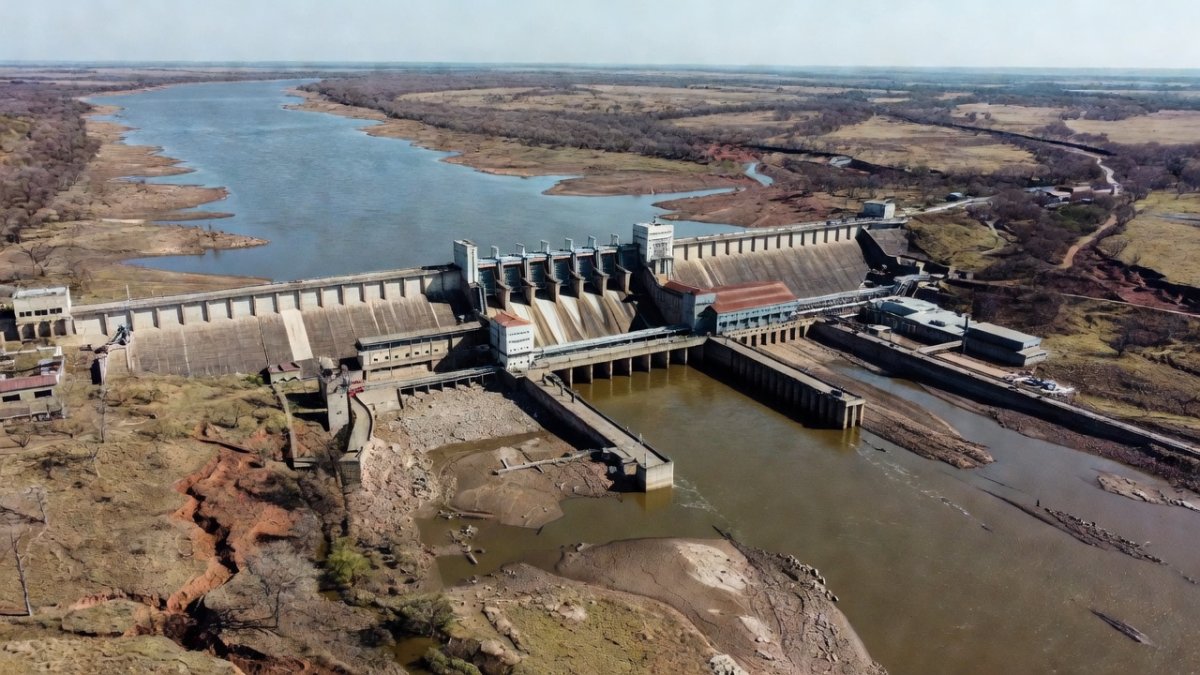
Yacyretá Dam operates twenty turbines, many at the end of their useful life. The aging equipment forces operators to maintain narrow flow windows that favor power generation over river health. The Aña Cuá expansion project, designed to add 270 megawatts, remains stalled without funding. Upstream, Itaipu Dam, one of the world's largest hydroelectric facilities shared by Brazil and Paraguay, further regulates the basin's pulse. These structures together control outflows that once varied naturally with seasonal rains. Now the river moves when turbines demand it, not when ecosystems require it.
The conflict between energy production and river vitality grows sharper each dry season. Low water reduces the dam's head, lowering efficiency and tempting operators to hold back even more flow. The stalled Aña Cuá project highlights how infrastructure promises outpace financial commitment. Without new turbines and updated operating rules, Yacyretá will continue contributing to the stagnant zones where algal blooms thrive. Binational agreements through EBY and COMIP must confront this reality. The dams were built to harness the Paraná; today they risk strangling it unless management shifts toward ecological needs alongside kilowatt targets.
Climate Change Meets the Super El Niño
A strong Super El Niño is developing in 2026 against a backdrop of record global ocean heat. Scientists note that higher temperatures increase evaporation across the basin while shifting rainfall seasonality. Deforestation in the upper basin, particularly in Brazil's Cerrado and Amazon edges, has already reduced evapotranspiration and base flows that once sustained the river through dry months. The combined effect amplifies every ENSO phase. The 2020-2021 La Niña drought and the 2024-2025 episode preview what stronger El Niño events will deliver more frequently.
Climate models project that extremes will intensify: deeper lows during dry phases and heavier floods when rains return. The current 72-year low is not an outlier but part of this trajectory. Deforestation removes the forest's capacity to recycle moisture into the atmosphere, weakening the very rains that recharge the Paraná. Without large-scale reforestation in headwater regions, even normal rainfall years will produce lower river levels. The Super El Niño now arriving will test whether governments treat these signals as temporary setbacks or as evidence that the basin's climate has fundamentally changed.
What This Means for Latin America
The Paraguay-Paraná Hidrovía carries soybean, grain, and other commodity exports from landlocked Paraguay, northern Argentina, and southern Brazil. Low water has already cut barge capacity from 2,500-3,500 tons per vessel to 1,500-2,000 tons or less. Each reduced ton raises transport costs and delays shipments to global markets. Paraguay's economy, heavily dependent on agricultural exports, feels the squeeze first. Argentina's northern ports face similar constraints, while Brazil monitors impacts on its southern grain corridors.
Energy security also hangs in the balance. Itaipu and Yacyretá supply substantial electricity to the region; lower reservoir levels threaten output precisely when demand peaks. Higher transport and energy costs ripple into food prices across South America. The drought therefore links climate, infrastructure, and trade in ways that affect every household from Asunción to Buenos Aires. Regional cooperation through COMIP and EBY becomes essential, yet political will remains fragmented. The Paraná's crisis demonstrates how one river's decline can constrain an entire continent's economic options.
The Bottom Line — What Comes Next
The Super El Niño threatens drought in the north and potential floods in the south, requiring flexible binational protocols that current dam rules do not provide. Adaptation demands immediate steps: reforestation of the upper basin to restore evapotranspiration, modernization of Yacyretá's turbines, and completion of the Aña Cuá project with ecological safeguards. Governments must also revise Hidrovía operating standards to protect minimum flows for navigation and aquatic life. Without these measures, the 72-year low will become the new baseline rather than an emergency.
Similar droughts now affect the Mississippi and Rhine, proving the Paraná is not alone. Latin America can lead by treating the river as shared infrastructure that requires climate-resilient management. The fishermen of Ayolas, the exporters along the Hidrovía, and the millions who rely on Itaipu and Yacyretá power all depend on decisions made in the coming months. The Paraná's 72-year low is a warning that must translate into coordinated action before the next drought arrives even lower.
By Elena Vasquez, Staff Writer
This article was produced with AI-assisted research and editorial support. Reporting is based on sources cited in the article.
What's Your Reaction?
 Like
0
Like
0
 Dislike
0
Dislike
0
 Love
0
Love
0
 Funny
0
Funny
0
 Wow
0
Wow
0
 Sad
0
Sad
0
 Angry
0
Angry
0

Latin America Correspondent at Global1.News. Based in Mexico City, covering politics, economics, energy, and culture across the region. Brings an on-the-ground perspective to stories spanning from the Rio Grande to Patagonia.















Comments (0)