
Sheinbaum's Plan Michoacán Drives 37% Homicide Drop
A Morning of Hope in Morelia President Claudia Sheinbaum chose Morelia for her Friday morning press conference, bringing national attention to a state long known for challenges with violence. Families in the colonias around the capital and farmers in the surrounding hills listened closely as officials shared numbers that point to real change. The 57-billion-peso Plan Michoacán

A Morning of Hope in Morelia
President Claudia Sheinbaum chose Morelia for her Friday morning press conference, bringing national attention to a state long known for challenges with violence. Families in the colonias around the capital and farmers in the surrounding hills listened closely as officials shared numbers that point to real change. The 57-billion-peso Plan Michoacán for Peace and Justice, launched late last year after the murder of Uruapan's mayor on November 1, is already showing results in daily life.
People in Michoacán know that security touches everything: whether children can walk safely to school, whether small business owners can open their doors without fear, and whether campesinos can harvest their crops without threats. The data presented offers cautious encouragement for these communities.
Clear Numbers on Fewer Homicides
National Public Security System chief Marcela Figueroa laid out the figures with care. In June the daily average stood at 2.33 homicides, a 46 percent drop from the peak month of January 2025. Even lower daily averages appeared in May at 2.10, April at 2.23, March at 1.90, and February at 2.11. June's rate was the lowest for that month in twelve years, with a 43 percent annual decline.
Across the first six months of 2026 the daily average reached 2.2, marking a 37 percent reduction from the full-year average in 2025. Compared with 2021, when the daily rate hit 7.5, the drop reaches 70.7 percent. These numbers matter to families who have lost loved ones and to neighborhoods that have lived under tension for years.
Arrests and Seizures Limit Criminal Reach
Security Minister Omar García Harfuch reported 1,342 arrests for high-impact crimes between October 1, 2024, and June 15, 2026. Authorities also seized 1,398 firearms and more than 35,000 kilograms of drugs while dismantling 30 clandestine laboratories. Such actions reduce the ability of criminal groups to extort, recruit, and control territory.
High-impact crimes, which include homicides, femicides, kidnappings, extortion, and violent robberies, averaged 17.5 per day in the first half of 2026, a 3 percent drop from 2025. While the work continues, these steps already ease pressure on local police and give residents more confidence to report problems through the 089 hotline.
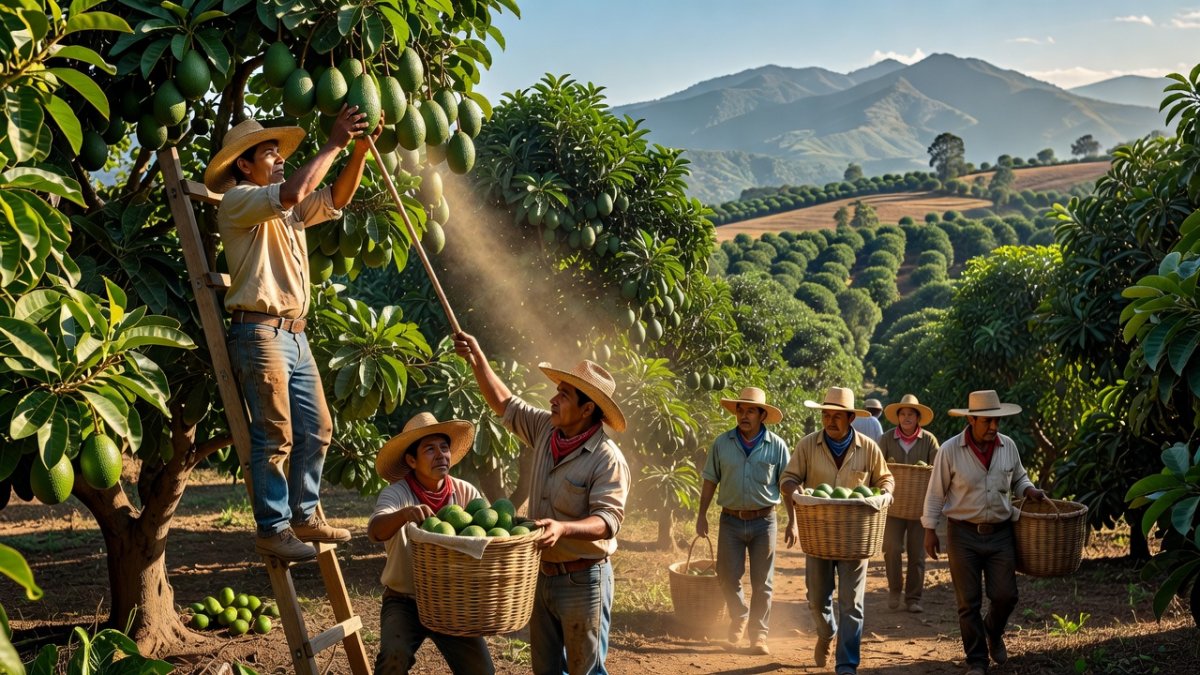
Relief for Avocado and Lime Producers
Michoacán leads the nation in avocado production and ranks high in lime output. Criminal groups have long targeted these growers with extortion demands that hurt family incomes and local economies. García Harfuch noted that reduced operational capacity for these groups directly helps producers keep their harvests and support their workers.
Campesinos in the rural areas of Uruapan and surrounding municipalities feel the difference when they can sell their fruit without constant threats. Small packing houses and transport businesses also benefit when roads feel safer. The strategy connects national efforts with the daily realities of people who grow the food that reaches Mexican tables and export markets.
Strengthening Local Institutions
García Harfuch emphasized the president's clear instructions: keep the security cabinet present in Michoacán, build intelligence and investigation capacity for state and municipal authorities, carry out targeted operations, respond quickly to citizen reports, and improve the 089 extortion hotline. These steps aim to give local police and prosecutors better tools without replacing community knowledge.
Teachers, healthcare workers, and market vendors in Morelia and smaller towns notice when authorities act on tips from neighbors. The approach respects the role of state governments while aligning with the broader security vision of the Sheinbaum administration.
National Progress and Local Stories
At the national level, homicides fell almost 30 percent in the first five months of 2026, with declines recorded in 28 of Mexico's 32 federal entities. Michoacán's results fit into this wider pattern, yet officials stress that the job is not finished. Extortion remains a priority, and efforts will continue to protect families and productive activities.
Indigenous communities, migrant workers, and maquiladora employees across the state share the same hope for safer streets and stronger institutions. The data from Morelia offers a starting point for conversations in family kitchens and town plazas about what comes next.
More than 130,000 Mexicans remain officially listed as missing nationwide, and the average of over 1,500 homicides per month in early 2026 reminds everyone that sustained work is required. Plan Michoacán shows one path forward that centers the needs of ordinary people.
Tags: Plan Michoacán, Claudia Sheinbaum, Michoacán security, homicide reduction, avocado farmers, extortion, Morelia, Omar García Harfuch, Marcela Figueroa
By Rosa Martinez, Staff Writer
This article was produced with AI-assisted research and editorial support. Reporting is based on sources cited in the article.
What's Your Reaction?
 Like
0
Like
0
 Dislike
0
Dislike
0
 Love
0
Love
0
 Funny
0
Funny
0
 Wow
0
Wow
0
 Sad
0
Sad
0
 Angry
0
Angry
0

Latin America/Andes Correspondent at Global1.News. Based in Bogota, covering politics, environment, energy, and social movements across the Andean region. Passionate about environmental journalism and communities protecting their land.













Comments (0)