
Russia's Record Assault on Kyiv Condemned by Starmer
British households awoke on the morning of Friday 3 July 2026 to devastating images of burning apartment blocks across the Ukrainian capital, after Russia unleashed its largest single assault on Kyiv since the full-scale invasion began more than four years ago. At least 30 people were killed and 91 wounded when waves of ballistic missiles, cruise missiles and long-range drones
British households awoke on the morning of Friday 3 July 2026 to devastating images of burning apartment blocks across the Ukrainian capital, after Russia unleashed its largest single assault on Kyiv since the full-scale invasion began more than four years ago. At least 30 people were killed and 91 wounded when waves of ballistic missiles, cruise missiles and long-range drones struck targets across every district of the city, in an attack that Prime Minister Keir Starmer condemned as "barbaric".
Russia Launches Record Assault on Kyiv — 30 Killed, 91 Wounded as Starmer Condemns Attack
London, UK – 3 July 2026 — British families woke to scenes of devastation as Russia launched its largest assault on Kyiv since the invasion began.
British Families Confront Fresh Horror from Kyiv
British households awoke on the morning of 3 July to the grim confirmation that Russia had unleashed its most ferocious assault yet on the Ukrainian capital. News bulletins interrupted breakfast routines with footage of burning buildings and emergency crews sifting through rubble. The scale of the overnight barrage left many viewers stunned, as reports detailed dozens of missiles and hundreds of drones converging on residential and civilian districts alike.
Prime Minister Keir Starmer issued an immediate and forceful response. “We are utterly appalled by Russia’s latest barbaric assault on Kyiv,” he stated, his words carrying the weight of Britain’s continued commitment to Ukraine. Downing Street sources indicated that the attack had been under discussion in the early hours, with ministers already reviewing options for additional support. The tone from Westminster was one of measured outrage rather than surprise, reflecting the grim regularity of such events.
The assault itself began shortly after midnight Kyiv time on 2 July. Air-raid sirens wailed across the city as residents hurried to shelters. By dawn the extent of the destruction was becoming clear, with multiple districts reporting direct hits. International media quickly framed the strike as a deliberate escalation, timed to maximise civilian impact and test Ukraine’s depleted air defences.
The Scale of the Assault: A Record Barrage
Russian forces fired 74 missiles and 496 drones during the night of 2 July. Of these, 28 ballistic missiles were directed solely at Kyiv, establishing a grim new record for a single strike on the capital. Ukrainian air defences performed heroically, intercepting 48 missiles and 476 drones, yet the sheer volume overwhelmed the system. Twenty-five ballistic missiles and twelve drones evaded interception, striking 33 separate locations spread across every district of the city.
Damage assessments conducted at first light revealed more than thirty affected sites. An ambulance station in one district was left partially collapsed, while a scientific research institute suffered a direct hit that destroyed laboratories and archives. A hotel popular with foreign journalists and aid workers was also struck, alongside several commercial premises. Rescue services reported that fires continued to burn at multiple locations well into the following day.
Military analysts noted that the concentration of ballistic missiles represented a calculated attempt to saturate Kyiv’s remaining Patriot batteries. The pattern suggested Russia was deliberately probing for gaps in coverage, a tactic that has become increasingly common as the war enters its fifth year.
The Human Cost Mounts in Kyiv’s Districts
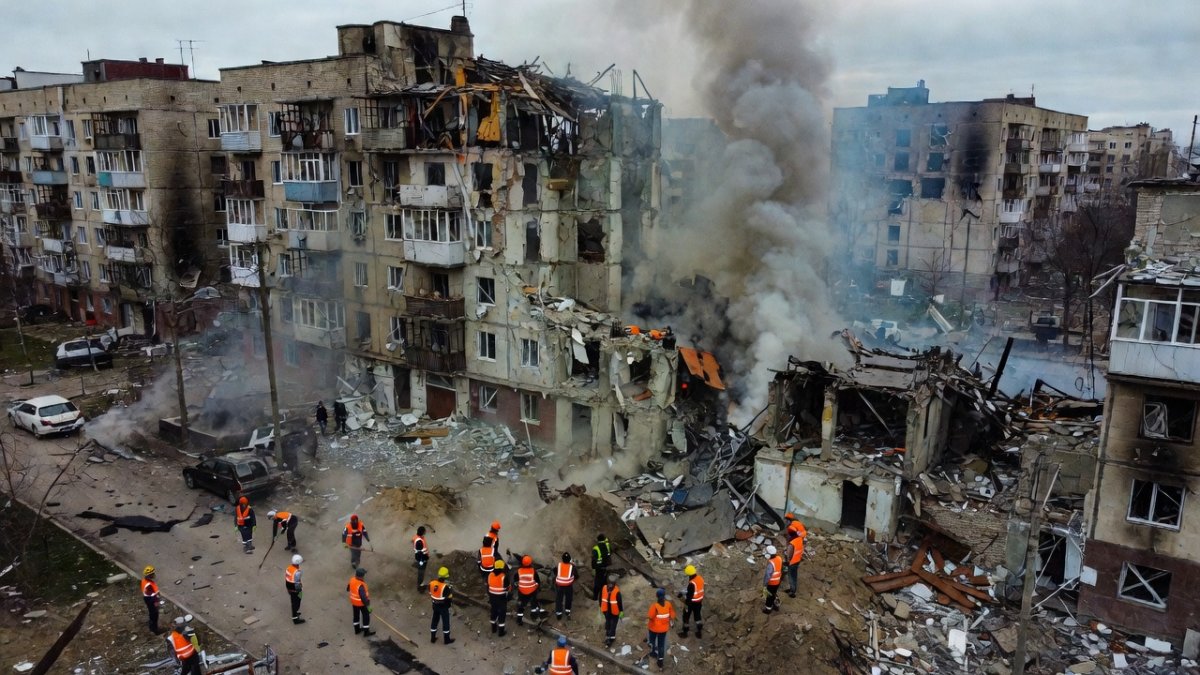
Thirty people were confirmed dead and ninety-one injured in the attack, among them two children. Mayor Vitali Klitschko described the assault as the “most massive” Kyiv had endured, a characterisation borne out by the spread of destruction. A national day of mourning was declared for 3 July, with flags lowered across government buildings and a minute’s silence observed in towns and cities throughout Ukraine.
Rescue teams worked without pause through the night, particularly in the Darnytskyi and Shevchenkivskyi districts where several apartment blocks had been hit. Cranes and heavy machinery arrived at first light to clear debris, while paramedics triaged the wounded in makeshift stations. Hospitals across the capital reported severe strain on capacity, with operating theatres running continuously and blood supplies running low.
Local residents spoke of the terror of sheltering in basements as explosions shook the ground above. Many had grown accustomed to nightly alerts, yet the intensity of this barrage exceeded previous experiences. Community volunteers quickly organised food and water distribution points for those displaced from their homes.
Zelensky Demands Urgent Air-Defence Reinforcements
President Volodymyr Zelensky used his morning address to underline Ukraine’s desperate need for 140 additional Patriot missiles. With Russia capable of launching approximately seventy ballistic missiles in a single wave, current stockpiles are insufficient to guarantee protection for major cities. “Putin is losing this war,” Zelensky declared. “The only thing he can do is intimidate people and kill civilians.”
The shortage of air-defence interceptors has become a critical vulnerability. Ukrainian commanders have repeatedly warned that without accelerated Western deliveries, further mass casualty events are inevitable. Criticism has focused on bureaucratic delays in production and shipping, which have left frontline units rationing missiles during previous attacks.
Defence officials in Kyiv are now prioritising the protection of energy infrastructure and civilian districts over military targets. This reallocation reflects the grim reality that Russia’s strategy has shifted decisively towards terrorising the population rather than achieving battlefield gains.
Starmer and European Allies Unite in Condemnation
Keir Starmer expanded on his initial statement during a press conference at Downing Street. He pledged that Britain would stand with Ukraine “for as long as it takes” and confirmed that fresh support packages were already in preparation. The Ministry of Defence later released details of additional training programmes and equipment deliveries scheduled for the coming weeks.
The European Council convened an emergency session to review existing sanctions and consider further measures targeting Russia’s military-industrial base. EU foreign policy chief Kaja Kallas urged member states to close loopholes that have allowed Russia to circumvent restrictions on dual-use technology. Germany issued a particularly strong statement, with the Chancellor describing the attack as “a new low in Putin’s campaign of terror”.
Diplomatic sources indicated that discussions are underway about accelerating the delivery of long-range strike capabilities to Ukraine. While no formal announcement has yet been made, the political momentum in European capitals appears to favour a more robust response than in previous months.
Fuel Shortages and Growing Disquiet Inside Russia
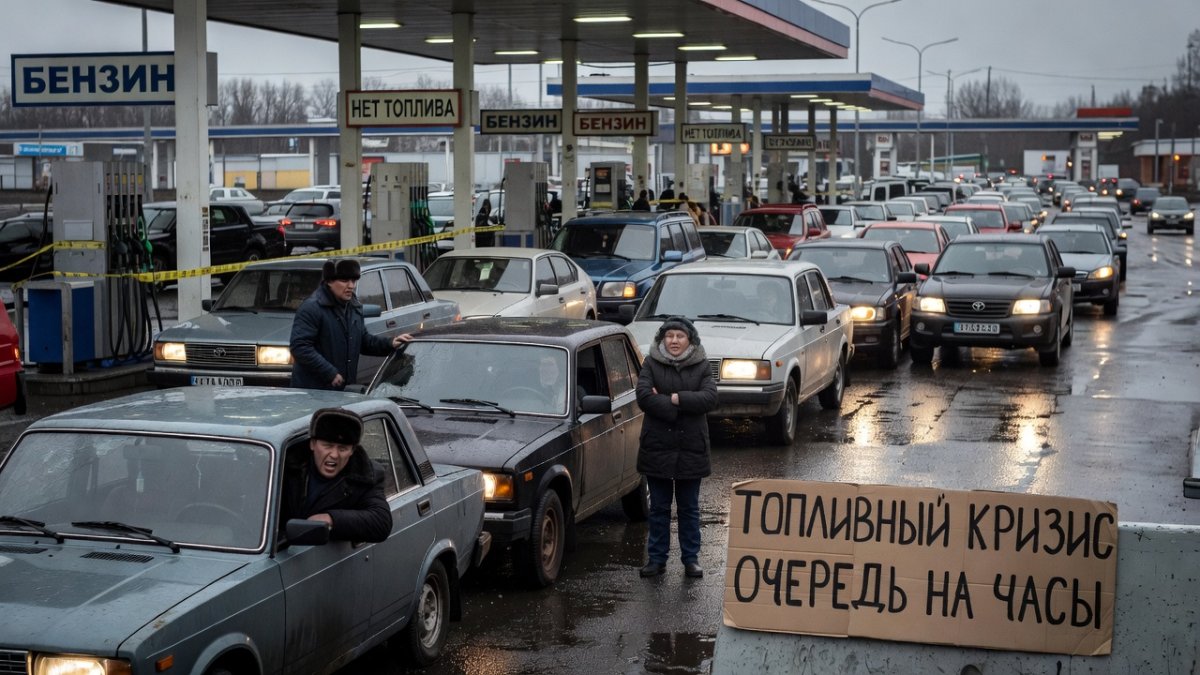
Ukrainian drone strikes have disabled roughly a quarter of Russia’s refining capacity, triggering visible strain across the country. Long queues formed at petrol stations in both Moscow and St Petersburg as drivers sought to fill their tanks before further restrictions took effect. Rationing has been introduced in several regions, limiting civilian vehicles to between twenty and thirty litres per transaction.
President Putin acknowledged the difficulties during a televised address but vowed that Russia would respond with further escalation. His remarks did little to calm public anxiety. Reports from independent Russian media suggest that even among traditionally loyalist circles, questions are being raised about the sustainability of the war effort.
The conflict has now lasted longer than the First World War. Economic pressures are beginning to erode the narrative of inevitable victory that state media has promoted for years. Agricultural regions are particularly affected, with fuel shortages threatening the autumn harvest and raising the prospect of food price spikes in the coming months.
The Broader Cost of a Protracted Conflict
Independent estimates place total casualties on both sides at approximately two million, with more than 450,000 Russian soldiers confirmed dead. These figures represent an enormous demographic and economic burden for Russia, one that is increasingly difficult to conceal from the domestic population. The loss of young men has left many rural communities depleted of working-age residents.
Russia’s economy continues to suffer under the weight of sanctions and military expenditure. The agricultural sector, already hampered by fuel shortages, faces additional challenges from disrupted supply chains and labour shortages. Household budgets are under pressure as inflation erodes purchasing power and basic goods become harder to obtain.
Public trust in the Kremlin’s narrative shows signs of fraying. While outright opposition remains dangerous, quiet expressions of fatigue are becoming more common in private conversations. The war’s duration has transformed what was once presented as a swift operation into a grinding national ordeal.
Implications for Britain’s Defence Posture
The attack has prompted fresh debate within Whitehall about the adequacy of Britain’s defence spending. Treasury officials are assessing the fiscal implications of sustained military aid, while the Ministry of Defence reviews long-term procurement plans. The defence industry in the North West, already benefiting from increased orders, is expected to see further expansion if commitments are maintained.
Public opinion remains broadly supportive of continued assistance to Ukraine, though concerns about domestic cost-of-living pressures persist. Families of British military trainers currently serving in Ukraine have expressed quiet anxiety about the heightened risks following the escalation. Government sources insist that all necessary protective measures are in place.
Strategic planners are examining how Britain might contribute to a more robust European air-defence architecture. Discussions include the possibility of joint procurement initiatives with European partners to accelerate production of critical interceptors.
The Bottom Line: A Decisive Choice for the West
Ukraine’s request for 140 Patriot missiles now sits at the centre of Western deliberations. The outcome of these discussions will shape the trajectory of the conflict in the months ahead. Britain faces a clear choice between deeper engagement and a more cautious posture that risks leaving Kyiv exposed to further massed strikes.
The coming weeks will reveal whether European capitals can translate their condemnations into tangible increases in defensive capability. For Ukrainian civilians, the urgency could not be greater. The war’s next phase will be determined as much by political will in London and Brussels as by events on the battlefield itself.
By Erica Thornton, Staff Writer
This article was produced with AI-assisted research and editorial support. Reporting is based on sources cited in the article.
What's Your Reaction?
 Like
0
Like
0
 Dislike
0
Dislike
0
 Love
0
Love
0
 Funny
0
Funny
0
 Wow
0
Wow
0
 Sad
0
Sad
0
 Angry
0
Angry
0

US Politics and Policy Correspondent at Global1.News. Based in Washington DC, covering American politics, policy, elections, and the courts. Knows how the system works and tells you what it actually means.











Comments (0)