
Iran Mourns Khamenei as 20 Million Expected at Funeral
Mourning begins Public mourning has begun across Iran following the death of former Supreme Leader Ayatollah Ali Khamenei in joint US-Israel strikes in February, according to reports from AFP. Officials told AFP that the funeral in Tehran could draw as many as 20 million mourners, with the public turnout expected to serve as a "referendum" for the Islamic Republic. Funeral even
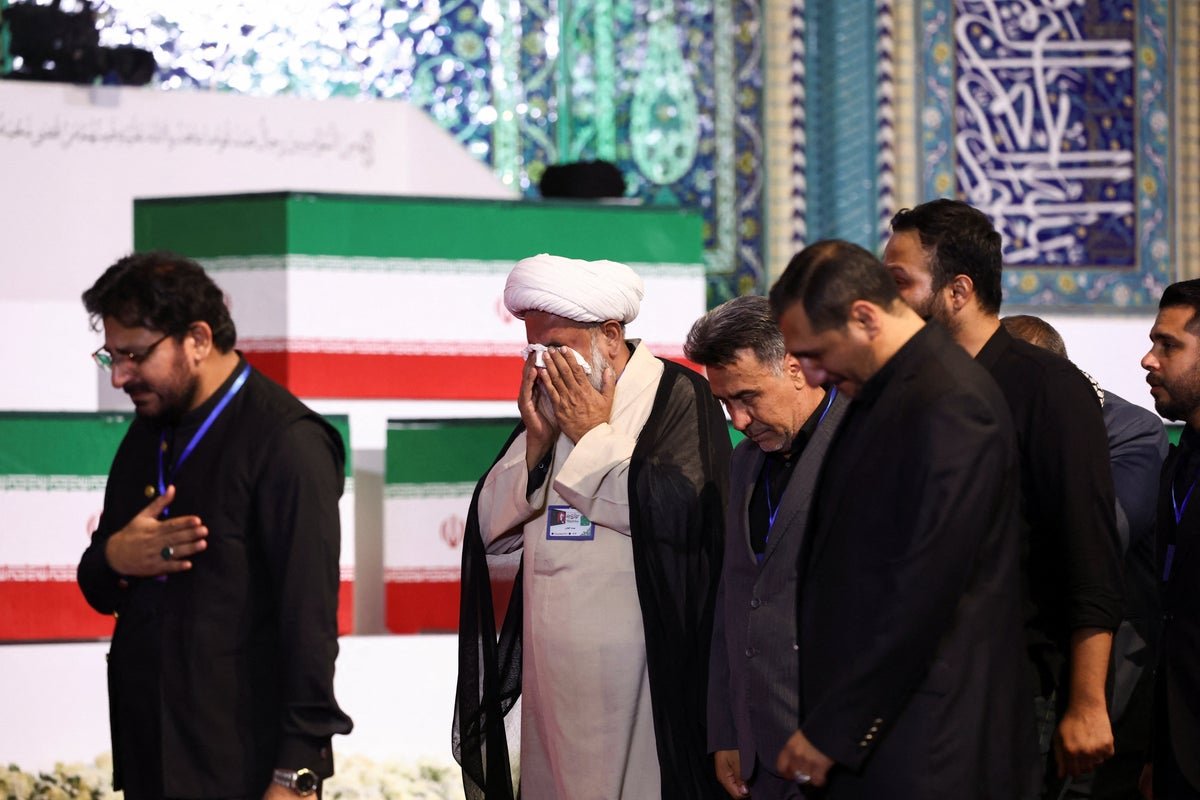
Mourning begins
Public mourning has begun across Iran following the death of former Supreme Leader Ayatollah Ali Khamenei in joint US-Israel strikes in February, according to reports from AFP. Officials told AFP that the funeral in Tehran could draw as many as 20 million mourners, with the public turnout expected to serve as a "referendum" for the Islamic Republic. Funeral events are scheduled to begin over the weekend in Tehran, followed by mass processions next week in Qom and Mashhad, as well as ceremonies in Iraq.
Qom Friday prayer leader Ayatollah Mohammad Saidi declared to state media that the large public turnout at the funeral procession of the martyred leader and the other martyrs will, in effect, be another referendum for the Islamic Republic. This framing positions the gatherings as a demonstration of continued support amid heightened regional tensions. State media coverage has emphasised the scale of the planned events to underscore national unity.
Mass processions are also planned through Qom and Mashhad, extending the mourning period over several days. AFP reporting highlights the logistical challenge of managing such large crowds in the capital and other holy cities. The events coincide with ongoing military posturing, adding a layer of complexity to the official narrative of national solidarity.
Analysts note that the emphasis on referendum-style participation reflects efforts by Iranian authorities to project resilience following the strikes. AFP sources indicate that the scale of attendance will be closely watched both domestically and internationally as a barometer of regime stability.
Warnings to US and Israel
Iran has issued direct warnings to Donald Trump and Israel against launching strikes during the state funeral period. Ali Abdollahi, commander of Khatam al-Anbiya Central Headquarters, stated that the enemies of Iran should avoid a miscalculation or else face harsh retaliation, as reported by state media outlets.
Iranian parliament speaker Mohammad Bagher Ghalibaf has claimed that avenging former supreme leader Ali Khamenei means freeing Muslims from oppression at the hands of the US and Israel. During a meeting with senior Amal Movement official Khalil Hamdan, Ghalibaf said without doubt that avenging the martyred leader of the revolution means nothing other than freeing all Muslims from the oppression of the United States and the Zionist regime.
Ghalibaf further described the great lesson from Khamenei's leadership as the need for Muslims and Shi'ites to remain united. This messaging, delivered through official channels, seeks to frame the conflict in broader regional and sectarian terms. The statements carry an edge that signals potential escalation if funeral proceedings are disrupted.
These warnings come at a sensitive moment, with Iranian officials using public platforms to deter external interference. The tone from both military and parliamentary figures suggests a coordinated effort to protect the mourning period while maintaining pressure on adversaries.
IRGC Strait of Hormuz deployment
The Islamic Revolutionary Guard Corps has reportedly deployed special forces along Iran's Persian Gulf coastline to identify vessels transiting the Oman-side route through the Strait of Hormuz before they enter the waterway, Iran International reported. According to sources cited by Iran International, Guard operatives are also attempting to obtain, through Omani sources, the schedules and transit coordination details of ships using the southern route through the Strait of Hormuz.
The sources said the Guard special forces are equipped with land-based, naval and aerial intelligence-gathering systems and have recently been assigned to identify in advance any vessel planning to use the southern route and issue warnings about its passage. This deployment adds a new layer of monitoring to one of the world's most critical energy chokepoints.
Iran's joint military command has warned that all oil tankers moving through the Strait of Hormuz must use its approved routes or face a forceful response. The statement from the Khatam al-Anbiya military command, aired on Iranian state television, declared that any failure to comply, deviation from the designated route, or disregard for the navigation protocols of the Islamic Republic of Iran in the Strait of Hormuz will be met with an immediate and forceful response from the armed forces, endangering the security of the violating vessels.
The statement also noted that the continued presence of US fighter jets over the strait causes insecurity in this waterway and threatens regional security. Iran International's reporting underscores the operational focus on pre-emptive identification, raising the prospect of heightened friction in the waterway during the mourning period.
US-Saudi rift
A widening rift has opened up between Saudi Arabia and the United States because of the war in Iran, according to officials who spoke to the Wall Street Journal. The partnership between Washington and Riyadh is souring over disputes on how President Donald Trump has handled the war, the officials told the Wall Street Journal.
The US is reportedly now considering reducing its military presence in Saudi Arabia and instead putting its forces in countries it feels were more supportive during the war, including Israel and Jordan. This potential shift reflects growing frustration in Washington with Riyadh's stance.
The Wall Street Journal reporting highlights how the conflict has exposed fractures in long-standing alliances. Officials described the disagreements as significant enough to prompt a reassessment of force posture in the region.
Such developments could alter the balance of US engagement in the Gulf at a time when Iranian warnings over the Strait of Hormuz are intensifying. The Wall Street Journal sources suggest the rift may have lasting implications for how Washington manages its partnerships amid ongoing instability.
Oil markets
Oil prices rose slightly today before a long holiday weekend in the US as wary optimism held over efforts to make peace in the Middle East between the US and Iran. Brent futures were up 17 cents, or 0.24 per cent, to $72.10 a barrel, while West Texas Intermediate was up 14 cents, or 0.20 per cent.
Market movements remain sensitive to any developments concerning the Strait of Hormuz, where Iranian military commands have issued navigation warnings. The modest gains reflect traders' caution rather than outright relief, given the potential for disruption from IRGC deployments reported by Iran International.
These price levels could translate into higher costs at UK petrol pumps if tensions persist, adding pressure on household budgets already strained by energy volatility. The Foreign Office continues to monitor the situation for any spillover effects on global supply routes.
Analysts view the current uptick as a holding pattern ahead of clearer signals on whether funeral-related military posturing will ease or escalate. The figures underscore how quickly sentiment can shift in response to statements from Khatam al-Anbiya command.
Vahidi re-emerges
A powerful general who leads Iran's paramilitary Revolutionary Guard emerged from hiding as Tehran prepared for the dayslong funeral for the late Supreme Leader Ali Khamenei. Photos published online by Iranian state media showed Gen Ahmad Vahidi attending a meeting about the funeral of Khamenei, then sitting alongside his casket as Iran's theocracy held a smaller service for him Thursday night near the supreme leader's former home in downtown Tehran.
Vahidi has become a major player in formulating Iran's tough stance in negotiating a possible permanent end to the war with the United States, experts say. He is believed to be part of a small clique in direct contact with Iran's new Supreme Leader Mojtaba Khamenei, who remains in hiding after being reportedly wounded in the Feb. 28 Israeli strikes that killed his father, the elder Khamenei.
Vahidi himself has not been seen publicly since Feb. 8, weeks before the Iran war began. His reappearance at the funeral preparations signals a return to visible roles in managing both ceremonial and strategic matters.
The timing of his emergence coincides with heightened warnings over the Strait of Hormuz and funeral security. State media imagery of Vahidi alongside the casket reinforces his position within the inner circle shaping Iran's negotiating posture.
UK dimension
Whitehall is monitoring developments in Iran and the Gulf for signs of wider regional instability that could affect British interests. Officials are particularly attentive to any escalation around the Strait of Hormuz that might disrupt energy flows and feed into domestic cost-of-living pressures.
The slight rise in Brent crude to $72.10 a barrel carries direct implications for UK petrol prices, which often track global benchmarks with a lag. Any sustained increase risks adding to inflation at a time when the economy remains sensitive to energy shocks.
The Foreign Office has maintained a watching brief on the funeral arrangements and associated military movements, assessing risks to British nationals and diplomatic facilities in neighbouring states. This low-key vigilance reflects the government's preference for measured responses amid fluid conditions.
What comes next
Funeral events will begin over the weekend in Tehran before moving to mass processions in Qom and Mashhad next week, with additional ceremonies planned in Iraq. The multi-day schedule provides Iranian authorities with repeated opportunities to project strength through public displays.
Regional risks remain elevated due to the IRGC's reported deployments and navigation warnings in the Strait of Hormuz. The combination of large-scale mourning events and military signalling creates a volatile backdrop that could test the restraint urged by Ali Abdollahi of Khatam al-Anbiya.
Outlook depends heavily on whether external actors heed Iranian warnings against strikes during the funeral period. The re-emergence of figures such as Gen Ahmad Vahidi suggests continuity in the hardline negotiating posture adopted since the February strikes.
Further market reactions will be watched closely, particularly if Hormuz-related statements intensify. The coming weeks will reveal whether the public mourning serves primarily as a unifying moment or becomes a flashpoint for broader confrontation.
By Erica Thornton, Staff WriterThis article was produced with AI-assisted research and editorial support. Reporting is based on sources cited in the article.
What's Your Reaction?
 Like
0
Like
0
 Dislike
0
Dislike
0
 Love
0
Love
0
 Funny
0
Funny
0
 Wow
0
Wow
0
 Sad
0
Sad
0
 Angry
0
Angry
0

US Politics and Policy Correspondent at Global1.News. Based in Washington DC, covering American politics, policy, elections, and the courts. Knows how the system works and tells you what it actually means.










Comments (0)