
Russia's Deadly Strike on Kyiv: 27 Dead, 100+ Wounded
Night of Terror: What Happened On the night of July 2, 2026, Kyiv endured one of the most devastating assaults of the year when Russia unleashed a massive combined drone and missile barrage across the Ukrainian capital. According to the Guardian and ABC News, at least 27 civilians were killed and more than 100 others wounded in the strikes that targeted residential areas withou
Night of Terror: What Happened
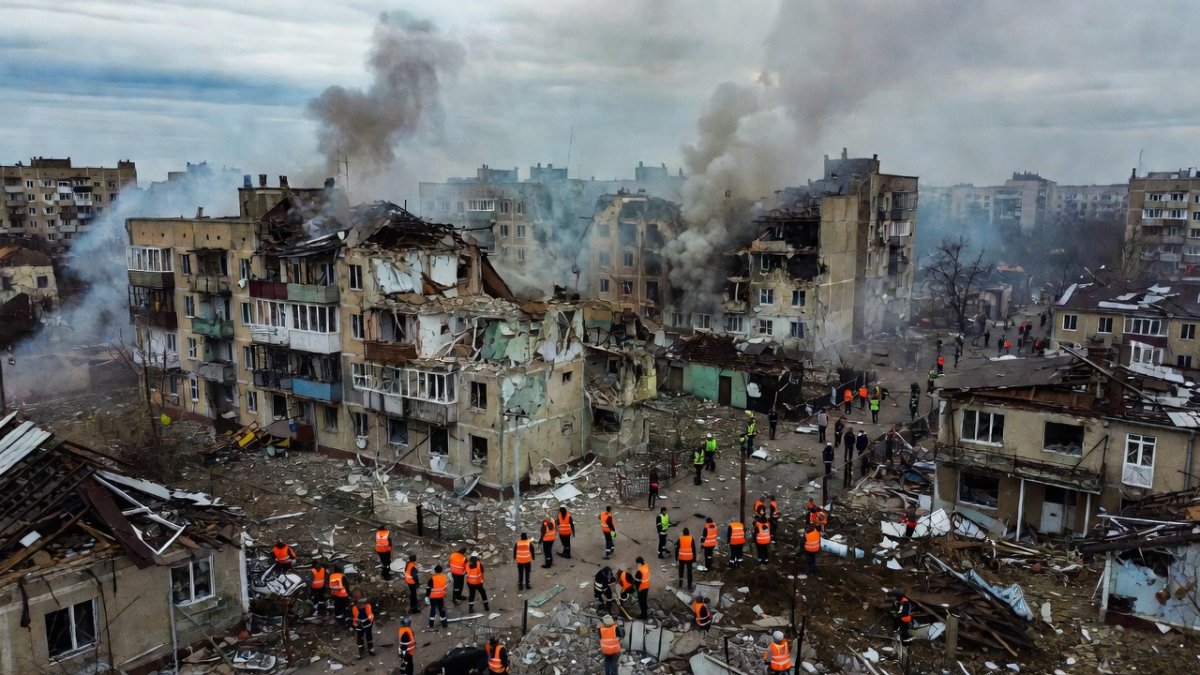
On the night of July 2, 2026, Kyiv endured one of the most devastating assaults of the year when Russia unleashed a massive combined drone and missile barrage across the Ukrainian capital. According to the Guardian and ABC News, at least 27 civilians were killed and more than 100 others wounded in the strikes that targeted residential areas without mercy. The Guardian reported that over 70 missiles were fired alongside numerous drones, overwhelming Ukrainian air defenses and raining destruction on neighborhoods from every district of the city. The Kyiv Independent confirmed that more than 20 apartment buildings were hit, along with a hotel and multiple medical facilities, leaving families trapped under rubble as rescue teams worked through the night. This was not a precision operation against military targets—it was a broad assault on civilian life that ABC News described as the deadliest strike on Kyiv this year. As someone who has covered this conflict from the start, I find these numbers sickening because they represent real mothers, children, and elderly residents whose lives were shattered in hours. Rescue operations continued into the following day, with teams pulling survivors from collapsed structures while air raid sirens wailed once more.
Russia's Retaliation Narrative
Russia framed the July 2 attack as direct retaliation for recent Ukrainian strikes on Russian oil facilities that had triggered fuel shortages inside Russia, a claim reported by France 24 and echoed in official statements from Moscow. Russian officials insisted the operation targeted sites supporting Ukraine's military capabilities, yet the verified impact tells a different story: the majority of damage fell on apartment blocks, a hotel, and hospitals across all districts of Kyiv. The Guardian's count of over 70 missiles and the Kyiv Independent's documentation of widespread residential destruction make it clear that civilian infrastructure bore the brunt. While Russia has every right to articulate its grievances over oil infrastructure, the scale of this response—killing 27 civilians per ABC News and Guardian reporting—crosses into collective punishment that no narrative can justify. Al Jazeera noted the pattern of such strikes escalating civilian suffering without advancing any stated military objective, underscoring how retaliation claims often serve as cover for broader intimidation tactics. The facts on the ground, verified across multiple outlets, reveal an attack designed to terrorize an entire city rather than respond proportionally to specific Ukrainian actions.
Zelenskyy's Response: 'We Will Retaliate'
Hours before the assault, President Zelenskyy had already warned that Russian forces were preparing a large-scale attack, a prediction that proved tragically accurate. In the aftermath, he visited the devastated Darnytskyi district and vowed that Ukraine would retaliate, statements carried by France 24. His words carried the weight of a leader watching his people suffer yet again, and they resonated with a nation that has endured repeated waves of such violence. Zelenskyy's commitment to respond is understandable given the 27 deaths and over 100 injuries documented by the Guardian and ABC News, but it also risks feeding the very cycle of escalation both sides claim to want to break. As an anchor who believes in accountability, I respect his duty to defend Ukraine while urging that any retaliation remain targeted and measured rather than mirroring the indiscriminate tactics just witnessed. Kyiv declared July 3 a day of mourning, allowing the city to grieve while rescue crews persisted in searching rubble for the missing. This moment demands leadership that protects civilians on both sides rather than perpetuating headlines of mounting casualties.
Poland Scrambles Jets — NATO on Edge
The ripple effects reached NATO's eastern flank when Poland scrambled fighter jets in response to the barrage, a move reported by CNBC that highlighted how quickly regional tensions can draw in alliance members. Polish authorities acted to secure their airspace amid fears that stray missiles or drones could cross borders, a prudent step given the volume of ordnance Russia deployed. CNBC's coverage emphasized the heightened alert status across NATO countries monitoring the situation in real time. This development transforms a bilateral conflict into a broader security concern, reminding the world that attacks on Kyiv do not occur in isolation. For viewers watching from afar, these jet scrambles signal that the war's dangers are no longer contained to Ukraine alone. The passionate truth is that every escalation like this inches the continent closer to wider confrontation, and responsible reporting requires acknowledging both the defensive necessity and the alarming precedent it sets.
The Bigger Picture: Escalation Spiral
Placing the July 2 attack in context reveals a dangerous spiral where each side cites the other's prior actions to justify larger responses. Russia's oil-facility grievances, as noted by France 24, sit alongside Ukraine's need to disrupt enemy logistics, yet the civilian toll—27 dead and widespread residential destruction per the Guardian, ABC News, and Kyiv Independent—shows how quickly military logic devolves into human tragedy. Al Jazeera has tracked similar patterns throughout the conflict, where claims of retaliation mask the reality of cities turned into battlegrounds. The deadliest strike on Kyiv this year did not occur in a vacuum; it followed months of tit-for-tat strikes that have hardened positions on both sides. My opinion, grounded in these verified reports, is that neither narrative of pure victimhood nor pure justification holds when apartment buildings and medical facilities become collateral. The international community must recognize that continued escalation only multiplies the 100-plus wounded and the families still waiting for news from rubble sites. Balanced coverage demands presenting Russia's stated rationale alongside the documented civilian impact without excusing either.
What Comes Next
The path forward requires citizens everywhere to move beyond passive concern and into concrete action that supports de-escalation and accountability. Contact your elected representatives today and demand they advocate for renewed diplomatic channels alongside continued defensive aid to Ukraine, ensuring that verified facts from the Guardian and ABC News drive policy rather than unchecked escalation. Support reputable humanitarian organizations delivering medical supplies to facilities damaged in Kyiv, using the Kyiv Independent's reporting as a guide for where needs are greatest. Share sourced updates from France 24 and CNBC with your networks to counter misinformation that inflames tensions further. Attend or organize local forums on conflict resolution to pressure leaders for negotiations that address security concerns for all parties, including Russia's oil infrastructure complaints. Finally, hold media outlets accountable by amplifying only those reports that cite specific evidence, fostering a public discourse that values verified details over emotional appeals alone. These steps empower ordinary people to influence outcomes without waiting for governments to act first.
By Jessica Ali, Global 1 News.This article was produced with AI-assisted research and editorial support. Reporting is based on sources cited in the article.
What's Your Reaction?
 Like
0
Like
0
 Dislike
0
Dislike
0
 Love
0
Love
0
 Funny
0
Funny
0
 Wow
0
Wow
0
 Sad
0
Sad
0
 Angry
0
Angry
0

Editor-in-Chief at Global1.News. Atlanta-based journalist who cuts through the BS and tells it like it is. Lead anchor, host, and the voice you hear when the spin stops and the truth starts.














Comments (0)