
Russia Forced to Import Gasoline Amid Refinery Attacks
The Paradox of a Petro-State Importing Gasoline Russia stands as the world’s third-largest exporter of refined petroleum products, yet the country now finds itself negotiating imports of gasoline to address domestic shortfalls. This reversal stems directly from Ukrainian drone attacks that have disrupted operations at multiple oil refineries and energy facilities. The situation
The Paradox of a Petro-State Importing Gasoline
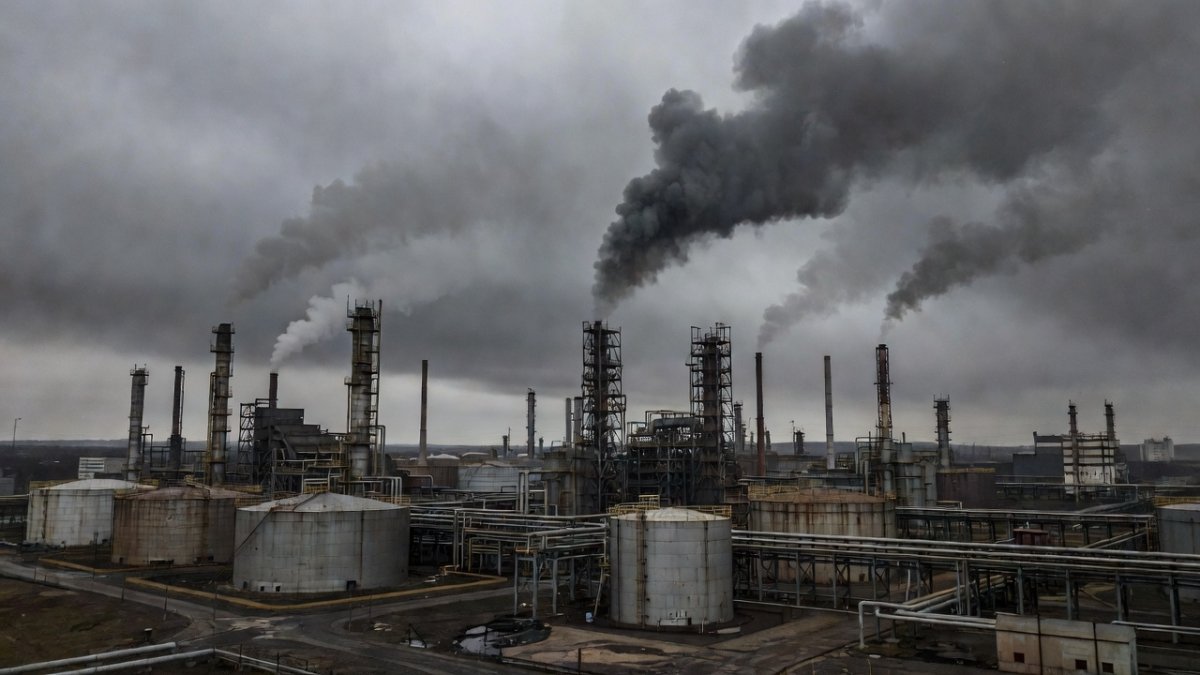
Russia stands as the world’s third-largest exporter of refined petroleum products, yet the country now finds itself negotiating imports of gasoline to address domestic shortfalls. This reversal stems directly from Ukrainian drone attacks that have disrupted operations at multiple oil refineries and energy facilities. The situation underscores how sustained strikes on infrastructure have exposed vulnerabilities in a nation long viewed as an energy powerhouse.
The paradox extends beyond mere supply numbers. As a major crude oil exporter, Russia possesses vast refining capacity under normal conditions, but recent events have forced a reevaluation of that strength. Fuel rationing measures have already appeared across regions, including annexed Crimea, highlighting the immediate effects on daily operations and economic stability during peak seasons.
Officials have framed the import discussions as a temporary stabilization tool rather than a permanent shift. However, the need to seek external supplies reveals the depth of the production challenges created by the attacks. This development arrives precisely when summer travel and agricultural activities demand reliable fuel access nationwide.
Analysts interpret the move as evidence that targeted infrastructure damage can rapidly alter a country’s energy balance, even for a petro-state with extensive reserves. The Kremlin’s acknowledgment of active talks signals recognition that internal production alone cannot meet current requirements without external support.
Kremlin Confirms Active Negotiations
On Tuesday, Kremlin spokesman Dmitry Peskov confirmed during a daily briefing that the Russian government is actively holding discussions with other countries regarding gasoline purchases. Peskov stated, “Discussions are actively being held,” while declining to identify specific nations involved. He added that imports would proceed only “if agreements can be reached at acceptable price points.”
These remarks followed reports from Reuters last week citing industry sources about potential imports of 50,000 metric tons of AI-92 grade gasoline from Kazakhstan. At that time, Kazakhstan’s energy minister indicated that Moscow had not yet formally approached Astana regarding such supplies, leaving the status of any formal request unclear.
Peskov’s comments align with broader government efforts to stabilize the domestic market after refinery disruptions. The spokesman emphasized that negotiations remain ongoing, suggesting flexibility depending on commercial terms. This measured response avoids committing to specific volumes or timelines while acknowledging the necessity of external options.
The confirmation from the Kremlin marks a public admission of vulnerability in fuel supply chains. By highlighting price considerations, Peskov signaled that any deals must fit within existing economic parameters amid the ongoing production shortfalls.
Putin's Admission of Fuel Shortages
President Vladimir Putin acknowledged this weekend that Russia faces a fuel shortage resulting from recent Ukrainian strikes on energy infrastructure. He provided an estimate of total gasoline reserves at 1.7 million metric tons, representing a 4 percent decline compared to the same period last year.
This figure from Putin offers a concrete benchmark for assessing the scale of the current deficit. The year-over-year drop indicates that reserves have not kept pace with previous levels, even before accounting for seasonal demand spikes during summer months.
Putin’s statement comes amid efforts by other officials to outline response measures. The acknowledgment by the president lends weight to reports of production challenges and underscores the urgency behind import negotiations.
Observers note that such public comments from the highest levels reflect the seriousness of the situation. The 4 percent reserve reduction, combined with ongoing attacks, suggests that replenishment through domestic means alone may prove insufficient in the near term.
Production Collapse and Refinery Damage
Russia has experienced a 25 percent drop in gasoline production following Ukrainian drone attacks that forced the shutdown of several large refineries. This decline represents a significant contraction in output for a country that normally ranks among the top global exporters of refined products.
The attacks have targeted key energy infrastructure, creating a network vulnerability that affects multiple facilities simultaneously. Shutdowns at these sites have compounded the supply issues, leading directly to the introduction of rationing measures in affected areas.
Industry sources indicate that the 25 percent reduction stems from both direct damage and precautionary halts at refineries to mitigate further risks. This level of disruption has not been offset by increased output from remaining operational plants.
The production collapse arrives at a moment when domestic demand remains steady or rising due to seasonal factors. Without rapid restoration of capacity, the shortfall is expected to persist, prompting the shift toward import discussions as a bridging strategy.
Human Cost: Rationing and Price Surges
Fuel rationing has been introduced across Russia and in annexed Crimea in response to the supply drop. These measures affect both civilian motorists and agricultural operations during critical periods of summer vacation travel and farming activity.
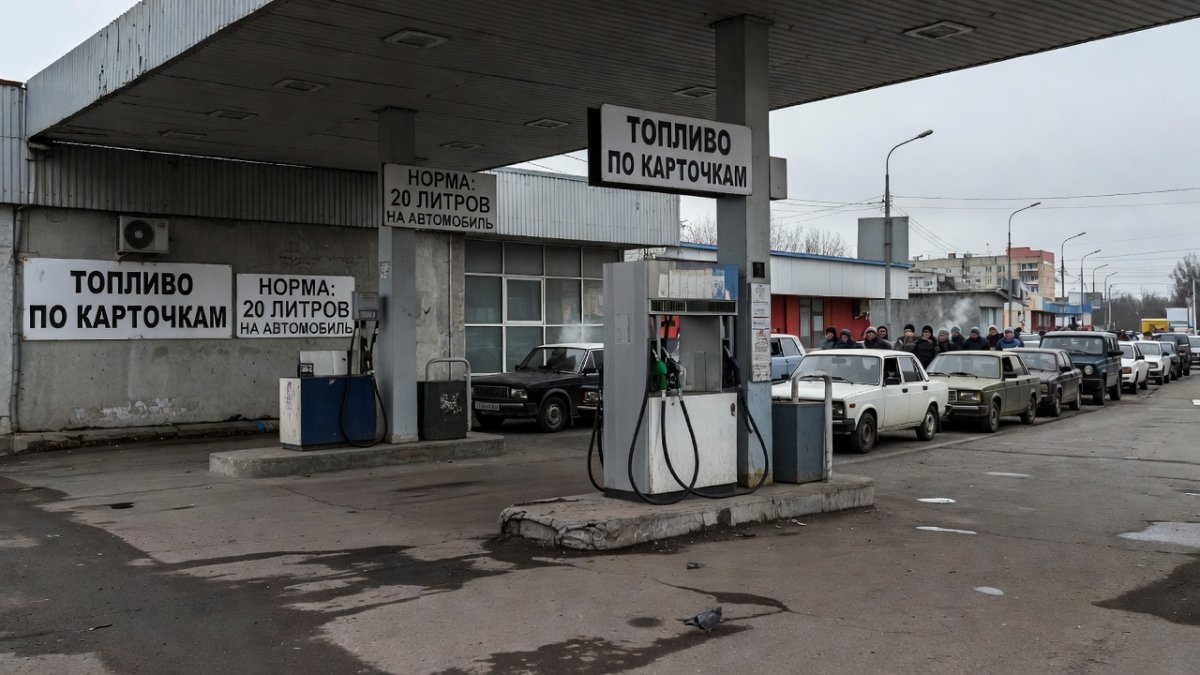
The average price of gasoline has climbed 9.8 percent since the start of the year, including a record single-week surge of 3 percent that pushed the national average to 71.20 rubles per liter as of June 22. This increase places additional pressure on household budgets and transportation costs.
Prime Minister Mikhail Mishustin issued a directive last week ordering Russia’s state statistics agency to suspend its weekly public reports on fuel prices. However, Rosstat stated on Tuesday that it would continue publishing retail price data, creating a point of institutional tension over transparency.
The combination of rationing, higher prices, and restricted information flow has created practical difficulties for citizens and businesses reliant on consistent fuel availability. Agricultural producers face particular challenges as planting and harvesting seasons overlap with these constraints.
Government Response and Legislative Measures
Deputy Prime Minister Alexander Novak described gasoline imports as one of the “key measures” required to stabilize the domestic fuel market. His comments followed legislative action in the State Duma, where lawmakers passed tax code changes last week to establish government subsidies for funding imports from abroad.
These tax adjustments aim to reduce financial barriers to bringing in foreign gasoline supplies. The subsidies represent a direct fiscal tool designed to support the import process amid the production shortfall.
Novak’s emphasis on imports as a priority reflects coordination across government branches to address the immediate crisis. The State Duma’s rapid passage of the tax measures indicates a focus on enabling quick implementation of the subsidy framework.
Additional steps include potential streamlining of customs procedures to facilitate incoming shipments. Together, these actions form a multi-pronged approach centered on external procurement while domestic refining capacity recovers.
Strategic Implications for Economy and Military
The fuel shortage carries implications for military logistics, as reliable gasoline supplies remain essential for operational readiness across various sectors. Disruptions in civilian fuel availability can indirectly affect broader resource allocation during ongoing conflicts.
Agricultural supply chains face risks from rationing and elevated prices, potentially impacting crop yields and food production at a time when farming activity peaks. Summer travel patterns have also been altered by the constraints, affecting tourism-related economic activity.
This week’s government decree closing seven railway border checkpoints with Finland, Estonia, and Latvia, effective July 1, adds further complexity to cross-border movements. The suspension halts individuals, vehicles, and cargo through those rail crossings, limiting alternative supply routes.
Manufacturing data from S&P Global showed the Russia Manufacturing PMI rising to 50.3 in June from 48.8 in May, yet the fuel situation introduces uncertainty for energy-intensive industries. The interplay between energy shortages and these border measures compounds logistical challenges for the broader economy.
Outlook and Market Stabilization
The timeline for any gasoline imports remains dependent on reaching acceptable agreements, as noted by Peskov. Industry discussions around 50,000 metric tons from Kazakhstan represent an initial volume under consideration, though formal confirmation from Astana has not yet occurred.
Restoration of refinery capacity will determine how long import reliance continues. Officials have positioned the measures as temporary, yet the 25 percent production drop suggests that full recovery may require sustained repairs and security enhancements at affected sites.
Long-term energy security considerations now include diversification of supply sources and potential reinforcement of infrastructure against future disruptions. The current episode illustrates how external factors can force rapid policy adjustments even in a major energy-exporting nation.
By Irina Volkov, Staff WriterThis article was produced with AI-assisted research and editorial support. Reporting is based on sources cited in the article.
What's Your Reaction?
 Like
0
Like
0
 Dislike
0
Dislike
0
 Love
0
Love
0
 Funny
0
Funny
0
 Wow
0
Wow
0
 Sad
0
Sad
0
 Angry
0
Angry
0
Russia/Eastern Europe Correspondent at Global1.News. Covering Russian politics, energy, security, and the shifting dynamics of the post-Soviet space. Provides clear-eyed analysis on one of the world's most opaque regions.












Comments (0)