
Japan's New Flag Law Tests Free Expression in Northeast Asia's Democratic Landscape
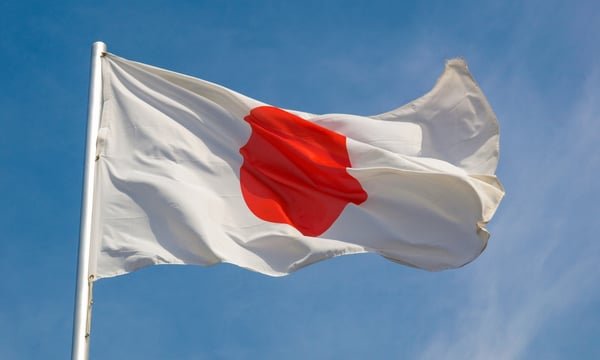
Japan’s Flag Desecration Statute: A Legislative Turning Point On 17 July 2026, Japan’s upper house of the Diet passed legislation that criminalizes the public desecration of the Hinomaru, the national flag. The measure imposes penalties of up to two years’ imprisonment or a fine of up to 200,000 yen for publicly damaging, removing, or defacing a Japanese flag in a manner judged likely to cause others “extreme discomfort or disgust.” The statute also covers livestreamed acts of desecration. Exemp
Japan’s Flag Desecration Statute: A Legislative Turning Point
On 17 July 2026, Japan’s upper house of the Diet passed legislation that criminalizes the public desecration of the Hinomaru, the national flag. The measure imposes penalties of up to two years’ imprisonment or a fine of up to 200,000 yen for publicly damaging, removing, or defacing a Japanese flag in a manner judged likely to cause others “extreme discomfort or disgust.” The statute also covers livestreamed acts of desecration. Exemptions were expressly written for creative works, including paintings, anime, manga, and video games. Prime Minister Sanae Takaichi championed the bill, framing it as the correction of a “wrong double standard”: foreign flags had enjoyed legal protection in Japan since 1907, while the Hinomaru itself had not. The same day, parliament amended the Imperial House Law for the first time since 1949, underscoring the broader symbolic and institutional moment in which the flag law emerged.
This development invites careful comparative scrutiny, particularly from the vantage point of the Korean Peninsula. South Korea has long maintained criminal sanctions against desecration of the Taegukgi under the National Flag Act of 2007, which provides for up to three years’ imprisonment or a fine of up to 20 million won. Japan’s move therefore narrows a long-standing asymmetry in how the two Northeast Asian democracies treat their national symbols. Yet the Hinomaru carries a distinct historical burden in Korea that the Taegukgi does not, and any analysis must weigh free-expression protections against the politics of national memory.
Historical Legacies of the Hinomaru on the Korean Peninsula
The Hinomaru’s association with Japanese imperial expansion remains a live issue in Korean historical consciousness. From the 1930s through 1945, Japanese forces carried the flag across Asia, including during the colonial administration of Korea (1910–1945). For many Koreans, the sun-disc emblem is inseparable from memories of forced assimilation, military conscription, and cultural suppression. Professor Takaaki Matsumiya of Ritsumeikan University has argued that the Hinomaru “doesn’t symbolise the democratic values Japan claims to defend,” precisely because of this wartime and colonial record. His observation resonates strongly in Seoul, where public displays of the Hinomaru still occasionally provoke diplomatic friction or civic protest.
Japan’s 1999 Flag and Anthem Law formally designated the Hinomaru as the national flag and “Kimigayo” as the anthem, yet it imposed no criminal penalties for desecration. That earlier statute reflected a post-war constitutional culture wary of compulsory patriotism. The 2026 legislation marks a clear departure. By introducing criminal liability keyed to the subjective standard of “extreme discomfort or disgust,” the Diet has shifted the balance toward protection of the symbol itself. Korean observers will inevitably read this shift through the lens of unresolved colonial history, even if the statute’s text is formally domestic in scope.
Comparative Legal Architecture: Japan and South Korea
South Korea’s National Flag Act of 2007 offers a useful benchmark. It criminalizes damage to or defilement of the Taegukgi with penalties that are, on paper, more severe than Japan’s new ceilings—three years’ imprisonment or 20 million won versus two years or 200,000 yen. Both laws, however, rest on similar policy rationales: the flag as a condensed expression of national continuity and the state’s interest in preventing public acts that degrade that symbol. Where the statutes diverge is in historical timing and political context. South Korea enacted its measure well after democratization, in a polity that had already experienced authoritarian over-use of national symbols. Japan’s 2026 law arrives after decades in which the Hinomaru remained legally unprotected relative to foreign flags, a gap Prime Minister Takaichi explicitly sought to close.
Neither statute creates an absolute ban. Japan’s creative-works exemption and South Korea’s own judicial practice leave room for artistic or satirical treatment. Yet both rely on open-textured language—“extreme discomfort or disgust” in the Japanese case—that vests considerable discretion in prosecutors and courts. The Democratic Lawyers Association of Japan has already condemned the Japanese threshold as an “arbitrary judgment” susceptible to selective deployment against political dissidents. Parallel concerns have surfaced periodically in South Korean legal commentary regarding the National Flag Act. In both systems, the tension between symbolic protection and expressive freedom is structural rather than accidental.
Free Expression and Constitutional Design in East Asia
East Asian constitutional orders typically affirm freedom of expression while simultaneously elevating certain collective symbols. Japan’s post-1947 Constitution, Article 21, guarantees freedom of speech and prohibits censorship; South Korea’s 1987 Constitution contains analogous protections. Neither text, however, has been interpreted to immunize every form of symbolic protest. Courts in both countries have upheld reasonable time, place, and manner restrictions, and both have tolerated narrowly drawn flag-protection statutes. The scholarly question is whether the 2026 Japanese law remains within that tradition or crosses into content-based suppression of political dissent.
One hundred and fifty Japanese academics petitioned parliament to reject the bill, underscoring elite unease. Their intervention echoes earlier debates surrounding the 1999 Flag and Anthem Law, when teachers’ unions and civil-liberties groups resisted mandatory flag-raising and anthem-singing in schools. The new criminal sanctions raise the stakes. Because the law extends to livestreaming, it also implicates digital expression—an arena in which both Japanese and Korean regulators have grown more assertive. Comparative constitutionalists will watch closely how Japanese courts construe “extreme discomfort or disgust.” If the standard is applied with restraint, the statute may function as a modest symbolic affirmation. If applied expansively, it could chill protest related to historical memory, security policy, or imperial institutions.
Nationalism and Democratic Consolidation in Northeast Asia
Public-opinion data reported by The Diplomat indicate a divided Japanese electorate: 40 percent supported criminal penalties, 21 percent favored prohibition without penalties, 19 percent saw no need for a ban, and 19 percent were unsure. This distribution suggests that the law does not rest on overwhelming popular consensus; rather, it reflects a determined legislative majority and the agenda-setting power of the Takaichi cabinet. In South Korea, support for the National Flag Act has generally been higher, consistent with a political culture in which national symbols were rehabilitated after authoritarian rule as markers of democratic sovereignty rather than instruments of it.
The simultaneous amendment of Japan’s Imperial House Law on 17 July 2026 reinforces the impression of a broader recalibration of national symbolism. While the flag statute and the imperial succession rules address distinct subjects, their temporal coincidence signals a government comfortable with reasserting traditional emblems. For Korean policymakers, such moves are rarely viewed in isolation. Heightened Japanese emphasis on the Hinomaru can complicate efforts to manage historical disputes, textbook controversies, and territorial issues. At the same time, South Korea’s own flag-protection regime limits the force of any purely liberal critique; both democracies have chosen to criminalize certain forms of symbolic attack.
Implications for Inter-Korean Relations and Regional Diplomacy
Although the Japanese statute is domestically framed, its regional reverberations are unavoidable. Inter-Korean relations already operate under conditions of acute symbolic sensitivity; the introduction of criminal penalties for Hinomaru desecration supplies another potential flashpoint should North Korean or progressive South Korean actors engage in flag-related protest. More immediately, the law may affect the tone of Japan–South Korea diplomatic coordination. Seoul has historically urged Tokyo to confront the colonial implications of its national symbols. A Japan that now criminalizes desecration of those symbols may prove less receptive to such entreaties, or may counter that South Korea maintains equivalent protections for the Taegukgi.
Daily life in South Korea is unlikely to change overnight. Yet civic educators, museum curators, and media organizations that address colonial history will need to navigate an environment in which Japanese authorities have drawn a brighter legal line around the Hinomaru. Reciprocally, Japanese residents and officials in Korea will continue to encounter a society in which the same flag can evoke trauma. The asymmetry of historical meaning persists even as the asymmetry of legal protection narrows.
Scholarly Assessment: Balancing Symbol and Speech
From an academic standpoint, the 2026 law illustrates a recurring dilemma in post-authoritarian and post-imperial democracies: how to protect national cohesion without re-creating the coercive patriotism of earlier eras. Japan’s decision to align its flag protections more closely with those long applied to foreign flags, and with South Korea’s National Flag Act, is defensible as a matter of formal equality among symbols. It is more problematic when measured against the Hinomaru’s specific historical trajectory in Korea and wider Asia. Professor Matsumiya’s critique—that the flag does not straightforwardly embody democratic values—captures this difficulty.
The decisive variables going forward will be prosecutorial restraint, judicial interpretation, and the political climate in which cases arise. If the “extreme discomfort or disgust” standard is reserved for egregious public vandalism, the statute may settle into the background of Japanese criminal law. If it becomes a tool for managing dissent over security policy, historical memory, or the imperial institution, it will validate the warnings issued by the Democratic Lawyers Association of Japan and the 150 academics who petitioned against the bill. Northeast Asian democracies are not unique in confronting these trade-offs; they are, however, distinctive in the density of unresolved historical grievances that any flag law inevitably activates.
In short, Japan’s new legislation closes a legal gap that successive governments had tolerated since the Meiji era’s protection of foreign flags. It does so at a moment of assertive conservative governance and against the backdrop of a colonial legacy that continues to shape Korean perceptions. Comparative analysis with South Korea’s National Flag Act of 2007 reveals convergent policy choices amid divergent historical meanings. The scholarly task is to track whether these statutes ultimately reinforce democratic self-confidence or constrict the space for contested memory—the very space on which mature democracies depend.
By Prof. David Park, Staff WriterThis article was produced with AI-assisted research and editorial support. Reporting is based on sources cited in the article.
What's Your Reaction?
 Like
0
Like
0
 Dislike
0
Dislike
0
 Love
0
Love
0
 Funny
0
Funny
0
 Wow
0
Wow
0
 Sad
0
Sad
0
 Angry
0
Angry
0

East Asia/Technology Correspondent at Global1.News. Seoul-based voice covering Korean politics, technology, business, and culture. Analyzes how technology and geopolitics intersect across East Asia.














Comments (0)