
Seoul's Student Population Falls Below 800,000 as Korea's Demographic Crisis Deepens
Korea's capital now confronts the starkest manifestation of its protracted demographic contraction, as Seoul's student population has fallen to a historic low of 782,104 in 2026. This figure, released by the Seoul Metropolitan Office of Education on June 7, underscores how sustained sub-replacement fertility is reshaping every tier of the national education system. The decline
Korea's capital now confronts the starkest manifestation of its protracted demographic contraction, as Seoul's student population has fallen to a historic low of 782,104 in 2026. This figure, released by the Seoul Metropolitan Office of Education on June 7, underscores how sustained sub-replacement fertility is reshaping every tier of the national education system. The decline is not an isolated statistical event but the cumulative outcome of structural forces that have compressed cohort sizes for more than a decade.
Seoul Student Numbers Below 800,000 for First Time as Demographic Pressures Reshape Korean Education
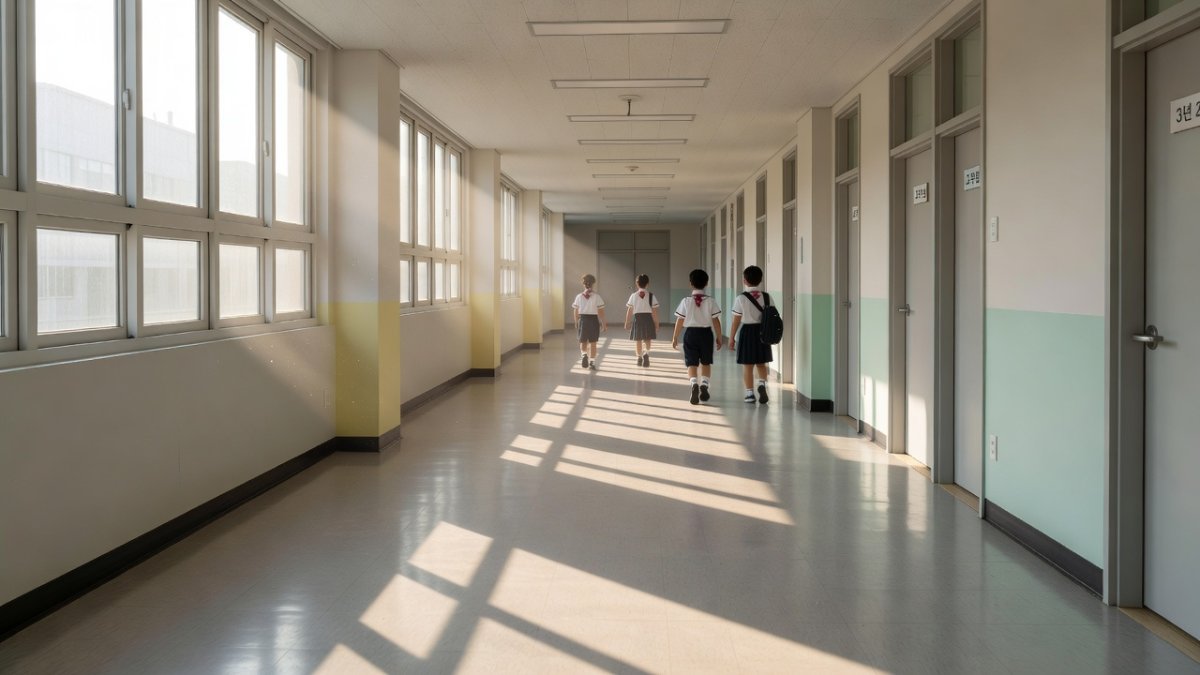
[Seoul, South Korea – June 10, 2026] — Seoul's student population has crossed below the symbolic threshold of 800,000 for the first time, registering 782,104 pupils across kindergarten through high school. The Seoul Metropolitan Office of Education attributes the drop directly to Korea's entrenched low-fertility regime, which has produced successively smaller birth cohorts since the early 2000s. This development carries immediate consequences for school operations, teacher deployment, and long-term fiscal planning in the capital's education sector.
Detailed Enrollment Breakdown and Year-on-Year Comparisons
The 2026 total of 782,104 students represents a year-on-year decline of 28,304 pupils, or 3.5 percent, from the 810,408 recorded in 2025. Compared with 2022, when enrollment stood at 880,370, the drop reaches 98,266 students—an 11.2 percent contraction over just four years. These figures illustrate an accelerating pace of decline that has outstripped earlier projections from both the Seoul Metropolitan Office of Education and Statistics Korea. Elementary schools experienced the steepest fall, losing 4.9 percent of their population to reach 323,802 students, while middle schools declined 2.9 percent to 193,896 and high schools fell 2.6 percent to 197,888. Kindergartens recorded a comparatively modest 1.2 percent reduction, settling at 58,683 children.
The uneven distribution across school levels reveals how fertility shocks propagate through the system with a lag. The sharpest elementary losses reflect births that occurred during the period when Korea's total fertility rate first dipped below 1.0. Middle- and high-school declines, though milder in percentage terms, still signal sustained pressure on secondary infrastructure. Analysts at the Korea Development Institute note that such rapid cohort shrinkage compresses the window available for policy adjustment, forcing education authorities to confront simultaneous contraction at multiple levels rather than sequential adjustments.
Class Size Trends and School-Level Implications
Despite the enrollment collapse, average class size across Seoul schools stood at 23.0 students in 2026, with elementary classes averaging 20.8 pupils. The total number of classes fell by 803, or 2.1 percent, to 37,294. The number of schools decreased by 15 to 2,092, while kindergartens declined by 16 to 724. One new high school, Heukseok High School, opened during the year, illustrating selective expansion amid overall contraction. These metrics suggest that class-size reductions have so far absorbed much of the enrollment shock, preserving relatively favorable pupil-teacher ratios in many institutions.
Smaller classes can enhance instructional quality and allow greater individualized attention, yet they simultaneously raise per-pupil costs and complicate the maintenance of specialized programs. School closures, though limited in number, concentrate in districts experiencing the fastest depopulation, prompting debates over whether remaining institutions can sustain extracurricular offerings and advanced coursework. Fiscal sustainability therefore hinges on whether authorities can align staffing formulas with demographic reality without eroding educational breadth.
Korea's Demographic Context and the National Fertility Crisis
Korea's total fertility rate has remained below 1.0 for several consecutive years, placing the country at the extreme low end of global fertility distributions. Structural drivers include prohibitive housing costs in major metropolitan areas, intense career competition, rigid gender norms surrounding childcare, and the high private expenditure required for supplementary education. These factors have produced a self-reinforcing cycle in which young adults delay or forgo childbearing, further shrinking future student cohorts. International comparisons with countries such as Japan and Italy reveal that Korea's fertility collapse has been both steeper and more persistent, amplifying the speed at which education infrastructure must adapt.
The national scope of the crisis implies that Seoul's experience is not anomalous but emblematic. Provincial regions face even steeper enrollment losses, threatening the viability of entire school districts. Education infrastructure nationwide must therefore be recalibrated around smaller, more dispersed student populations while preserving equitable access to quality instruction. Without broader social-policy interventions addressing housing, labor-market duality, and gender equity, demographic headwinds will continue to dominate enrollment trajectories for at least another generation.
Policy Responses from the Seoul Metropolitan Office of Education
The Seoul Metropolitan Office of Education has begun incorporating mid- and long-term population projections into facility and staffing plans, emphasizing the creation of appropriately sized schools rather than maintaining legacy capacity. Officials have signaled adjustments to teacher quotas that reflect actual enrollment rather than historical benchmarks, alongside targeted investments to reduce regional disparities in educational resources. These measures align with the Ministry of Education's broader framework, which encourages consolidation where enrollment justifies it and supports innovation in multi-grade or combined-class models where numbers remain low.
Implementation challenges remain significant. Teacher unions have expressed concern that quota reductions could increase workloads, while parent groups worry that school mergers may lengthen commutes. The office has therefore prioritized transparent consultation processes and phased implementation schedules. Success will depend on whether these administrative adjustments can be paired with pedagogical reforms that leverage smaller cohorts to improve learning outcomes rather than merely managing decline.
Regional Disparities and Their Educational Consequences
Within Seoul itself, enrollment losses have not been uniform; districts with higher concentrations of young families have experienced slower declines, while others face accelerated contraction. This intra-urban variation widens gaps in school vitality and program offerings. Rural and peri-urban schools nationwide confront more severe threats, including the risk of complete closure, which can accelerate out-migration and further erode community infrastructure. Seoul's relative density offers some buffer, yet even the capital cannot escape the aggregate effects of national cohort shrinkage.
Maintaining educational equity therefore requires deliberate redistribution mechanisms. Policies that channel additional resources to schools serving depopulating neighborhoods, or that facilitate inter-district program sharing, may mitigate some consequences. Without such interventions, the demographic crisis risks entrenching new forms of educational stratification between thriving and declining locales.
Looking Ahead: Structural Reform and Long-Term Planning
Over the coming decade, Seoul and national authorities will likely pursue further school consolidation, revised teacher-allocation formulas, and possibly expanded recruitment of international students or immigrants to stabilize enrollment at higher education levels. University enrollment is projected to contract sharply after 2030, raising questions about institutional viability and the future supply of skilled labor. Economic modeling by the Korea Development Institute suggests that sustained workforce shrinkage could dampen productivity growth unless offset by higher human-capital investment per student and productivity-enhancing immigration policies.
Ultimately, the record-low student population of 782,104 serves as both warning and opportunity. If policymakers treat demographic contraction as a catalyst for qualitative improvement rather than a problem to be managed through incremental cuts, Korea may yet convert its fertility crisis into a more sustainable, higher-quality education system. The choices made in the next five years will determine whether Seoul's schools emerge leaner yet stronger or simply diminished.
By Prof. David Park, Staff Writer
This article was produced with AI-assisted research and editorial support. Reporting is based on sources cited in the article.
What's Your Reaction?
 Like
0
Like
0
 Dislike
0
Dislike
0
 Love
0
Love
0
 Funny
0
Funny
0
 Wow
0
Wow
0
 Sad
0
Sad
0
 Angry
0
Angry
0

East Asia/Technology Correspondent at Global1.News. Seoul-based voice covering Korean politics, technology, business, and culture. Analyzes how technology and geopolitics intersect across East Asia.














Comments (0)