
Radioactive Water Crisis in La Cantera Mexico Exposed
Radioactive Groundwater Devastates Mexican Village as Mothers Defy Government and Neighbors San José Iturbide, Guanajuato – Mexico, December 2025 La Cantera sits in the municipality of San José Iturbide, Guanajuato, home to fewer than 700 inhabitants. This tiny settlement became the epicenter of a public-health catastrophe when three young girls died from leukemia within a sing
Radioactive Groundwater Devastates Mexican Village as Mothers Defy Government and Neighbors San José Iturbide, Guanajuato – Mexico, December 2025
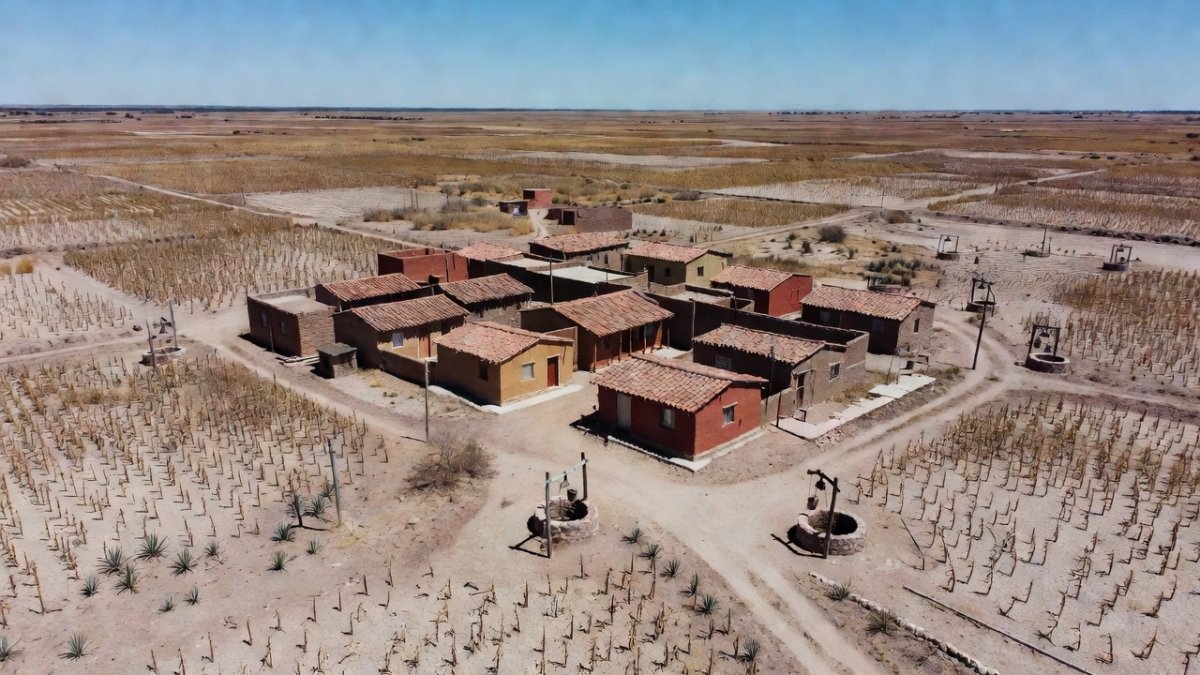
La Cantera sits in the municipality of San José Iturbide, Guanajuato, home to fewer than 700 inhabitants. This tiny settlement became the epicenter of a public-health catastrophe when three young girls died from leukemia within a single year. Nely Baeza watched her infant daughter enter a hospital 21 days after birth, her tiny body covered in blood. Local authorities repeatedly insisted the water was safe, yet the pattern of illness could no longer be ignored.
A local teacher joined the affected mothers to form an action group. They collected testimonies and demanded independent testing. Their persistence eventually brought hydrogeologist Dr. Adrián Ortega from Mexico City to sample the wells. The results confirmed radioactive contamination at four times normal levels in the groundwater. The source lay in ancient aquifers containing naturally occurring radioactive material that industrial agriculture had begun to drain.
The Deaths That Changed Everything
The first leukemia diagnosis arrived quietly, dismissed as an isolated tragedy. Within months two more girls from the same cluster of homes had died. Families in La Cantera counted the losses in hushed conversations at the small plaza. Nely Baeza’s daughter survived the initial crisis only after 21 days of intensive care, her skin marked by hemorrhages that doctors struggled to explain. These deaths forced the community to confront a terrifying possibility: the water they drank daily was killing their children.
Local health records showed no comparable spike in neighboring villages, sharpening suspicion around La Cantera’s wells. Mothers began mapping every household that relied on the same deep sources. They noticed that families using shallower, older cisterns reported fewer cases. The pattern pointed directly at the groundwater. When authorities continued to declare the water potable, the mothers realized they would have to generate their own evidence or watch more children die. Their grief hardened into organized resistance.
What the Water Revealed
Dr. Adrián Ortega’s tests left no doubt. Groundwater samples from La Cantera registered radioactive contamination four times above established safety thresholds. The contamination originated in ancient aquifers rich in naturally occurring radioactive material. Decades of intensive pumping for export crops had lowered the water table, forcing wells to draw from deeper, more radioactive layers. What had once been a stable resource became a slow-moving toxin.
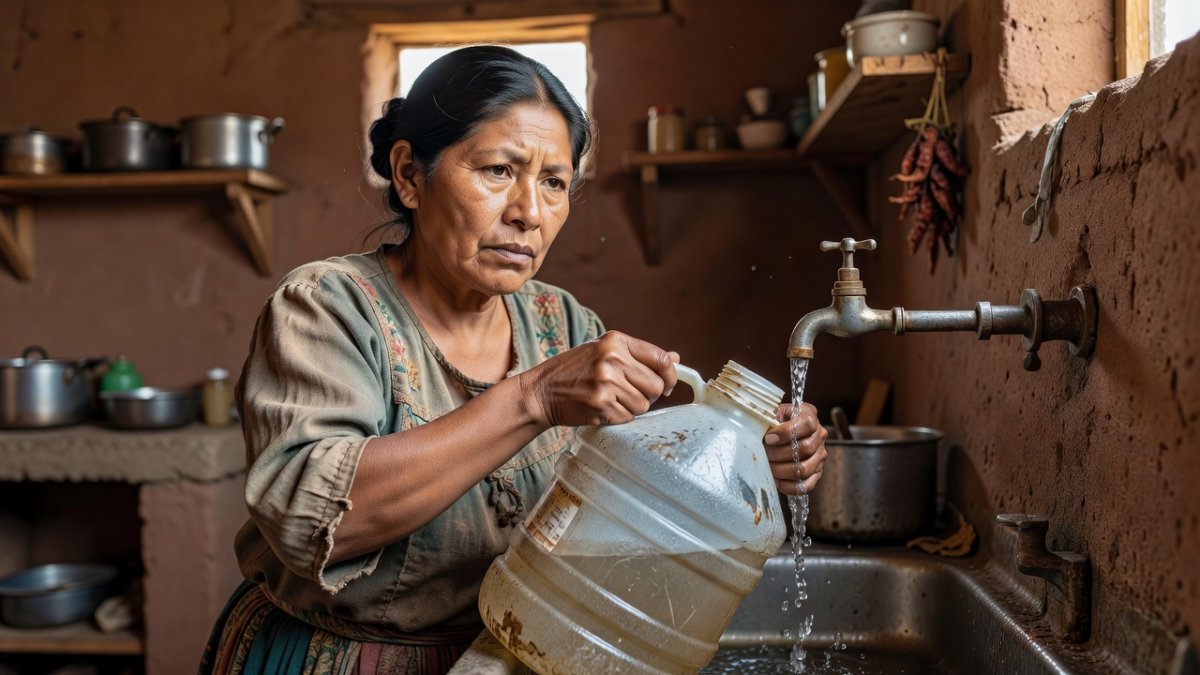
Residents described the water’s metallic taste and occasional cloudiness, yet officials from CONAGUA and SEMARNAT maintained it met all standards. The mothers collected bottles for independent analysis, documenting chain-of-custody themselves. Ortega’s findings matched their suspicions exactly. The data transformed private tragedy into public evidence. Suddenly the community possessed scientific proof that the water itself was the vector of leukemia and infant hemorrhaging. This single fact upended every official reassurance and set the stage for prolonged conflict.
NAFTA, Industrial Agriculture, and the Thirst for Water
Guanajuato ranks among Mexico’s most important agricultural regions. After NAFTA took effect in 1994, corporate farms expanded rapidly across the state, planting strawberries, broccoli, and avocados for export markets. These water-intensive crops required constant irrigation from the region’s aquifers. Shallow layers were quickly depleted, compelling drillers to reach deeper into the radioactive strata that had remained untouched for millennia.
The economic transformation brought jobs yet extracted a hidden environmental cost. Large-scale operations enjoyed priority water rights while small communities like La Cantera watched their wells decline. The same aquifers that once supported subsistence farming now supplied global supermarket shelves. When the mothers connected their children’s illnesses to this shift, they exposed how trade policy had reshaped local hydrology. The documentary draws explicit parallels to California’s Central Valley, southern Arizona, and the American Midwest, where similar aquifer depletion has produced comparable contamination risks. La Cantera thus became a microcosm of a continental crisis driven by export agriculture.
The Government Response: Denial and Retribution
Once news of the radioactive readings spread, CONAGUA and SEMARNAT officials doubled down on their safety claims rather than supplying alternative water sources. Instead of delivering tankers or drilling new wells, the government simply cut the existing supply to La Cantera. Residents were left to haul water from distant, untested sources while officials continued insisting the original wells posed no danger. This punitive measure punished the very community that had raised the alarm.
Internal documents obtained by the filmmakers reveal that both agencies knew the aquifer geology yet chose not to act. The mothers’ action group faced bureaucratic stonewalling at every turn. Requests for bottled water or medical monitoring were denied on the grounds that no emergency existed. The documentary captures the surreal spectacle of families carrying contaminated water under the watch of government vehicles that refused to intervene. This calculated neglect transformed a public-health failure into an active campaign of retribution against those who dared to speak.
Mothers Against the World
After the water tests became public, the community turned against the mothers. Neighbors accused them of destroying the town’s reputation and scaring away seasonal work. Hostility escalated to isolation and veiled threats. The women who had lost daughters now walked through the plaza alone, their former friends crossing the street to avoid conversation. The choice presented to them was stark: stop fighting or continue despite community opposition.
Nely Baeza and the teacher who helped organize the group refused to retreat. They documented every act of intimidation and continued pressing for medical screenings. The documentary shows how this internal fracture compounded the external threat of radiation. Mothers who had once shared childcare now confronted one another across newly drawn battle lines. Their determination to protect future children required them to withstand both radioactive water and social exile. In La Cantera, activism exacted a price measured in lost friendships as well as lost lives.
What La Cantera Means for Latin America
The crisis in La Cantera mirrors patterns repeating across Latin America wherever export agriculture meets fragile aquifers. From Chile’s Atacama to Brazil’s Cerrado, intensive irrigation is lowering water tables and mobilizing naturally occurring contaminants. The fourfold radioactive spike recorded by Dr. Ortega offers a measurable warning for regulators throughout the region. Guanajuato’s experience demonstrates that trade agreements can accelerate aquifer depletion faster than local institutions can respond.
The Age of Water places these Mexican events alongside California’s Central Valley, southern Arizona, and the American Midwest to illustrate a shared continental vulnerability. Small communities bear the earliest and heaviest costs while corporate farms externalize the damage. The mothers of La Cantera therefore speak not only for their village but for every settlement whose water is being sacrificed to distant markets. Their struggle underscores the urgent need for aquifer governance that prioritizes human health over export volumes.
The Bottom Line — A Crisis of Justice and Water
Three girls dead from leukemia, an infant hospitalized at 21 days covered in blood, and a village of fewer than 700 people left without safe water represent a profound failure of governance. The documentary The Age of Water by Isabel Alcantara Atalaya and Alfredo Alcantara records how NAFTA-driven agriculture, aquifer mismanagement, and official denial converged to poison La Cantera. CONAGUA and SEMARNAT chose silence and retaliation over remediation, while neighbors turned on the mothers who refused to accept the verdict.
The radioactive contamination at four times normal levels will persist until deeper policy changes occur. Yet the women of La Cantera have already altered the narrative. By insisting on independent testing and publicizing Dr. Ortega’s findings, they forced a hidden crisis into national view. Their choice to continue despite hostility offers a template for communities across Latin America facing similar aquifer threats. Justice in this case begins with acknowledging that water is not an infinite commodity to be mined for export but a fundamental right that governments must protect. The mothers of La Cantera have paid the price; the rest of the region must now decide whether to learn from their evidence. By Elena Vasquez, Staff Writer
This article was produced with AI-assisted research and editorial support. Reporting is based on sources cited in the article.
What's Your Reaction?
 Like
0
Like
0
 Dislike
0
Dislike
0
 Love
0
Love
0
 Funny
0
Funny
0
 Wow
0
Wow
0
 Sad
0
Sad
0
 Angry
0
Angry
0

Latin America Correspondent at Global1.News. Based in Mexico City, covering politics, economics, energy, and culture across the region. Brings an on-the-ground perspective to stories spanning from the Rio Grande to Patagonia.













Comments (0)