
Yazidi Survivors Doctor: Nagham Nawzat Duhok Recovery
The Day Captivity Began in Sinjar DUHOK, Iraq - Shireen was studying for a high school examination at her home in the northern Iraqi town of Sinjar on 3 August 2014, when Islamic State group (IS) militants broke into her house and kidnapped her from her family. At the age of 19, she was sold as a sex slave to an IS militant in the north-western city of Tal Afar. Three months la
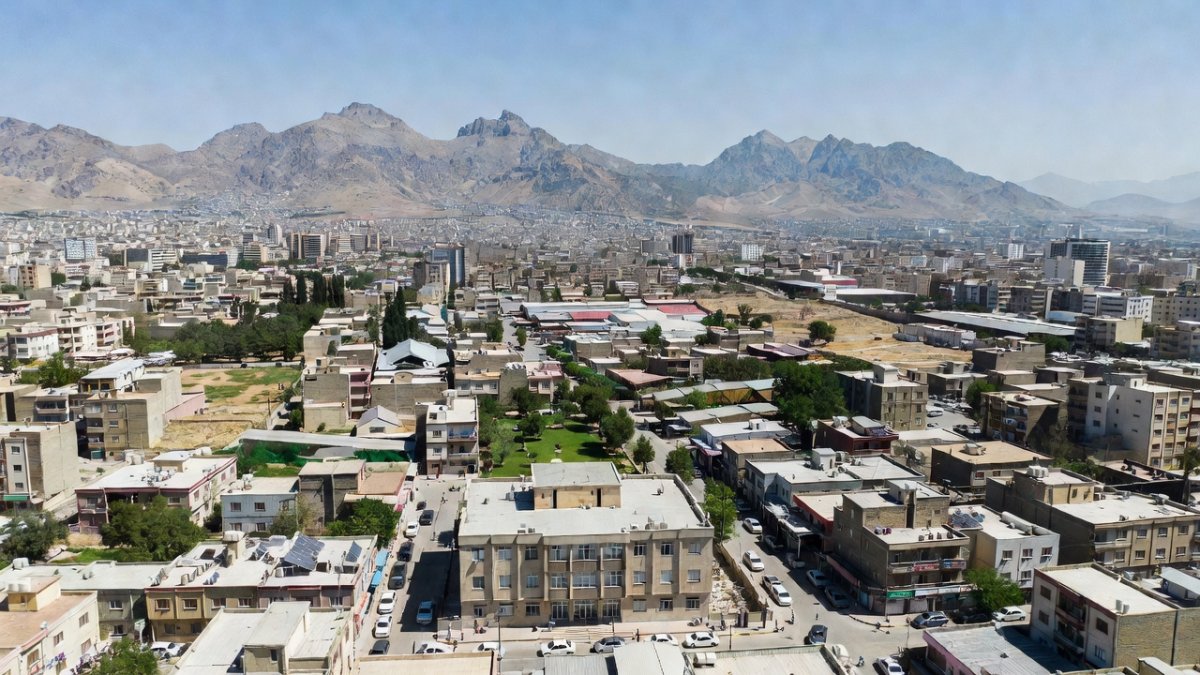
The Day Captivity Began in Sinjar
DUHOK, Iraq - Shireen was studying for a high school examination at her home in the northern Iraqi town of Sinjar on 3 August 2014, when Islamic State group (IS) militants broke into her house and kidnapped her from her family. At the age of 19, she was sold as a sex slave to an IS militant in the north-western city of Tal Afar. Three months later, Shireen was sold once again to Abu Omar, another IS fighter in Mosul, to become his third wife. According to reports from survivors, such sudden abductions marked the beginning of a systematic campaign that targeted Yazidi communities across northern Iraq. The events of that August day in Sinjar set in motion personal tragedies that continue to shape the lives of thousands, highlighting the abrupt rupture of ordinary routines under the shadow of advancing militants.
Global 1 News
This initial seizure reflects the broader pattern of displacement that affected entire families. Survivors recount how homes once filled with study materials and family conversations became sites of violence and separation. The cautious timeline, drawn from accounts as of 2018, underscores that these experiences were not isolated but part of coordinated actions across Sinjar, Tal Afar, and Mosul. For Yazidi survivors, the memory of that day remains a reference point for understanding the scale of loss, where individual futures were redirected toward prolonged uncertainty and trauma.
Enslavement and Daily Realities Under Abu Omar
Shireen tells MEE that Abu Omar declared his affection in words that clashed with his actions. "He said 'I love you,' but when you love someone, you don't rape her. It destroyed my life," she recounts. For more than two years, Shireen says, she was not allowed to leave the house in Mosul. She was forced to cook, wash the dishes and clean every day. "There were two guards at the entrance of the house, and I was not allowed to go outside, [or] even to the garden to breathe fresh air," she says. According to Shireen, Abu Omar later brought two other Yazidi girls to the house. One was six years old and was forced to clean the house, while the other was 10. She was raped frequently by Abu Omar: Shireen says she tried to stop him, but her pleas fell on deaf ears.
Yazidis believe in Yasdan, a god who emanates seven angels. The angel they revere above all others is Melek Tawwus or the Peacock Angel - but Shireen was told by IS that Melek Tawwus was the devil and so was forced to convert to Islam. These forced conversions compounded the physical confinement, stripping away religious identity alongside personal autonomy. The presence of child captives in the household illustrates how IS extended its control across generations, turning domestic spaces into environments of sustained coercion. Such details, preserved in survivor testimonies, reveal the intimate mechanisms of control that defined daily existence for those held in Mosul.
Release Amid the Battle for Mosul and Immediate Losses
In 2016, Shireen was released by Iraqi forces during the campaign to retake Mosul from IS. After more than two years of captivity, Shireen suffered from depression and constant nightmares that prevented her from sleeping. Her uncle and many of her friends were killed by IS, while her father and one of her sisters have been missing since 2014, after they were also taken. "It's too horrible, the skeletons of my uncle and my friends are under the ground," she states. The timing of her release coincided with military operations that gradually dismantled IS strongholds, yet the human cost lingered in unresolved disappearances and unrecovered remains.
Upon her release, she visited Dr Nagham Nawzat, a Yazidi gynaecologist in the city of Duhok, in Iraq's Kurdish region. But Nawzat not only gave her a physical examination - she also listened to Shireen and offered her emotional support. The transition from captivity to freedom exposed the gaps in immediate protection mechanisms, where physical liberation did not automatically restore psychological stability. Survivors like Shireen navigated a landscape marked by both relief and the weight of absent family members, underscoring how the aftermath of abduction extended far beyond the moment of rescue.
Dr Nagham Nawzat's Lifelong Commitment to Women's Health
"Dr Nawzat helped all of us. Without her help, I wouldn't be here today," the 23-year-old says. "After I came back from captivity, Dr Nawzat sat down with me and told me that I was brave. I love her so much." Nawzat is highly respected among the Yazidi community. According to Hussein al-Qaidi, the director of the Kidnapped Affairs department at the Kurdistan Regional Government (KRG) in Duhok, 2,023 Yazidi women have been liberated from IS territories as of July 2018. Nawzat, 42, has provided life-saving support to more than half of them, helping an estimated 1,200 Yazidi women, according to al-Qaidi.
Born in Mosul to a Yazidi family in 1976, her life-long dream was to study medicine. Concerned about women's issues from an early age, she graduated with a degree in gynaecology from Mosul's Medical College in 2002. "[I wanted] to better understand issues related to women's health, teach women about health care and provide support for them," she tells MEE. In March 2016, Nawzat received the International Women of Courage Award from then-US Secretary of State John Kerry for providing psychological support to traumatised Yazidi survivors and for combating gender-based violence. Her path from Mosul Medical College to frontline care in Duhok demonstrates a sustained focus on health equity amid regional upheaval.
The Duhok Survivors Centre and UNFPA Support Framework
In 2014, IS seized almost a third of Iraq. At least 12,000 Yazidis were killed or kidnapped as part of what the United Nations describes as an "ongoing genocide" against the religious minority. The following year, Nawzat decided to join the Duhok Survivors' Centre, where she volunteers to provide healthcare and psychological support for Iraqi women who survived IS. Funded by the United Nations Population Fund (UNFPA), it's the only facility in Iraq that specialises in gender-based violence. Nawzat uses a post-traumatic medical approach commonly found in Iraq. Afterwards, she conducts a thorough physical check-up and then listens attentively as her patients talk about their fears and their traumatising experiences.
Nawzat offers them support and positive reinforcement "like a big sister the survivors can confide in," she says. According to Nawzat, as she creates a relationship with her patients based on mutual trust so they confide in her and reveal their deepest emotions and fears with ease. She is happy to meet her patients again whenever they request psychological support. This model addresses both immediate medical needs and the longer-term emotional recovery required after prolonged captivity, illustrating how targeted facilities can fill voids left by broader institutional responses.
Implications for Survivors and the Scale of Genocide
The experiences documented through Shireen's account and the work of Dr Nagham Nawzat point to the profound challenges facing Yazidi survivors in rebuilding their lives. With at least 12,000 individuals killed or kidnapped and only 2,023 women liberated by July 2018 according to KRG figures, the numbers reveal a genocide whose full extent continues to unfold. The absence of many family members, including Shireen's father and sister, leaves communities with enduring questions about accountability and closure. International protection mechanisms, despite awards such as the one presented by John Kerry, have struggled to prevent or fully mitigate such targeted violence against religious minorities.
Recovery remains a protracted process that extends beyond physical release. The nightmares and depression described by Shireen after her time in Mosul and Tal Afar demonstrate how trauma embeds itself in daily functioning. Facilities like the Duhok Survivors' Centre, supported by UNFPA, offer one pathway, yet the reliance on individual practitioners such as Nawzat highlights systemic limitations in scaling psychological care across affected regions including Sinjar and Mosul. The long road ahead involves not only medical interventions but also societal recognition of the genocide's ongoing consequences for identity, family structures, and community cohesion.
Failures in Protection and Paths Toward Sustained Recovery
Analysis of these events reveals critical shortcomings in international and regional safeguards that allowed IS to seize almost a third of Iraq and perpetrate widespread abductions. The forced conversions and confinement detailed in survivor testimonies underscore how religious persecution intersected with gender-based violence, leaving lasting scars that awards and statements alone cannot erase. For Yazidi women who endured sales between fighters in Tal Afar and Mosul, the return to places like Duhok represents a fragile beginning rather than an endpoint. The estimated 1,200 women assisted by Dr Nagham Nawzat through the KRG's Kidnapped Affairs department illustrate both the reach of dedicated local efforts and the overwhelming demand that persists.
Ultimately, the stories preserved here emphasize that meaningful recovery demands consistent resources, cross-border cooperation, and acknowledgment of the genocide's human dimensions. Without expanded support structures, survivors face continued isolation amid unresolved losses. The work of figures like Hussein al-Qaidi and Nawzat provides models for compassionate engagement, yet broader failures in prevention leave communities navigating a future shaped by both resilience and the weight of unaddressed atrocities.
By Fatima Al-Rashid, Staff WriterThis article was produced with AI-assisted research and editorial support. Reporting is based on sources cited in the article.
What's Your Reaction?
 Like
0
Like
0
 Dislike
0
Dislike
0
 Love
0
Love
0
 Funny
0
Funny
0
 Wow
0
Wow
0
 Sad
0
Sad
0
 Angry
0
Angry
0
Middle East Correspondent at Global1.News. Based in Beirut, covering politics, conflict, energy, and society across the Middle East. Brings context and depth to a region often reduced to headlines.












Comments (0)