
What Prague's Taiwan Policy Reveals About the Gap Between Rhetoric and Reality — Lessons for Seoul's China Balancing Act
The Czech Shift: Rhetoric vs. Substance The return of Andrej Babiš to the premiership in late 2025 prompted expectations of a sharp reversal in Czechia’s Taiwan engagement. During the prior administration, Prague had positioned itself as one of Taipei’s most vocal European partners, with high-level visits and public endorsements that irritated Beijing. Babiš had campaigned on t
The Czech Shift: Rhetoric vs. Substance
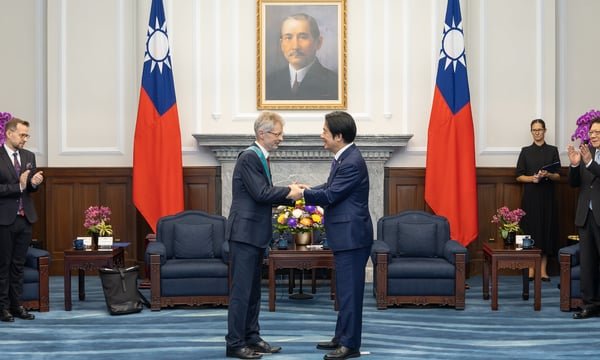
The return of Andrej Babiš to the premiership in late 2025 prompted expectations of a sharp reversal in Czechia’s Taiwan engagement. During the prior administration, Prague had positioned itself as one of Taipei’s most vocal European partners, with high-level visits and public endorsements that irritated Beijing. Babiš had campaigned on the need to prioritize commercial access to the Chinese market, criticizing earlier gestures as costly symbolism. In practice, however, the change has been largely rhetorical. The Senate President Miloš Vystrčil’s June 2026 delegation to Taipei proceeded on a commercial flight after Babiš refused a government aircraft, yet the visit still produced a new Taiwanese investment fund valued at 50 million euros. Trade statistics reveal continuity rather than rupture: Taiwan’s drone exports to Czechia in the first quarter of 2026 exceeded US$100 million, surpassing Taiwan’s entire global drone export value for 2025. This pattern mirrors Seoul’s experience after presidential transitions. Successive South Korean administrations have adjusted the volume of public statements on Taiwan while preserving the core of unofficial economic and technological ties. The Ministry of Foreign Affairs routinely reaffirms adherence to the one-China principle in official communiqués, yet National Assembly committees continue to host semiconductor supply-chain dialogues that include Taiwanese firms. Both cases demonstrate that middle-power governments can recalibrate tone without dismantling the institutional and commercial architecture that sustains relations with Taipei.
Seoul's Parallel Tightrope: Between Washington and Beijing
South Korea’s management of Taiwan policy occurs within the structural constraints of the U.S.-ROK alliance and deep economic interdependence with China. Seoul maintains unofficial representative offices in Taipei while scrupulously avoiding any language that could be read as recognition of statehood. This balancing act intensified after 2016, when the deployment of THAAD prompted Chinese economic retaliation against Korean chaebol products. The episode remains a reference point for policymakers weighing the costs of visible alignment with Taipei. Korea’s semiconductor industry adds further complexity: Taiwan Semiconductor Manufacturing Company and Samsung Electronics compete yet also cooperate within global foundry networks that Beijing seeks to influence. MOFA statements therefore emphasize “peace and stability across the Taiwan Strait” without endorsing specific security initiatives. National Assembly dynamics reinforce caution; progressive and conservative legislators alike recognize that overt support for Taiwan could trigger secondary sanctions on Korean battery and chip exports to China. The Czech experience under Babiš offers a comparative lens. Just as Prague’s government aircraft refusal signaled deference to Beijing without halting drone procurement, Seoul’s calibrated rhetoric allows continued participation in U.S.-led technology coordination mechanisms while preserving market access in China. The result is a diplomacy of deliberate ambiguity that protects core economic interests.
Why Rhetoric Changes but Relationships Endure
Institutional and constitutional factors limit the scope of policy reversal in both Prague and Seoul. Czechia’s constitutional court intervened to ensure President Petr Pavel’s participation in the 2026 NATO summit, illustrating judicial checks on executive foreign-policy discretion. South Korea possesses analogous constraints: the Constitutional Court and National Assembly oversight committees have historically constrained abrupt shifts in inter-Korean or U.S. alliance policy. Economic interdependence supplies additional inertia. Taiwan’s drone exports to Czechia are embedded in supply chains ultimately supporting Ukraine, an issue that commands broad domestic consensus in Prague irrespective of government composition. Similarly, Korea’s semiconductor and battery trade with Taiwan forms part of chaebol global production networks that neither progressive nor conservative administrations have been willing to disrupt. These structural realities explain why symbolic gestures—refusing an aircraft, issuing a one-China reaffirmation—can be deployed for domestic political signaling while substantive exchanges continue. The pattern suggests that middle powers facing asymmetric dependencies on both Washington and Beijing develop repertoires of low-cost rhetorical adjustment that preserve operational continuity in sensitive economic domains.
The Drone Trade as a Case Study in Quiet Continuity
The surge in Czech-Taiwan drone trade provides concrete evidence that commercial linkages can outlast political transitions. Taiwan’s Ministry of Economic Affairs recorded exports exceeding US$100 million to Czechia in the first quarter of 2026 alone, with cumulative small-drone shipments reaching 181,000 units in the first four months of the year. Analysts link a significant share of these systems to onward transfer toward Ukraine. For Seoul, the parallel lies in semiconductor and electric-vehicle battery components. Korean firms source specialized materials and equipment from Taiwan while simultaneously navigating Chinese pressure on supply-chain localization. Official data show that Korea’s exports of semiconductor manufacturing equipment to Taiwan have remained stable across multiple administrations, even as public statements on cross-strait issues have fluctuated. The drone case demonstrates that functional cooperation tied to urgent security priorities—support for Ukraine in Europe, technology resilience in Northeast Asia—creates path dependence that governments find costly to reverse. Both Prague and Seoul therefore practice a form of compartmentalization: visible political signaling satisfies domestic constituencies favoring warmer ties with Beijing, while the underlying trade and technology relationships expand under the cover of technical or humanitarian framing.
What the NATO Delegation Dispute Reveals About Constitutional Constraints
The 2026 dispute over Czech representation at the NATO summit in Ankara exposed the limits of executive control over foreign policy. Babiš’s attempt to sideline President Petr Pavel was blocked by a Constitutional Court injunction, forcing inclusion of the head of state while still designating the prime minister as delegation leader. This episode parallels institutional frictions in Seoul. Korea’s Constitutional Court has repeatedly shaped the boundaries of presidential authority in inter-Korean relations and alliance management. National Assembly ratification requirements for certain international agreements further constrain unilateral action. In both systems, these checks prevent rapid dismantling of existing commitments, whether they involve Taiwan engagement or alliance coordination. The result is incremental rather than revolutionary policy change. For Seoul, this means that even a hypothetical administration seeking deeper accommodation with Beijing would face judicial and legislative hurdles when attempting to alter unofficial ties with Taipei or semiconductor cooperation frameworks. The Czech precedent therefore illustrates how constitutional design in middle powers can insulate functional relationships from the oscillations of electoral politics.
Strategic Implications for Northeast Asia and Inter-Korean Relations
Seoul’s Taiwan calculus directly influences its leverage in inter-Korean diplomacy and alliance management. Visible warming toward Taipei risks Chinese economic countermeasures that could weaken South Korea’s position in any future North Korean negotiation. Conversely, overly cautious distancing from Taiwan could undermine U.S. confidence in Korea’s reliability within the broader Indo-Pacific technology coalition. The Czech experience suggests that quiet continuity in economic and technological domains allows middle powers to retain flexibility. Korea can sustain semiconductor supply-chain coordination with Taiwan without public security commitments that would provoke Beijing. This approach preserves diplomatic space for managing North Korea contingencies, where Chinese cooperation remains essential. At the same time, the U.S.-ROK alliance benefits from Korea’s demonstrated willingness to participate in de-risking initiatives that include Taiwanese partners. The lesson is that calibrated ambiguity, rather than dramatic alignment or reversal, maximizes maneuvering room in a region where great-power competition intersects with peninsula-specific dynamics.
Lessons for Twenty-First-Century Middle Power Diplomacy
The parallel trajectories of Czechia and South Korea illuminate a broader pattern in middle-power statecraft. Both states face asymmetric dependencies on the United States for security and on China for market access, while maintaining unofficial yet economically significant ties with Taiwan. The ability to modulate rhetoric without dismantling substance constitutes a core diplomatic competence. Institutional constraints—constitutional courts, legislative oversight, and entrenched commercial networks—limit the reversibility of policy. For Seoul, this implies that future adjustments in Taiwan policy will likely remain incremental, preserving one-China language in official statements while allowing chaebol-driven technology cooperation to proceed. The Czech case demonstrates that such compartmentalization can sustain functional engagement even under governments rhetorically inclined toward Beijing. In an era of intensifying great-power rivalry, this model of deliberate ambiguity offers middle powers a framework for maintaining policy flexibility without sacrificing either alliance credibility or economic resilience.
By Prof. David Park, Staff WriterThis article was produced with AI-assisted research and editorial support. Reporting is based on sources cited in the article.
What's Your Reaction?
 Like
0
Like
0
 Dislike
0
Dislike
0
 Love
0
Love
0
 Funny
0
Funny
0
 Wow
0
Wow
0
 Sad
0
Sad
0
 Angry
0
Angry
0

East Asia/Technology Correspondent at Global1.News. Seoul-based voice covering Korean politics, technology, business, and culture. Analyzes how technology and geopolitics intersect across East Asia.












Comments (0)