
Japan Summer Bonuses Top ¥1 Million for First Time Since 1981
Historic Milestone: Japan Summer Bonuses Cross ¥1 Million The Keidanren survey of 112 firms across 19 industries recorded a weighted average summer bonus of ¥1,008,706, marking a 1.88 percent year-on-year increase. This figure represents the first time the average has exceeded the ¥1 million threshold since records began in 1981. The result caps five straight years of annual ga
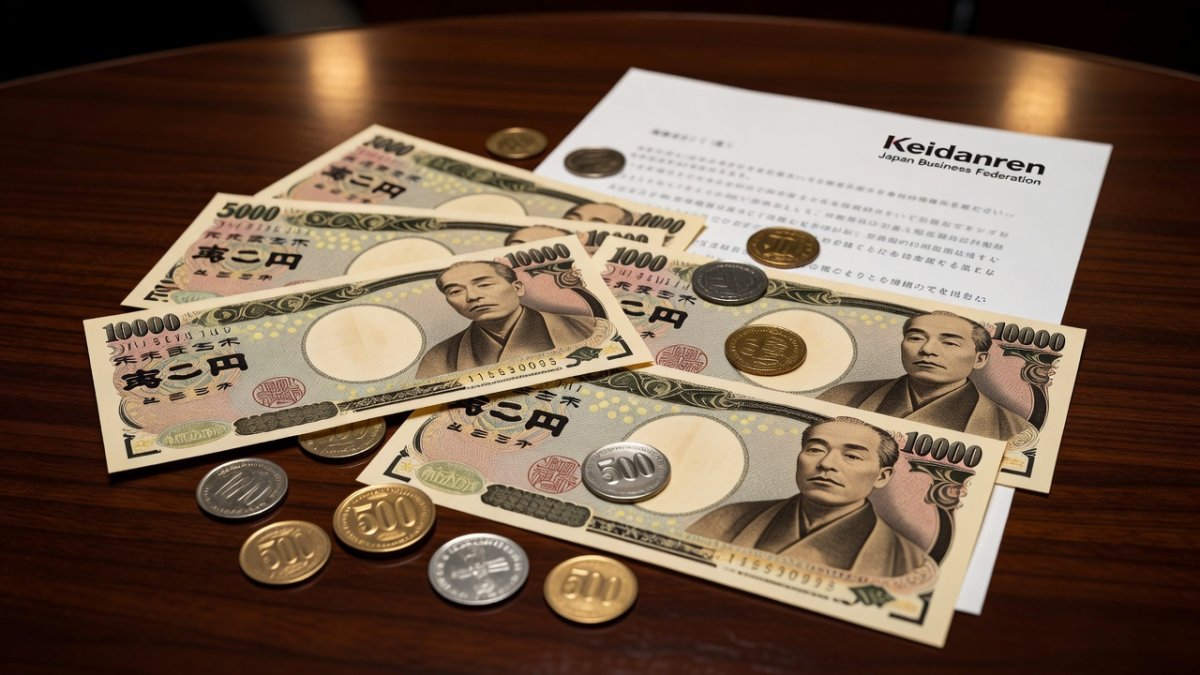
Historic Milestone: Japan Summer Bonuses Cross ¥1 Million
The Keidanren survey of 112 firms across 19 industries recorded a weighted average summer bonus of ¥1,008,706, marking a 1.88 percent year-on-year increase. This figure represents the first time the average has exceeded the ¥1 million threshold since records began in 1981. The result caps five straight years of annual gains and underscores the sustained upward trajectory in corporate payouts.
Manufacturers, which accounted for 99 of the surveyed firms, posted an average of ¥1,060,434, up 1.63 percent. Non-manufacturers, represented by 13 firms, reached ¥864,712, rising 4.01 percent. The overall advance past ¥1 million carries symbolic weight for Japanese labor relations, signaling that large companies have restored bonus levels last seen more than four decades ago.
Keidanren officials described the outcome as evidence that strong pay-hike momentum remains in place. The 1.88 percent rise, while modest compared with some prior jumps, is notable because it lifts the average above a psychologically important barrier. With five consecutive increases now on record, the data point to a structural shift rather than a one-off recovery.
The 1981 benchmark provides historical context: until this year, summer bonuses at major firms had never again averaged ¥1 million in real terms. The latest reading therefore closes a long chapter of stagnation and opens a new phase in which ¥1 million-plus payouts could become the norm for leading companies.
Sectoral Winners: Manufacturing, Construction and Financial Services
Within the Keidanren sample, construction delivered the strongest sector performance. Kajima Construction recorded the highest individual average at ¥2.7 million. Nonferrous metals posted a 10.7 percent increase, while the rubber sector rose 6.38 percent. These gains outpaced the overall 1.88 percent advance and illustrate how specific industries benefited from robust order books and pricing power.
Manufacturers as a group reached ¥1,060,434, comfortably above the all-industry average. Non-manufacturers lagged at ¥864,712 yet still recorded the larger percentage gain of 4.01 percent, narrowing the gap somewhat. Construction led overall sector growth, reflecting heavy public and private investment in infrastructure projects.
A parallel Nikkei-listed survey showed a higher average of ¥1,046,931, up 4.07 percent. The difference highlights the premium earned by firms with greater exposure to equity-market performance and global demand. Financial services companies within the Nikkei sample benefited from improved trading revenues and fee income, further widening the dispersion between listed and non-listed entities.
These sectoral patterns confirm that bonus growth remains concentrated among firms with strong earnings visibility. Construction and nonferrous metals stand out as clear outperformers, while the broader manufacturer cohort continues to anchor the ¥1 million-plus milestone.
Three Pillars Behind the Bonus Surge
Three interlocking drivers explain the 2026 bonus outcome. First, resilient corporate earnings persisted despite external tariff pressures on the auto industry. Second, the Shunto wage negotiations produced a 5.09 percent hike according to Rengo’s third tally, creating direct spillover into summer payouts. Third, intensifying labor competition amid demographic decline forced companies to raise compensation to retain staff.
Keidanren officials explicitly stated that strong pay-hike momentum remains in place, attributing the result to these combined forces. The 5.09 percent Shunto figure translated into higher base pay that in turn lifted bonus calculations, which are frequently multiples of monthly salary. This linkage amplified the effect across the 112 surveyed firms.
Demographic shrinkage has reduced the pool of available workers, particularly in manufacturing and construction. Firms responded by lifting bonuses to improve retention, a strategy visible in the 10.7 percent jump in nonferrous metals and the standout ¥2.7 million payout at Kajima Construction. The combination of solid profits, negotiated wage gains, and labor-market tightness therefore produced the first ¥1 million average since 1981.
These pillars are expected to remain relevant. Earnings resilience, continued Shunto pressure, and demographic constraints together suggest that the current momentum is not transitory but structural.
The Two-Track Economy: Large Firms vs Small and Medium Enterprises
Ministry of Health, Labour and Welfare data reveal a stark gap: large firms with 500 or more employees paid average bonuses of approximately ¥660,000, while small and medium enterprises with 30 to 99 workers averaged roughly ¥350,000. The Teikoku Databank nationwide average across all firms stood at ¥457,000, well below the Keidanren large-firm figure of ¥1,008,706.
Structural barriers explain why SMEs have not matched the milestone. Limited pricing power prevents many smaller companies from passing on higher labor costs to customers. Narrower profit margins leave less room for generous bonus distributions even when demand is steady. In addition, SMEs often lack the scale to absorb cost increases without eroding competitiveness.
The ¥1 million threshold therefore remains confined to a subset of large, capital-intensive firms. The 112 companies in the Keidanren survey represent leading players in 19 industries, not the broader economy. This two-track reality means that while headline averages cross historic lines, the majority of Japanese businesses continue to operate at substantially lower compensation levels.
Closing the gap would require sustained improvements in SME productivity and bargaining power, conditions not yet visible in the July 2026 data.
Non-Regular Workers and the Bonus Divide
Nearly 40 percent of Japan’s workforce consists of non-regular employees, many of whom remain ineligible for the summer bonuses captured in the Keidanren survey. These workers typically receive lower base pay and lack the contractual provisions that link compensation to corporate performance. Consequently, the ¥1,008,706 average applies only to regular employees at the surveyed firms.
Equal-pay-for-equal-work rules introduced in recent years have sought to narrow disparities, yet implementation remains uneven. Non-regular staff in SMEs and service sectors often continue to receive minimal or zero bonus payments. The structural exclusion means that the symbolic crossing of ¥1 million does not translate into broad-based gains for the majority of the labor force.
Teikoku Databank’s ¥457,000 nationwide average already incorporates many non-regular workers and smaller firms, illustrating how the headline Keidanren figure overstates typical compensation. Without further policy measures to extend bonus eligibility or raise base wages for non-regular roles, the divide is likely to persist even as large-firm payouts reach new records.
The 40 percent share of non-regular employment therefore acts as a brake on the diffusion of the current bonus momentum throughout the economy.
What to Watch: Wage Momentum and Demographic Pressures
Looking ahead to 2027, the Bank of Japan will continue monitoring wage trends as a key condition for sustainable inflation. The 5.09 percent Shunto outcome and the first ¥1 million summer bonus average provide positive signals, yet participation by SMEs remains uncertain. METI and MHLW are expected to explore measures that improve SME pricing power and productivity to broaden the gains.
Demographic decline will keep labor competition intense, supporting further upward pressure on compensation at large firms. Whether the ¥1 million level becomes a sustained norm depends on whether earnings resilience continues and whether Shunto negotiations maintain their recent pace. The gap between the Keidanren average and the Teikoku Databank figure of ¥457,000 suggests that diffusion will be gradual.
Policy focus is likely to shift toward enabling smaller companies to raise pay without eroding margins. If such measures prove effective, the 2026 milestone could mark the beginning of a more inclusive wage expansion rather than an isolated peak confined to leading corporations.
By Kenji Tanaka, Staff Writer
Tags: Japan wages, summer bonuses, Keidanren survey, Shunto 2026, labor market, SMEs, non-regular workers, BOJ policy
This article was produced with AI-assisted research and editorial support. Reporting is based on sources cited in the article.
What's Your Reaction?
 Like
0
Like
0
 Dislike
0
Dislike
0
 Love
0
Love
0
 Funny
0
Funny
0
 Wow
0
Wow
0
 Sad
0
Sad
0
 Angry
0
Angry
0

Japan Correspondent at Global1.News. Tokyo-based voice covering Japanese politics, technology, economy, and culture. Tracks the intersection of tradition and innovation in one of the world's most dynamic societies.















Comments (0)