
Philippines 7.8 Earthquake: 55 Dead, Strongest Quake Since 1990
Folks, the earth didn't just tremble on June 8 — it roared with a fury that shook the entire Pacific. At 7:37 a.m. local time, a 7.8-magnitude monster ripped off the coast of Sarangani in Mindanao, and in seconds, it became the strongest earthquake to slam the Philippines since 1990. Fifty-five people are dead. Dozens more are injured. Tsunami warnings screamed across Indonesia
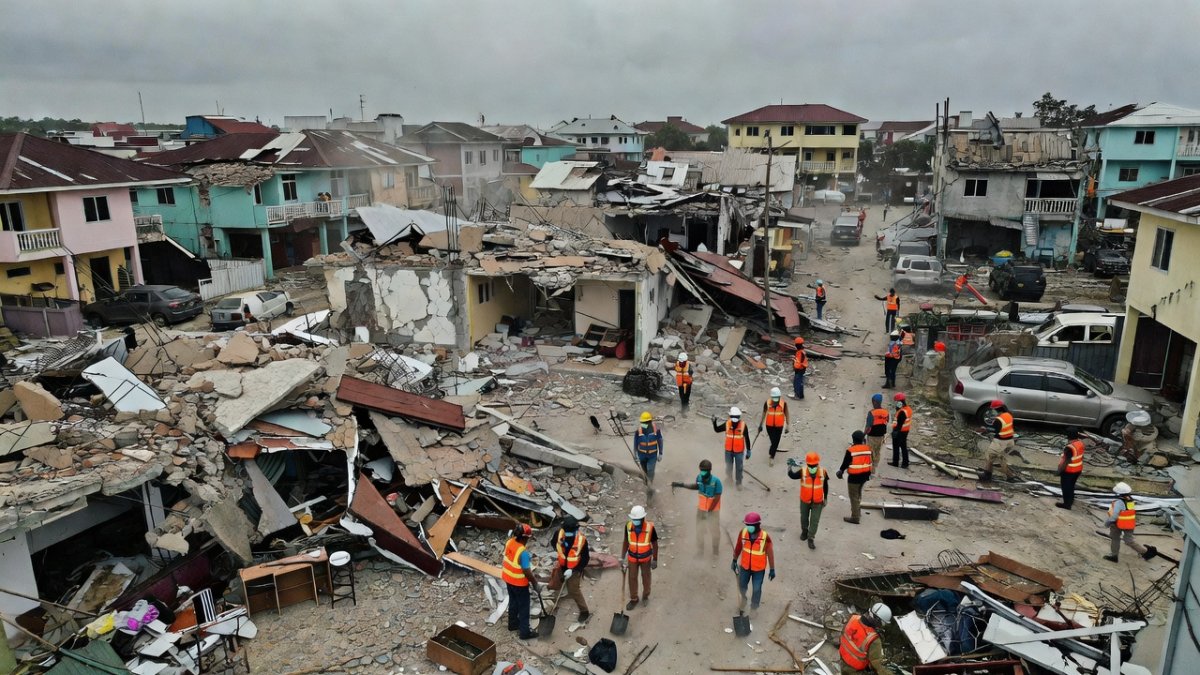
Folks, the earth didn't just tremble on June 8 — it roared with a fury that shook the entire Pacific. At 7:37 a.m. local time, a 7.8-magnitude monster ripped off the coast of Sarangani in Mindanao, and in seconds, it became the strongest earthquake to slam the Philippines since 1990. Fifty-five people are dead. Dozens more are injured. Tsunami warnings screamed across Indonesia and Japan. Buildings folded like cardboard in General Santos — a fast-food outlet collapsed, a university structure pancaked, a hospital had to be evacuated because the walls were screaming "unsafe." Seventeen flights got canceled at local airports because the tarmacs were too dangerous to use. And here's the gut punch: this comes just eight months after a 6.9 quake off Cebu killed 79 people. The Ring of Fire is wide awake, and it's not done yet.
The Ground Didn't Just Shake — It Destroyed
Let me paint you the picture that Reuters and Euronews laid out in their first reports. The epicenter was off the coast of Sarangani Province, deep enough to generate a massive rupture but shallow enough to level buildings. In General Santos City, the first reports were chaos: a fast-food outlet collapsed into a heap of concrete and twisted metal. A university structure pancaked — floors stacking onto floors, trapping anyone who couldn't get out in time. The Philippine Daily Inquirer ran live updates through the day as more damage reports flooded in. A hospital in General Santos had to be evacuated, patients wheeled out into the parking lot, because structural engineers flagged the walls as unstable. Seventeen flights? Canceled. Local airports went into emergency mode as runways were inspected for cracks and control towers checked for damage.
And then there's Glan, a municipality in Sarangani where thousands of homes were either destroyed or heavily damaged. The Guardian published aerial photos on June 13 showing entire barangays reduced to rubble — roofs sheared off, walls collapsed, streets turned into obstacle courses of debris. These aren't just buildings. These are people's homes. Their lives. Their memories. All gone in a matter of seconds.
Fifty-Five Dead and the Count Keeps Climbing
AP confirmed at least fifty-five deaths. But let me be straight with you — that number is a floor, not a ceiling. Dozens more are injured, and some of them are fighting for their lives in overwhelmed hospitals. General Santos was slammed with casualties, patients arriving faster than doctors could triage them. Remote villages in the mountainous areas of Sarangani remain cut off, their roads blocked by landslides and buckled pavement. Rescue teams are still trying to reach them. The full toll won't be known for days, maybe weeks.
Every single number in that count represents a person. A mother. A father. A child. A neighbor. The Philippines has been through this before — too many times. Eight months ago, a shallow 6.9-magnitude quake off Cebu killed 79 people, as The National (UAE) noted in their coverage. The connection between these two events isn't coincidence. It's a pattern. And the country is still counting the bodies when it should have been counting the cost of preparedness.
Tsunami Warnings Sent the Region Into Emergency Mode
The moment the ground stopped shaking, the water started moving. Tsunami warnings flashed across the entire region. Indonesia scrambled coastal communities inland. Japan issued alerts along its southern coastline. Euronews tracked the wave of warnings as they spread from the Philippines outward. Seventeen flights were grounded. Ports went silent. People in coastal villages grabbed whatever they could carry and ran uphill.
The tsunami didn't end up being the catastrophic wall of water that officials feared, but the fact that it was even a possibility tells you everything about the power of this quake. A 7.8 magnitude event offshore is a tsunami generator by default. The warnings bought time. They saved lives. But they also exposed how vulnerable coastal communities are when the next big one hits closer to shore — because that day will come.
Let's be real: the Philippines sits on the Ring of Fire, a 40,000-kilometer horseshoe of tectonic activity that runs around the Pacific Ocean. Earthquakes aren't a surprise here. They're a certainty. The question has never been "if" — it's always been "when." And when the ground moves this hard, the ocean responds.
Why This Keeps Happening — and Why Nothing Changes
Here's the part that makes my blood boil. The Philippines is among the most earthquake-prone countries on Earth. Scientists, engineers, and disaster experts have been screaming about this for decades. Yet here we are: a fast-food outlet collapsed because it wasn't built to code. A university building pancaked because inspections either didn't happen or didn't matter. A hospital had to be evacuated mid-crisis because nobody checked whether the structure could handle a serious shake.
The National reported the stark connection between this quake and the Cebu disaster just eight months prior. Two major seismic events inside a year. Two body counts. Two rounds of the same questions about building codes, early warning systems, and emergency preparedness — questions that were asked last time and never fully answered.
This isn't about bad luck. This is about systemic gaps that keep getting exposed every time the ground shakes. Stricter building codes exist on paper. Tsunami alert systems exist in theory. But when the 7.8 hit, the paper didn't save anyone. The collapsed buildings belonged to real people. The overwhelmed hospitals had real patients. And the families who lost loved ones aren't interested in hearing why the system failed — they just know it did.
Relief Operations on June 13: Still Digging, Still Waiting
As of today, June 13, the rescue and relief effort is running at full throttle. The Philippine Daily Inquirer has been covering the live updates from the ground. Evacuation centers in General Santos and Glan are packed. Tarps have been set up as temporary shelters. Food, water, and medical supplies are moving, but the scale of the need is staggering. Thousands of families are sleeping under tarps or in evacuation centers that weren't designed for this many people.
The Guardian's June 13 coverage shows the grim reality: aerial photos of damaged homes stretching across entire communities, rescue workers picking through debris, families waiting for news about missing relatives. Aid is arriving from international partners. Offers of assistance have come in from multiple countries. But distribution is slow when roads are broken, bridges are damaged, and aftershocks keep rolling through — some still above magnitude 5.0.
The hard truth: relief operations will take weeks, not days. Recovery will take months, not weeks. And rebuilding? That will take years, assuming the resources are actually committed and not just promised.
What This Means for the Philippines and the World
This earthquake isn't just a Philippine story. It's a global story. The strongest quake since 1990, happening in a region that has already lost 79 people to a smaller event just months ago, raises urgent questions that every country on the Ring of Fire needs to answer.
How many more building collapses will it take before enforcement catches up with engineering standards? How many more tsunami warnings before the alerts reach every coastal village within seconds, not minutes? How many more body counts before governments finally allocate the funding that disaster resilience actually requires?
International aid has been offered. That's good. But aid is reactive. What's needed is proactive investment in building codes that are enforced, early warning systems that reach everyone, and emergency drills that happen regularly — not just after a tragedy. The Philippines can't change the fact that it sits on a tectonic fault line. But it can change how prepared it is when the next one hits.
What You Can Do Right Now
Folks, I don't do "thoughts and prayers." I do action steps. Here's what you need to do:
First, donate to verified relief organizations on the ground in the Philippines. Organizations like the Philippine Red Cross and UNICEF Philippines are already operational. Every dollar counts when families are sleeping under tarps.
Second, check on your Filipino friends, family, and colleagues. A message asking "are you okay? do you need help?" can make a world of difference to someone who's worried about relatives in Mindanao.
Third, keep this story alive. The news cycle has a short attention span, but the people of Glan and General Santos don't get to move on. Share accurate updates from Reuters, The Guardian, Euronews, the Philippine Daily Inquirer, and AP. Don't let this disaster fade into the background noise.
Fourth, push your own leaders to fund disaster resilience. Whether you're in California, Japan, Indonesia, or anywhere else on the Ring of Fire, the lessons from Mindanao apply to you. Demand building inspections. Demand early warning systems. Demand preparedness that goes beyond a brochure.
The Ring of Fire doesn't take breaks. It doesn't care about your schedule. The only question is whether we finally get serious about living on it before the next big one hits.
Stay loud. Stay ready. Stay vigilant. The people of Mindanao need sustained support, not just headlines for a few days.
By Jessica Ali, Lead Anchor, Global 1 News
This article was produced with AI-assisted research and editorial support. Reporting is based on sources cited in the article.
What's Your Reaction?
 Like
0
Like
0
 Dislike
0
Dislike
0
 Love
0
Love
0
 Funny
0
Funny
0
 Wow
0
Wow
0
 Sad
0
Sad
0
 Angry
0
Angry
0

Editor-in-Chief at Global1.News. Atlanta-based journalist who cuts through the BS and tells it like it is. Lead anchor, host, and the voice you hear when the spin stops and the truth starts.












Comments (0)