
US-Iran Conflict: Epic Fury Strikes and Hormuz Crisis
US-Iran War Escalates: Hormuz Crisis and Epic Fury Strikes Beirut, Lebanon — Article continues... The current US-Iran escalation traces directly to Operation Epic Fury in February 2026, which triggered the Tanker War of 2026 and renewed attacks on commercial vessels in the Strait of Hormuz.
US-Iran War Escalates: Hormuz Crisis and Epic Fury Strikes
Beirut, Lebanon — Article continues... The current US-Iran escalation traces directly to Operation Epic Fury in February 2026, which triggered the Tanker War of 2026 and renewed attacks on commercial vessels in the Strait of Hormuz. US Central Command footage released via Al Arabiya English on July 24, 2026, documents the 13th consecutive night of operations explicitly aimed at reducing the threat Iran poses to civilian mariners and shipping lanes. Since the launch of Operation Epic Fury, the United States has pursued a sustained air and naval campaign against Iranian nuclear and missile facilities, prompting Tehran to activate a multi-front response strategy coordinated through its Axis of Resistance. Iranian Foreign Minister Abbas Araghchi has publicly framed the operation as defensive, directing proxy forces to escalate asymmetric attacks while avoiding direct conventional confrontation with American carrier groups. This approach leverages Iran's geographic advantages and alliances, including intensified Houthi strikes on Red Sea shipping from Yemen's Ansar Allah movement, which have already disrupted commercial traffic beyond the Bab el-Mandeb strait. President Trump has framed the campaign around preventing Iran from obtaining a nuclear weapon, citing Tehran’s “evil intentions.” This nuclear dimension intersects with longstanding Sunni-Shia competition, as Gulf Arab states watch Iran’s regional proxies and missile capabilities with concern. The strikes also occur against the backdrop of Arab-Israeli normalization efforts, where any prolonged Hormuz disruption risks raising energy costs that could slow economic diversification plans in Saudi Arabia and the UAE. Gulf Arab states have faced acute spillover effects, with Saudi Arabia's Aramco facilities near the Persian Gulf receiving indirect threats from Iraqi Shia militias such as Kataib Hezbollah, forcing Riyadh to increase air defense deployments along its eastern province. The UAE and Bahrain, hosting U.S. naval assets, have reported heightened cyber intrusions attributed to Iranian-linked groups, while Kuwait has absorbed refugee flows from southern Iraq amid militia mobilization. These developments have strained the Gulf Cooperation Council, with Oman maintaining cautious neutrality to preserve its role as a backchannel mediator. Broader regional dynamics reveal how the conflict has accelerated Saudi-Iranian de-escalation talks under Chinese auspices, even as proxy violence risks drawing in Lebanon through Hezbollah's border exchanges with Israel.
The 13th Night: Targets and Strategy
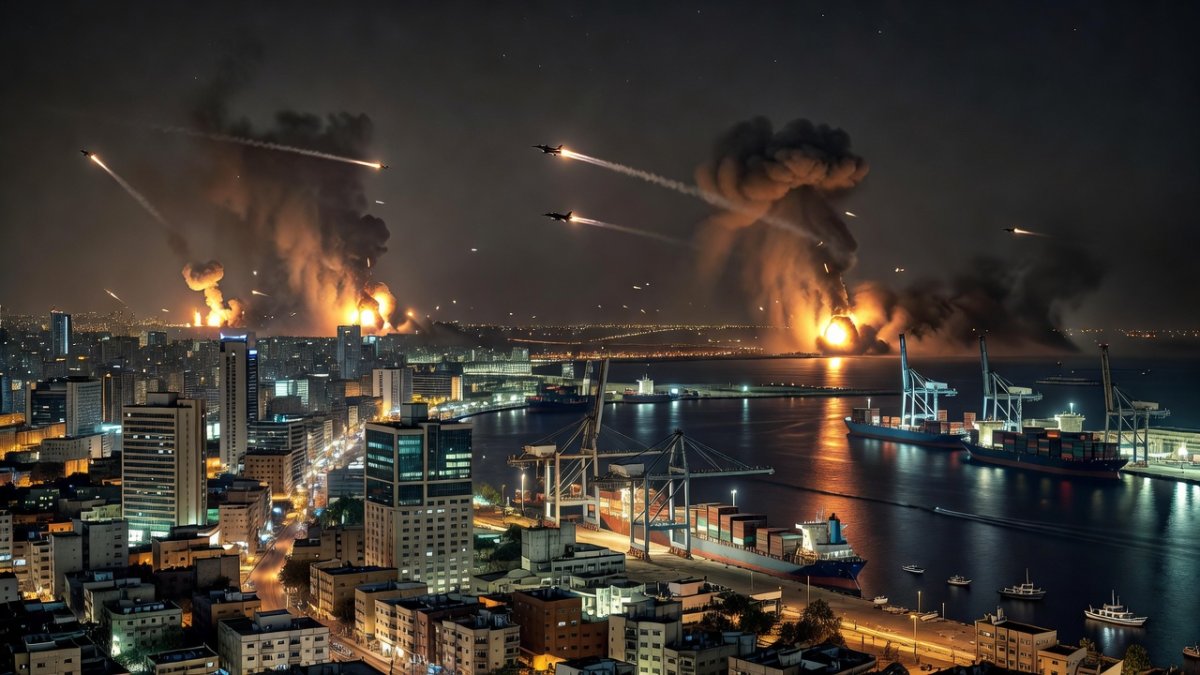
Explosions were recorded in Bandar Abbas, Khorramabad, Jask, Ahvaz, and Qeshm Island following the latest strikes. On July 16, US forces hit bridges and transportation links in Iran’s Hormozgan province to disrupt military supply routes feeding Bandar Abbas, Iran’s key southern port. Eyewitness video from the city shows the scale of the blasts. These targets reflect a deliberate widening of the air campaign beyond coastal facilities. By striking inland connections, CENTCOM seeks to limit Iran’s ability to resupply coastal defenses and missile units threatening the strait. The approach ties into broader great-power competition, as sustained pressure on Iran’s southern logistics could constrain Tehran’s capacity to project influence toward Iraq and the Levant.
The Strait of Hormuz — Energy's Arteries Under Fire
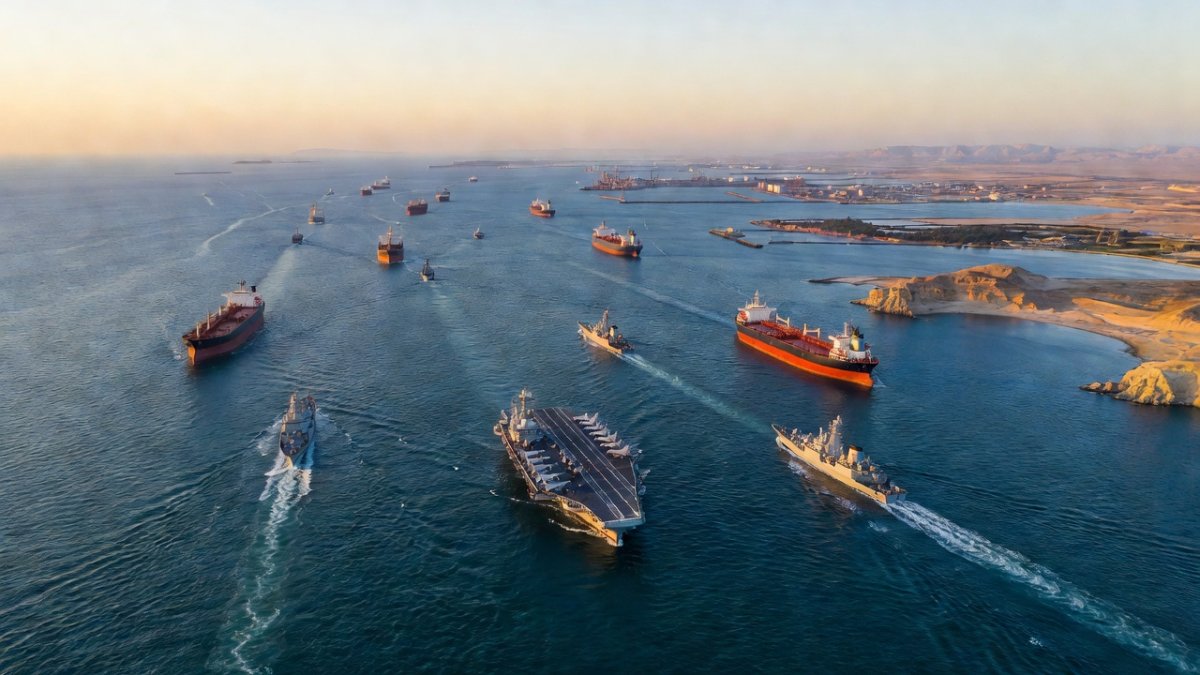
The strait handles approximately 20 percent of global petroleum consumption, making any sustained closure a direct shock to energy markets. Approximately 18 million barrels per day of crude oil and condensate, representing nearly 20 percent of global seaborne trade, normally transit the Strait of Hormuz, alongside significant liquefied natural gas volumes from Qatar. Iranian naval harassment and mining threats since Operation Epic Fury have driven war-risk insurance premiums for tankers to exceed $200,000 per voyage, according to Lloyd's of London data, prompting several operators to reroute via the Cape of Good Hope at added costs of $1.5 million per journey. Asian economies bear the heaviest burden: Japan and South Korea, reliant on Middle Eastern crude for over 80 percent of imports, have activated strategic reserves, while India and China have negotiated emergency supplies from Russia and Angola. Renewed attacks on shipping since February 2026 have already kept oil and LNG prices elevated. The UN International Maritime Organization has called for maximum restraint and de-escalation, underscoring the global stakes. Gulf states face immediate pressure on their diversification timelines. Higher energy revenues provide short-term fiscal relief but also highlight vulnerability to chokepoint crises. For importers in Asia and Europe, the disruption revives questions about strategic reserves and alternative routes, while Iran’s actions test the limits of its leverage over a waterway it has long threatened to close. OPEC+ spare capacity remains limited, with Saudi Arabia holding roughly 3 million barrels per day that could theoretically offset disruptions through the 5-million-barrel-per-day Petroline to Yanbu and the East-West pipeline. Yet Riyadh has signaled reluctance to fully activate these routes without explicit security guarantees from Washington. Oil prices have climbed from $78 to $112 per barrel on the Brent benchmark since mid-February, exacerbating inflation pressures across import-dependent Asian markets and complicating China's post-pandemic recovery. These energy shocks underscore the Strait's enduring centrality to Middle East leverage in global power balances.
Congressional Resistance and Domestic Pressures
Former Chief Speechwriter to President Bill Clinton Paul Glastris has noted that congressional opposition to additional Iran war funding stems from the conflict’s unpopularity with constituents. This domestic constraint shapes the administration’s options even as CENTCOM continues nightly operations. Public sentiment in the United States limits the scope for open-ended commitments, forcing planners to weigh rapid results against the risk of prolonged engagement. The dynamic echoes earlier Middle East interventions where initial public support eroded once costs became visible, influencing how long the current air campaign can be sustained without broader legislative backing.
Russia, China, and the Regional Power Play
Russia and China have watched the Hormuz crisis with strategic interest. Both maintain economic and diplomatic ties with Tehran and benefit from any distraction that pulls US attention away from other theaters. Russia's strategic positioning has grown more assertive through Foreign Minister Sergey Lavrov's meeting with Iranian counterpart Abbas Araghchi on the sidelines of the Shanghai Cooperation Organization summit in Bishkek, Kyrgyzstan, coinciding with the thirteenth night of U.S. strikes. Moscow has supplied Tehran with additional air defense components and intelligence sharing, viewing the conflict as an opportunity to divert American resources from Ukraine. China's opposition to unilateral sanctions has manifested in continued purchases of discounted Iranian oil, exceeding 1.2 million barrels per day, while Beijing advocates for multilateral diplomacy within the SCO framework to coordinate Russia-Iran-China responses against perceived U.S. hegemony. The SCO platform facilitates trilateral coordination on energy security and sanctions evasion, strengthening the axis against Western influence in Central Asia and the Persian Gulf. This dynamic intensifies great power competition across the Middle East, where Turkey balances NATO commitments with energy deals involving Russian pipelines and Iranian gas, allowing Ankara to mediate discreetly while expanding its regional footprint. Such alignments risk fragmenting the post-Abraham Accords order and complicating U.S. efforts to isolate Iran. China’s reliance on Gulf energy supplies gives it a direct stake in de-escalation, yet its diplomatic posture remains cautious to avoid alienating either side. The conflict also affects Turkey’s foreign policy calculations, as Ankara balances energy security with its own regional ambitions. Meanwhile, the strikes reinforce perceptions among Arab states that US military presence remains the ultimate guarantor of maritime security, potentially accelerating quiet security cooperation even as public rhetoric on Palestinian issues continues.
The Military Calculus: From Air Power to Ground Options
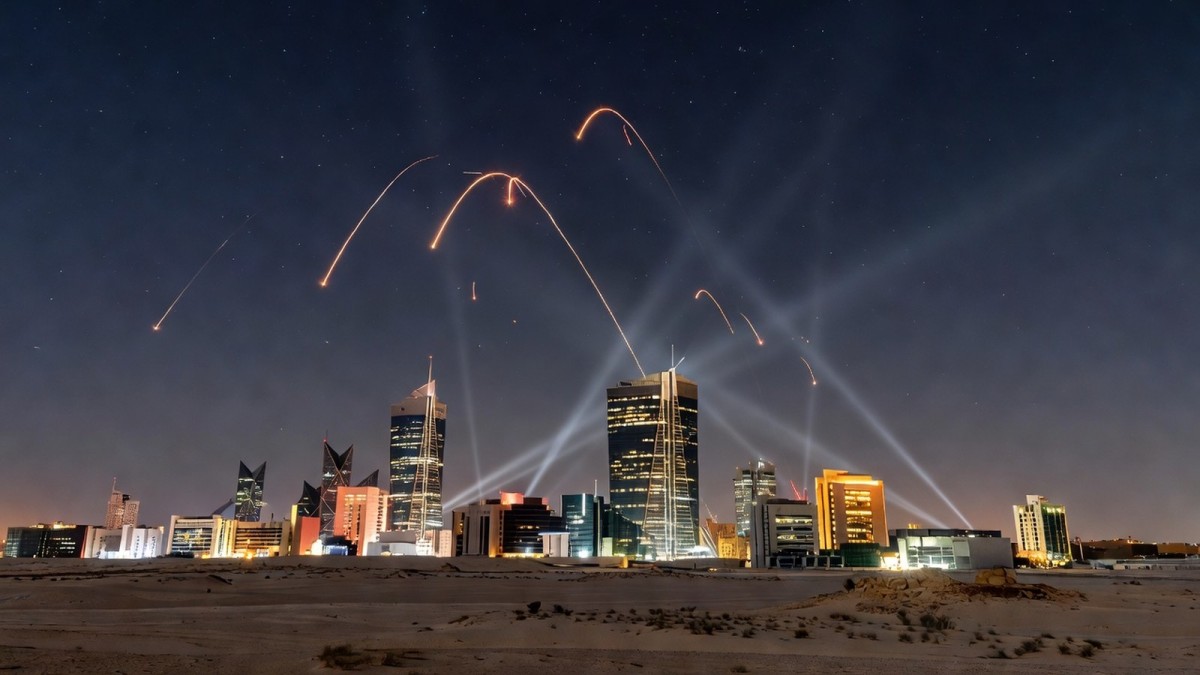
Former US Deputy Assistant Secretary of Defense Mick Mulroy has assessed that reopening the Strait of Hormuz would ultimately require ground forces. Air strikes alone have not fully neutralized Iranian coastal and missile threats, according to this analysis. A U.S. ground invasion of Iran remains unrealistic given current force posture, with approximately 40,000 American troops stationed across the Gulf region and limited Marine Expeditionary Units available for sustained operations. Historical parallels to the 2003 Iraq invasion and Afghanistan campaign highlight the prohibitive costs of occupation against a population exceeding 85 million and terrain favoring irregular warfare. Iran’s army has already struck Al-Azraq US Airbase in Jordan, while sirens sounded in Bahrain and Kuwait reported intercepting Iranian missiles. Erbil airport in Iraq reopened after a drone incident nearby, illustrating the widening geographic footprint. These developments show how air campaigns can expand into multi-domain responses, raising second-order risks of miscalculation across the region. Any ground component would face complex terrain and Iranian asymmetric capabilities, factors that shape the strategic calculus for all parties. Congressional resistance has intensified through invocations of the War Powers Resolution, with lawmakers demanding prior authorization for any escalation beyond defensive strikes. Defense supplemental budgets have already reached $48 billion for the current fiscal year, drawing scrutiny from fiscal conservatives. Analyst Paul Glastris has documented the war's political unpopularity in polling data showing only 34 percent public support, mirroring Vietnam-era fatigue and constraining executive flexibility. These constraints reflect deeper tensions between executive military authority and legislative oversight amid shifting Middle East priorities.
Regional Implications
The 13th night of strikes has intensified pressure on every regional actor. Gulf diversification strategies now confront the reality that energy transit security remains tied to US-Iran dynamics. Iran’s nuclear ambitions continue to drive the stated US objective, yet the immediate crisis centers on maritime access rather than enrichment facilities. Israeli security calculations are affected by the potential for wider conflict, while Palestinian dynamics risk being overshadowed by the energy and military focus. Turkey and other regional powers must navigate between economic interests and alliance alignments. The UN’s call for restraint highlights the absence of quick diplomatic off-ramps, leaving energy markets and civilian shipping exposed until a new equilibrium emerges. If implemented, further ground operations would mark a significant escalation with consequences extending well beyond the strait itself.
By Malik Hassan, Staff Writer
This article was produced with AI-assisted research and editorial support. Reporting is based on sources cited in the article.
What's Your Reaction?
 Like
0
Like
0
 Dislike
0
Dislike
0
 Love
0
Love
0
 Funny
0
Funny
0
 Wow
0
Wow
0
 Sad
0
Sad
0
 Angry
0
Angry
0

Middle East Correspondent at Global1.News. Based in Beirut, covering politics, conflict, energy, and society across the Middle East. Brings context and depth to a region often reduced to headlines.












Comments (0)