
South China Sea Clash Exposes Deepening Strategic Fault Lines
The article analyzes the July 20, 2026 clash at Second Thomas Shoal, where Chinese Coast Guard personnel injured a Philippine sailor during a resupply mission. It covers historical claims, the 2016 arbitration ruling, Philippine strategic realignment with the US and Japan, US resource strains amid Iran operations, and ASEAN divisions over maritime disputes.
A violent clash at Second Thomas Shoal has thrust the South China Sea into renewed global focus, as Chinese Coast Guard forces physically confronted Philippine sailors during a routine resupply mission, injuring one serviceman with a baton strike. This July 2026 incident exposes the raw strategic fault lines running through the region, where territorial claims, military alliances, and great-power rivalries intersect with dangerous immediacy. The confrontation signals how quickly localized disputes can escalate amid shifting U.S. commitments and ASEAN divisions.
South China Sea Clash Exposes Deepening Strategic Fault Lines
Manila, Philippines — Article continues...
The Confrontation at Ayungin Shoal
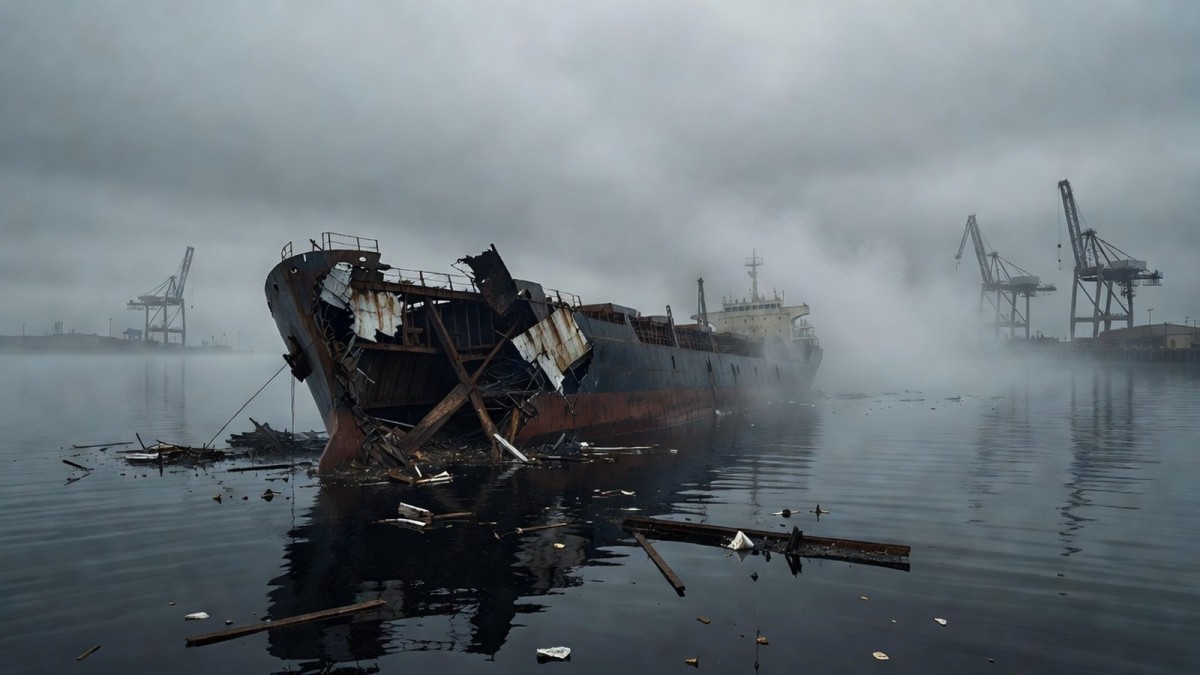
In a recent CGTN report examining South China Sea tensions, the July 20, 2026 incident at Second Thomas Shoal receives detailed attention as a flashpoint in ongoing maritime disputes. Chinese Coast Guard personnel confronted Philippine Navy sailors during a resupply mission to the grounded BRP Sierra Madre. A Chinese officer struck a Philippine sailor on the head with a wooden baton, resulting in injury. Manila condemned the action as excessive, while Beijing maintained that Philippine forces had provoked the encounter through unauthorized maneuvers near the shoal.
Historical Claims and Legal Disputes
Second Thomas Shoal forms part of the Spratly Islands chain, where overlapping assertions have persisted for decades. The Philippines has maintained the BRP Sierra Madre, a decommissioned United States Navy landing ship deliberately grounded in 1999, as a military outpost. China asserts rights across virtually the entire South China Sea through its nine-dash line framework. The 2016 ruling by the Permanent Court of Arbitration in The Hague rejected key elements of that claim in the case brought by the Philippines, yet Beijing continues to reject the decision outright. These positions create a persistent legal and operational friction that shapes every resupply operation and patrol in the area.
The 2016 Permanent Court of Arbitration ruling addressed multiple provisions under the United Nations Convention on the Law of the Sea, including Articles 56, 57, and 121 concerning exclusive economic zones and the status of maritime features. The tribunal found that several features claimed by China within the nine-dash line, such as Mischief Reef and Second Thomas Shoal, do not generate extended maritime entitlements and that China's historic rights claims lacked legal foundation beyond the convention. Beijing rejected the award immediately, declaring it null and void, and has since intensified its presence through continued construction on artificial islands at Fiery Cross, Subi, and Mischief Reefs, adding radar installations, airstrips, and defensive systems that extend operational reach across the Spratlys.
China's 2021 Maritime Interests Protection Law further codified enforcement mechanisms for these claims, authorizing coast guard and maritime militia operations to safeguard asserted rights and establishing administrative procedures for foreign vessels operating in disputed zones. This legislation has altered the operational environment by providing domestic legal cover for more assertive interdictions during resupply missions. Regional reactions from Vietnam and Malaysia have included parallel diplomatic protests and increased patrols, yet the absence of coordinated ASEAN pushback has allowed Beijing to manage the dispute through incremental enforcement rather than negotiated settlement, raising the prospect of normalized low-level friction that tests Manila's endurance without immediate escalation.
Philippine Strategic Realignment
Under President Bongbong Marcos, Manila has adopted a more assertive posture toward South China Sea issues, reversing the rapprochement pursued during the Duterte period. This shift aligns with expanded military cooperation with Japan, which has supplied radar systems and patrol vessels to strengthen Philippine maritime capabilities. The annual Balikatan 2026 exercises with the United States involved 17,000 troops and featured live-fire drills near contested waters. Such developments reflect Manila's calculation that external partnerships can offset China's material advantages in the region while reinforcing its own presence at outposts like Second Thomas Shoal.
The Enhanced Defense Cooperation Agreement has enabled expanded U.S. rotational access to Philippine facilities at Basa Air Base, Fort Magsaysay, and additional sites identified in the 2023 expansion, facilitating prepositioning of equipment and joint training that directly supports maritime domain awareness near contested features. These arrangements complement the annual Balikatan exercises and reflect Manila's effort to offset China's numerical superiority through allied interoperability. At the same time, bilateral trade with China reached $38 billion in 2025, creating economic dependencies in agriculture, infrastructure, and manufacturing that constrain the scope of Philippine countermeasures and expose domestic sectors to potential retaliation during periods of heightened tension.
The Japan-Philippines Reciprocal Access Agreement adds another layer by permitting mutual troop deployments and equipment transfers, including radar systems and patrol vessels already delivered under prior programs. This trilateral alignment with Washington and Tokyo strengthens Manila's ability to sustain presence at outposts like Second Thomas Shoal, yet it also risks accelerating Chinese economic and diplomatic pressure on Philippine supply chains. Scenario analysis suggests that sustained external support could deter further Chinese consolidation, while any perceived weakening of U.S. commitments might prompt Manila to recalibrate toward limited accommodation to protect trade volumes and avoid isolation within ASEAN.
US Strategic Overstretch Amid Middle East Commitments
The incident unfolded against a backdrop of heightened US-Iran tensions and an active American military campaign targeting Iranian nuclear facilities. This simultaneous pressure creates a two-front strategic challenge for Washington, stretching naval and diplomatic resources between the Middle East and the Indo-Pacific. The US State Department described the Chinese actions as dangerous and aggressive conduct, yet the broader resource allocation dilemma limits the speed and scale of any direct response. Beijing's leadership observes these constraints closely, recognizing that divided American attention may reduce the credibility of extended deterrence commitments in Southeast Asia.
Current U.S. force posture places an aircraft carrier strike group in the Persian Gulf to support operations against Iranian nuclear facilities while maintaining rotational deployments and Balikatan-linked assets in the South China Sea. This simultaneous commitment reduces the availability of high-end naval platforms for rapid reinforcement in the Indo-Pacific, lengthening response times and complicating extended deterrence signaling to allies. The Congressional Budget Office has highlighted persistent shortfalls in U.S. Navy shipbuilding capacity, projecting that fleet expansion targets will remain unmet through the late 2020s due to industrial base constraints and competing budgetary priorities.
These resource pressures shape Beijing's calculations by demonstrating the limits of American presence across two theaters, potentially encouraging calibrated challenges at Second Thomas Shoal that fall below thresholds triggering full U.S. intervention. Regional partners observe these dynamics closely, with some Southeast Asian states increasing hedging through diversified economic ties. Over the medium term, the combination of carrier commitments in the Middle East and shipbuilding shortfalls could erode perceptions of reliable forward deployment, prompting Manila and others to accelerate alternative security arrangements even as Washington seeks to preserve credibility through selective demonstrations of resolve.
ASEAN Fragmentation and Regional Dynamics
ASEAN members remain divided on South China Sea questions. The Philippines, Vietnam, and Malaysia continue to assert their respective claims, while Cambodia and Laos maintain positions more aligned with Chinese preferences. This fragmentation prevents unified ASEAN statements or coordinated diplomatic initiatives, allowing bilateral pressures to dominate. China's approach leverages these divisions through targeted economic engagement and infrastructure projects, limiting the organization's ability to serve as an effective counterweight. The result is a patchwork of national strategies rather than a cohesive regional framework.
China's Maritime Strategy and Broader Objectives
China's 2026 National Defense White Paper identifies maritime rights protection as a core pillar of national security. Artificial islands constructed at Fiery Cross, Subi, and Mischief Reefs now host military installations, including airstrips and missile systems, enhancing operational reach across the Spratlys. These developments support Beijing's Dual Circulation strategy by securing sea lanes vital for energy imports and export markets. The Second Thomas Shoal confrontation fits within this pattern of incremental enforcement, aimed at deterring further Philippine consolidation while signaling resolve to external actors without triggering full-scale escalation.
Strategic Calculus and Second-Order Effects
Each actor pursues distinct objectives with varying leverage. China seeks to consolidate de facto control over features within its nine-dash line while avoiding direct conflict with the United States. The Philippines aims to internationalize the dispute and secure material support from partners. Washington must balance Indo-Pacific commitments against Middle East demands, weighing the costs of sustained presence. Second-order effects extend to the Global South, where perceptions of American distraction may encourage hedging strategies, and to the EU, which monitors supply-chain vulnerabilities tied to regional stability. Over time, these dynamics risk normalizing low-level confrontations that erode established norms without producing decisive outcomes.
By Prof. Marcus Chen, Staff Writer
This article was produced with AI-assisted research and editorial support. Reporting is based on sources cited in the article.
What's Your Reaction?
 Like
0
Like
0
 Dislike
0
Dislike
0
 Love
0
Love
0
 Funny
0
Funny
0
 Wow
0
Wow
0
 Sad
0
Sad
0
 Angry
0
Angry
0

World Politics Analyst at Global1.News. Based in Beijing, covering US-China relations, global trade, and geopolitical strategy. Brings deep analytical perspective to the power dynamics shaping international affairs.













Comments (0)