
Russia's Independent Candidates Face Tough September Vote
Russia's independent candidates confront a political system engineered to neutralize dissent ahead of this September's parliamentary vote, with administrative hurdles and economic discontent converging to test the Kremlin's managed democracy. The first national election since the 2022 Ukraine invasion places all 450 State Duma seats in play under conditions that favor incumbents and sideline challengers. Observers note that these contests could reveal whether public frustrati
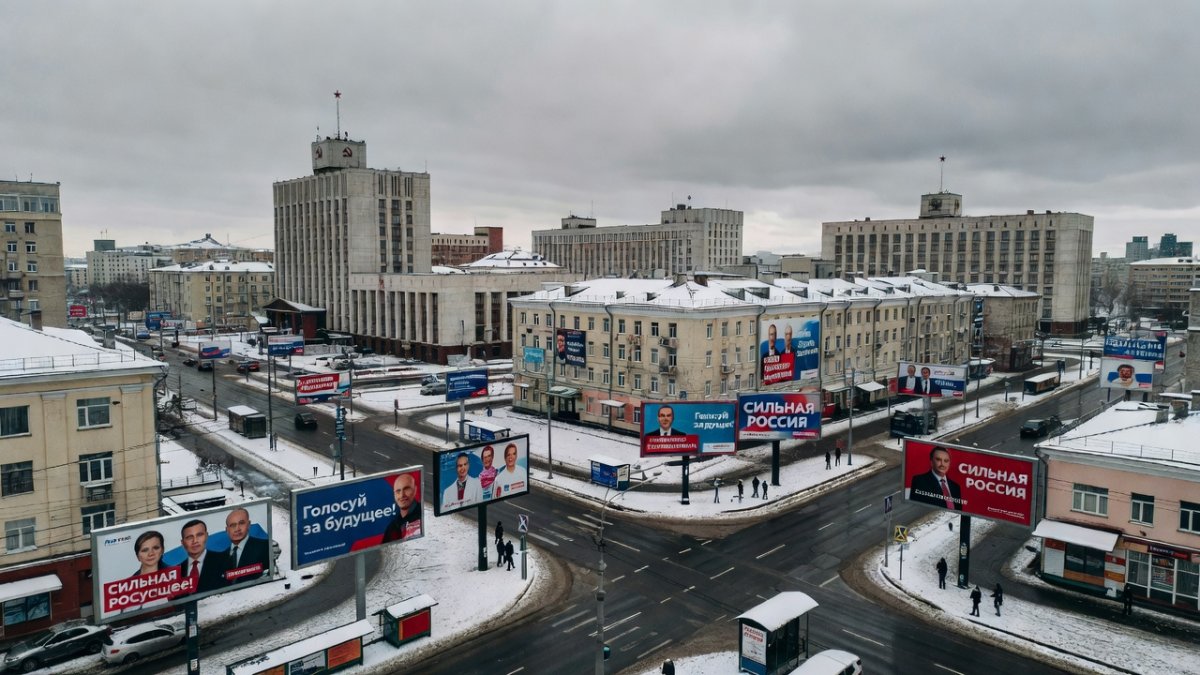
Independent Candidates Confront Kremlin Barriers in September Vote
Moscow, Russia — Russia prepares for its first parliamentary elections since the full-scale Ukraine invasion, with voting scheduled across three days this September for the 450 seats in the State Duma. United Russia has fielded candidates in every one of the 225 single-member constituencies, a move that consolidates its structural advantage under the mixed electoral system. This approach coincides with widespread regional grievances over fuel shortages linked to Ukrainian drone strikes on energy facilities and warehouses.
The Electoral Context This September
Russia holds its first parliamentary election since the Ukraine invasion on September 18-20. The campaign period overlaps with the summer holiday season, a timing that has persisted for over a decade and tends to suppress voter turnout. Kremlin sources indicate that authorities view these contests simultaneously as a managed procedure and a potential source of additional risk amid ongoing economic strain.
United Russia Dominance Across Constituencies
United Russia is nominating candidates in all 225 single-member constituencies for the first time since the return of the mixed system. Top names on its federal list include war correspondent Yevgeny Poddubny, Foreign Minister Sergei Lavrov, and Moscow Mayor Sergei Sobyanin. This comprehensive coverage leaves limited space for genuine competition in districts where independents might otherwise mobilize local support.
Barriers Facing Independent Candidates
Opposition candidates encounter registration barriers, restricted media access, and sustained administrative pressure. Last year's regional parliament elections produced only 33 independent candidates in total, with just 14 advancing past the nomination stage. Analysts suggest this pattern signals a deliberate narrowing of the political field ahead of the national vote.
The Municipal Filter as a Gatekeeping Tool
The municipal filter requires independent candidates to collect signatures from municipal deputies, a process subject to severe administrative pressure that blocks most aspirants. Communist Party candidates failed to pass this filter in multiple regions, including Altai, Transbaikal, Lipetsk, Orenburg, and Saint Petersburg. This mechanism effectively funnels viable candidacies toward parties aligned with the Kremlin.
The municipal filter, introduced in 2012 following mass protests against electoral fraud, requires independent and opposition candidates to secure signatures from 5 to 10 percent of municipal deputies in a given constituency, with thresholds varying by region and population size. In practice, this process operates under tight administrative control, as local deputies aligned with United Russia or regional governors face direct pressure to withhold endorsements. Candidates must often navigate notarized lists and verification procedures that allow authorities to disqualify submissions on technical grounds, a mechanism refined after the 2011-2012 demonstrations to prevent repeat surges in street mobilization.
Recent regional elections illustrate the filter's effectiveness. Communist Party candidates were blocked in Altai, Transbaikal, Lipetsk, Orenburg, and Saint Petersburg, where signature shortfalls were cited despite documented efforts to gather support. In Saint Petersburg, for instance, multiple KPRF aspirants failed after deputies reported coercion from city hall. This pattern, repeated across more than a dozen regions last year, reduced independent candidacies to just 33 nationwide, with only 14 advancing. Analysts attribute the tightening directly to post-2012 legislation that raised signature requirements and expanded verification powers.
Regional Economic Context and Public Mood
Fuel shortages and economic damage from Ukrainian drone attacks on energy infrastructure and Wildberries warehouses have dominated regional headlines in recent months. Many Russians, including previously apolitical bloggers, have taken to social media to express frustrations over these disruptions. This climate of discontent could influence voter behavior even as official narratives emphasize stability.
Ukrainian drone strikes have directly disrupted fuel supplies and retail logistics, with documented hits on energy facilities and two Wildberries warehouses in St. Petersburg and Crimea in recent months. These attacks caused temporary halts in heating oil deliveries to rural districts and delayed shipments of consumer goods, exacerbating shortages reported in at least eight regions. In agricultural areas, fuel scarcity has raised costs for machinery operation and transport to markets, while urban commuters face higher prices at pumps and intermittent heating shortfalls in apartment blocks during shoulder seasons.
Public reaction has appeared on social media platforms, where previously apolitical bloggers and local accounts document empty fuel stations and rising grocery prices. These expressions of frustration mark a shift from earlier wartime restraint, linking economic strain to questions about governance effectiveness. Regional governors have attributed disruptions solely to external attacks, yet the visible daily impacts on transport, agriculture, and household budgets create conditions where voter discontent could surface despite official messaging focused on stability and resilience.
Yabloko Party's Campaign Under Pressure
Yabloko party chairman Nikolai Rybakov is overseeing a field of 300 candidates despite documented government pressure on the liberal opposition group. The party's persistence represents one of the few organized efforts to challenge United Russia's sweep in single-member districts. Observers note that Yabloko's visibility remains constrained by limited media access and local administrative obstacles.
Founded in 1993, Yabloko remains Russia's oldest registered liberal party, yet it operates under sustained legal and administrative constraints. The party has faced repeated attempts to designate affiliates as "undesirable organizations," limiting foreign funding and increasing scrutiny of domestic activities. Nikolai Rybakov, the current chairman, has publicly stated that the 300 candidates fielded this cycle represent a deliberate push to contest single-member districts where United Russia dominance is least contested, a strategy adjusted after weaker showings in prior cycles when registration barriers reduced participation.
Compared with previous parliamentary elections, the current number of nominees exceeds the roughly 200 candidates Yabloko managed in 2021, though many still encounter signature verification delays and restricted access to state media. Rybakov has emphasized grassroots collection of signatures and local issue-focused platforms to circumvent federal-level obstacles. Within the broader opposition landscape, Yabloko's persistence stands in contrast to parties that have been effectively sidelined or absorbed, highlighting the narrowing space for organized liberal participation ahead of the September vote.
Analysis of Implications for Kremlin Authority
This could indicate that the Kremlin seeks to project unity while containing any pockets of genuine opposition. The inclusion of high-profile figures such as Lavrov and Sobyanin on the federal list underscores an effort to link the ruling party with established authority. At the same time, Poddubny's required disclosure of stock holdings in Apple, Intel, and Nebius Group highlights the transparency rules applied unevenly across the candidate pool.
The inclusion of Sergei Lavrov and Sergei Sobyanin on United Russia's federal list mirrors the 2024 presidential election approach, where high-profile figures were used to signal institutional continuity and deter internal challenges. Yevgeny Poddubny's candidacy, requiring disclosure of holdings in Apple, Intel, and Nebius Group, underscores the Kremlin's effort to integrate war correspondents into the political structure, reinforcing narratives of militarized loyalty. This tactic echoes the 1990s practice of co-opting prominent media personalities but occurs under far tighter central control.
Economic grievances over fuel and infrastructure damage introduce variables absent from the tightly managed 2024 vote. Historical precedents from the 2011-2012 protests show that localized discontent can amplify when administrative barriers appear overly rigid. Should turnout fall or protest votes concentrate in specific districts, the model of managed democracy risks exposing gaps between projected unity and actual regional sentiment, testing the system's capacity to absorb friction without visible adjustment.
Outlook for Managed Elections
The combination of structural barriers and economic grievances creates conditions where turnout and results may diverge from official expectations. Independent voices in places like Perm, where 20-year-old candidate Alexei Ogloblin campaigns with basic signage, illustrate the limited avenues available for grassroots participation. How these dynamics unfold this September will test the resilience of Russia's controlled electoral framework. By Irina Volkov, Staff Writer
This article was produced with AI-assisted research and editorial support. Reporting is based on sources cited in the article.
What's Your Reaction?
 Like
0
Like
0
 Dislike
0
Dislike
0
 Love
0
Love
0
 Funny
0
Funny
0
 Wow
0
Wow
0
 Sad
0
Sad
0
 Angry
0
Angry
0
Russia/Eastern Europe Correspondent at Global1.News. Covering Russian politics, energy, security, and the shifting dynamics of the post-Soviet space. Provides clear-eyed analysis on one of the world's most opaque regions.









Comments (0)