
China-Thailand Defense: AI, Cybersecurity & Border Talks
In the heart of Southeast Asia, Defense Minister Lt. Gen. Adul Boonthamcharoen met Chinese Defense Minister Adm. Dong Jun on Friday in Bangkok. The two officials advanced bilateral defense ties through talks on artificial intelligence, cybersecurity, defense industry collaboration, and the Thai-Cambodian border. China and Thailand Strengthen Defense Cooperation Amid Expanding Strategic Partnership Bangkok, Thailand — Defense Minister Lt. Gen.
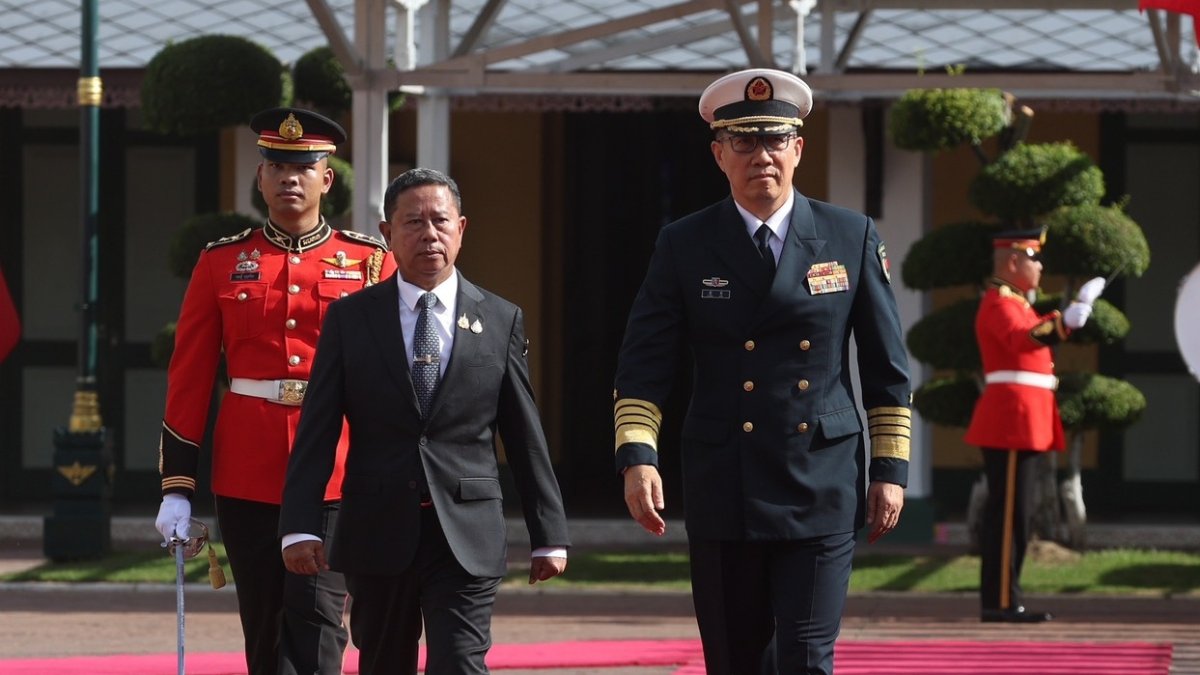
China and Thailand Strengthen Defense Cooperation Amid Expanding Strategic Partnership
Bangkok, Thailand — Defense Minister Lt. Gen. Adul Boonthamcharoen met Chinese Defense Minister Adm. Dong Jun on Friday in Bangkok to advance bilateral defense ties, marking a pivotal step in their comprehensive strategic partnership that promises tangible benefits for Thai security and regional harmony.
Defense Ministers Convene in Bangkok
The meeting took place at the Thai Defense Ministry headquarters. Both sides confirmed their commitment to the comprehensive strategic partnership. The two officials focused on concrete areas including artificial intelligence, cybersecurity, defense industry collaboration, and peaceful resolution of the Thai-Cambodian border issue through existing bilateral mechanisms. Lt. Gen. Adul Boonthamcharoen stated that Adm. Dong Jun pledged continued Chinese support for Thailand while maintaining neutrality, noting that both Thailand and Cambodia remain good friends of China.
Discussions on Responsible AI and Cybersecurity
Thai and Chinese representatives examined practical steps for responsible artificial intelligence applications in defense settings. They also reviewed cybersecurity cooperation measures aimed at protecting critical infrastructure shared across the region. Military technology exchanges formed another core topic, with emphasis on joint training programs and technology transfers that extend past traditional equipment purchases. The two ministers agreed to increase collaboration against transnational crime networks operating in Southeast Asia.
Thai-Cambodian Border Issue Addressed
Both defense ministers reaffirmed support for resolving the Thai-Cambodian border issue exclusively through bilateral channels and peaceful negotiations. Lt. Gen. Adul Boonthamcharoen clarified that Adm. Dong Jun did not offer mediation, stating directly that reports claiming such an offer were incorrect. This approach aligns with Thailand's longstanding preference for direct dialogue with Cambodia, avoiding external involvement that could complicate local community relations along the border provinces. The Royal Thai Government continues to prioritize stability for residents in affected areas near the frontier. China's position of remaining neutral on the Thai-Cambodian border issue, while pledging support for Thailand, reflects the balanced approach Beijing maintains given its friendly relations with both nations.
Expansion of Military Cooperation Beyond Equipment
Adm. Dong Jun expressed China's interest in broadening military cooperation with Thailand to include training exercises, technology sharing, and artificial intelligence development. These areas build on existing defense equipment exchanges that have operated for years between the two nations. Lt. Gen. Adul Boonthamcharoen confirmed that the discussions moved past hardware acquisitions to focus on capacity building for Thai personnel. Such steps support the Thai Ministry of Defence in strengthening operational readiness while maintaining balanced relations with multiple partners.
Thailand's Balanced Regional Positioning
By hosting Adm. Dong Jun this week, Thailand reinforces its role as a constructive partner that engages major powers while upholding its own priorities. The Royal Thai Police and other agencies stand to gain from improved information sharing on cross-border issues that affect tourism and trade routes. The outcomes of the Friday discussions provide a clear framework for future joint activities that respect Thailand's sovereignty and its friendships across the region. This measured approach supports long-term stability valued by Thai society and its Buddhist traditions of harmony.
Implications for Thai Communities and ASEAN Stability
The strengthened defense cooperation matters directly for communities across Thailand, from Bangkok to the Isaan region and southern provinces, because enhanced cybersecurity and transnational crime efforts help protect daily life and economic activities. Thai citizens benefit when regional borders remain stable through dialogue rather than escalation. The Bangkok meeting signals continued emphasis on ASEAN centrality in security matters. Thailand's position within ASEAN allows it to model peaceful bilateral problem-solving that other member states can reference when addressing their own shared challenges. The neutral stance on the Thai-Cambodian issue and emphasis on bilateral mechanisms help ensure that border areas remain conducive to economic activities vital for eastern and Isaan communities. The visit reinforces Thailand's role in maintaining ASEAN stability through its strategic partnership with China, with potential benefits for cross-border trade and people-to-people connections across the region.
By Ann Srisawat, Staff WriterThis article was produced with AI-assisted research and editorial support. Reporting is based on sources cited in the article.
What's Your Reaction?
 Like
0
Like
0
 Dislike
0
Dislike
0
 Love
0
Love
0
 Funny
0
Funny
0
 Wow
0
Wow
0
 Sad
0
Sad
0
 Angry
0
Angry
0

Southeast Asia Correspondent at Global1.News. Based in Bangkok, covering Thai and Southeast Asian politics, economy, technology, and culture. Deep regional perspective on one of the world's most dynamic regions.















Comments (0)