
Hadeeds Walk Free as Privy Council Declines Rushed Appeal
The Hadeeds’ release this week marks a pivotal moment in Trinidad and Tobago’s ongoing State of Emergency, as the Privy Council’s refusal to rush an appeal by the State restored liberty to a high-profile couple after weeks of legal reversals. The decision has stirred national debate over emergency powers, judicial oversight and the balance between security and individual rights amid rising crime and economic strain.
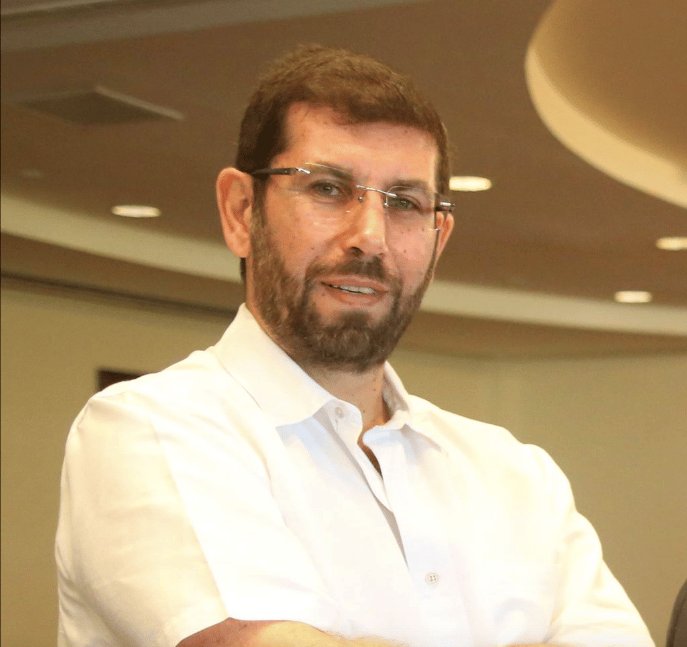
Hadeeds Walk Free as Privy Council Declines Rushed Appeal
Port of Spain, Trinidad — The Hadeeds walked free from detention this week after the Judicial Committee of the Privy Council refused to fast-track an emergency appeal by the State, lifting a stay that had briefly kept the couple under house arrest. For a nation watching the back-and-forth of legal orders with growing unease, the decision brought a measure of relief mixed with questions about how emergency powers are being applied in Trinidad and Tobago.
The Dramatic Release
Dominic Hadeed, a Trinidadian businessman, and his wife Genevieve Hadeed were detained on 24 June 2026 under Preventive Detention Orders issued during the State of Emergency. Their release came after weeks of hearings, tribunal recommendations and last-minute court filings that kept the couple in legal limbo. The SoE tribunal had already recommended Dominic Hadeed’s release, concluding that continued detention was not necessary or expedient in the public interest. Hours before they were due to leave under strict conditions, the State secured a stay, only for the Privy Council to decline the rushed hearing on 24 July.
The moment the Hadeeds stepped from the Port of Spain courthouse on 24 July 2026 carried the weight of weeks of procedural reversals. Observers described a subdued scene outside the Hall of Justice, where a small group of supporters and journalists waited under heavy police presence. Dominic Hadeed, visibly fatigued, exchanged brief words with his legal team while Genevieve Hadeed maintained a composed demeanour as they entered a waiting vehicle bound for their home under strict curfew conditions. The release followed the Privy Council’s terse refusal to expedite the State’s application, restoring the Court of Appeal order issued ten days earlier.
This outcome stood in stark contrast to the events reported in the 20 July article titled “Hadeeds’ free paper bun — less than a day after winning house arrest.” The couple had been hours from departing detention when the State secured its emergency stay, creating an abrupt emotional reversal that legal commentators likened to a judicial game of cat and mouse. The whiplash—from tribunal recommendation to conditional freedom, then renewed restriction, and finally release—underscored the precarious nature of liberty under emergency powers. Families across Trinidad and Tobago, many following the case through local radio and social media, expressed relief tempered by concern over how such last-minute filings affect public trust in the process.
Full Timeline of the Legal Saga
The sequence began with the couple’s detention on 24 June 2026. Written submissions on behalf of Dominic Hadeed reached the SoE tribunal on 9 July, followed by oral submissions the next day. On 14 July the Court of Appeal, comprising Justices of Appeal Peter Rajkumar, Mira Dean-Armorer and Joan Charles, found that the Hadeeds had established an arguable case that the Preventive Detention Orders were legally deficient and ordered their release under house arrest. The State responded within hours with an emergency application that secured a stay. An appeal was lodged with the Privy Council as JCPC/2026/0066 on 21 July. Three days later the Privy Council declined to expedite the matter, allowing the original Court of Appeal order to take effect.
The sequence opened on 24 June 2026 with the couple’s detention under Preventive Detention Orders signed by the Commissioner of Police. Written submissions prepared by the Hadeeds’ counsel, arguing that the orders were procedurally flawed for failing to disclose sufficient grounds, reached the SoE tribunal on 9 July. Oral arguments the following day emphasised the absence of particularised evidence linking the Hadeeds to threats against public safety. On 14 July the Court of Appeal, comprising Justices of Appeal Peter Rajkumar, Mira Dean-Armorer and Joan Charles, accepted that an arguable case existed and directed release under house arrest.
The State, represented by the Director of Public Prosecutions alongside the Attorney General, responded within hours by obtaining a stay from a single judge. An appeal was lodged with the Privy Council as JCPC/2026/0066 on 21 July, seeking an expedited hearing. Three days later the Judicial Committee declined the request without detailed reasons, allowing the original Court of Appeal ruling to stand. Throughout, the DPP maintained that national security considerations justified continued detention, while the Hadeeds’ team insisted the orders lacked the specificity required under the Constitution.
Preventive Detention Orders and the State of Emergency
Preventive Detention Orders allow authorities to hold individuals without charge during a declared State of Emergency. In Trinidad and Tobago these powers have been used amid ongoing concerns over crime and public safety. The SoE tribunal’s role is to review each order and determine whether continued detention serves the public interest. In Dominic Hadeed’s case the tribunal reached a clear conclusion in favour of release. The involvement of the Commissioner of Police, Minister of Homeland Security Roger Alexander, the Attorney General and Police Constable Eldon Calliste underscores how multiple arms of the State are engaged in these proceedings.
Preventive Detention Orders, authorised under the Emergency Powers Regulations, permit detention without charge for renewable periods during a declared State of Emergency. The current SoE, proclaimed by the Rowley/Young administration in response to escalating gang-related violence, has resulted in more than 100 individuals being held. The SoE tribunal, chaired by a retired judge, reviews each order to assess whether continued detention remains necessary or expedient. In Dominic Hadeed’s case the tribunal concluded that the public interest did not require further incarceration, a finding that carried significant weight with the Court of Appeal.
The Hadeeds’ challenge has become one of the most prominent tests of these powers. Similar tensions have arisen elsewhere in the Caribbean; the Inter-American Commission on Human Rights has scrutinised prolonged emergency measures in Jamaica and Belize, warning against indefinite restrictions on liberty. In Trinidad and Tobago the interplay between security imperatives and civil liberties remains acute, particularly as communities grapple with both crime and the economic pressures of inflation. The tribunal’s recommendation in this instance illustrates that judicial oversight mechanisms, though limited, continue to operate.
The Privy Council’s Place in Trinidad and Tobago’s Legal System
The Judicial Committee of the Privy Council remains Trinidad and Tobago’s final court of appeal. Its refusal to fast-track the State’s application meant the stay could not stand, restoring the Court of Appeal’s earlier ruling. This outcome highlights the practical effect of having an external appellate body that can decline rushed requests even when domestic authorities seek immediate intervention. The decision also illustrates how the Privy Council’s procedural choices can directly influence the liberty of individuals held under emergency measures.
Trinidad and Tobago’s retention of the Judicial Committee of the Privy Council as its final appellate court has long been debated, with successive governments weighing replacement by the Caribbean Court of Justice. The present case demonstrates the practical consequences of that choice: an external body’s procedural decision directly restored the liberty of two citizens after domestic authorities sought to maintain restrictions. CARICOM’s sustained advocacy for wider CCJ adoption rests partly on the argument that regional judges possess greater familiarity with local constitutional contexts, including the application of emergency powers.
The Privy Council’s refusal to expedite the State’s application therefore carries symbolic weight beyond the immediate outcome. It highlights how procedural rules at the apex court can constrain executive urgency even when domestic institutions appear aligned with the government’s position. For advocates of the CCJ, the episode supplies fresh material for the ongoing constitutional conversation about sovereignty and access to justice.
Implications for the Rule of Law and Other Detainees
The case has prompted discussion about the balance between security measures and individual rights during the State of Emergency. The Court of Appeal’s finding of an arguable case on the legal sufficiency of the orders, combined with the tribunal’s recommendation for release, suggests that not every detention order will withstand scrutiny. Other persons held under similar orders may now look to the Hadeeds’ experience as they seek reviews of their own situations. The episode also raises questions about how the government applies emergency powers in a context of high living costs and persistent crime concerns that affect communities across Trinidad and Tobago.
The Rowley/Young administration has positioned law-and-order measures at the centre of its political platform, yet the Court of Appeal’s finding of an arguable case against the Preventive Detention Orders risks emboldening further challenges. Detainees and their families are likely to cite both the tribunal’s recommendation and the Privy Council’s procedural stance when seeking reviews. The Inter-American Commission on Human Rights has already criticised aspects of Trinidad and Tobago’s emergency regime, adding external pressure that could influence domestic litigation strategy.
Public perception is further complicated by the cost-of-living crisis. With food prices and utility bills rising sharply, many citizens question whether high-profile legal battles over emergency powers distract from broader governance failures. The Hadeeds’ release may therefore serve as a precedent that strengthens judicial checks, while simultaneously testing the government’s narrative that stringent measures enjoy unqualified public support.
What Happens Next
The Hadeeds are now subject to the conditions set by the Court of Appeal, including house arrest. Further proceedings may follow if the State pursues the substantive appeal without the expedited timetable it sought. Observers will watch how the SoE tribunal and the courts handle remaining detainees and whether additional challenges reach the Privy Council. For families and communities in Trinidad and Tobago, the outcome serves as a reminder that legal safeguards continue to operate even under emergency conditions.
The State retains the option to pursue its substantive appeal before the Privy Council on the merits of the Preventive Detention Orders themselves, rather than merely the expedited timetable. The Hadeeds remain subject to house-arrest conditions, including electronic monitoring and reporting requirements, while the State of Emergency continues in force. Other detainees’ cases continue to move through the tribunal system, with several reviews scheduled for the coming weeks.
This episode establishes an important precedent: the tribunal’s recommendations and the Court of Appeal’s scrutiny can prevail even against determined State resistance. Observers anticipate that future challenges will test whether the procedural safeguards demonstrated here extend to less prominent cases, potentially reshaping the balance between security policy and individual rights for the remainder of the emergency period.
By Sharon Sahatoo, Staff WriterThis article was produced with AI-assisted research and editorial support. Reporting is based on sources cited in the article.
What's Your Reaction?
 Like
0
Like
0
 Dislike
0
Dislike
0
 Love
0
Love
0
 Funny
0
Funny
0
 Wow
0
Wow
0
 Sad
0
Sad
0
 Angry
0
Angry
0

Caribbean Correspondent at Global1.News. Based in Port of Spain, Trinidad, covering Caribbean politics, economy, energy, climate, and culture. Amplifying the voices and stories of the Caribbean region.














Comments (0)