
UK on Alert as Iran Names RAF Fairford Legitimate Target
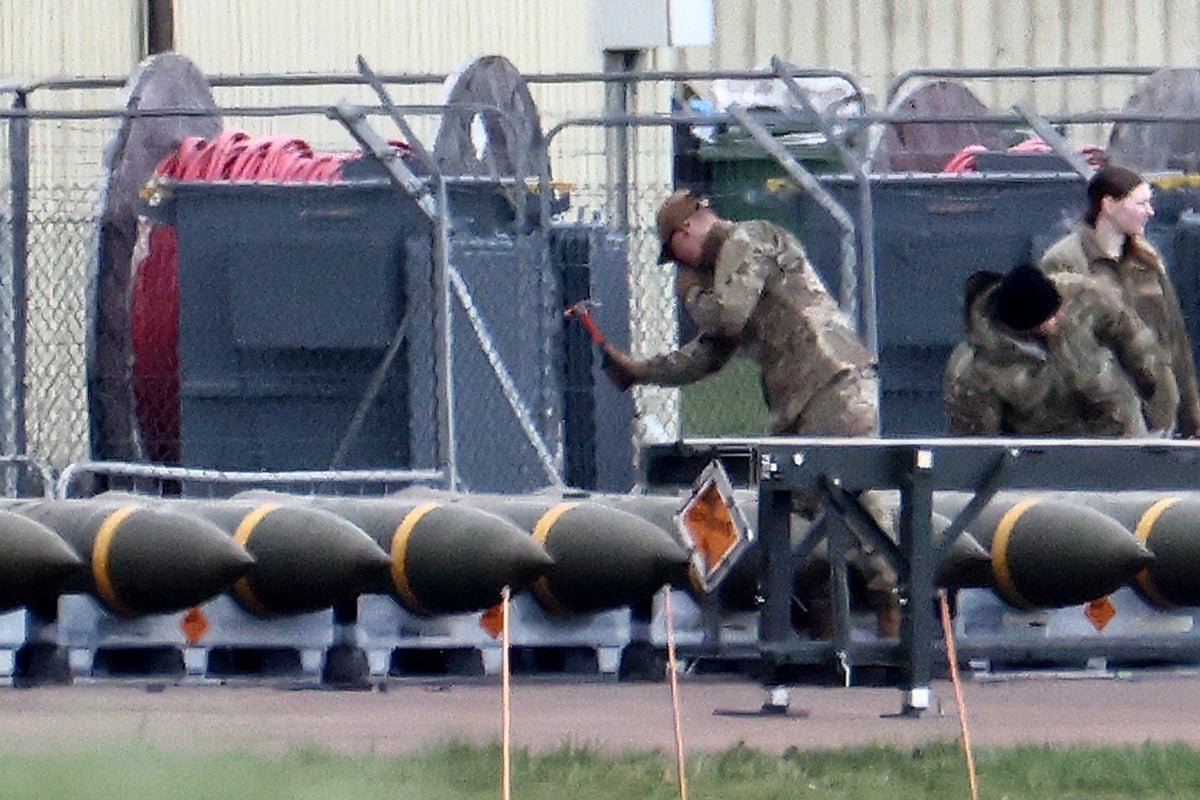
UK Braces for Iranian Threat as RAF Fairford Named Legitimate Target London, UK — Article continues... Iran’s Islamic Revolutionary Guard Corps has declared RAF Fairford a legitimate target after the base supported recent US bombing operations, prompting an immediate British commitment to layered air and missile defences.
UK Braces for Iranian Threat as RAF Fairford Named Legitimate Target
London, UK — Article continues...
Iran’s Islamic Revolutionary Guard Corps has declared RAF Fairford a legitimate target after the base supported recent US bombing operations, prompting an immediate British commitment to layered air and missile defences. Whitehall has confirmed that Royal Navy, Army and RAF assets stand ready around the clock, backed by a fresh £790 million investment and close NATO coordination. The threat marks a sharp escalation in tensions linked to operations in the Strait of Hormuz and follows earlier Iranian strikes on British-linked facilities.
Iranian Revolutionary Guards Issue Direct Threat to RAF Fairford
The Islamic Revolutionary Guard Corps has declared RAF Fairford in Gloucestershire a legitimate target following the United States Air Force's use of the base for a bombing raid. The IRGC statement also identified the British monarchy as the main cause of misfortunes in the region. This warning arrives amid heightened tensions over British involvement in operations linked to the Strait of Hormuz.
Whitehall Confirms Layered Air and Missile Defences
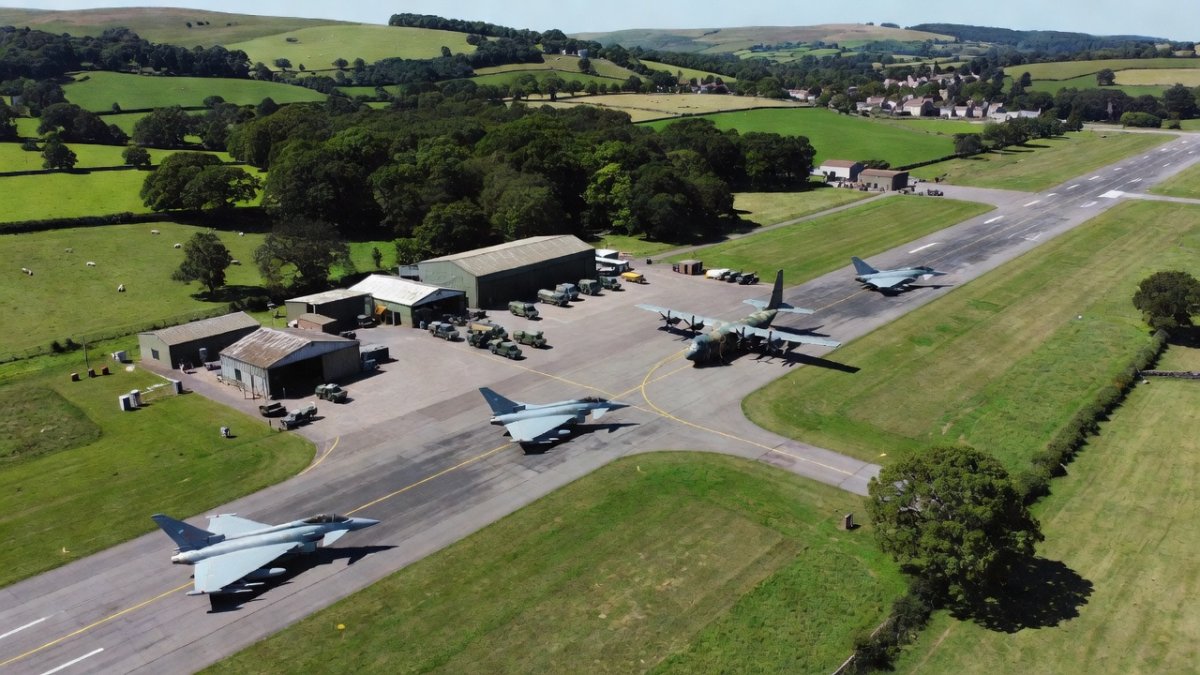
The UK government stated that its Armed Forces stand ready to protect the United Kingdom from attacks on its soil or from abroad. Officials described a layered approach to air and missile defence involving Royal Navy, British Army and Royal Air Force assets equipped with advanced capabilities, coordinated closely with NATO allies. The response emphasised continuous 24/7 readiness without specifying operational details. A layered air and missile defence system integrates short-, medium- and long-range interceptors with early-warning radars and fighter cover. At RAF Fairford this means Sky Sabre batteries providing medium-range protection, Sea Viper systems aboard any nearby Type 45 destroyers offering naval support, and Typhoon quick-reaction alert aircraft maintained at high readiness. The combination is designed to defeat threats at different altitudes and speeds, from cruise missiles to ballistic projectiles.
The STAR upgrade at RAF Fylingdales enhances space-based tracking of incoming missiles, feeding data into the NATO Integrated Air and Missile Defence network. This allows real-time cueing of allied assets across Europe. In practice, a threat detected over the eastern Mediterranean could trigger a coordinated response involving UK, US and other NATO interceptors before the projectile reaches British airspace. Experts at RUSI and King's College London note that while the architecture is conceptually robust, coverage gaps remain over parts of the UK itself. Israel's Iron Dome demonstrates the value of dense, rapid-reaction interceptors against short-range rockets, yet replicating such density across Britain would require far greater investment. Analysts warn that current numbers of launchers and interceptors could be overwhelmed by a concerted Iranian or proxy salvo, particularly if multiple axes of attack are used simultaneously.
£790 Million Investment in Missile Defence Capabilities
The new defence investment plan allocates £790 million specifically to air and missile defence systems. This funding supports upgrades across multiple services and aligns with existing commitments to NATO collective defence arrangements. The allocation forms part of broader efforts to strengthen protection for UK bases and overseas installations.
Previous Iranian Strikes on British-Linked Targets
In March 2026 Iran launched two ballistic missiles towards the British territory of Diego Garcia. One missile failed while the second was intercepted by a US warship. During the same period an Iranian Shahed one-way attack drone struck RAF Akrotiri in Cyprus, highlighting the reach of Iranian unmanned systems against UK facilities. The April 2026 attack on Diego Garcia marked a sharp escalation in Iran's willingness to target British-linked assets directly. Iranian forces launched a salvo of Emad missiles from sites in southern Iran, with several projectiles tracked across the Indian Ocean. One warhead detonated approximately 800 metres from the runway at the joint UK-US facility, causing minor structural damage to peripheral buildings but no fatalities among personnel. The proximity of the strike underscored the improving accuracy of Iran's medium-range systems and served as a stark warning that London could no longer assume its overseas bases were beyond reach.
Shortly afterwards, a Shahed-136 drone swarm struck RAF Akrotiri in Cyprus. The low-cost loitering munitions evaded initial radar detection by flying at sea-skimming altitudes before climbing for terminal attack. Two drones impacted near fuel storage tanks, triggering a limited fire that was quickly contained. No service personnel were killed, yet the incident exposed vulnerabilities in point defence against mass drone assaults. These operations represented Iran's first direct attacks on UK territory or its dependencies since the Iran-Iraq war period, signalling a doctrinal shift towards calibrated strikes on Western forward operating locations. Technical assessments indicate that the Shahab-3 and its Emad variant now incorporate improved guidance and manoeuvrable re-entry vehicles, allowing greater precision against fixed targets. The Shahed-136, meanwhile, offers a cheap, attritable option for saturating defences. Together, these capabilities suggest Tehran possesses both the reach and the numbers to threaten multiple UK-linked sites simultaneously, forcing London to reassess long-standing assumptions about sanctuary for its forces.
Prime Minister Andy Burnham Notified of US Bases Agreement
New Prime Minister Andy Burnham received notification last week that Britain had recommitted to the US bases agreement covering collective self-defence. The arrangement includes support for US defensive operations aimed at degrading Iranian missile sites used in attacks on shipping in the Strait of Hormuz. This step marks a shift following earlier friction in relations with the previous administration. Prime Minister Andy Burnham's swift reaffirmation of the US bases agreement contrasts sharply with Sir Keir Starmer's more measured tone during his own tenure. Where Starmer sought to balance European and transatlantic priorities, Burnham has placed renewed emphasis on the indivisibility of UK and US security interests. This recommitment signals that Labour under his leadership intends to treat the American presence in Britain as a core strategic asset rather than a political liability.
The language of "collective self-defence" invoked by Downing Street carries both international and domestic weight. It frames any attack on RAF Fairford as an assault on NATO territory, thereby justifying a robust allied response. Domestically, the move may help neutralise Conservative criticism that Labour remains instinctively sceptical of close US ties, while also reassuring Washington that the special relationship remains intact despite changes of government. Nevertheless, the decision carries political risks. Some within the Labour Party and the wider public remain uneasy about hosting US strategic bombers that could draw Britain into distant conflicts. Burnham's approach therefore tests whether the electorate will accept heightened exposure in exchange for the perceived security benefits of deeper American integration.
Complete Withdrawal of Diplomatic Staff from Tehran
The Foreign, Commonwealth and Development Office has withdrawn all remaining diplomatic staff from Iran. The department now advises against all travel to the country. These measures reflect the deterioration in bilateral ties and the assessment of heightened risks to British personnel and interests.
US Central Command Continues Strikes on Iranian Assets
US Central Command has conducted a twelfth consecutive night of strikes targeting Iran's maritime capabilities, missile and drone storage facilities, coastal surveillance sites and air defence assets. The operations form part of efforts to counter threats to international shipping routes. Britain’s support for the US bases agreement places RAF Fairford within the operational framework of these activities. By the twelfth night of the current US-Iran exchange, American and allied forces had conducted repeated strikes against Iranian missile facilities and command nodes. CENTCOM reports indicate that several launch sites have been degraded, yet Iranian retaliatory capacity remains intact. The tempo of operations suggests a prolonged campaign rather than a short punitive raid.
The Broader Iran War and Strait of Hormuz
Iranian threats to close the Strait of Hormuz have already pushed Brent crude above $110 a barrel, with UK petrol prices rising sharply at the pumps. Shipping insurers have increased war-risk premiums, and several tankers have diverted around the Cape of Good Hope. The Houthi movement in Yemen has intensified its own attacks on Red Sea traffic, compounding the disruption to global energy flows. While CENTCOM claims to have neutralised a significant portion of Iran's long-range strike infrastructure, Tehran retains shorter-range systems and proxy networks capable of sustaining pressure. The risk of further escalation, including direct confrontation in the Gulf, remains high and continues to shape both military planning and economic forecasts in Britain.
Implications for UK Security and Civilian Preparedness
The combination of Iranian threats, prior attacks on Diego Garcia and RAF Akrotiri, and the fresh commitment to US operations signals a more direct exposure for British military infrastructure. Whitehall's emphasis on NATO integration and the £790 million investment reflects preparations for sustained missile and drone threats. The developments also indicate a reset in transatlantic partnership after earlier strains over the Iran conflict.
RAF Fairford's designation as a legitimate target places Gloucestershire residents in a new category of potential risk. Local authorities have received updated contingency guidance, including shelter-in-place protocols and evacuation routes should missile or drone warnings be issued. While no public alert system has yet been activated, emergency planners are reviewing Cold War-era siren networks and considering modern digital alternatives. The £790 million investment in enhanced defences is substantial yet arguably insufficient to cover all contingencies. Much of the funding will go towards additional interceptors and radar upgrades, but civil defence measures such as hardened public shelters and mass casualty medical stockpiles have received comparatively little attention since the end of the Cold War. Experts argue that a credible deterrent posture must be matched by visible steps to protect the civilian population.
Reviving meaningful civil defence would require cross-government coordination and public communication campaigns not seen for decades. Without such preparation, any successful strike on Fairford could produce not only military but also significant societal disruption in surrounding communities.
By Erica Thornton, Staff Writer
This article was produced with AI-assisted research and editorial support. Reporting is based on sources cited in the article.
What's Your Reaction?
 Like
0
Like
0
 Dislike
0
Dislike
0
 Love
0
Love
0
 Funny
0
Funny
0
 Wow
0
Wow
0
 Sad
0
Sad
0
 Angry
0
Angry
0

US Politics and Policy Correspondent at Global1.News. Based in Washington DC, covering American politics, policy, elections, and the courts. Knows how the system works and tells you what it actually means.















Comments (0)