
Iran's Minab School Strike: 120 Children Dead, Families Still Wait for Answers as US Investigation Stalls
In a recent BBC News Global News Podcast episode, Iranian families in the southern city of Minab continue to seek answers about the devastating school strike that killed 120 children on 28 February — the deadliest single civilian incident of the US-Israeli war with Iran.
In a recent BBC News Global News Podcast episode, Iranian families in the southern city of Minab continue to seek answers about the devastating school strike that killed 120 children on 28 February — the deadliest single civilian incident of the US-Israeli war with Iran. BBC senior international investigations correspondent Nawal Al-Maghafi travelled to Minab to investigate the strike as the Trump administration's investigation remains incomplete, with no findings released to the public.
Iran's Minab School Strike: 120 Children Dead, Families Still Wait for Answers as US Investigation Stalls
Minab, Iran — Five months after a precision-guided Tomahawk missile struck the Shajareh Tayyebeh Primary School in Minab, southern Iran, families gather every evening at the cemetery where their children are buried. The strike, which occurred in the opening hours of the US-Israeli war with Iran on 28 February, killed 156 people including 120 children, according to the Minab prosecutor's office. The Trump administration has still not released the findings of its own investigation.
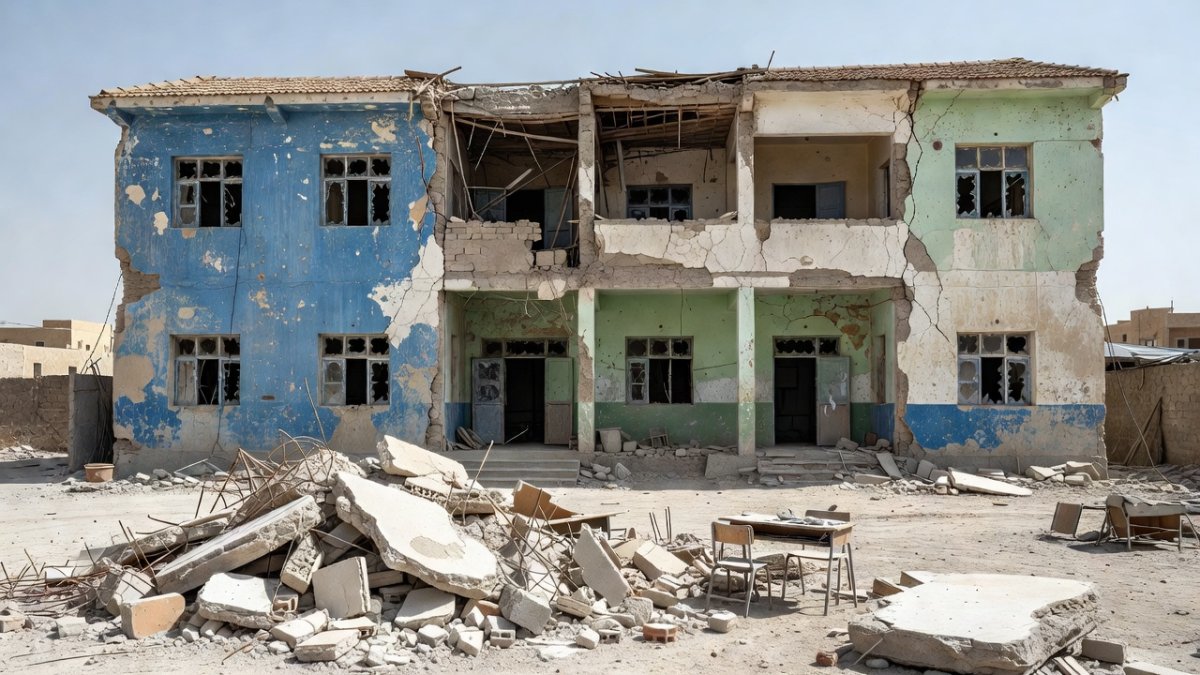
The Day the School Became a War Zone
On the morning of 28 February, as the first attacks of the US-Israeli military campaign unfolded across Iran, the Shajareh Tayyebeh Primary School in Minab was holding a normal Saturday session. Because it was the Islamic holy month of Ramadan, children had gathered in the prayer hall to recite the Quran before classes began, according to teacher Amaineh Nademi, who spoke to the BBC.
As explosions were heard in the distance, the headteacher announced the school would close, and teachers began contacting parents, urging them to collect their children. Only five of Nademi's 15 first-grade pupils remained in her classroom on the upper floor when a missile struck the school building directly.
"Just as I went to leave, a missile struck the school," Nademi told the BBC. "Something hit my head and my students' heads — we were all sent flying." Thick black smoke filled the classroom, she said, making it impossible to see the children she was holding in her arms. She remembers another explosion, screaming, children crying, and then the school collapsing around them.
Expert video analysis has confirmed that the IRGC complex adjacent to the school was hit by a precision-guided Tomahawk missile — a type of cruise missile that neither Israel nor Iran is known to possess, strongly indicating US involvement. Satellite imagery from Planet Labs, analysed by BBC Verify, shows multiple strikes and burn marks around the school, suggesting it was hit more than once in simultaneous or near-simultaneous strikes.
156 Dead, Including 120 Children — The Human Toll
The Minab prosecutor's office has confirmed 156 people killed, including 120 children, a pregnant woman and her unborn child. Earlier Iranian reports had placed the death toll at 168. The school had 264 pupils in total, according to Iran's Education Ministry.
Reza Besharati, a Red Crescent rescue worker who was among the first responders, described finding bodies that were grimly disfigured. "Maybe just a hand, maybe just a leg. Nobody had a complete body," he told the BBC. Many families identified their children only by their shoes or clothing.
One mother, Masoumeh Mehran Shekhabadi, whose nine-year-old daughter Setayesh was killed, described the scene she encountered when she ran to the school. "There was no school. There was only smoke, children's hair, a hand on one side, a foot on the other. They had been torn to pieces." Setayesh was identified by the cream-coloured socks she had been wearing, her mother said.
The US-based Human Rights News Agency (Hrana) has documented 1,114 Iranian civilian deaths since the beginning of the war, including 183 children. The Minab school strike alone accounts for two-thirds of the documented child casualties.
The US Investigation — Still Incomplete After Five Months
In the immediate aftermath, President Donald Trump blamed Iran for the strike without providing evidence. Defense Secretary Pete Hegseth said the US military was investigating and that US forces "never target civilian targets." He later announced a higher-level investigation led by an officer from outside US Central Command (Centcom). Five months later, the findings have still not been released.
Several US media outlets, citing people familiar with the investigation, have reported that preliminary findings concluded it was likely that outdated data supplied by the US Defence Intelligence Agency (DIA) led to the school being treated as part of a military site. The school was previously part of the same compound as the adjacent IRGC base, but a wall was built separating the two facilities in 2016, and the school has its own entrances and yards.
Information indicating the site was a school was publicly available online. Archived snapshots of the websites for the girls' and boys' sections of the school, taken in the months before the attack, include the address of the site. Despite this, the targeting systems did not flag the school as a civilian structure.
The head of Centcom told a congressional committee in May that the investigation was "complex" because the school was "on an active IRGC cruise missile base" — a claim Iran's foreign ministry rejected as a "baseless fabrication." The BBC approached the Department of Defense and the US military for comment, but officials said the investigation was ongoing and there were no further updates.
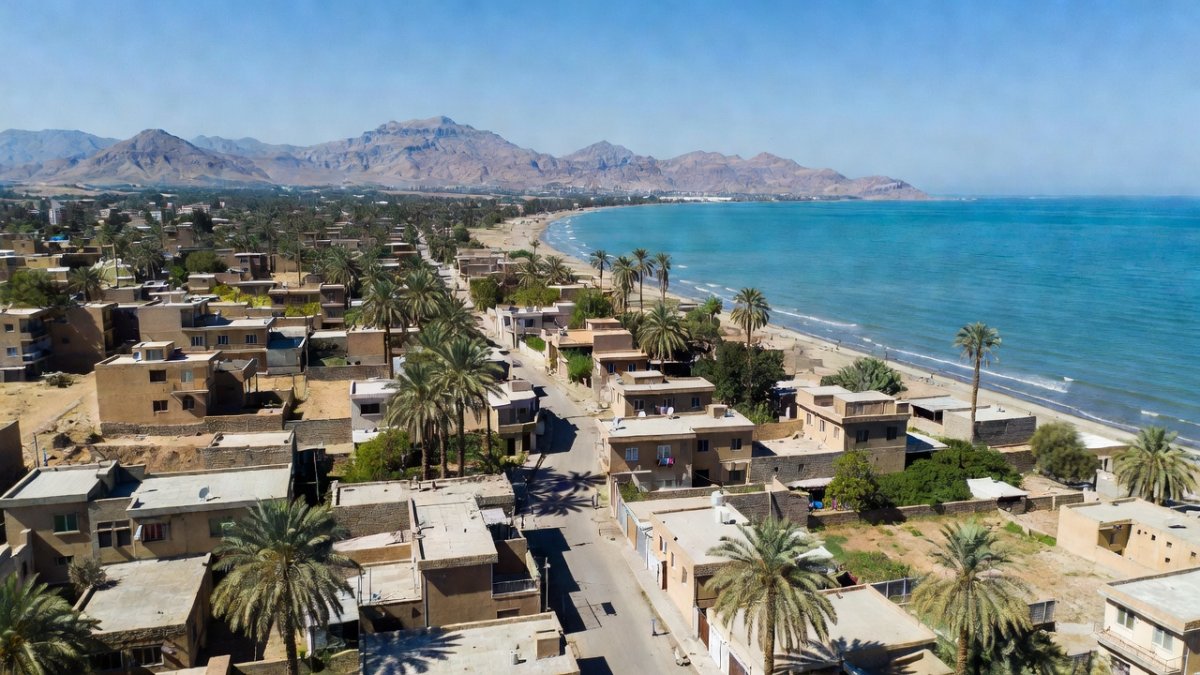
A Forensic Case: What the Evidence Shows
BBC Verify has conducted extensive forensic analysis of the strike. Satellite imagery captured by Planet Labs four days after the incident reveals more widespread destruction than initially confirmed through verified videos. At least five buildings in the area show visible craters and black scorch marks, indicating multiple strikes. A munitions expert told the BBC the pattern suggests "one or more targets in close proximity to each other."
Historical satellite images show the school area was part of the IRGC complex before a wall was built in 2016, after which it had separate entrances and yards. Photographs also show buildings on the IRGC compound included a clinic and a car wash — community and medical facilities that the IRGC operates alongside its military activities. Local residents told BBC Persian that while the site had previously been a base for an IRGC naval brigade, they believed its military use had ceased several years ago.
A senior analyst from McKenzie Intelligence Services told the BBC that the crater on the ground floor of the two-story school building indicates a specialised munition designed to "penetrate to the lower levels" may have been used. This is consistent with the use of a Tomahawk cruise missile, which the US is known to deploy from naval vessels in the region.
US military maps also confirm American operations in southern Iran — including the Minab area — at the time of the strike, though the Pentagon has not officially acknowledged responsibility.
Voices from Minab Families and Local Officials
Beyond the immediate rescue efforts, families in Minab have organised weekly gatherings at the cemetery to demand accountability. Local officials from the Hormozgan provincial government have echoed calls for transparency, stating that the separation of the school from the IRGC site since 2016 was well documented in municipal records. These officials noted that the site's civilian status was registered with Iran's Education Ministry, raising questions about how targeting data failed to reflect this change.
Surviving teachers and parents described the psychological toll on the community. Many children who escaped the strike now refuse to attend any school, fearing further attacks. Community leaders have requested international observers to document the site independently, though access remains restricted.
Global Repercussions and the War's Propaganda Battle
The Minab school strike has become a powerful propaganda tool for the Iranian government, which has invoked the attack repeatedly in speeches, at international forums, and in state media coverage. Iran even named a plane carrying negotiators "Minab-168" in reference to the initial death toll, using the tragedy to bolster its diplomatic position.
The attack offers the Islamic Republic a potent counter-narrative to Washington's description of its campaign as a targeted military operation against Iran's nuclear and military infrastructure. Iran's foreign ministry has consistently argued that a campaign presented as an attack on its military and security apparatus has instead inflicted a devastating and disproportionate cost on civilians.
The war has divided Iranian society. Some celebrated when US airstrikes began, angered by the government's history of detaining dissidents and using lethal force during protests, hoping military pressure might weaken the regime. However, opponents of the government have also told the BBC that the Minab strike was a huge blow, making the idea of a clean, surgical war impossible to sustain and allowing the authorities to present themselves as defenders of the Iranian people.
International Community Perspectives and Calls for Accountability
Reactions from the international community have varied. European Union officials have urged both sides to allow independent verification of civilian casualties, while the United Nations has called for a full review of targeting protocols in urban areas. Israeli officials have maintained that all strikes were coordinated with precise intelligence shared among allies, without directly addressing the Minab incident. Human rights organisations worldwide have highlighted the case as an example of the risks posed by outdated intelligence in modern warfare.
Analysts suggest that prolonged silence from the Trump administration could strain relations with traditional partners who emphasise civilian protection standards. This could indicate broader challenges in maintaining coalition support if similar incidents surface elsewhere in the campaign.
Analysis — The Unanswered Questions and What Comes Next
Five months after the strike, the central question remains unanswered: who authorised the strike on a building that satellite imagery and publicly available records showed was a school? The US military's own investigation has not been released, and the Trump administration has not offered a timeline for its completion.
The case highlights a deeper structural problem in US targeting protocols. If preliminary findings are correct — that outdated DIA data and disconnected intelligence systems caused the school to be misidentified as a military target — the implications extend far beyond Minab. The same systems may have produced similar errors elsewhere in the campaign, potentially placing more civilians at risk.
For the families of Minab, the wait continues. Every evening, mothers wipe dust from photographs of their children displayed on graves. Fathers sit and pray long after darkness has fallen. Around them, surviving siblings play between the headstones of brothers and sisters whose lives were cut short on an ordinary Saturday morning in February.
"What was these children's crime? Did they carry weapons? A pencil, a book, a notebook and a schoolbag. They had no weapons," Masoumeh Mehran Shekhabadi said through tears. "They'd gone to learn."
By Irina Volkov, Staff Writer
This article was produced with AI-assisted research and editorial support. Reporting is based on sources cited in the article.
What's Your Reaction?
 Like
0
Like
0
 Dislike
0
Dislike
0
 Love
0
Love
0
 Funny
0
Funny
0
 Wow
0
Wow
0
 Sad
0
Sad
0
 Angry
0
Angry
0

Russia/Eastern Europe Correspondent at Global1.News. Covering Russian politics, energy, security, and the shifting dynamics of the post-Soviet space. Provides clear-eyed analysis on one of the world's most opaque regions.











Comments (0)