
Vance Boelter Sentenced to Two Life Terms for Assassinating Minnesota House Speaker
The Crime — What Boelter Did On July 23, 2026, Vance Luther Boelter, 59, stood in federal court and accepted two consecutive life sentences without release plus 40 years for the cold-blooded murders of Minnesota House Speaker Emerita Melissa Hortman and her husband Mark Hortman. Who did it? Boelter. What happened? He impersonated a cop, rang doorbells in the dead of night, and opened fire on elected officials and their families. When? June 14, 2025, starting around 3:30 a.m.
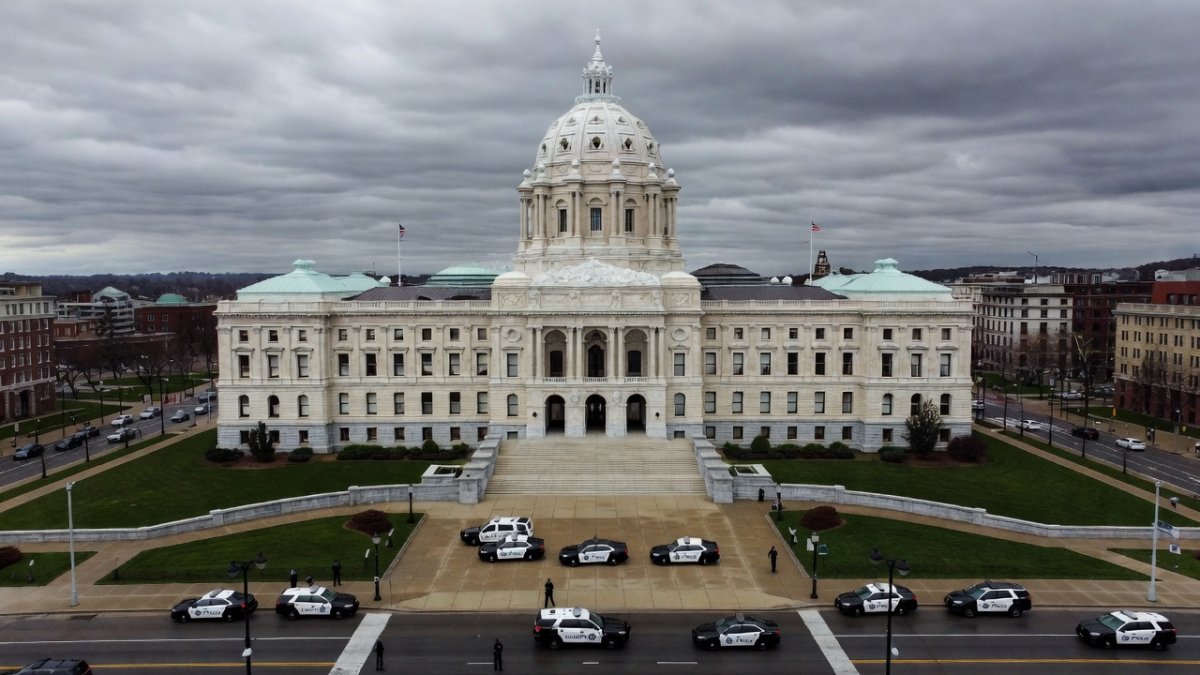
The Crime — What Boelter Did
On July 23, 2026, Vance Luther Boelter, 59, stood in federal court and accepted two consecutive life sentences without release plus 40 years for the cold-blooded murders of Minnesota House Speaker Emerita Melissa Hortman and her husband Mark Hortman. Who did it? Boelter. What happened? He impersonated a cop, rang doorbells in the dead of night, and opened fire on elected officials and their families. When? June 14, 2025, starting around 3:30 a.m. Where? Brooklyn Park and nearby suburbs in Minnesota. Why? A premeditated hit list aimed at Democratic lawmakers. How? Tactical gear, fake badge, and a gun he used without hesitation. This wasn't random violence. This was an assault on the people we elect to run our state.
Such targeted political assassinations of sitting state legislative leaders remain exceptionally rare in modern U.S. history, with the last comparable case involving the 1978 murder of San Francisco Supervisor Harvey Milk. This incident underscores a troubling escalation in violence aimed at elected officials, moving beyond rhetoric to direct attacks on democratic institutions. In an era of heightened polarization, Boelter's methodical approach—using a fake badge and tactical gear—highlights how personal grievances can intersect with broader anti-government sentiments to produce lethal outcomes.
Data from the U.S. Capitol Police reveals a sharp rise in threat assessments, with over 9,600 cases investigated in fiscal year 2024 alone, a 50% increase from pre-2020 levels. This Minnesota attack echoes patterns seen in the January 6 Capitol riot, the 2011 shooting of Rep. Gabby Giffords, and the 2017 congressional baseball field attack, where ideological motives drove violence against public figures. Experts note that while mass shootings dominate headlines, politically motivated killings of lawmakers have climbed steadily, prompting renewed debates on protecting officials at all levels of government.
The broader conversation around threats against public officials has intensified, with organizations like the National Governors Association calling for federal funding to enhance home security for state legislators. Boelter's hit list targeting multiple Democrats illustrates how such acts aim not only at individuals but at disrupting legislative functions, fueling calls for better intelligence sharing between local and federal agencies to prevent future plots.
Boelter pleaded guilty in June 2026 to six federal counts of murder, attempted murder, and stalking. That plea spared him the death penalty but locked in the maximum sentence short of execution. Prosecutors called it an attack on democracy itself. They weren't exaggerating. Boelter didn't just kill two people. He tried to silence an entire branch of government.
A Night of Terror — The June 14, 2025 Attacks
Boelter started his rampage at the home of State Senator John Hoffman and his wife Yvette. He showed up in tactical uniform and mask, pretending to be police. He shot both Hoffmans multiple times. They survived, but barely. Their daughter Hope was inside and escaped unharmed. From there Boelter drove to Melissa Hortman's house in Brooklyn Park. Mark Hortman, 60, answered the door. Boelter gave a fake name and badge number, claimed he was doing a welfare check, then opened fire the second Mark let him get close. He pushed inside and chased Melissa, 57, upstairs, shooting her repeatedly. The family dog Gilbert took bullets too and died from his wounds. Two other lawmakers' homes were on the list that night. One had no answer. At the second, a real cop approached Boelter's car thinking he was backup, and Boelter bolted.
This was no spur-of-the-moment meltdown. Court records show a prepared target list and a deliberate plan to impersonate law enforcement. Boelter knew exactly who he was hunting and why.
The Victims — Melissa Hortman and the Others
Melissa Hortman wasn't just another politician. She served in the Minnesota House since 2004 and rose to Speaker Emerita. She delivered real results: codifying abortion rights, passing a clean energy standard, and legalizing recreational marijuana. Her husband Mark died beside her. Senator John Hoffman, 65, and Yvette Hoffman took multiple gunshot wounds but lived. Hoffman's words in court cut deep: "These were acts of calculated violence... The defendant permanently changed my life... Every ordinary, boring moment forever altered by extraordinary violence."
Boelter's own statement sounded hollow next to that. "To every person I have caused loss, pain, heartache, confusion, sadness, shame, or loneliness, I am truly sorry." Sorry doesn't bring back the dead or erase the terror he spread. The Hortmans paid the ultimate price for serving the public.
Hortman's legislative legacy extended far beyond her role as Speaker Emerita, including her pivotal sponsorship of Minnesota's 2023 law codifying Roe v. Wade protections into state statute, her leadership in passing a 100% clean energy mandate by 2040, and her key role in legalizing recreational cannabis through the 2023 legalization bill. Colleagues across party lines remembered her as a pragmatic dealmaker who bridged divides on issues from education funding to infrastructure, with tributes pouring in from the State Capitol describing her as "the conscience of the House." Her death has left a void in progressive policy advancement, as lawmakers scramble to sustain momentum on environmental and social reforms she championed.
Reactions from fellow legislators highlighted the personal toll, with Senate Majority Leader Kari Dziedzic noting in a public statement that Hortman's "unwavering commitment to Minnesota families" made her an irreplaceable voice. The Hortman children, Sophie and Colin, attended the federal sentencing and delivered victim impact statements emphasizing their parents' dedication to public service; Sophie described the family's shattered sense of safety, while Colin spoke of the lasting trauma inflicted on their community. Their presence in court underscored the generational ripple effects of such violence on families of public servants.
Mark Hortman's quiet support for his wife's career, often behind the scenes at community events, added depth to the couple's joint legacy of civic engagement. This case has prompted discussions at the Capitol about establishing a permanent memorial fund in their names to support emerging leaders in public service.
The Manhunt and Fear — Minnesota's Largest Police Search
The killings triggered the biggest police manhunt in Minnesota history. Elected officials went into lockdown. Capitol security got militarized overnight. Lawmakers from both parties faced nonstop threats while the state tried to figure out how one man in a fake uniform could terrorize an entire government. Panic wasn't an overreaction. Boelter had a list and the willingness to use it. Every lawmaker wondered if they were next.
That fear didn't come from nowhere. Political polarization had already been boiling. Boelter poured gasoline on it with bullets.
The Sentence — Two Life Terms Plus 40 Years
Judge handed down two consecutive life terms without the possibility of release plus an additional 40 years, or 480 months. Prosecutors called it the maximum sentence short of the death penalty. Boelter avoided execution by pleading guilty, but he won't see daylight again. The federal case is closed. The message is clear: attack lawmakers and the system will bury you under concrete and steel for the rest of your life.
The Bigger Picture — Political Violence and Democracy
Prosecutors nailed it in their statement: "Vance Boelter committed an assault on democracy. He shattered the lives of his victims. He terrified Minnesota's public servants. He threatened police and pointed a gun at an officer. He viciously attacked the organs of Minnesota's representative government." This wasn't about one guy's grievances. It was about trying to remove elected leaders through murder. That crosses a line no society can tolerate. When politicians start getting hunted at home in the middle of the night, representative government itself is under fire. Boelter didn't just kill two people. He tried to scare every other lawmaker into silence.
National trends show threats against members of Congress reaching record highs, with the Capitol Police reporting more than 8,000 threat assessments in 2023 compared to roughly 3,000 in 2017, driven by online radicalization and partisan rhetoric. This Minnesota case fits into a post-2020 pattern of escalating political violence, including attacks on election workers and state officials, signaling a shift from protests to targeted intimidation that undermines trust in representative government. Security experts from the Department of Homeland Security warn that without coordinated protections, such incidents could proliferate at the state level where resources are limited.
U.S. Capitol Police statistics indicate a surge in cases involving stalking and home intrusions against lawmakers, with 2025 projections exceeding prior years amid heightened election tensions. Analysts argue this reflects a broader societal breakdown where political opponents are dehumanized, making violence seem justifiable to extremists. The Boelter attack amplifies concerns that democracy's foundations—open access to officials—are eroding under the weight of fear.
Experts advocate for enhanced measures like 24/7 protective details for state leaders and improved threat monitoring through fusion centers. This incident serves as a stark reminder that political violence threatens not just individuals but the deliberative process essential to governance nationwide.
What Comes Next — State Charges
Boelter still faces state charges in Hennepin County: two counts of murder, four counts of attempted murder, impersonating a police officer, and animal cruelty for killing the dog Gilbert. His first state court appearance is set for August 3, 2026. The federal sentence is done, but Minnesota isn't finished with him. Those charges will add another layer of accountability on top of the life terms already locked in.
The Bottom Line
Boelter got the maximum the feds could give without the needle. Two lives ended, two more nearly ended, a dog dead, and a state left looking over its shoulder. The sentence fits the crime, but it doesn't undo the damage. Political violence like this doesn't just hurt families. It poisons the air around democracy itself. Boelter is gone for good. The rest of us still have to live with what he did and make damn sure it never happens again. That's the raw truth, no sugarcoating.
The federal sentence of two consecutive life terms plus 40 years sends a strong deterrent signal, demonstrating that attacks on lawmakers will result in permanent incarceration without parole, potentially discouraging copycat plots by emphasizing the system's resolve. Legal observers note this outcome reinforces federal jurisdiction over interstate threats to officials, setting precedents for similar cases where state resources might fall short. Yet deterrence alone cannot address root causes like radicalization.
A broader societal reckoning is essential, involving honest dialogues on reducing inflammatory rhetoric from media and politicians that fuels division. Without confronting how polarization normalizes hostility toward opponents, isolated sentences risk treating symptoms rather than the underlying erosion of civic norms. This demands accountability from platforms amplifying threats and education initiatives promoting democratic values.
Citizens should engage by supporting legislation for increased security funding for elected officials, participating in nonpartisan civic groups to foster dialogue, and reporting suspicious activity to authorities. Active involvement in protecting democratic processes—through voting, advocacy, and community vigilance—remains vital to preventing future tragedies and restoring faith in public service.
By Jessica Ali, Staff Writer
This article was produced with AI-assisted research and editorial support. Reporting is based on sources cited in the article.
What's Your Reaction?
 Like
0
Like
0
 Dislike
0
Dislike
0
 Love
0
Love
0
 Funny
0
Funny
0
 Wow
0
Wow
0
 Sad
0
Sad
0
 Angry
0
Angry
0

Editor-in-Chief at Global1.News. Atlanta-based journalist who cuts through the BS and tells it like it is. Lead anchor, host, and the voice you hear when the spin stops and the truth starts.













Comments (0)