
Philippine Ex-Officer's Arrest Closes Chapter on 2016 Korean Murder Case
The arrest of former Philippine police officer Rafael Dumlao III for the 2016 murder of South Korean businessman Jee Ick-joo marks a significant milestone in nearly a decade of bilateral justice cooperation between Manila and Seoul. This case, which saw a Korean national abducted under the guise of an anti-drug operation, strangled inside the Philippine National Police headquar
The arrest of former Philippine police officer Rafael Dumlao III for the 2016 murder of South Korean businessman Jee Ick-joo marks a significant milestone in nearly a decade of bilateral justice cooperation between Manila and Seoul. This case, which saw a Korean national abducted under the guise of an anti-drug operation, strangled inside the Philippine National Police headquarters, and his remains cremated and disposed of, has been a persistent point of diplomatic engagement between the two capitals. It also serves as a concrete test of South Korea's consular protection framework for its citizens across Southeast Asia, a region where over one million Koreans reside.
Philippine Ex-Officer's Arrest Closes Chapter on 2016 Korean Murder Case
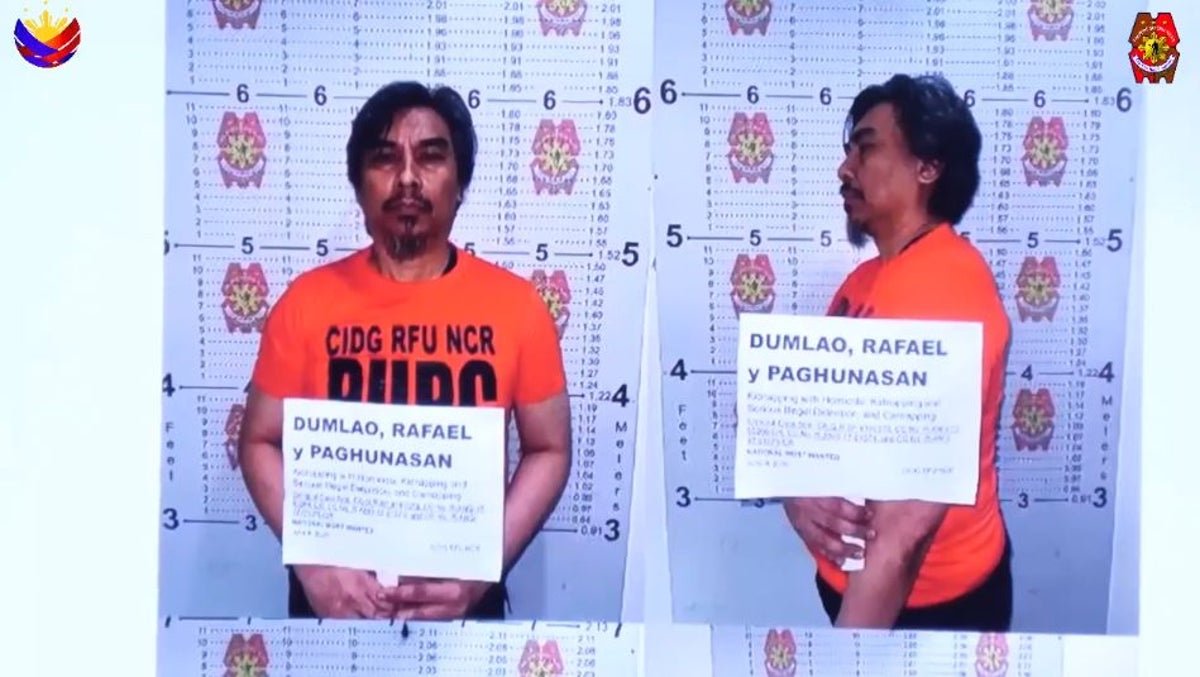
Seoul, South Korea — June 12, 2026 — The detention of dismissed police Lieutenant Colonel Rafael Dumlao III brings renewed focus to long-standing efforts by Manila and Seoul to resolve the 2016 killing of Jee Ick-joo through established legal channels.
Source: The Independent (Asia News Network)
The Arrest Operation in Quezon City
The arrest unfolded at 5 a.m. on June 9, 2026, when operatives from the Criminal Investigation and Detection Group-National Capital Region apprehended Dumlao at a residence in Pasong Tamo, Quezon City. Surveillance teams had monitored the location for three weeks after receiving credible intelligence on his whereabouts. Officers found the former anti-drug task force official asleep beside a loaded handgun, confirming his status as an armed fugitive. A P1 million bounty had been posted for his capture following the Supreme Court's 2025 affirmation of his conviction.
Interior Secretary Jonvic Remulla and Police Chief Jose Melencio Nartatez publicly confirmed the operation's success. During the surveillance period, agents observed Dumlao watching his daughter's wedding via Facebook Live, illustrating the extended period he had evaded authorities. The two-year manhunt concluded without incident, demonstrating coordinated Philippine law-enforcement capabilities in executing high-profile warrants tied to transnational cases.
The 2016 Abduction, Killing, and Cover-Up
Jee Ick-joo, a South Korean businessman, was abducted on October 18, 2016, in Angeles City under the pretext of an Oplan Tokhang anti-drug operation. Dumlao, then a senior police official, participated in the kidnapping that led to Jee being transported to Camp Crame, the Philippine National Police headquarters. There, the victim was strangled to death. His body was subsequently cremated and the ashes flushed down a toilet in an attempt to eliminate evidence.
The perpetrators also sought to extort money from Jee's family after the murder. These actions formed the core of the criminal charges that eventually reached the Philippine Supreme Court. The brutality of the cover-up, executed inside a national police facility, exposed systemic vulnerabilities in the implementation of anti-drug operations during that period. The case quickly became one of the most prominent examples of abuses linked to the Duterte administration's drug war campaign, with official records showing that the operation deviated from standard procedures.
Judicial Journey: From Acquittal to Final Conviction
In June 2023 an Angeles City court acquitted Dumlao while convicting two other individuals. The decision was overturned in July 2024 by the Court of Appeals, which ruled that the trial court had committed grave abuse of discretion. The appellate court found sufficient evidence linking Dumlao to the kidnapping and murder, imposing a minimum sentence of thirty years imprisonment.
The Supreme Court affirmed the conviction in 2025, rendering Dumlao a fugitive until his June 2026 arrest. Throughout the appeals process, Philippine authorities maintained communication with the South Korean embassy and Jee's widow, ensuring transparency in the judicial proceedings that ultimately upheld the verdict. The legal process spanned nearly a decade from the original crime to the upheld verdict, illustrating the Philippine judiciary's internal checks on lower-court decisions in high-profile cases involving state agents.
Global 1 News
Diplomatic Response and Korea-Philippines Relations
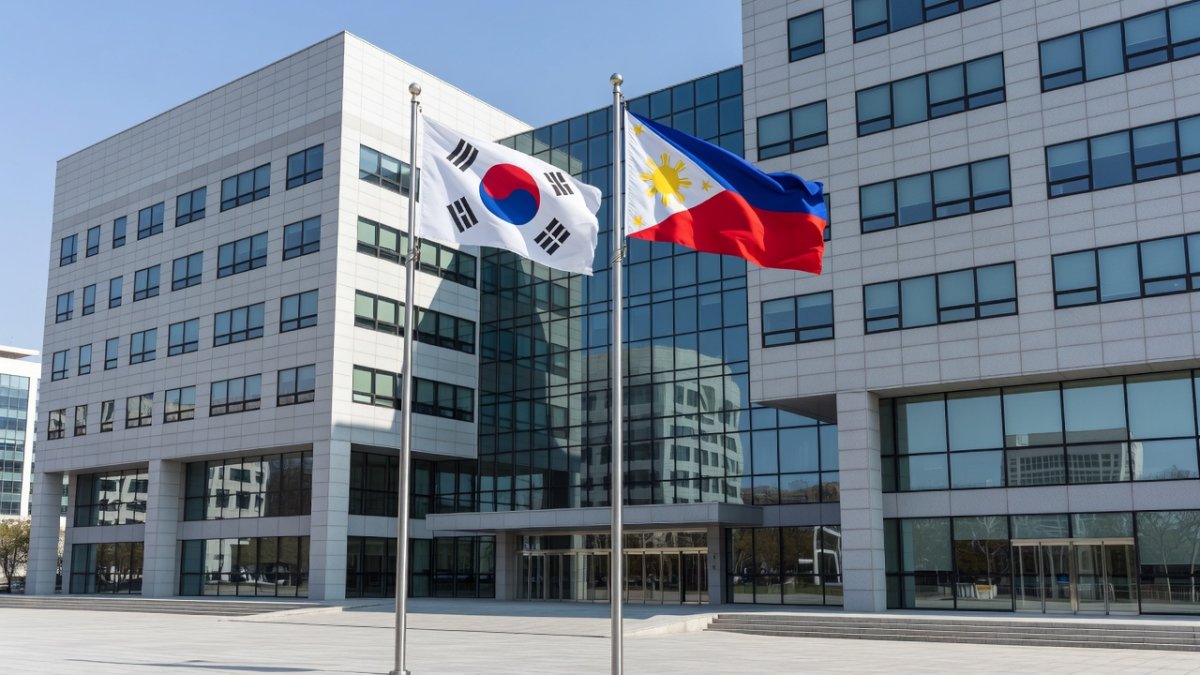
Manila promptly notified the South Korean ambassador and Jee's widow following the arrest. President Lee Jae-myung issued a statement congratulating Philippine authorities on the successful operation. The case has served as a tangible demonstration of the bilateral legal assistance treaty between the two nations, facilitating information exchange and eventual extradition procedures where required.
Diplomatic engagement over the nine-year period reinforced institutional channels for handling crimes against Korean nationals in the Philippines. Both governments have cited the resolution as evidence that sustained cooperation can overcome initial investigative and judicial setbacks. Interior Secretary Remulla explicitly described the case as a direct consequence of Oplan Tokhang abuses during the previous administration.
Consular Protection for Korean Nationals Abroad
South Korea's Ministry of Foreign Affairs maintains a structured consular protection framework for its citizens residing across ASEAN countries. With more than one million Koreans living in Southeast Asia, the Jee Ick-joo case underscored the necessity of robust monitoring and rapid diplomatic intervention when nationals face criminal harm abroad.
The bilateral legal assistance treaty with the Philippines enabled consistent advocacy for the victim's family and supported the judicial process from acquittal through final conviction. Seoul's approach emphasizes both immediate consular assistance and long-term institutional cooperation to deter future incidents. The case has informed MOFA's broader risk assessment for Korean business communities in Southeast Asia.
The Duterte Drug War and International Accountability
The murder occurred during the implementation of Oplan Tokhang, the anti-drug campaign under former President Rodrigo Duterte. The case has become emblematic of documented abuses associated with that policy. Duterte himself was arrested in 2025 and transferred to the International Criminal Court in The Hague, where his trial on crimes-against-humanity charges is scheduled to begin on November 30.
International scrutiny of the drug war has intersected with bilateral justice efforts between Manila and Seoul. The Dumlao conviction illustrates how individual criminal accountability can proceed even as broader questions of state policy face examination at international forums. Remulla's public remarks explicitly connected the Dumlao case to documented excesses of the earlier campaign, reinforcing the link between domestic judicial processes and international accountability mechanisms.
Implications for ASEAN Security Cooperation
The successful resolution strengthens precedents for cross-border legal assistance within ASEAN. Korea's treaties with the Philippines provide a model for other member states seeking to address crimes involving foreign nationals. Coordinated surveillance and arrest operations demonstrate practical mechanisms for enforcing convictions across jurisdictions.
Regional security discussions increasingly incorporate consular protection standards and mutual legal assistance protocols. The Jee Ick-joo case supplies concrete evidence that sustained diplomatic and judicial engagement can produce results even in complex, high-profile matters involving state actors. Both capitals have utilized ASEAN forums to discuss transnational crime cooperation, and the case provides a measurable benchmark for evaluating these efforts.
Looking Ahead: What This Means for Bilateral Ties
The arrest and impending legal proceedings are expected to deepen institutional trust between Seoul and Manila. Both capitals have signaled willingness to expand cooperation on transnational crime, consular services, and judicial capacity building. Future engagements may include enhanced information-sharing platforms and joint training programs for law-enforcement personnel.
By upholding the final conviction, Philippine authorities have reinforced the credibility of their judicial system in the eyes of international partners. South Korea, in turn, has validated its consular protection mechanisms, offering reassurance to its large expatriate communities across Southeast Asia. The case thus serves as both closure for one family and a foundation for stronger bilateral relations in the years ahead.
By Prof. David Park, Staff Writer
This article was produced with AI-assisted research and editorial support. Reporting is based on sources cited in the article.
What's Your Reaction?
 Like
0
Like
0
 Dislike
0
Dislike
0
 Love
0
Love
0
 Funny
0
Funny
0
 Wow
0
Wow
0
 Sad
0
Sad
0
 Angry
0
Angry
0

East Asia/Technology Correspondent at Global1.News. Seoul-based voice covering Korean politics, technology, business, and culture. Analyzes how technology and geopolitics intersect across East Asia.













Comments (0)