
Peru Votes Amid Crushing Insecurity — And a Battle Over Its Natural Wealth
Peru Heads to the Polls Amid Crushing Insecurity and a Battle Over Natural Wealth After eight presidents in ten years, Peruvian voters head to the polls this Sunday facing a choice that cuts to the heart of the country's twin crises: spiraling crime and a bitter debate over who benefits from the nation's vast mineral wealth. Nearly 30,000 extortion incidents were reported in 20
Peru Heads to the Polls Amid Crushing Insecurity and a Battle Over Natural Wealth
After eight presidents in ten years, Peruvian voters head to the polls this Sunday facing a choice that cuts to the heart of the country's twin crises: spiraling crime and a bitter debate over who benefits from the nation's vast mineral wealth. Nearly 30,000 extortion incidents were reported in 2025 alone, making insecurity the dominant issue in a tight race between right-wing candidate Keiko Fujimori and left-wing challenger Roberto Sánchez. The outcome will not only determine Peru's trajectory on law enforcement and resource policy but also send signals across a Latin America where fear of crime is shifting political landscapes rightward.
The Extortion Epidemic: A Daily Reality in San Juan de Lurigancho
The statistics have names and faces. Bus driver Toño was shot in the legs and abdomen after a criminal gang sent his company a message demanding roughly $15,000 and threatening, "If you don't meet our demands, we will kill your drivers." Toño survived but spent four months out of work and now drives with plain-clothed armed police on board for protection. "Although my wounds are dry, internally I feel pain," he says. "I've never been so afraid to leave my young children. If I had money, I'd leave the country."
Toño's case is one of nearly 30,000 extortion incidents reported across Peru in 2025. Many target transport workers and small businesses in Lima's poorer districts. In San Juan de Lurigancho, a sprawling hillside suburb where dusty neighborhoods cling precariously to the slopes, armed police now guard the gate of the bus depot where Toño works. Security chief Eiffel Calla reports that five drivers from the company have been attacked. One was killed. Another was left in a vegetative state. According to an independent observatory of crime and violence, 239 drivers lost their lives to such attacks last year alone.
Keiko Fujimori's Hardline Platform and a Complicated Legacy
Keiko Fujimori, running for the presidency for the fourth time, has built her campaign around tough-on-crime policies. At her final rallies, she declared "war" on extortionists, promising to deploy the military against organized crime, tighten control over prisons, and work with financial institutions to block payments to criminal gangs. Supporters have responded enthusiastically. Piero, a Fujimori supporter at one rally, argues that a heavy-handed approach to insecurity is "sorely lacking in these times" and describes Peru as "overflowing" with crime. Another backer, Janeth, links her choice directly to economic anxieties, saying, "for economy stability, we choose Keiko Fujimori."
Fujimori's campaign inevitably invokes the memory of her father, Alberto Fujimori, who governed from 1990 to 2000 and is remembered by supporters for restoring order and stabilizing the economy. But Alberto Fujimori was ultimately jailed for human rights abuses, and his daughter's campaign walks a careful line between invoking his legacy and acknowledging its costs. The tension between the appeal of decisive security measures and the historical baggage of authoritarian tactics runs through every Fujimori rally and every voter conversation reported in the source material. Fujimori herself spent a year and a half in pre-trial detention from 2018 to 2020 on campaign-finance allegations that were ultimately dropped last year, adding another layer of complexity to her image as a law-and-order candidate.
Roberto Sánchez's Vision: Redistributing Peru's Mineral Wealth
Opposing Fujimori is Roberto Sánchez, whose platform calls for sweeping changes to the state, higher public spending, a review of mining contracts, increased corporate taxes, a higher minimum wage, and greater state control over natural resources. These proposals have unsettled financial markets, but they speak directly to a persistent grievance in a country that is a major exporter of copper, gold, and other critical minerals.
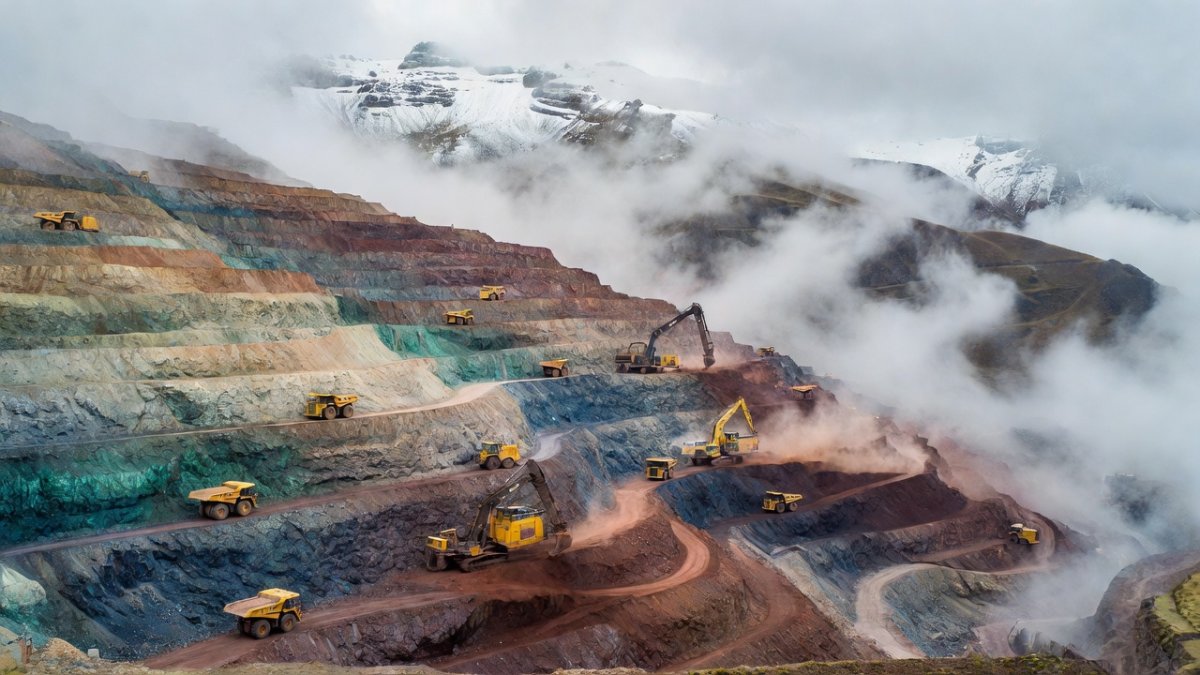
Peru's economy has remained relatively stable despite the churn of eight presidents in a decade, largely on the strength of its mineral exports. But Sánchez and his supporters argue that this wealth does not reach ordinary citizens or the rural communities where extraction takes place. Supporter María Elena Linares puts it bluntly: "Our raw material, our gold, our copper, goes to other countries… we are experiencing misery." She rejects the notion that Sánchez's policies would scare off foreign investors, insisting, "We are going to nationalise, but we are also going to accept foreign countries that want to contribute to our country." Another supporter, Raúl, backs Sánchez's plans to expand state capacity in hopes of bringing more investment in health and education, as well as infrastructure outside Peru's major cities.
Sánchez has also promised to free former left-wing president Pedro Castillo, who was imprisoned after attempting to dissolve congress and rule by decree to avoid impeachment — a pledge that resonates with voters seeking a break from the political establishment that has produced eight presidents in ten years.
Congressional Fragmentation and Voter Fatigue
Whoever wins Sunday's election will inherit a deeply fractured congress. No party holds a majority. Fujimori's party has the largest minority bloc, but not enough to govern alone. This fragmentation has produced repeated presidential impeachments and blocked coherent policy responses to crime and inequality. Many Peruvians are simply exhausted. Last year, widespread "Gen Z" protests erupted, with young people arguing that the state was failing to tackle crime, corruption, and inequality. Under-30s make up about a quarter of the electorate, and many who took to the streets feel that neither candidate offers genuine structural change.
Legal Clouds Over Both Campaigns
Both candidates carry legal baggage that complicates any promise of clean governance. A judge ruled this week that Sánchez could stand trial over alleged undeclared campaign finances from regional elections between 2018 and 2020. He denies the accusations and plans to appeal. Fujimori spent nearly a year and a half in pre-trial detention from 2018 to 2020 on campaign-financing allegations that were eventually dropped last year. These parallel investigations highlight how Peru's political class remains entangled in the very corruption and instability that voters hope to escape. The legal uncertainty adds yet another layer of risk to an already volatile political environment.
Latin America Watching Closely
Peru's election does not take place in isolation. Fears of insecurity have pushed other Latin American nations toward hardline leaders who promise law-and-order solutions, and Sunday's result could reinforce or challenge that trend. For residents of San Juan de Lurigancho and similar districts across the country, the immediate question is whether the next president will make their daily commute safer. But the deeper question — and the one that will shape Peru's trajectory for years to come — is whether the country can finally break its cycle of short-lived presidencies and channel its mineral revenues into the infrastructure, safety, and public services that citizens have been demanding for a decade.
The choice this Sunday is between two competing visions: one that prioritizes immediate security through force, and another that seeks to address the structural inequities that many Peruvians believe are the root cause of their country's instability. Neither candidate offers a sure path forward. But for voters like Toño, who drives to work every morning with armed police on his bus, the stakes could not be higher.
By Elena Vasquez, Staff WriterThis article was produced with AI-assisted research and editorial support. Reporting is based on sources cited in the article.
What's Your Reaction?
 Like
0
Like
0
 Dislike
0
Dislike
0
 Love
0
Love
0
 Funny
0
Funny
0
 Wow
0
Wow
0
 Sad
0
Sad
0
 Angry
0
Angry
0

Latin America Correspondent at Global1.News. Based in Mexico City, covering politics, economics, energy, and culture across the region. Brings an on-the-ground perspective to stories spanning from the Rio Grande to Patagonia.











Comments (0)