
After NDTV Report, Centre Orders Probe Into B.Ed Colleges That May Not Exist
After NDTV investigation, Centre directs NCTE probe into B.Ed colleges in Madhya Pradesh that exist only on paper. Report reveals regulatory failures across 600+ teacher training institutions.
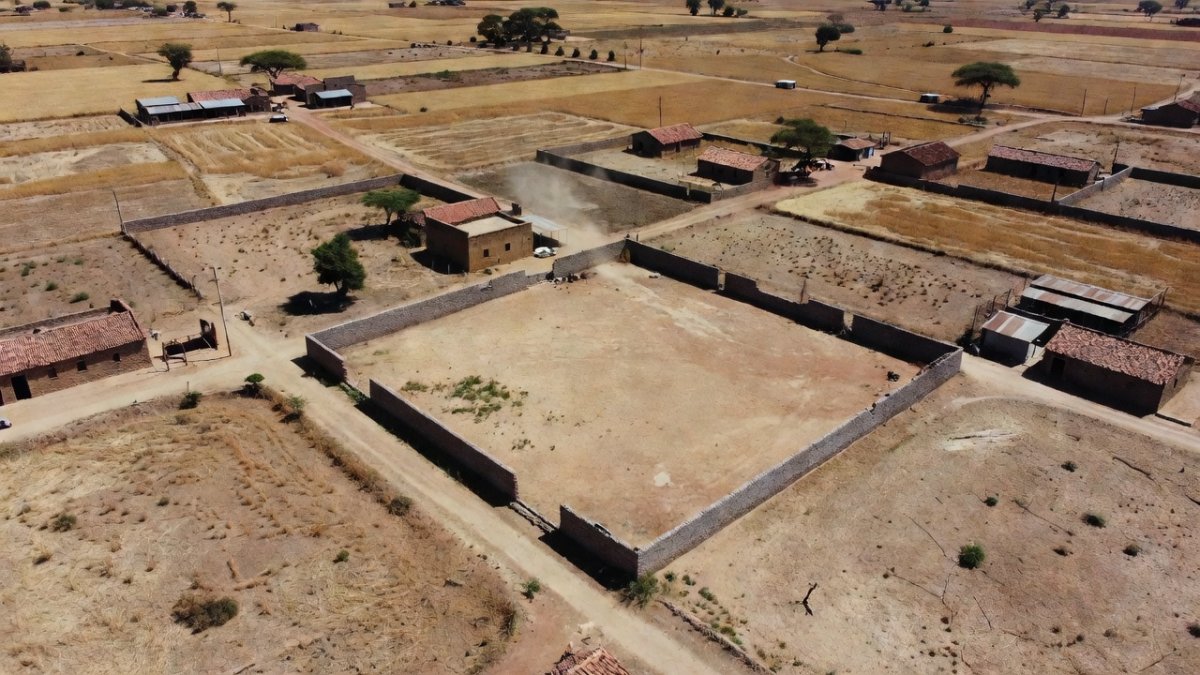
The central government has ordered a formal probe into B.Ed colleges in Madhya Pradesh after an NDTV investigation revealed that several listed institutions may exist only on paper. With over 600 teacher-training institutions offering more than 58,000 seats and admitting 47,000 to 48,000 students annually, the findings expose deep flaws in regulatory enforcement across one of India's largest education sectors.
After NDTV Report, Centre Orders Probe Into B.Ed Colleges That May Not Exist
New Delhi, India – July 18, 2026 — The Ministry of Education has directed the National Council for Teacher Education to investigate multiple B.Ed colleges in Madhya Pradesh whose physical addresses do not match operational institutions. NDTV's ground report documented sites listed as colleges that turned out to be agricultural land or buildings bearing names of unrelated entities, triggering immediate central intervention.
The NDTV Investigation and Its Findings
NDTV reporters visited addresses registered with regulatory bodies and found no functional teacher-training facilities at several locations. One site appeared as farmland, while adjacent structures carried names of different private institutions. The report, titled "Inside Madhya Pradesh's Paper Empire Of Teacher-Training Colleges," documented how these entities continue to appear on official lists despite lacking infrastructure.
The NDTV team inspected 25 teacher-training colleges across Bhopal, Indore, and Jabalpur districts, cross-referencing NCTE and state higher-education department records. Twelve sites were either farmland or occupied by unrelated businesses such as real-estate offices, private coaching centres, and small warehouses. Regulatory files listed full infrastructure — classrooms, libraries, and laboratories — yet ground visits revealed only boundary walls or locked gates. Recognition had been secured through submitted affidavits and photographs that were never verified by physical inspection; subsequent renewals relied on the same unexamined paperwork. In several cases, colleges paid annual affiliation fees to universities while operating from rented commercial spaces that bore no resemblance to the approved layouts.
Madhya Pradesh's Scale of Teacher Education
Madhya Pradesh hosts more than 600 teacher-training institutions with over 58,000 B.Ed seats. Between 47,000 and 48,000 students secure admission each year, feeding a multi-crore education business. Many of these colleges operate under affiliations that the National Council for Teacher Education and University Grants Commission are now required to verify on the ground.
Madhya Pradesh's B.Ed sector generates roughly Rs 696 crore in annual tuition fees at an average of Rs 1.2 lakh per seat. Private institutions account for 85 percent of the 600-plus colleges, leaving fewer than 90 government or aided colleges. The state's teacher-training density — nearly 85 seats per lakh population — exceeds that of Rajasthan and Uttar Pradesh. Political patronage has repeatedly surfaced: several colleges are linked to legislators or their family members who have served on university syndicates or state education boards. Similar irregularities prompted NCTE show-cause notices in 2015 and a CBI inquiry in 2018, yet enforcement remains sporadic and most institutions continue to appear on official rolls.
Regulatory Oversight by NCTE and UGC
The National Council for Teacher Education (NCTE), established under the NCTE Act 1993, grants recognition only after institutions demonstrate compliance with 15 core standards, including a minimum 1,500 sq ft built-up area per 100 students, at least six full-time faculty with NET/PhD qualifications, a 5,000-volume library, and functional laboratories. Recognition begins with an online application and self-declaration, followed by a physical inspection by a three-member team; however, the council's 2022-23 annual report reveals that only 38% of listed institutions received on-site verification in the preceding five years due to staff shortages. The University Grants Commission (UGC) maintains the affiliated-university layer, yet its 2021 inspection guidelines allow state universities to self-certify compliance, creating the enforcement gap now under scrutiny in Madhya Pradesh. Between 2018 and 2023, NCTE withdrew recognition from 214 colleges nationwide, including 47 in Bihar and 29 in Uttar Pradesh, primarily for fake faculty records and non-existent infrastructure.
Impact on Students and Future Teachers
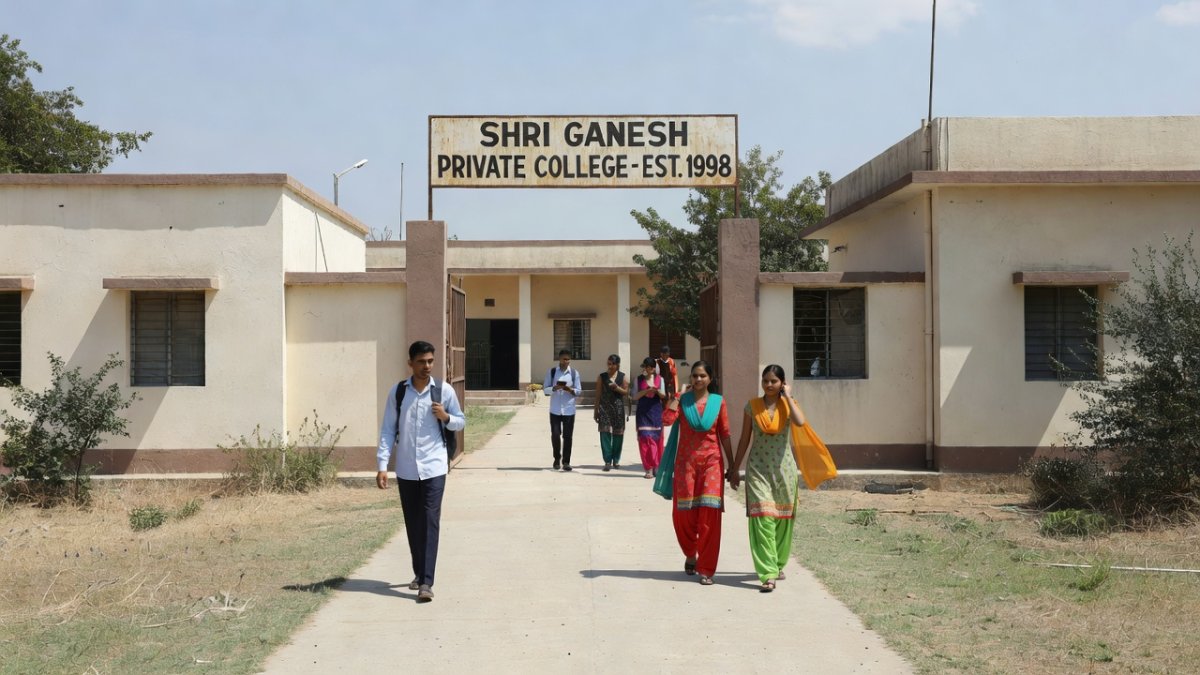
Students enrolling in unrecognised or non-existent colleges risk worthless degrees that block eligibility for government teaching jobs and further studies. Students typically discover their degrees are invalid only when they attempt to register for the Teacher Eligibility Test (TET) or apply for government recruitment, at which point the examining body cross-checks the institution's NCTE status and rejects the application. In Madhya Pradesh alone, an estimated 4,200 candidates were barred from the 2023-24 TET cycle after their colleges were flagged. Employment consequences are immediate: without a valid B.Ed, candidates cannot qualify for the 18,000+ primary and secondary posts advertised annually by the MP School Education Department. Private colleges charge Rs 1.2-1.8 lakh for the two-year programme, compared with Rs 45,000-60,000 at government institutions such as the Regional Institute of Education, Bhopal. In 2022, over 300 affected students from Indore and Jabalpur staged protests outside the MP Higher Education Department, later filing a public-interest petition in the Jabalpur High Court seeking compensation and degree regularisation. In states like Madhya Pradesh, where thousands graduate annually, such institutions undermine the quality of the teaching workforce entering government schools across Bhopal, Indore, and Jabalpur districts.
Similar Issues Across Other States
Similar patterns have emerged in Rajasthan, where the NCTE derecognised 112 colleges in 2021, and in Uttar Pradesh, where 87 institutions were struck off in 2020 for operating as "degree mills." These cases mirror the national proliferation of roughly 1,800 unverified teacher-education entities identified by the Ministry of Education's 2022 AISHE data.
Broader Challenges in Indian Education Regulation
India's higher education framework has long struggled with quality control in professional courses. The Central Teacher Eligibility Test (CTET) and State TETs, conducted by the National Testing Agency, require a recognised B.Ed as a mandatory eligibility condition under the Right to Education Act, 2009, which mandates that all teachers possess qualifications laid down by NCTE. Fake degrees therefore inflate official teacher-training capacity figures while producing candidates who fail TET at rates exceeding 85% in states with high concentrations of such colleges. Similar issues have surfaced in engineering and medical education, where regulatory bodies face resource constraints and political pressures. The Madhya Pradesh case highlights how paper institutions distort national data on teacher availability and training capacity, and how regulatory fragmentation between NCTE, UGC, and state bodies continues to undermine the RTE's goal of ensuring professionally qualified teachers in every classroom.
The Bottom Line
The ordered probe must translate into physical inspections and delisting of non-compliant colleges to protect students and restore credibility to teacher education. Without sustained enforcement by the Ministry of Education, NCTE, and UGC, the 58,000-seat system in Madhya Pradesh will continue producing graduates whose qualifications rest on addresses that do not exist.
— By Dr. Raj Patel, Staff Writer
This article was produced with AI-assisted research and editorial support. Reporting is based on sources cited in the article.
What's Your Reaction?
 Like
0
Like
0
 Dislike
0
Dislike
0
 Love
0
Love
0
 Funny
0
Funny
0
 Wow
0
Wow
0
 Sad
0
Sad
0
 Angry
0
Angry
0

India/South Asia Correspondent at Global1.News. Analytical voice with a background in science and health journalism. Based in New Delhi, covering Indian politics, education, healthcare, technology, and policy. Breaks down complex data into clear, actionable reporting.













Comments (0)