
Ernesto Ruffo Arrested for Fuel Smuggling in Ensenada
In a recent DW News report on narcos, trade, and migration under President Claudia Sheinbaum, the challenges of governance in Mexico come into sharp focus with yesterday's arrest of former Baja California Governor Ernesto Ruffo Appel at his home in Ensenada. The Arrest and Charges SSPC officers executed an FGR arrest warrant at Ruffo's residence in Ensenada, Baja California, on Thursday, July 16, 2026.
In a recent DW News report on narcos, trade, and migration under President Claudia Sheinbaum, the challenges of governance in Mexico come into sharp focus with yesterday's arrest of former Baja California Governor Ernesto Ruffo Appel at his home in Ensenada.
The Arrest and Charges
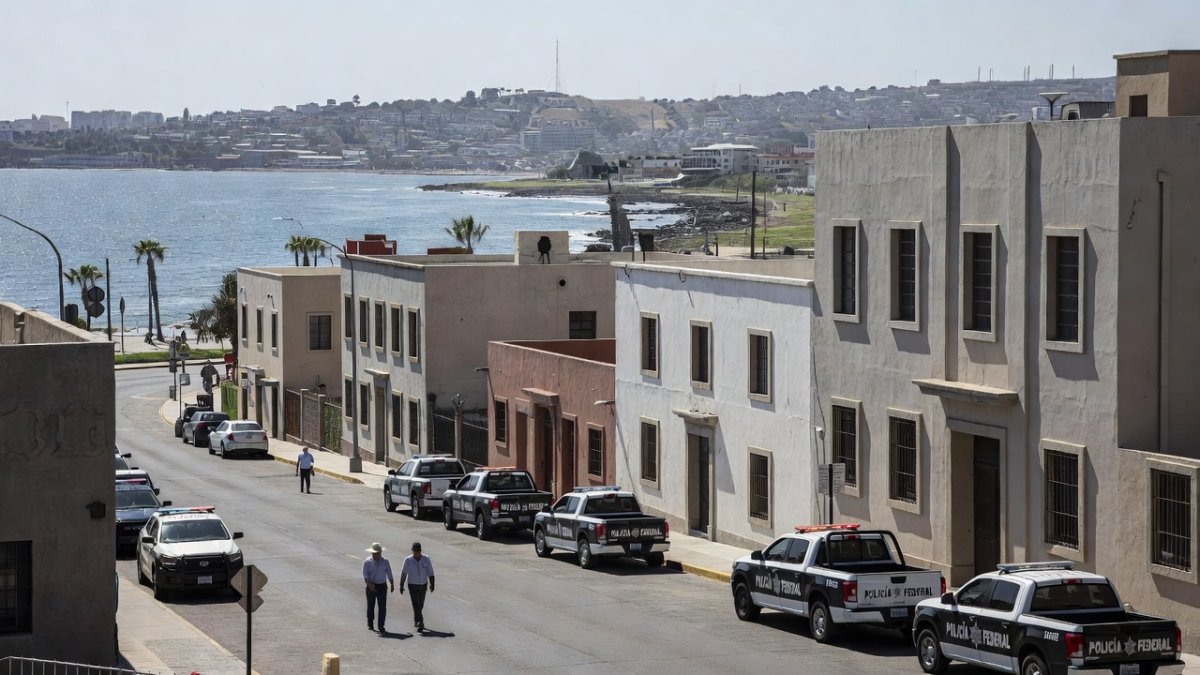
SSPC officers executed an FGR arrest warrant at Ruffo's residence in Ensenada, Baja California, on Thursday, July 16, 2026. The 74-year-old faces charges of delincuencia organizada and contrabando de combustible, charges that carry significant prison sentences under Mexican federal law.
The FGR stated the investigation remains active with additional details expected. His business partner Ricardo Thompson Navarro was detained in the same operation.
Local residents in the colonias surrounding Ensenada expressed surprise at the scale of the operation, noting that SSPC agents arrived in multiple vehicles just after dawn. The charges of organized crime and fuel smuggling carry penalties that could exceed 20 years if convicted, reflecting the federal government's determination to treat huachicol fiscal as a national security threat rather than a simple customs violation. Families in the area recalled how Ruffo's earlier political career had once symbolized a break from PRI-era practices, yet many now wonder whether the same networks that once operated with impunity have simply adapted to new economic opportunities in the energy sector.
Who Is Ernesto Ruffo Appel
Ernesto Ruffo Appel served as Baja California governor from 1989 to 1995, becoming the first opposition governor in Mexico's modern history as a PAN member. He later represented the state in the Mexican Senate from 2012 to 2018.
Residents in Ensenada colonias recall his early tenure as a shift from decades of PRI dominance, though many families now question how that legacy connects to the current fuel smuggling allegations.
Born on June 25, 1952, in San Diego, California, Ruffo studied at ITESM Monterrey before entering public service as municipal president of Ensenada. His 1989 gubernatorial victory marked a historic turning point, ending more than six decades of uninterrupted PRI control in the state and inspiring opposition movements nationwide. Supporters at the time praised his focus on transparency and economic development along the border, yet critics today point to the rapid growth of private energy ventures during and after his administration as evidence that political influence may have facilitated later business dealings. The contrast between his pioneering role in democratic transition and the serious federal charges now leveled against him has sparked intense debate in Baja California communities about accountability across generations of leadership.
The Ingemar Fuel Smuggling Network
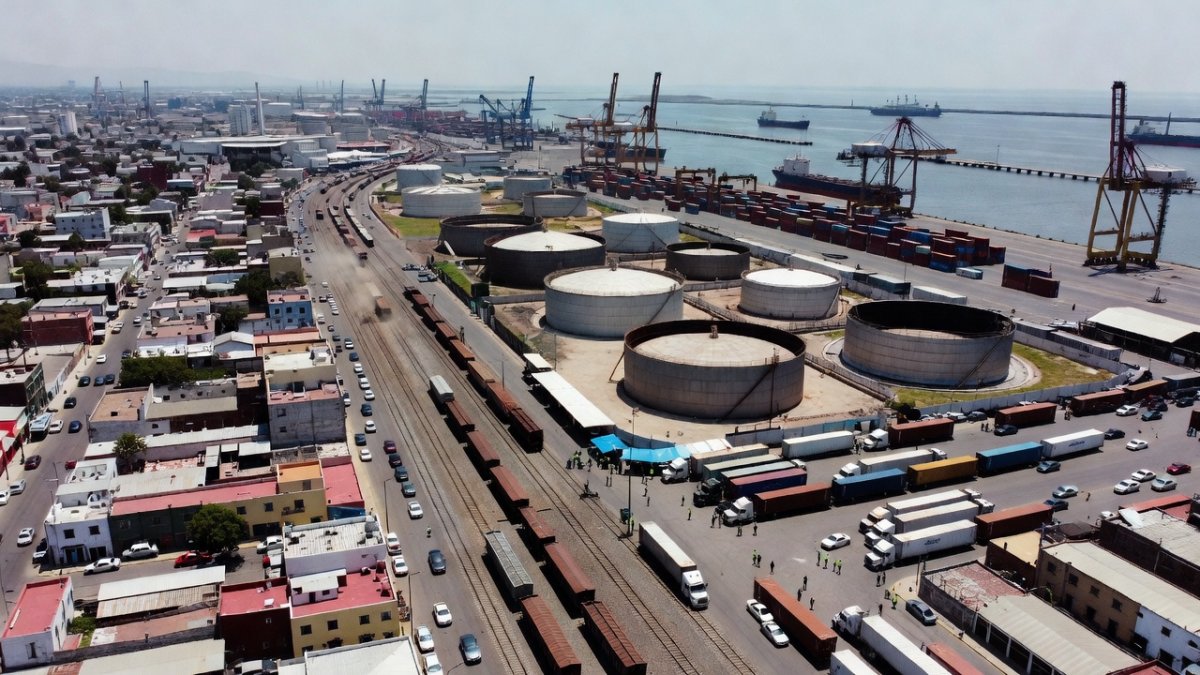
Ingemar S.A. de C.V., where Ruffo holds majority ownership, began as a real estate firm in 2018 before shifting to energy activities in 2019. The CRE issued a permit in 2023 allowing annual imports of up to 500 million liters of gasoline and diesel, a license that raised eyebrows given that federal energy policy had largely frozen new import permits during that period.
Authorities allege the company falsified customs documents to import fuel as tax-exempt additives, moving shipments from the United States into Mexico via railways while declaring only 10 percent of actual volume. Financial records show transfers exceeding 3 billion pesos and forex operations above 1.3 billion dollars.
The network links to the July 2025 seizure in Coahuila of 129 tanker cars carrying more than 15 million liters of contraband fuel, one of the largest such confiscations in Mexican history.
Investigators have traced how Ingemar allegedly exploited regulatory gaps during the transition period when the CRE still granted limited permits despite the broader freeze on new licenses. The discrepancy between declared and actual volumes allowed the firm to move massive quantities across the border under the guise of industrial additives, a tactic that significantly reduced tax obligations while flooding regional markets with untaxed product. The Coahuila seizure highlighted the sophistication of the rail-based operation, with authorities recovering documentation that allegedly linked multiple shipments directly to Ingemar facilities. Such methods illustrate how private companies with political connections could navigate the complex web of energy regulations that PEMEX and federal authorities have struggled to fully monitor.
The Scale of Huachicol Fiscal in Mexico
Fuel smuggling known as huachicol fiscal drains an estimated 9.2 billion dollars from Mexico each year. Attorney General Ernestina Godoy described the Ingemar operation as "the largest fuel smuggling network detected to date."
Communities in northern states such as Baja California and Coahuila feel the direct effects through distorted local fuel markets that raise costs for small business owners and maquiladora workers who rely on affordable diesel for daily commutes.
According to FinCEN reports from June 2026, fuel theft has now surpassed many traditional revenue streams as the most significant non-drug illicit income source for Mexican cartels. The Mexican Navy has seized 17 million liters of stolen fuel in recent coordinated operations, underscoring the industrial scale of the problem. These losses directly affect public finances, limiting funds available for IMSS clinics and infrastructure projects that serve rural ejidos and urban neighborhoods alike. In border regions, the influx of smuggled product creates artificial price volatility that hits campesinos transporting goods to tianguis markets particularly hard.
The Cartel Connection to Huachicol
Recent US Treasury sanctions targeting two Mexican nationals and nine entities tied to CJNG fuel theft operations in June 2026 reveal how deeply organized crime has penetrated the energy sector. Cartels have shifted significant resources into huachicol fiscal because it offers lower risks and higher margins than some drug trafficking routes. Communities across northern Mexico report that these networks often recruit local workers through informal channels, creating complex social dynamics where economic necessity intersects with criminal enterprise. The FGR's focus on dismantling these structures reflects a broader recognition that fuel smuggling now funds weapons purchases and territorial control in ways that directly threaten public safety in colonias and ejidos.
Political Reactions from PAN and Morena
The PAN party and the Somos Mexico movement labeled the arrest political persecution aimed at discrediting historic opposition figures. Morena officials defended the action as a necessary step against corruption regardless of party affiliation.
Debates in the Congreso de la Union have already referenced the case, with members from both the Camara de Diputados and Senado weighing in on how such investigations affect public trust in institutions like the FGR and SSPC.
Governor Marina del Pilar Avila Olmeda has faced her own controversies involving leaked FBI recordings, adding another layer of complexity to the political landscape in Baja California. PAN leaders argue that selective enforcement undermines the democratic gains Ruffo helped pioneer, while Morena representatives emphasize that no individual stands above the law. Discussions in the Cámara de Diputados have highlighted the need for stronger oversight of CRE permitting processes to prevent future cases where political connections might influence regulatory decisions.
US Involvement and Border Security Challenges
An estimated 135,000 guns are trafficked from the United States into Mexico each year, many of which end up in the hands of groups involved in fuel smuggling. The Ingemar case has prompted renewed calls for tighter coordination between Mexican authorities and US Customs and Border Protection along rail corridors. Families living near the border in Tijuana and Ensenada note that the same routes used for legitimate commerce can be exploited for illicit fuel movements, creating ongoing challenges for SEDENA and SEMAR inspection teams. These cross-border dynamics illustrate how domestic anti-corruption efforts under Sheinbaum must contend with international supply chains that complicate enforcement.
Broader Anti-Corruption Efforts Under Sheinbaum
The Ruffo case follows other high-profile actions, including the recent indictment of Sinaloa Governor Ruben Rocha Moya in the United States and the arrest of a vice admiral in Argentina. Sheinbaum's administration has signaled continued focus on networks involving PEMEX-related smuggling.
Families in rural ejidos and urban colonias across Mexico watch these developments closely, hoping stronger enforcement will reduce the daily economic pressure created by organized fuel theft.
Building on the Fourth Transformation initiated by former President Andrés Manuel López Obrador, Sheinbaum has placed anti-corruption at the center of her governance agenda. The administration's approach combines aggressive prosecutions with institutional reforms aimed at closing regulatory loopholes that previously allowed entities like Ingemar to operate with limited scrutiny. Observers note that sustained pressure on both political figures and private companies could gradually restore public confidence in institutions such as the FGR and CRE.
Impact on Mexican Communities and Fuel Prices
Ordinary households in Ensenada and surrounding areas face higher gasoline costs that strain budgets for teachers, healthcare workers, and campesinos who transport goods to tianguis markets. The 9.2 billion dollar annual loss from huachicol fiscal reduces resources available for IMSS clinics and local infrastructure projects.
Small business owners in Tijuana and Ciudad Juarez report that smuggled fuel undercuts legitimate stations, creating uneven competition that hurts compliant operators and their employees.
The ripple effects extend beyond immediate price increases, affecting everything from public transportation costs in colonias to the viability of small agricultural operations in nearby ejidos. Workers in maquiladoras often see their already tight household budgets further squeezed when diesel prices fluctuate due to illicit market interference. Community leaders in northern states emphasize that meaningful progress against huachicol fiscal would free up resources for schools, clinics, and roads that directly improve daily life for Mexican families.
What To Watch For in Upcoming Legal Proceedings
The FGR will continue presenting evidence from the Ingemar investigation, including customs records and financial transfers. Hearings are expected to determine whether additional individuals connected to the railway smuggling routes will face charges.
Observers in Baja California note that outcomes in this case could influence how future CRE permits are monitored and how SEDENA and SEMAR coordinate border fuel inspections.
Legal experts anticipate that the proceedings will test the strength of financial tracking mechanisms recently strengthened under Sheinbaum's administration. Any convictions could set important precedents for prosecuting complex smuggling networks that span multiple states and involve both political and business figures. Residents across the region remain attentive to how the case unfolds, viewing it as a potential indicator of whether systemic reforms will deliver lasting accountability.
Sheinbaum's Fourth Transformation and Anti-Corruption Legacy
President Claudia Sheinbaum has framed her administration's actions as a continuation of the Fourth Transformation, extending efforts to root out corruption that began under her predecessor. The Ruffo arrest signals that no political legacy, regardless of its historic significance, will shield individuals from scrutiny when federal resources are at stake. Communities from Ensenada to Coahuila hope these investigations will translate into tangible improvements in fuel affordability and public services funded by recovered revenues. As proceedings advance, the case may reshape how Mexicans view the balance between political history and contemporary accountability.
By Rosa Martinez, Staff Writer
This article was produced with AI-assisted research and editorial support. Reporting is based on sources cited in the article.
What's Your Reaction?
 Like
0
Like
0
 Dislike
0
Dislike
0
 Love
0
Love
0
 Funny
0
Funny
0
 Wow
0
Wow
0
 Sad
0
Sad
0
 Angry
0
Angry
0
Latin America/Andes Correspondent at Global1.News. Based in Bogota, covering politics, environment, energy, and social movements across the Andean region. Passionate about environmental journalism and communities protecting their land.









Comments (0)