
NEET UG 2026 Crisis: Paper Leak, Re-Exam and Reforms
The Scale The NEET UG 2026 examination was conducted on May 3, 2026, with 22.75 lakh candidates registered, equivalent to 2.275 million aspirants. Of these, 22.05 lakh students actually appeared across more than 5,000 centres spread over 552 Indian cities and an additional 14 cities abroad. This scale underscores NEET's position as one of the largest medical entrance examinatio
The Scale
The NEET UG 2026 examination was conducted on May 3, 2026, with 22.75 lakh candidates registered, equivalent to 2.275 million aspirants. Of these, 22.05 lakh students actually appeared across more than 5,000 centres spread over 552 Indian cities and an additional 14 cities abroad. This scale underscores NEET's position as one of the largest medical entrance examinations globally, serving as the sole gateway for admission to 1.08 lakh MBBS seats distributed across AIIMS institutions, state medical colleges, and private medical colleges throughout India.
NEET UG tests candidates in physics, chemistry, and biology through a pen-and-paper format that includes 200 multiple-choice questions with negative marking for incorrect answers. The stakes remain extraordinarily high because success determines entry into India's competitive medical education pipeline, directly influencing the future supply of doctors. With India's doctor-to-patient ratio still below WHO recommendations, any disruption in this examination process carries long-term consequences for the national healthcare workforce.
The examination's massive logistical footprint involves coordination across diverse geographic and socioeconomic regions. Candidates from rural backgrounds often travel long distances, incurring significant expenses for transportation and temporary accommodation. The sheer volume of participants highlights both the aspiration for medical careers and the intense competition that defines undergraduate medical admissions in India.
The NEET coaching industry in Kota, Rajasthan, has evolved into a formidable economic powerhouse, drawing more than 50,000 students each year to its specialized institutes that promise rigorous preparation for medical entrance exams. This sector now commands revenues surpassing ₹50,000 crore, driven by intensive classroom programs, mock tests, and personalized mentoring that families view as essential investments. The influx sustains a parallel economy of hostels, transport, and ancillary services, yet it also exposes the commodification of education where success metrics overshadow holistic student development.
NEET functions as the singular determinant for admission into 1.08 lakh MBBS seats nationwide, structured through a 15% All India Quota that promotes national mobility and an 85% state quota preserving regional preferences. This bifurcated system aims for equitable distribution but concentrates opportunities in select hubs, with AIIMS Delhi offering merely around 1,200 seats amid fierce competition. Meanwhile, private medical colleges impose annual fees of ₹15-25 lakh, effectively sidelining meritorious candidates from lower-income backgrounds and perpetuating socioeconomic disparities in healthcare education access.
The psychological burden on aspirants manifests acutely in Kota, where 20-25 suicides occur annually, fueled by relentless academic demands and familial expectations that equate failure with personal inadequacy. Students endure isolation, sleep deprivation, and performance anxiety in an ecosystem that prioritizes rank over well-being, often without adequate counseling infrastructure. This toll underscores systemic neglect, as data from local authorities reveal rising mental health crises that demand urgent policy interventions beyond exam reforms.
The Leak
The paper leak originated in Rajasthan, where authorities traced the breach to organized networks that compromised question papers before the May 3 examination. Over 45 people were detained in Rajasthan in connection with the scandal. The Central Bureau of Investigation received orders to conduct a multi-state investigation, expanding the probe beyond Rajasthan to identify all involved parties and assess the extent of the compromise.
This incident further eroded public confidence in the National Testing Agency, which has faced repeated scrutiny following earlier leaks in examinations such as NIFTEE and JEE. The pattern of security failures raises fundamental questions about the agency's capacity to safeguard high-stakes national tests. United Doctors Front described the scandal as a systemic failure, pointing to inadequate protocols that allowed sensitive materials to be leaked despite previous warnings.
The leak not only invalidated the original results for affected candidates but also triggered widespread anxiety among the 22.05 lakh students who had prepared rigorously. Investigations continue to examine whether the breach extended to other states and how examination materials were distributed through unauthorized channels.
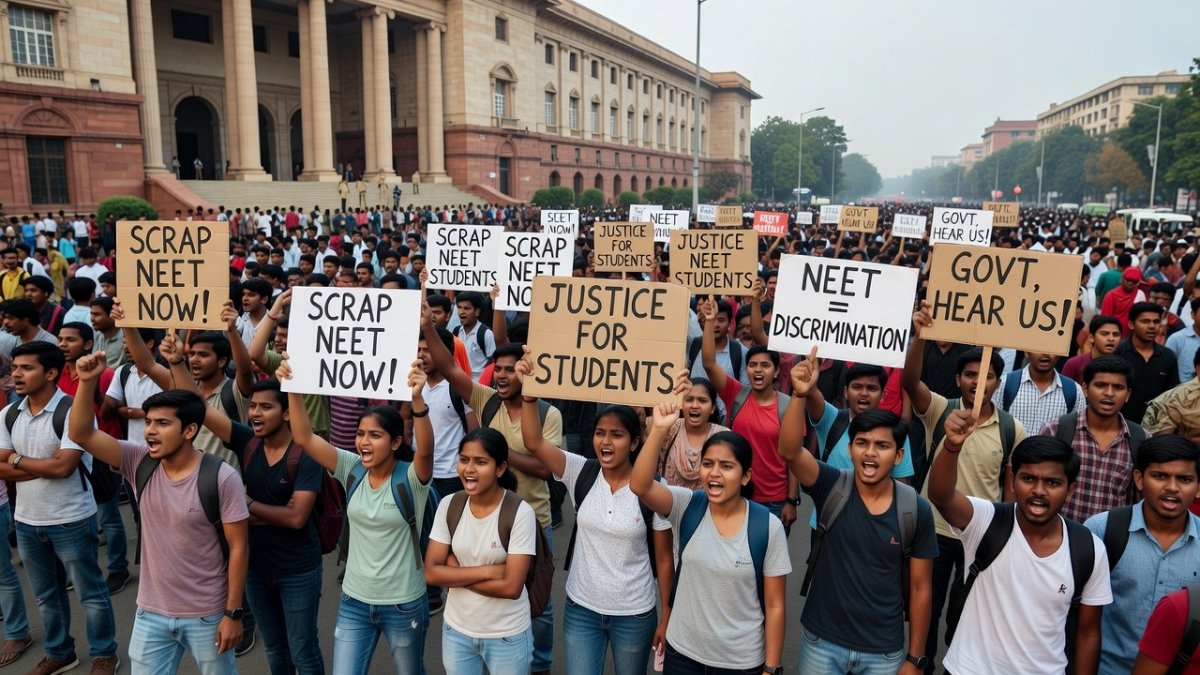
The leak's chronology unfolded rapidly after the May 3 examination, with initial reports surfacing within days through social media and student complaints, prompting swift governmental response culminating in cancellation on May 13 and a CBI probe ordered the following day. This timeline exposed vulnerabilities in the National Testing Agency's oversight, amplifying public distrust in the integrity of high-stakes testing. Subsequent investigations highlighted lapses in paper distribution and center management that allowed breaches to propagate unchecked across multiple states.
Previous NTA scandals provide context for recurring issues, including the NIFTEE 2026 results controversy marked by discrepancies in scoring, the 2024 UGC NET cancellation due to similar integrity failures, and repeated JEE paper leak attempts that strained institutional credibility. These incidents reveal patterns of inadequate safeguards and delayed accountability, eroding confidence among millions of examinees who rely on transparent processes for career advancement. Analysts note that without structural overhauls, such events risk normalizing systemic fraud in India's competitive exam framework.
In Rajasthan, the leak operated through sophisticated networks where question papers were photographed at centers and disseminated via encrypted messaging apps, enabling rapid sharing among select groups. Solved answer keys were then commodified, fetching prices between ₹3-10 lakh per buyer, transforming academic malpractice into a lucrative underground enterprise. This method exploited gaps in real-time monitoring, underscoring how technological tools intended for connectivity can facilitate large-scale collusion when regulatory vigilance falters.
Protests & Politics
NSUI, the student wing of Congress, organized protests outside Shastri Bhawan in Delhi, demanding the complete ban of NTA and the resignation of Education Minister Dharmendra Pradhan. During these demonstrations, Youth Congress chief Uday Bhanu Chib was detained by police. The protests highlighted student frustration over repeated examination irregularities and the perceived lack of accountability from regulatory bodies.
The Supreme Court issued notices to the Centre and NTA on multiple petitions concerning the paper leak. The court specifically demanded affidavits detailing past exam security reforms and measures taken to prevent future breaches. This judicial intervention added significant pressure on the government to address systemic vulnerabilities in national testing processes.
Opposition parties leveraged the crisis to criticize the government's handling of education policy, while the ruling dispensation emphasized ongoing investigations and future technological upgrades. The India Today video titled 'NEET Row: Congress's Student Body Protest In Delhi' captured the intensity of student mobilization and the political dimensions surrounding the controversy.
Protests have mirrored the NEET crisis in cities like Patna and Lucknow, where students and parents organized rallies demanding accountability and transparent re-examination protocols amid fears of compromised merit. These demonstrations highlight regional variations in outrage, with local leaders amplifying calls for systemic change to prevent future irregularities. The unified voice across states signals a broader movement against perceived governmental apathy toward educational equity.
Congress leader Rahul Gandhi publicly condemned the government's handling as a profound failure, emphasizing how repeated lapses undermine the aspirations of India's youth and erode institutional trust. His statements, echoed in parliamentary debates, advocate for independent audits and swift justice, framing the issue as symptomatic of larger governance shortcomings in education policy. This political intervention has intensified pressure for reforms that prioritize student welfare over administrative inertia.
Re-exam Logistics
The re-examination was scheduled for June 21, 2026, in pen-and-paper mode from 2:00 PM to 5:15 PM across 551 cities. Admit cards were released on June 14, 2026, through the official portal neet.nta.nic.in, allowing candidates to download their hall tickets and verify examination centre details. Paper setters remained under strict lockdown protocols until the re-examination date to prevent any further leaks.
Bihar Police issued public warnings against fake paper leak claims and fraudulent calls targeting aspirants, cautioning families about potential scams that exploit the prevailing uncertainty. These measures aimed to protect vulnerable candidates from additional financial and emotional distress during an already stressful period.
Logistical arrangements for the re-examination required rapid redeployment of resources across hundreds of cities while maintaining enhanced security. The compressed timeline between the original exam and the retest placed considerable pressure on both students and administrators, necessitating swift communication and verification processes.
Re-examination logistics incorporate the strictest security protocols to date, featuring signal jammers at all centers to block unauthorized transmissions, comprehensive CCTV surveillance for real-time monitoring, and biometric verification to authenticate candidates. These measures aim to restore credibility following the breach, though they impose logistical complexities on administrators managing thousands of venues simultaneously. Data from pilot implementations suggest enhanced deterrence against tampering attempts.
Paper setters have been sequestered in isolation since June 7, severed from external communications to safeguard question integrity throughout the development phase. This unprecedented protocol, involving secure facilities and monitored interactions, reflects lessons from prior leaks while raising concerns about examiner well-being under prolonged confinement. Experts argue such isolation, though effective, necessitates balanced support systems to maintain quality output without undue strain.
2027 CBT Shift
Education Minister Dharmendra Pradhan announced that NEET would transition to a fully online computer-based test format starting in 2027. This policy shift seeks to reduce vulnerabilities associated with physical paper handling and distribution. However, the move faces substantial infrastructure challenges, particularly in rural India where reliable internet connectivity and digital literacy remain inconsistent.
The digital divide poses a significant barrier for candidates from economically disadvantaged backgrounds who may lack access to quality devices or stable power supply during examinations. Government initiatives to expand digital infrastructure must accelerate to ensure equitable access ahead of the 2027 implementation.
Stakeholders have called for pilot programs and extensive training modules to familiarize students with the new format. The transition represents a major overhaul of India's largest medical entrance system, requiring coordinated efforts across central and state agencies to avoid disadvantaging any demographic group.
Transitioning to computer-based testing in 2027 draws direct parallels with JEE Main, which has operated fully in CBT mode since 2019, demonstrating scalable infrastructure for high-volume exams with reduced leak risks. This shift promises standardized delivery and faster result processing, yet requires adaptation for NEET's larger candidate pool and diverse regional access challenges. Comparative analyses indicate improved efficiency but highlight the need for robust digital literacy training among aspirants.
Implementing CBT across more than 5,000 centers entails substantial costs for hardware upgrades, software development, and network enhancements, potentially running into thousands of crores based on JEE precedents. Coaching institutes express cautious optimism, citing reduced paper-handling vulnerabilities, while student bodies voice apprehensions over unequal access in rural areas lacking reliable electricity and internet. These reactions underscore the tension between modernization benefits and equitable implementation hurdles.
Financial Impact on Families
The coaching industry in India, valued at over ₹50,000 crore, plays a central role in NEET preparation, with many families investing substantial sums in tuition, study materials, and residential programs. The paper leak and subsequent re-examination imposed additional financial burdens through repeated travel costs, accommodation expenses, and lost wages for accompanying parents.
Opportunity costs proved particularly acute for students from lower-income households who had already sacrificed academic years or part-time employment to focus on preparation. The uncertainty surrounding results further delayed career planning and increased psychological stress on families already stretched by coaching fees that often exceed annual household incomes in many regions.
Long-term economic analyses suggest that repeated examination disruptions can reduce overall enrollment efficiency, forcing capable students to either drop out or incur debt for additional preparation cycles. These dynamics exacerbate existing inequalities in access to medical education.
Re-examination imposes direct financial strains of ₹8,000-15,000 per candidate for travel, accommodation, and related expenses, compounding the already burdensome preparation costs for middle-class families. Aggregated nationally, this translates to an additional economic burden of ₹180-340 crore, diverting resources from education to logistics amid inflation pressures. Such figures illuminate the hidden externalities of exam irregularities on household economies.
Delays in counseling from June to August-September result in significant lost academic time, forcing students into prolonged uncertainty that disrupts study momentum and mental preparation for medical programs. This postponement cascades into deferred career timelines, with ripple effects on internship cycles and residency planning. Data-driven assessments reveal how these shifts exacerbate opportunity costs for an entire cohort of aspiring doctors.
Credibility Crisis & Reforms Needed
The cumulative effect of the NEET UG 2026 crisis has created a profound trust deficit in India's examination ecosystem. Repeated security lapses have prompted calls for independent oversight bodies and transparent audit mechanisms to restore public confidence. Without meaningful reforms, the credibility of the entire medical admission process remains at risk.
Systemic reforms must address not only technological upgrades but also governance structures within NTA and accountability frameworks for examination conduct. Enhanced background checks for personnel handling sensitive materials, real-time monitoring systems, and stricter penalties for leaks represent essential steps forward.
The implications extend beyond immediate student concerns to the broader healthcare workforce pipeline. Delays and disruptions in NEET directly affect the annual intake of doctors, potentially widening gaps in rural healthcare delivery. Sustained investment in secure, equitable examination systems is therefore critical for India's long-term public health objectives.
 — By Dr. Raj Patel, Staff Writer
Parliamentary committee reports on the NTA have long recommended enhanced oversight mechanisms, including regular audits and technology integration to mitigate fraud risks in national examinations. These findings emphasize the urgency for an independent examination regulator detached from the Ministry of Education to ensure impartial governance and swift redressal. Implementation of such reforms could fundamentally recalibrate trust in the testing ecosystem.
Experts advocate for digital tracking systems and blockchain verification of question papers to create immutable audit trails, preventing unauthorized alterations or leaks at source. This technological framework, drawn from global best practices, offers verifiable transparency while minimizing human intervention points vulnerable to collusion. Adoption would signal a proactive stance toward safeguarding meritocracy in India's medical admissions process.
This article was produced with AI-assisted research and editorial support. Reporting is based on sources cited in the article.
What's Your Reaction?
 Like
0
Like
0
 Dislike
0
Dislike
0
 Love
0
Love
0
 Funny
0
Funny
0
 Wow
0
Wow
0
 Sad
0
Sad
0
 Angry
0
Angry
0

India/South Asia Correspondent at Global1.News. Analytical voice with a background in science and health journalism. Based in New Delhi, covering Indian politics, education, healthcare, technology, and policy. Breaks down complex data into clear, actionable reporting.















Comments (0)