
Taber Billboard Defies Removal Order Over Alberta Referendum
Taber Billboard Defies Removal Order as Alberta Prepares October Referendum on Separation Path The Billboard Controversy Unfolds in Taber The digital billboard erected in Taber, a community of roughly 10,000 residents located 265 kilometres southeast of Calgary, has become a focal point in debates over Alberta's future within Canada. Organiser Cory Morgan of the Pathway to Inde
Taber Billboard Defies Removal Order as Alberta Prepares October Referendum on Separation Path
The Billboard Controversy Unfolds in Taber
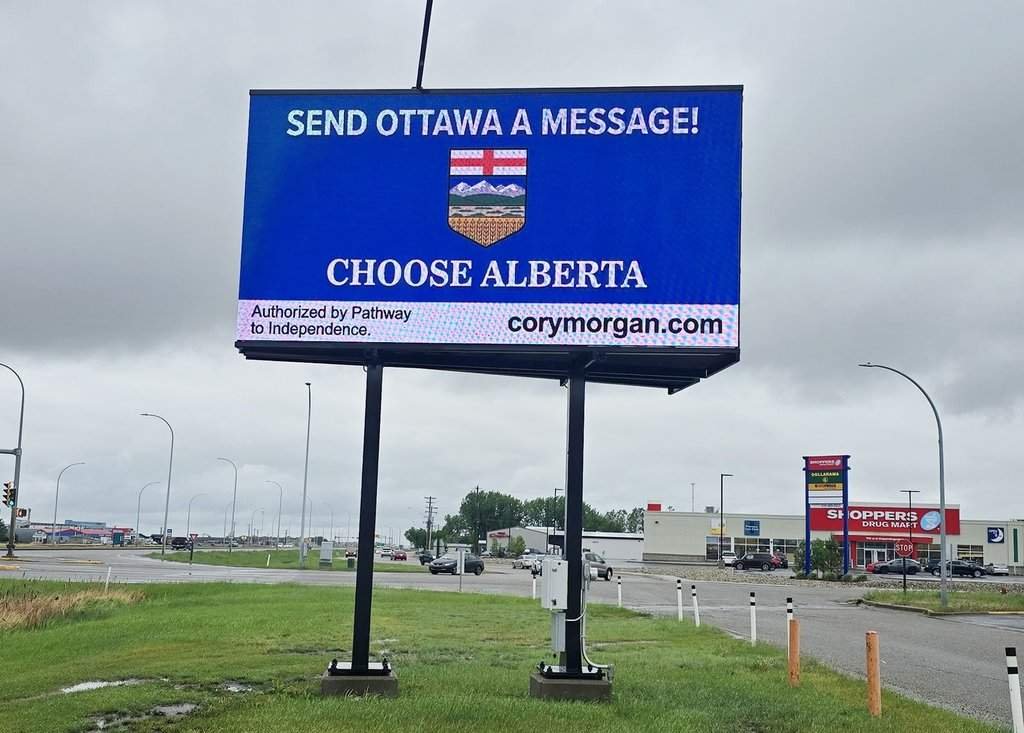
The digital billboard erected in Taber, a community of roughly 10,000 residents located 265 kilometres southeast of Calgary, has become a focal point in debates over Alberta's future within Canada. Organiser Cory Morgan of the Pathway to Independence group paid approximately $1,100 to display the Alberta shield alongside the message "Send Ottawa a Message! Choose Alberta." The display appeared shortly before the town issued its formal demand for removal.
On June 3, Town CAO Derrin Thibault sent a letter requiring the sign's removal by June 13, labelling it a nuisance under municipal bylaws. The same day, the town posted on social media that the message does not represent the views of Taber or its residents. Despite the deadline, Morgan confirmed the original sign remains in place, with two additional smaller signs added and a third scheduled for installation on June 14.
Morgan stated that Taber should stick to potholes, picking up garbage and catching dogs rather than intervening in the display. He reported receiving messages from both supporters of the cause and federalists who feel harmed by the broader movement. Finding suitable sites for similar messaging has proven difficult in other Alberta locations.
Historical Context of Alberta Separatism and Western Alienation
Alberta separatism traces its roots to longstanding tensions between Western provinces and the federal government in Ottawa, particularly over resource control and fiscal transfers. These grievances gained renewed attention following the Supreme Court of Canada carbon pricing ruling, which prompted Premier Danielle Smith to announce the October 19 referendum on May 21, 2026. The current billboard reflects patterns of protest that have surfaced periodically since the 1980s.
Western alienation has often centred on perceptions that federal policies, including energy regulations and equalisation payments, disadvantage resource-rich provinces like Alberta. Historical movements have included calls for greater provincial autonomy or, in rarer cases, outright separation. The present effort ties directly to the upcoming referendum question on whether Alberta should remain in Canada or begin a process toward a binding separation vote.
Public opinion data continues to show that a large majority of Albertans reject separation as an option. This persistent gap between activist efforts and broader sentiment underscores the challenges facing groups seeking to advance independence discussions through public displays and referendums.
Understanding the October 19 Referendum and Canadian Constitutional Law
The referendum scheduled for October 19, 2026, asks Albertans whether the province should stay in Canada or start a process toward a binding separation vote. Under Canadian constitutional law, such a referendum does not itself trigger separation. Instead, it would initiate a structured process that could lead to a future binding vote, requiring negotiations involving the federal government and potentially other provinces.
Canadian constitutional practice emphasises that any path to provincial separation must align with the amending formula in the Constitution Act, 1982. Past precedents, including the 1998 Supreme Court reference on Quebec secession, established that unilateral declarations of independence lack legal validity. The Alberta referendum therefore serves as an advisory step rather than a decisive mechanism.
Legal scholars note that the outcome would influence political discourse but would not automatically alter Alberta's status within Confederation. The process would likely involve extensive consultations, possible court challenges, and intergovernmental talks before any binding vote could occur.
Municipal Authority Versus Charter Free Speech Protections
Taber's demand for removal of the billboard raises questions about the balance between municipal land-use regulations and protections under the Canadian Charter of Rights and Freedoms. The town cited nuisance provisions in its June 3 letter, asserting authority over signage that it believes disrupts community standards. Such bylaws typically govern commercial and political displays on public or visible private property.
Section 2(b) of the Charter guarantees freedom of expression, which courts have interpreted to include political messaging. However, municipalities retain powers to regulate the time, place, and manner of expression, provided restrictions are reasonable and demonstrably justified in a free and democratic society. The Taber case may test whether a political sign constitutes a nuisance or falls within protected expression.
Similar disputes in other Canadian jurisdictions have sometimes resulted in negotiated compromises or court rulings clarifying the limits of municipal oversight. Morgan's decision to add further signs suggests an intent to test enforcement boundaries while highlighting the difficulty of securing alternative display locations.
Cory Morgan's Strategy and Perspective
Cory Morgan has positioned the Taber billboard as part of a broader campaign to pressure Ottawa through visible public messaging. He has noted receiving both supportive correspondence and critical feedback from those opposed to separation, indicating the divisive nature of the issue. The addition of multiple signs after the initial deadline reflects a deliberate escalation in visibility.
Morgan's approach emphasises grassroots tactics in smaller communities where larger urban centres have proven less receptive to hosting similar displays. By focusing on Taber, the campaign seeks to maintain momentum ahead of the October referendum without relying solely on digital or social media channels.
Supporters argue that such signs keep the constitutional question in public view, while critics contend they misrepresent local sentiment. Morgan's comments about municipal priorities underscore his view that towns should avoid involvement in provincial or federal political debates.
Premier Danielle Smith's Political Positioning
Premier Danielle Smith announced the referendum following the Supreme Court carbon pricing decision, framing it as a response to federal-provincial tensions. Alberta NDP critics have accused her of playing a double game, suggesting the move allows the government to appear responsive to separatist voices while maintaining distance from outright endorsement of independence.
Smith's strategy occurs against a backdrop of federal-provincial relations strained by energy policy and carbon pricing. The referendum serves as a mechanism to gauge sentiment without committing the province to immediate action, consistent with the legal reality that the vote initiates a process rather than separation itself.
Observers note that the premier must navigate pressures from both Western alienation advocates and those prioritising national unity. The Taber billboard episode illustrates how local disputes can intersect with provincial political calculations in the lead-up to October 19.
National Implications for Canadian Unity
The Taber billboard and associated referendum have drawn attention to questions of Canadian unity that extend beyond Alberta's borders. While polls indicate limited support for separation among Albertans, the visibility of such campaigns can influence national discourse on federalism and regional grievances.
Other provinces have watched developments with interest, particularly regarding how Ottawa might respond to any future process initiated by the referendum. The episode highlights ongoing debates about resource revenue sharing, regulatory authority, and the balance of powers within Confederation.
Reactions from federalist voices in Alberta and elsewhere suggest concern that prolonged public displays could deepen divisions, even if the legal threshold for separation remains high. The coming months will test whether the referendum serves to channel or amplify existing tensions.
Tags: Alberta Referendum, Western Alienation, Canadian Unity, Taber Billboard, Cory Morgan
By Alex Thompson, Staff Writer
This article was produced with AI-assisted research and editorial support. Reporting is based on sources cited in the article.
What's Your Reaction?
 Like
0
Like
0
 Dislike
0
Dislike
0
 Love
0
Love
0
 Funny
0
Funny
0
 Wow
0
Wow
0
 Sad
0
Sad
0
 Angry
0
Angry
0

Canada Correspondent at Global1.News. Based in Toronto, covering Canadian politics, energy, trade, and US-Canada relations. Provides the Canadian perspective on North American and global affairs.














Comments (0)