
Japan May Help Antigua Turn Sargassum From Beach Menace Into Business
Japan May Help Antigua Turn Sargassum From Beach Menace Into Business The Sargassum Crisis Across Caribbean Shores We in the islands have all seen it, that thick brown carpet washing up on our beaches and turning paradise into a smelly nightmare. Sargassum seaweed has been plaguing Caribbean coastlines for years now, choking fishing grounds and driving away visitors who come fo
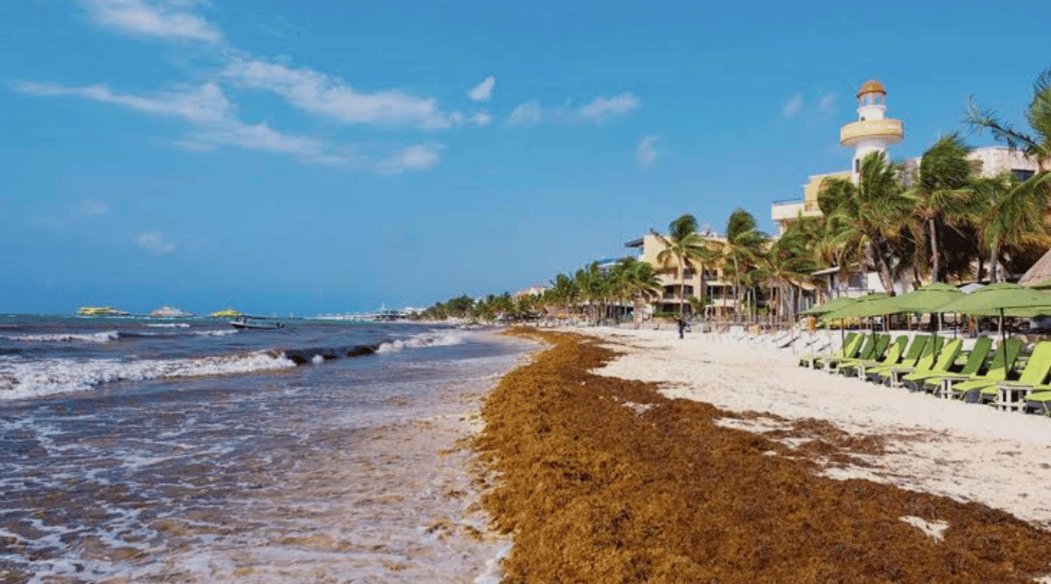
The Sargassum Crisis Across Caribbean Shores
We in the islands have all seen it, that thick brown carpet washing up on our beaches and turning paradise into a smelly nightmare. Sargassum seaweed has been plaguing Caribbean coastlines for years now, choking fishing grounds and driving away visitors who come for the clear waters and white sand. In places like Antigua and Barbuda the problem hits hard because tourism forms the backbone of the economy, and when the beaches suffer, so do the small vendors, hotel workers and boat captains who depend on steady visitors.
The seaweed releases hydrogen sulphide gas as it decomposes, creating that foul odour that lingers for days and makes outdoor work almost unbearable. Fisherfolk across the region report reduced catches because the mats block sunlight and alter the marine environment. Climate change and shifting ocean currents have made the blooms more frequent and larger, leaving communities to clean up what nature and global forces have sent their way.
Countries throughout the Caribbean share this burden, from the southern chain right up to the northern Leewards. Local governments have tried various removal methods, yet the real difficulty lies in what happens after the seaweed is collected. Without proper disposal or reuse, the problem simply moves from the beach to a pile somewhere else, still releasing gases and creating new headaches for nearby residents.
Antigua and Barbuda Reaches Out to Japan
Agriculture Minister Anthony Smith Jr. recently travelled to Japan and held talks with officials there about possible cooperation on the sargassum issue. The discussions were later shared at a post-Cabinet media briefing by Director General of Communications Maurice Merchant, who explained that Japanese officials showed clear willingness to assist Antigua and Barbuda with its seaweed challenge. This bilateral approach comes at a time when the country is already working to manage the influx on its own shores.
Antigua has acquired equipment to harvest the seaweed from beaches, yet disposal remains the critical bottleneck. Merchant noted the main challenge: once the sun hits the sargassum, gases are emitted and there is that foul odour. The talks also touched on fisheries infrastructure, fish and vegetable markets, and broader food security initiatives, showing that the conversation went beyond just seaweed to wider agricultural cooperation.
Minister Smith returned encouraged by the exchanges, and Cabinet was informed that Japan stands ready to provide technical expertise should Antigua decide to move forward. No commitments on funding were made during the visit, and officials have been careful not to suggest anything is already in motion.
The Shape of a Possible Partnership
Japanese officials indicated they would be willing to send a technical team to assess harvesting operations on the ground in Antigua and Barbuda. Such a visit could help identify practical ways to turn the collected seaweed into useful products rather than simply burying or burning it. Potential by-products mentioned include fertilisers, animal feed, biofuels and other commercial items that could create new income streams for local communities.
The focus would likely start with understanding the scale of Antigua’s current harvesting efforts and then exploring small-scale processing options that fit the island’s size and resources. Because no timeline has been announced, any technical mission would need careful planning to match Antigua’s existing equipment and workforce capacity. Officials have stressed that decisions on next steps remain with the Antiguan side.
This kind of cooperation would build on Antigua’s own initiative to collect the seaweed, adding the missing piece of what to do with it afterwards. The emphasis stays on technical knowledge rather than large financial pledges at this early stage, keeping expectations grounded in what has actually been discussed.
Japan’s Earlier Work with Caribbean Nations
In 2022 Japan funded a USD 12.3 million UNDP project aimed at sargassum management across five Caribbean countries: Barbados, St. Kitts and Nevis, St. Lucia, St. Vincent and the Grenadines, and Trinidad and Tobago. That regional effort looked at collection methods and possible uses for the seaweed, yet Antigua and Barbuda was not part of the group. The current bilateral talks therefore offer a way to address that gap directly between the two nations.
Japan has shown consistent interest in Caribbean environmental challenges, often through technical support rather than headline-grabbing spending. The 2022 project demonstrated that Japanese expertise can be adapted to island conditions, and the same approach could prove useful in Antigua where tourism and fishing face similar pressures from the seaweed. Officials in both countries appear to recognise the value of sharing lessons already learned elsewhere in the region.
Because the earlier project did not cover every affected nation, this new conversation allows Antigua to explore solutions tailored to its own beaches and economy. It also highlights how individual countries can pursue practical partnerships when broader regional programmes leave some islands out.
Economic Opportunities from Sargassum
If processing becomes viable, the seaweed could move from a costly nuisance to a source of local enterprise. Fertiliser made from sargassum might support small farmers growing vegetables for the domestic market, while animal feed could help livestock owners reduce import bills. Biofuel production, though more complex, could eventually contribute to energy needs in a region where fuel costs remain high.
These possibilities would require careful testing to ensure the products meet safety and quality standards, especially for anything entering the food chain. Still, the idea of creating value from what currently costs money to remove offers a hopeful shift for communities that have grown used to viewing the seaweed only as a problem. Local entrepreneurs could eventually play a role in collection, drying and initial processing steps.
Any economic benefit would depend on steady supply of the seaweed and reliable markets for the finished goods. Officials have not claimed quick wins, and the discussions so far focus on assessment rather than immediate factory construction. This measured approach recognises that turning a natural occurrence into steady business takes time and proper planning.
Protecting Tourism and Coastal Livelihoods
Tourism remains the lifeblood for Antigua and Barbuda, and repeated sargassum events can damage the island’s reputation with visitors who expect pristine beaches. Hotels and tour operators already spend time and money clearing the seaweed, yet the odour and sight of it can still reach guests and affect reviews. Finding a productive use for the material could reduce these repeated clean-up costs while keeping beaches more inviting.
Fishing communities also stand to gain if better management reduces the mats that interfere with boat movement and fish habitats. When beaches stay cleaner, the whole coastal economy feels the difference, from craft vendors to restaurant owners who rely on the steady flow of cruise passengers and stay-over visitors. The talks with Japan therefore touch on more than technical details; they connect to the daily realities of people whose incomes rise and fall with the condition of the shoreline.
Climate change continues to influence how often and how much seaweed arrives, so long-term solutions must consider both removal and reuse. Antigua’s existing harvesting equipment already shows local commitment, and external technical input could strengthen those efforts without replacing them.
What This Could Mean for the Wider Region
Success in Antigua and Barbuda might encourage other Caribbean nations facing similar issues to explore their own bilateral arrangements. The region has long worked through CARICOM and other bodies on shared challenges, yet country-to-country cooperation can sometimes move faster when needs are specific. Japan’s willingness to engage directly fills a space left by the 2022 project that did not include every affected island.
Lessons from any technical assessment in Antigua could be shared across the Caribbean, helping neighbours avoid repeating early mistakes. Sargassum does not respect borders, so practical knowledge about processing and disposal benefits the entire basin. At the same time, each country’s tourism and fishing sectors have their own characteristics, so solutions will still need local adaptation.
The conversations also remind us that environmental problems in the Caribbean often require partnerships beyond the region. Japan’s interest shows that distant partners can contribute useful expertise when the issue aligns with their own technological strengths.
Realistic Expectations on Timing and Next Steps
No timeline has been set for any technical team visit or further decisions, and no funding commitment has been announced. Cabinet was simply informed that Japan stands ready to provide expertise if Antigua chooses to proceed. This cautious language reflects the early stage of the discussions and avoids raising hopes before concrete plans exist.
Any future steps would likely begin with the proposed assessment of current harvesting operations, followed by joint exploration of suitable processing methods. Even then, turning ideas into working facilities would require additional studies, possible pilot projects and careful consideration of costs. Officials have been clear that Antigua retains control over whether and how to move forward.
For now, the talks represent an opening rather than a finished agreement. Communities across Antigua and the wider Caribbean will watch with interest, knowing that real progress on sargassum will come only through steady, practical work rather than quick announcements. The focus remains on finding ways to ease the burden on beaches while exploring whether the seaweed can eventually support new livelihoods. By Sharon Sahatoo, Staff Writer
This article was produced with AI-assisted research and editorial support. Reporting is based on sources cited in the article.
What's Your Reaction?
 Like
0
Like
0
 Dislike
0
Dislike
0
 Love
0
Love
0
 Funny
0
Funny
0
 Wow
0
Wow
0
 Sad
0
Sad
0
 Angry
0
Angry
0

Caribbean Correspondent at Global1.News. Based in Port of Spain, Trinidad, covering Caribbean politics, economy, energy, climate, and culture. Amplifying the voices and stories of the Caribbean region.















Comments (0)