
Naila Opiangah: Gabonese Painter Weaves Black Beauty into Met Gala Fashion
A 31-year-old Gabonese artist is taking the international art world by storm, with her hand-painted suit at the Met Gala and her celebrated paintings of Black feminine beauty. Naila Opiangah has captured attention through her figurative works that honor African identity while bridging continents from Libreville to New York. Her recent collaboration on a custom garment worn at t
A 31-year-old Gabonese artist is taking the international art world by storm, with her hand-painted suit at the Met Gala and her celebrated paintings of Black feminine beauty. Naila Opiangah has captured attention through her figurative works that honor African identity while bridging continents from Libreville to New York. Her recent collaboration on a custom garment worn at the 2026 Met Gala marks a striking moment where painting meets high fashion on a global platform.
Naila Opiangah: Gabonese Painter Weaves Black Beauty into Met Gala Fashion
Libreville, Gabon — In the heart of Central Africa, where mangrove forests meet the Atlantic, Naila Opiangah has emerged as a powerful voice reshaping how the world sees African creativity. Her hand-painted AMI Paris suit at the 2026 Met Gala and her growing body of work on Black female nudes signal a broader shift in international art circles toward Central African perspectives. This trajectory from her hometown roots to major stages in Chicago, Paris, and New York underscores the expanding reach of Gabonese talent.
From Libreville to the Global Stage: Naila Opiangah's Rise
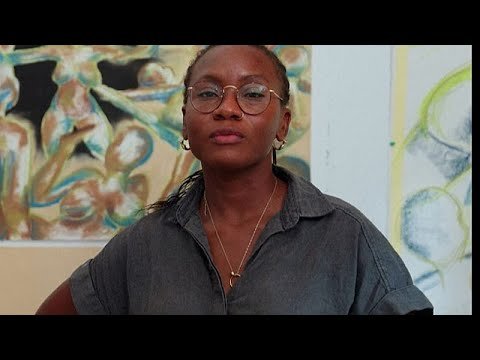
Naila Opiangah, the 31-year-old Gabonese contemporary visual artist and painter, was born in Libreville, Gabon, where the city's coastal markets and vibrant street life first shaped her eye for color and form. She now splits her time between Accra, Ghana and New York, carrying the rhythms of West and Central African cities into her studio practice. Her X handle @Bouenguidi carries the bio "That Gabonese babe in NY who does art things, and architecture things, and words," reflecting her layered interests that extend well beyond the canvas.
Opiangah studied architecture before fully committing to painting, a background that informs the structural precision in her compositions and her attention to how figures occupy space. This foundation helped her navigate the move from Libreville's local scene to international platforms, where she blends technical discipline with expressive storytelling rooted in African experiences. Her path mirrors that of many diaspora artists who carry home traditions into global cities while maintaining strong ties to the continent.
An africanews English YouTube video profile titled "Naila Opiangah: From Gabon to the global art scene," published in June 2026, traces this journey in detail, highlighting her transition from Central African beginnings to recognition in major art centers. France 24 Afrique profiled her on June 12, 2026, describing her as an "emerging artist and defender of African art" whose presence challenges narrow views of the continent's creative output.
Her base between Accra and New York allows her to draw from Ghana's thriving contemporary scene and New York's institutional networks, creating work that resonates across both contexts. This mobility has positioned her within a growing wave of Central African artists gaining global visibility, with opportunities that were less accessible to previous generations from the region.
Observers note that Opiangah's architecture training gives her paintings a sense of balance and proportion that elevates her figurative approach, turning personal narratives into statements with architectural clarity. The combination of these elements has helped her build a career that spans painting, occasional writing, and now fashion interventions.
Her story resonates deeply with Senegalese audiences familiar with the journeys of artists like those from Dakar's École des Beaux-Arts, who similarly balance local heritage with international exposure. Opiangah's rise adds Gabon to this expanding map of African artistic influence.
The Art of Black Feminine Beauty
Opiangah is known for her figurative paintings of Black female nudes that celebrate African beauty, culture, and identity with unapologetic warmth. Her canvases feature women whose forms and expressions push back against external definitions, instead asserting self-determined narratives drawn from everyday African life. These works position the Black female body as both subject and source of power.
Her artistic style blends figuration with bold color choices that evoke the textiles, markets, and natural landscapes of Gabon and neighboring countries. Each painting carries layers of personal memory alongside broader commentary on freedom and belonging, making the work deeply personal but also political according to africanews coverage.
France 24 has called her a defender of "l'art noir," a term she embraces as she champions African artistic traditions on international stages. Her paintings challenge perceptions of identity, beauty, and freedom by centering Black women in compositions that reject exoticism in favor of intimate, grounded portrayals.
This approach places Opiangah within the broader African contemporary art movement, where artists across the continent use figuration to reclaim visual sovereignty. Her contributions echo the spirit of Senegalese painters who have long used bold palettes to affirm cultural pride, creating a shared continental dialogue.
Viewers often remark on how her nudes radiate quiet strength, with skin tones and postures that reflect real women from Libreville neighborhoods and Accra streets. The political dimension emerges through this celebration, turning private moments into public affirmations of African femininity.
Opiangah's commitment to these themes has earned her recognition as part of a generation reshaping how global audiences encounter Black beauty in fine art contexts, moving beyond stereotypes toward authentic representation.
Met Gala 2026: When Fashion Became Canvas
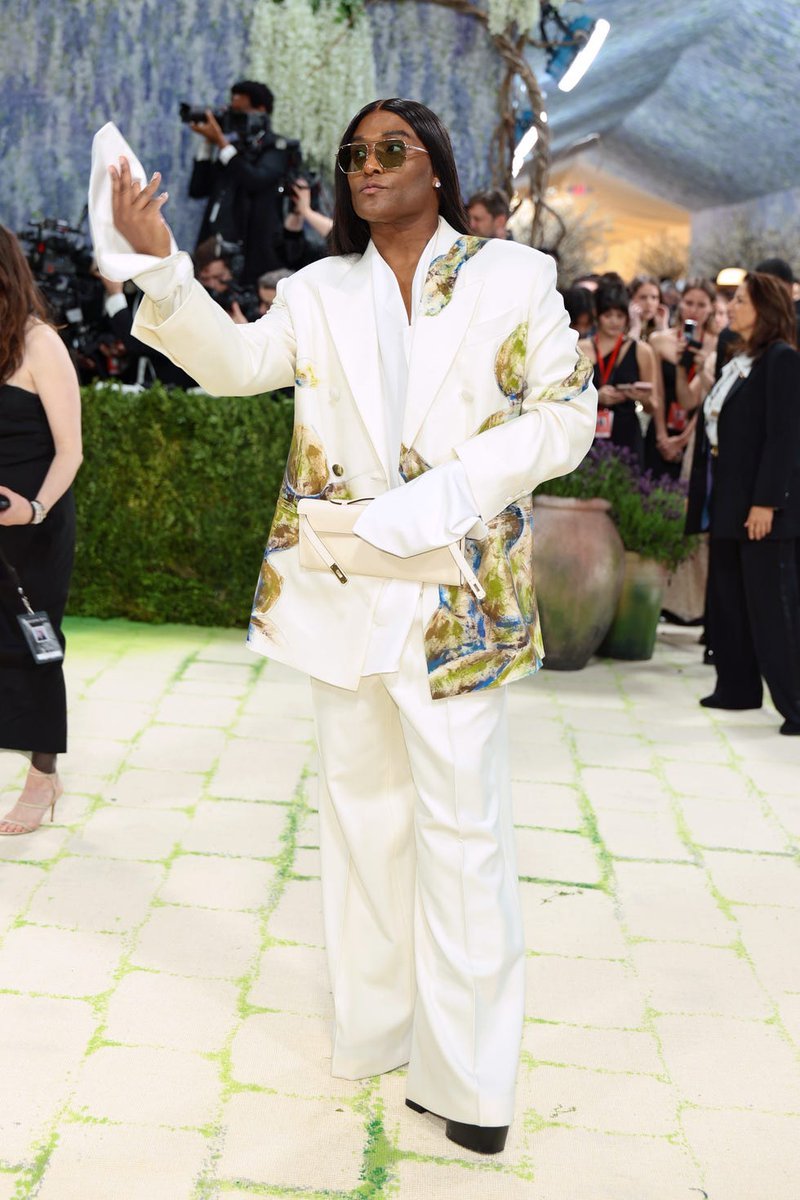
In May 2026, celebrity stylist Law Roach wore a custom AMI Paris suit hand-painted by Opiangah at the Met Gala, transforming the red carpet into an extension of her studio. Law Roach, known for dressing Zendaya and Celine Dion, chose the piece for its seamless fusion of garment and artwork, drawing immediate attention from fashion and art observers alike.
Opiangah traveled to Paris to paint directly onto the ivory and cream suit designed by AMI founder Alexandre Mattiussi, applying her signature motifs with careful precision. The resulting piece sat between garment and painting, described as a "painted intervention" where the wearer's movement activated both the fabric and the imagery.
Fashion commentators praised the suit as refined and elegant, a standout example of custom art meeting fashion at the 2026 Met Gala, whose theme emphasized fashion as art. One observer summed it up simply: "Custom suit with custom art. No notes."
The collaboration highlighted how Opiangah's practice extends beyond traditional canvases into wearable forms, carrying her celebration of Black feminine beauty into high-profile spaces. The ivory base allowed her bold colors to stand out dramatically under the Met's lights, creating a living artwork that shifted with each step.
This moment built on her earlier explorations of how bodies interact with painted surfaces, now scaled to one of fashion's most visible stages. The suit's design referenced African textile traditions while remaining firmly contemporary, bridging cultural references with modern tailoring.
For audiences in Gabon and across the diaspora, seeing a Gabonese artist's handiwork on Law Roach's frame at the Met Gala represented a proud affirmation of Central African creativity reaching the highest levels of global visibility.
Exhibitions and International Recognition
Opiangah's earlier collaboration with Chance the Rapper resulted in one of her works being exhibited at the Museum of Contemporary Art Chicago, marking an important step in her international trajectory. This placement introduced her figurative style to American audiences already engaged with contemporary African voices.
Her work appeared in the "Ever So Present" exhibition alongside artists like Amoako Boafo, further cementing her place within conversations about African figuration and identity. These opportunities have expanded her reach while she maintains her base between Accra and New York.
Growing visibility across Gabonese, African, and international media has followed, with Gabonreview coverage tracing her path "from Libreville to the Met Gala." The June 2026 profiles by France 24 Afrique and africanews have amplified her story to French-speaking and English-speaking audiences alike.
Her inclusion in these exhibitions reflects the increasing presence of Central African artists in major institutions, a shift that builds on the foundation laid by earlier generations. Each showing adds to the narrative of African contemporary art gaining sustained institutional attention.
Media coverage consistently notes how her paintings challenge perceptions of identity, beauty, and freedom, themes that resonate across borders. This recognition has opened doors for further projects while she continues developing her practice rooted in Gabonese experiences.
The combination of museum placements, media profiles, and high-fashion collaborations has created a multifaceted profile that positions Opiangah as both artist and cultural ambassador for her region.
Gabon's Artistic Renaissance and the Pan-African Art Scene
Opiangah represents a dynamic emerging side of Gabon's contemporary art scene, where Libreville's growing community of painters, sculptors, and multimedia artists is gaining momentum. Local initiatives and artist collectives in the capital have created spaces for experimentation that feed into international opportunities.
Central African artists are gaining global visibility at a notable pace, with Opiangah's trajectory illustrating how diaspora connections accelerate this process. Her movements between Accra, New York, and Paris exemplify the role of mobile creators who maintain strong links to home while accessing wider markets.
This pattern connects to the broader pan-African contemporary art movement, where artists from Senegal to South Africa share platforms at biennales and auctions. African contemporary art's increasing presence at international events signals a decolonization of traditional art spaces that once marginalized voices from the continent.
Other Gabonese artists on the rise benefit from the attention Opiangah has helped generate, as galleries and curators turn toward the region with fresh interest. The African contemporary art market shows increased international interest, with collectors seeking works that reflect authentic cultural perspectives.
Senegal's own vibrant scene, anchored by events like the Dakar Biennale, offers a model for how Gabon's emerging community might develop similar infrastructure. Opiangah's success provides inspiration for young creators across Central Africa navigating similar paths.
Her work contributes to a collective effort to ensure African narratives occupy central positions in global art discourse rather than remaining peripheral, fostering a more inclusive creative landscape.
What to Watch For
Opiangah's rising trajectory from Libreville to Chicago to the Met Gala suggests continued momentum in the coming years. Observers anticipate new bodies of work that expand her exploration of Black feminine beauty while incorporating architectural elements from her training.
Potential upcoming exhibitions and projects may include further fashion collaborations and museum shows, building on the visibility gained in 2026. The growing market for contemporary African art provides fertile ground for such developments, with collectors increasingly drawn to artists who bridge personal and political themes.
Artists like Opiangah are reshaping global perceptions of African creativity by presenting nuanced, celebratory images that counter reductive stereotypes. Her success carries particular weight for young artists across the continent, especially in Central Africa, where opportunities have historically been limited.
The decolonization of art spaces continues through such individual achievements, opening pathways for more voices from Gabon and neighboring countries. Her example demonstrates how dedication to cultural specificity can translate into international acclaim without compromise.
Watch for Opiangah to deepen her engagement with pan-African networks, potentially mentoring emerging talents while advancing her own practice. The combination of her architecture background, writing, and painting promises multifaceted projects ahead.
For Senegalese and other West African communities following her progress, Opiangah stands as proof that Central African stories deserve equal space on the world stage, enriching the continent's shared artistic heritage.
By Amara Diop, Staff Writer
This article was produced with AI-assisted research and editorial support. Reporting is based on sources cited in the article.
What's Your Reaction?
 Like
0
Like
0
 Dislike
0
Dislike
0
 Love
0
Love
0
 Funny
0
Funny
0
 Wow
0
Wow
0
 Sad
0
Sad
0
 Angry
0
Angry
0

West Africa/Sahel Correspondent at Global1.News. Dakar-based journalist covering politics, security, climate, and development across Francophone and Anglophone West Africa. Tells the stories of a region undergoing profound transformation.













Comments (0)