
Dissident Hong Kong bookseller Lam Wing-kee dies aged 70
The Death of Lam Wing-kee: Symbol of Resistance in Hong Kong's Struggle for Expression The Life and Defiance of Lam Wing-kee Lam Wing-kee, who passed away at Mackay Memorial Hospital in Taipei on Thursday at the age of 70 after battling lung cancer, embodied a steadfast commitment to publishing materials critical of China's political leadership. As the operator of Causeway Bay
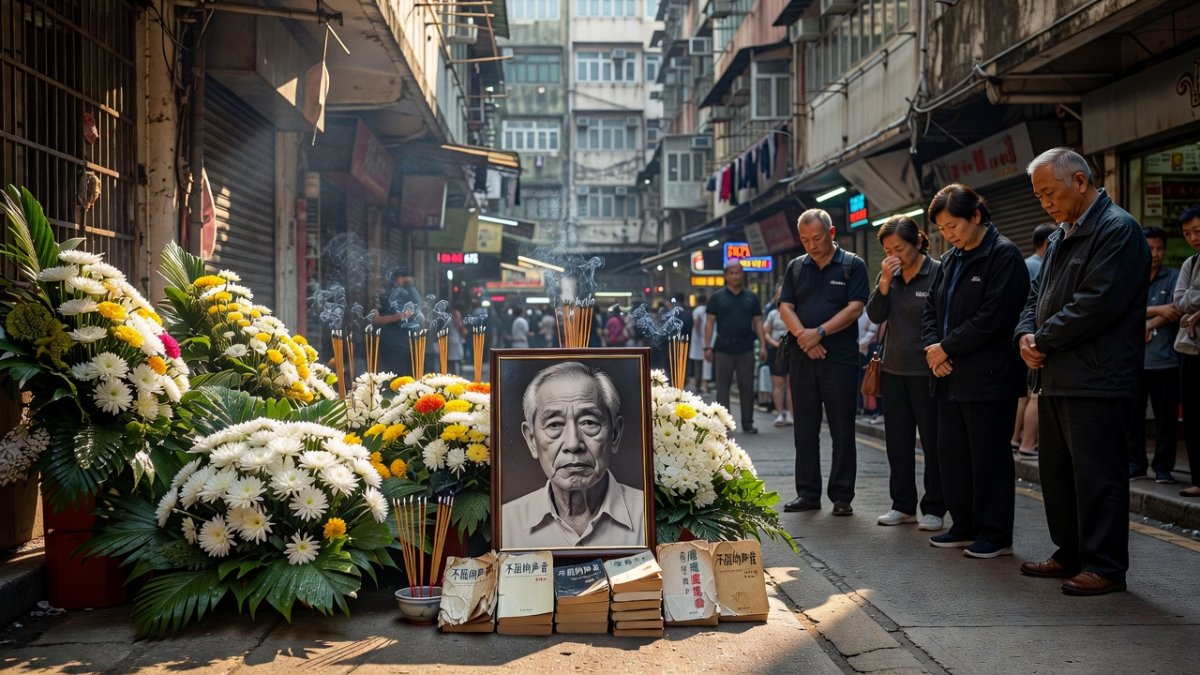
The Life and Defiance of Lam Wing-kee
Lam Wing-kee, who passed away at Mackay Memorial Hospital in Taipei on Thursday at the age of 70 after battling lung cancer, embodied a steadfast commitment to publishing materials critical of China's political leadership. As the operator of Causeway Bay Books in Hong Kong, Lam specialized in works that examined the inner workings of the Chinese Communist Party, drawing readers from across the region who sought perspectives unavailable on the mainland. His decision to reopen the bookstore in Taiwan after fleeing in 2019 underscored a deliberate choice to sustain spaces for open discourse despite personal risks.
The 2015 Disappearances and the Crackdown on Independent Booksellers
In 2015, Lam was detained during a visit to mainland China and held for more than 400 days as part of a broader operation targeting Hong Kong booksellers who distributed publications unflattering to Beijing's elite. Several colleagues from Causeway Bay Books similarly vanished before reappearing in Chinese custody. Lam later described a televised confession as scripted and staged, highlighting the coercive methods employed to extract compliance. This episode illustrated Beijing's willingness to extend its reach beyond its borders to suppress dissenting voices in Hong Kong, a special administrative region under the "one country, two systems" arrangement established in 1997.
Connection to the 2019 Extradition Bill Protests
Lam's flight to Taiwan in 2019 was directly precipitated by fears that Hong Kong's proposed extradition legislation would facilitate his return to mainland authorities. The bill, which would have allowed transfers to jurisdictions without formal extradition treaties, including mainland China, triggered months of mass demonstrations across Hong Kong. These protests reflected widespread apprehension that the measure would erode judicial independence and expose residents to arbitrary detention. Lam's case served as a concrete example of how such policies could be weaponized against individuals engaged in protected speech, amplifying public mobilization against perceived encroachments on autonomy.
Taiwan's Role as Refuge and Beijing's Strategic Calculus
Taiwan's acceptance of Lam and the reopening of his bookstore there positioned the island as a sanctuary for those evading mainland pressure. Taiwan authorities framed the venture as emblematic of democratic values, providing a platform for Hong Kong exiles to convene and articulate their experiences. From Beijing's perspective, this development reinforced concerns over Taiwan's function as a base for activities challenging the People's Republic's narrative control. The episode aligns with China's longstanding objective of preventing the island from serving as a hub that undermines unification efforts, consistent with the Dual Circulation strategy's emphasis on insulating domestic discourse from external influences.
Geopolitical Ramifications for Hong Kong's Autonomy and Regional Influence
Lam's trajectory reveals Beijing's incremental approach to consolidating authority over Hong Kong, prioritizing stability and ideological conformity over the preservation of distinct legal traditions. This calculus seeks to neutralize potential sources of ideological contagion that could affect mainland populations, while signaling resolve to international observers. For ASEAN nations and the European Union, the pattern suggests heightened risks for cross-border publishing and academic exchanges involving sensitive topics, potentially prompting recalibrations in investment and partnership frameworks. Second-order effects include strengthened solidarity among Global South actors wary of extraterritorial legal assertions, as well as accelerated diversification of supply chains away from jurisdictions perceived as vulnerable to political interference.
Taiwan President Lai Ching-te's Response and Cross-Strait Dynamics
Taiwan President Lai Ching-te expressed deep sadness over Lam's passing, emphasizing how his life illustrated both the worth of free expression and the burdens imposed by authoritarian measures. This statement, issued via social media, signals Taipei's intent to leverage such cases in its public diplomacy to differentiate its governance model from that of the mainland. In the broader cross-strait context, it underscores Taiwan's strategy of highlighting individual agency and institutional openness as counterpoints to unification pressures, even as Beijing maintains that the island remains an inalienable part of China. The response may influence ongoing multilateral discussions on human rights mechanisms in the Asia-Pacific, where Taiwan seeks greater participation despite exclusion from many formal bodies.
By Prof. Marcus Chen, Staff WriterThis article was produced with AI-assisted research and editorial support. Reporting is based on sources cited in the article.
What's Your Reaction?
 Like
0
Like
0
 Dislike
0
Dislike
0
 Love
0
Love
0
 Funny
0
Funny
0
 Wow
0
Wow
0
 Sad
0
Sad
0
 Angry
0
Angry
0

World Politics Analyst at Global1.News. Based in Beijing, covering US-China relations, global trade, and geopolitical strategy. Brings deep analytical perspective to the power dynamics shaping international affairs.













Comments (0)